|
By Youk Keun Yeh
I BELIEVE one can learn a lot when one ventures outside one's comfort zone. Thus, when I first heard about the SIM GE summer programme, I thought it would be a great opportunity for me to further position myself as a 'global talent'.
As a foreign student who has studied in Singapore for a couple of years, I already know what it is like to study overseas; it is difficult at first because of the different environment, but learning the culture of a new country by interacting with the locals was a thrilling experience I was eager to repeat.
There are several things that impressed me during the summer programme in Norway, but I would like to focus on a company visit to the Telenor group - one of the largest telecommunications companies in the world.
The company visit comprised two parts: a brief presentation about the organisation, and a guided tour by a company employee. The visit was a good opportunity to learn about the Norwegian working style, company structure, and how their workplace ethos is so different from that of most places in Asia.
As a business student, I have always been curious about various organisational structures and cultures in different countries, and the relationship between those two elements. The tour, that allowed the students to look around the company, was especially useful in helping us understand how they work and also how different they are from other foreign companies in many ways.
I noticed, for instance, that the company has lots of open spaces, facilitating the free flow of ideas and discussions, and more informal working relationships.
We were also told that, unlike most companies in Asia, Norwegian companies tend to have flat organisational structures. In Korea, and in other Asian countries, it is very hierarchical, and people who are in a higher position normally tell subordinates what to do without asking for their opinion. This way, they manage to work faster. However, people who are in lower positions sometimes feel that they are not respected by their superiors.
Also, I found it interesting that Telenor employees have flexible work hours. The Telenor staff member who was showing us around told us that the quantity of time spent at the office isn't what matters, but rather how productively employees spend their time.
On the other hand, in countries such as Korea, most companies have fixed working hours. For example, Korean people normally work from 8am to 6pm or 7pm. Even if they finish their work early, they are not allowed to leave.
In my opinion, Asia still has this rule because people think an organisation runs well when it has a certain framework that everyone is obliged to follow. They believe that too much freedom will make people idle and ill-disciplined.
Another thing that caught my attention was that Telenor encourages people to have a balance between work and leisure. Near the Telenor building, there is a long stretch of road for cycling and a beach for swimming. The company feels that people get more creative ideas and perform better when they are not under undue pressure and stress, and enjoy a good-quality life.
I think this is possible in Norway because the country has a low population density and a large expanse of land. Most Asian countries have a high population density, so it is hard to have such a relaxing work environment.
Overall, the summer programme proved to be a valuable eye-opening experience - with the company visit as its highlight - giving me a delectable taste of life in Norway, in a way I wouldn't have been able to as an ordinary tourist.
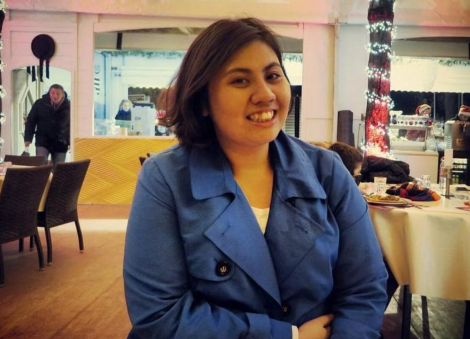
The writer is a Korean student at SIM Global Education. She is pursuing her final- year studies in the BSc (Honours) in Banking and Finance course offered by the University of London in conjunction with SIM Global Education.
|