

Samsung Galaxy Watch 8 review: Can health be represented with a number?

The Samsung Galaxy Watch 8 can tell you if you're lacking antioxidants, but is it reliable?
PHOTO: AsiaOne/Khoo Yi-Hang

 PUBLISHED ONSeptember 18, 2025 1:35 PMBYKhoo Yi-Hang
It seems my colleagues and I are at relatively higher risk of health conditions — simply put, we're unhealthy.
At least that's what I gathered from the readings of Samsung's latest Galaxy Watch 8, which has a new feature capable of determining a wearer's antioxidant levels.
This is significant as antioxidants fight free radicals which are responsible for many diseases including cancer.
That the Galaxy Watch 8 is able to evaluate the quantity of antioxidants a wearer may have is therefore very useful, especially if the user is able to make use of the information to improve his or her health.
I was excited to try this feature, but was horrified to find out that my readings constantly fell into the "very low" category for the antioxidant index.
For perspective, the index is presented in a rating from 0 to 100, with "very low" ranging from 0 to 49, "low" from 50 to 74, and "adequate" from 75 to 100.
My colleagues, too, never scored above a "low" rating, despite some of them eating healthier food options.
Determined to improve my rating, I tried to eat food that purportedly contain antioxidants — and that I would still enjoy.
After a quick Google search, I picked out three sources of antioxidants: strawberries, dark chocolate and turmeric which I consumed in capsules.
For a week, I added these sources to my diet hoping to see some change.
But, like my waistline, the ratings refuse to budge.
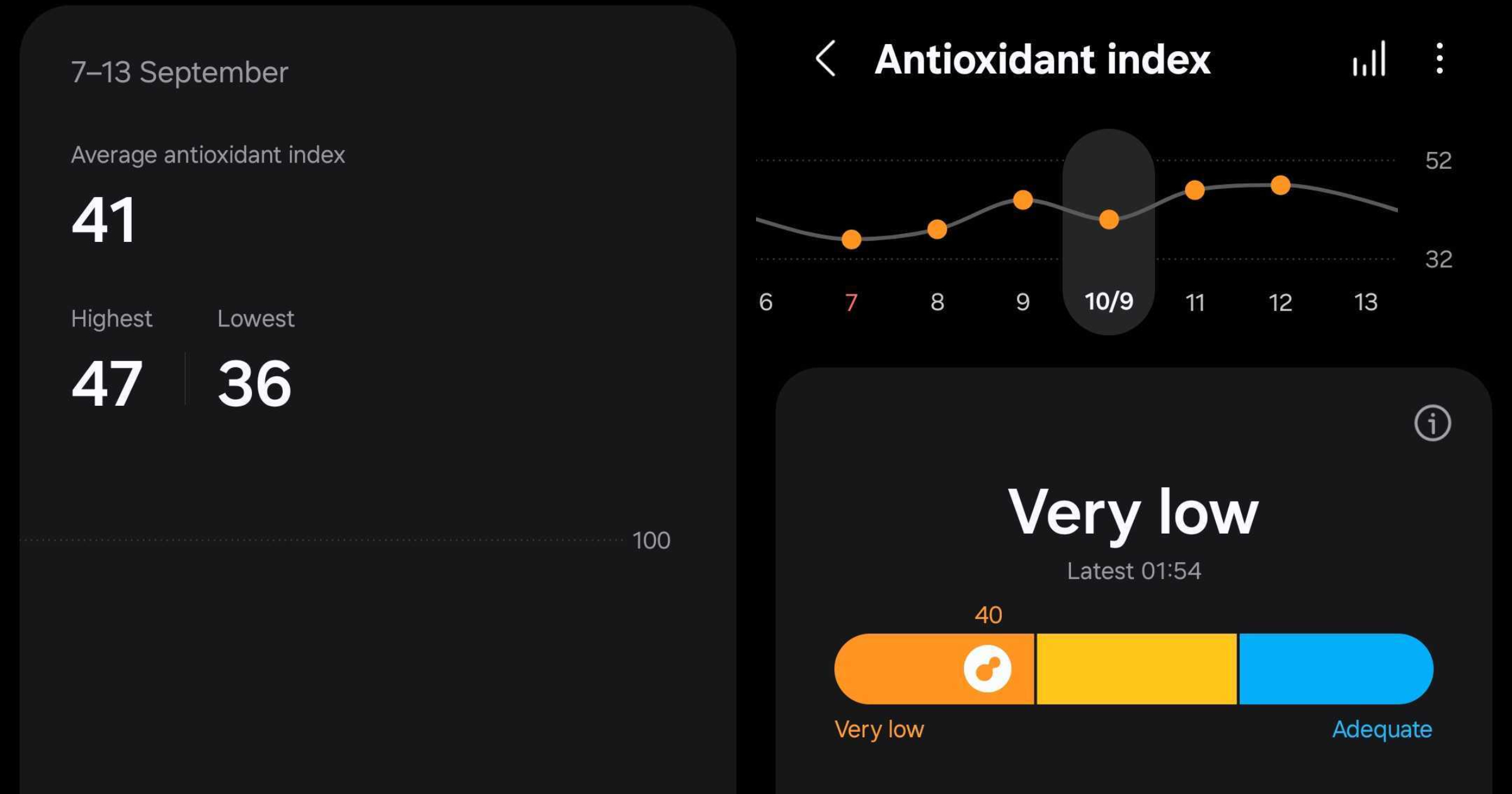
Noticing that my readings did not change despite a change in my diet, I was a bit confused.
In an attempt to determine if I was doing something wrong, I tried multiple tests of the Galaxy Watch 8 on other family members and friends.
While most actually got similar index ratings as me, one person stood out with a rating of over 70 each time I tested the scanner on her. As it turns out, she consumes fruits and vegetables regularly, maintaining a consistently high intake of antioxidants.
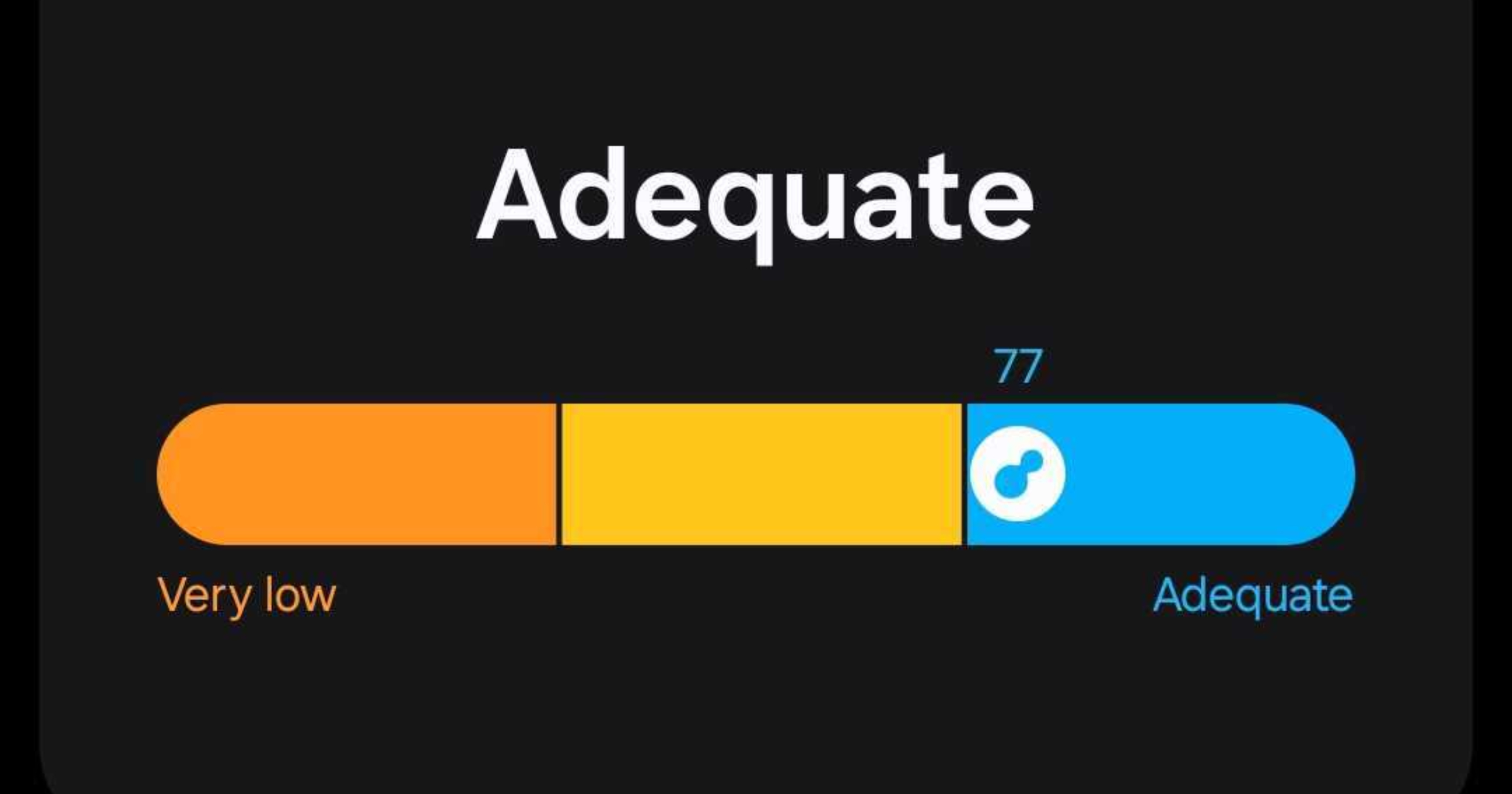
Clearly, it's possible, and my Watch 8 isn't broken.
So why did my change in diet not reflect on the antioxidant index?
As it turns out, the way the antioxidant index gets information from the wearer is a significant factor for readings via the Galaxy Watch 8's BioActive Sensor.
The user has to activate the sensor through the device, press their thumb against the sensor and start the scan through the Samsung Health app on the device.
For approximately 10 seconds, blue, yellow and infrared LEDs will emit from the sensor, detecting carotenoid levels in the skin, which translates to antioxidant ratings in the index, according to a post on Samsung's newsroom.
To make sense of this, AsiaOne spoke with Barry Halliwell, a distinguished professor in the department of biochemistry at the Yong Loo Lin School of Medicine in the National University of Singapore, as well as senior research fellow Irwin Cheah.
The devil is in the detail, as Dr Halliwell said — the watch only checks for carotenoids, which are just only one of many different antioxidants that exist.
He explained that carotenoids, which are coloured compounds like beta carotene, can be found in fruits and vegetables.
These carotenoids enter the body and eventually the skin, hence the old story that if you eat too many carrots, you'll turn orange, Dr Halliwell said.
"The problem is, if you're going by colour, you're not measuring most antioxidants," he stated.
"You're not measuring the enzymes or the glutathione —a powerful antioxidant that protects cells from free radicals — or vitamin C or vitamin E. You're actually only measuring the coloured compounds that get into the skin.
"If you eat a lot of fruits and vegetables, the carotenoids get into the skin, so there'll be a change, but it's not measuring total antioxidants."
There's debate as to whether carotenoids are antioxidants at all, Dr Halliwell added.
Strawberries, which were a key source of antioxidants in my diet, contain mainly the colourless polyphenols — a plant compound containing antioxidants — he explained.
Another reason behind the lack of improvement in my antioxidant readings was the period that I tested my diet — a week — which may not have been sufficient.
While vitamin C are water soluble and can be absorbed into the body — and subsequently expelled — within an hour, carotenoids are quite different.
"Carotenoids get into the skin quite slowly," Dr Halliwell commented. "It takes several days or a couple of weeks to raise the levels in the skin, and then they slowly come down.
"If you stop eating (carotenoid-rich foods), it will slowly come down over a few weeks," he said.
[[nid:714667]]
When asked if there is a fail-proof method to measuring antioxidants or determining antioxidant levels in the body, Dr Halliwell explained that there is "no acceptable total antioxidant activity measurement".
He stated that each antioxidant is chemically different and has to be measured individually with separate tests, usually after drawing blood.
Commenting on the watch, Dr Halliwell stressed that his explanations of how antioxidants work does not equate to criticism of the Watch 8 itself.
Describing the device as "useful", he said that it works as advertised on the tin — the sensor detects carotenoids in the skin to estimate antioxidant index levels.
"But don't equate carotenoid level with antioxidant level, because the carotenoids are one of hundreds of different antioxidants, and they're not very high level compared with things like glutathione and vitamin C and vitamin E and so on," he said.
Senior research fellow Irwin Cheah concurred, adding: "In a competitive market (specifically smart watches/devices) companies are always looking for interesting ways to innovate to give themselves and edge or differentiating factor from others.
"While the scanner does do what it says… it is but one antioxidant in the body and not necessarily the most abundant or important antioxidant."
Moreover, the antioxidant scanner is but one function of the watch.
Other notable features include the ectopic beat detection, which registers premature heartbeats that often go undetected in routine checkups, and can inform decisions based on risks relating to heart health such as arrhythmia (irregular heartbeat).
The watch also tracks vascular load — or stress on blood vessels — in your sleep, which can inform signs of stress to your mind and body, changes in diet or in rest.
It also features a tracker for a user's circadian rhythm and how much they may need to sleep over a period of three days, interpreting the data and calculating optimal bedtime for waking up refreshed.
So the Galaxy Watch 8 certainly can't be an alternative to your next trip to the doctor — but it can definitely guide your journey towards better health.
Galaxy Watch 8 is available in Singapore and is priced at $498.
[[nid:718576]]
khooyihang@asiaone.com