Shu Qi apologetic for bringing up the pain of trauma victims who watch her directorial debut Girl
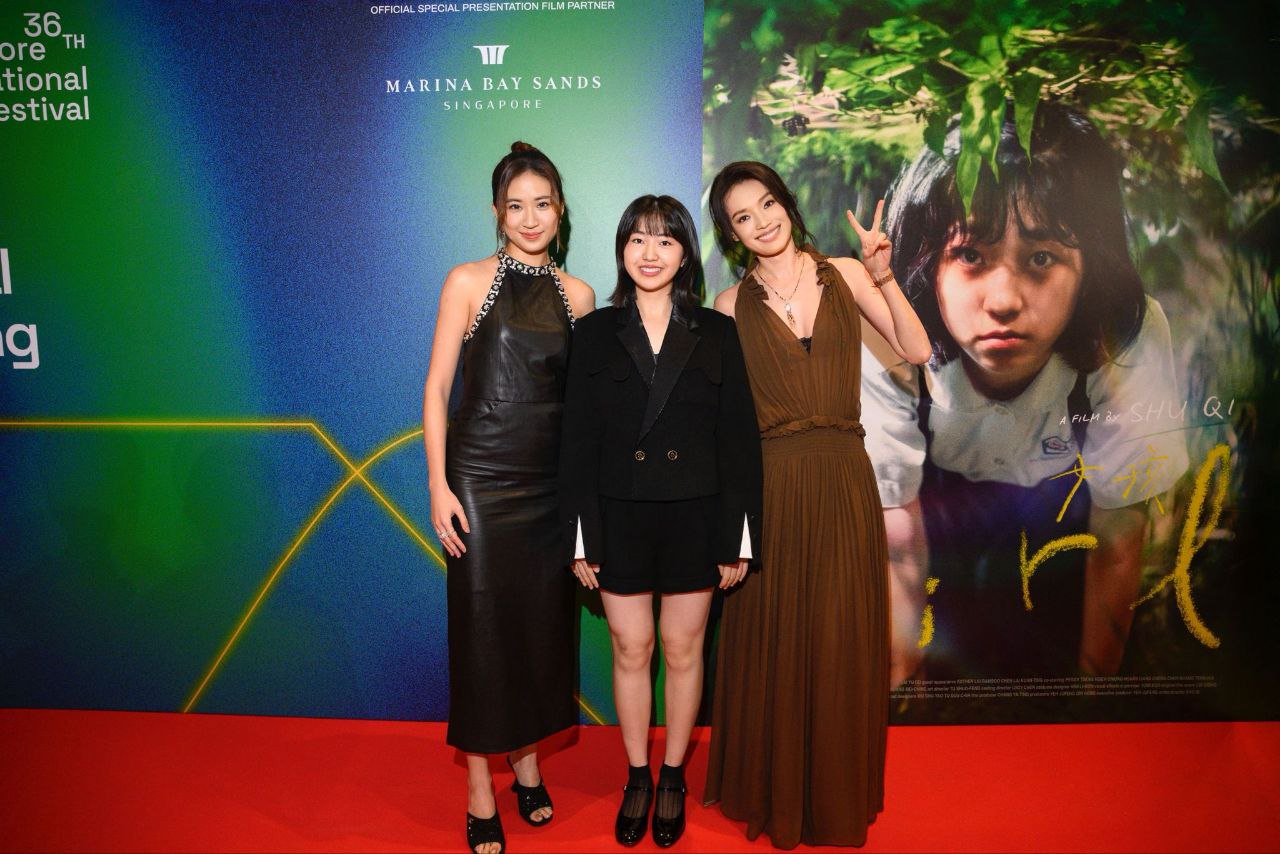
(From left) Taiwanese actresses Joanne Tang, Bai Xiao-ying and Shu Qi attended the Singapore International Film Festival on Nov 26 and 27 for their film Girl.
PHOTO: Yang Yi
PUBLISHED ONNovember 28, 2025 7:10 AMBYYeo Shu Hui
While feeling pressured on whether her directorial debut film Girl would be received positively, Taiwanese actress Shu Qi saw a hate comment.
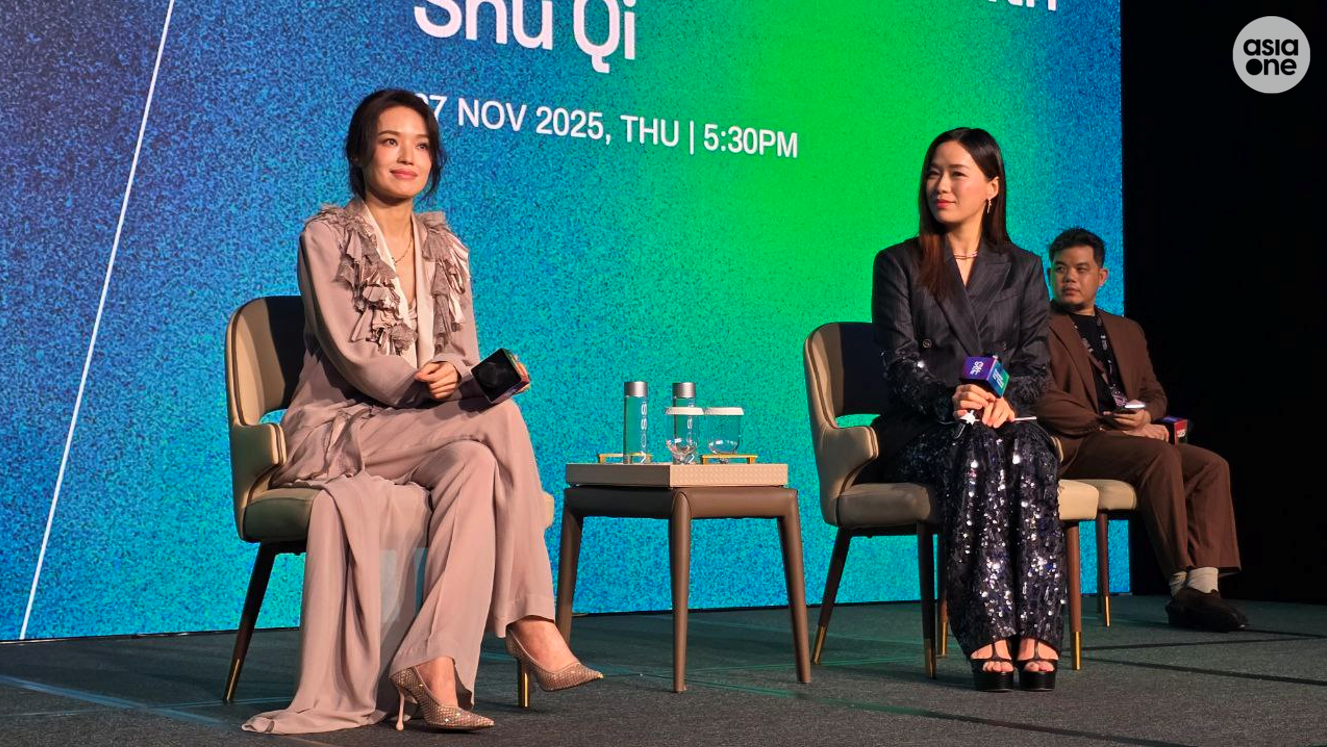
"There was a comment by a viewer who said they hated this film, because it tore their heart apart again," the 49-year-old told viewers at the In Conversation With session conducted yesterday (Nov 27) as part of the Singapore International Film Festival (SGIFF).
Holding back her tears, Shu Qi collected her thoughts quickly and watched her film again.
She shared: "I felt apologetic towards women who bear trauma, because indeed, to those who have been hurt by their families in the past, this film is very cruel to them.
"Despite that, I am glad they are able to face a better version of themselves now."
Shu Qi was in Singapore on Nov 26 and 27 for Girl, which is the opening film for SGIFF, a part of Infocomm Media Development Authority's (IMDA) Singapore Media Festival.
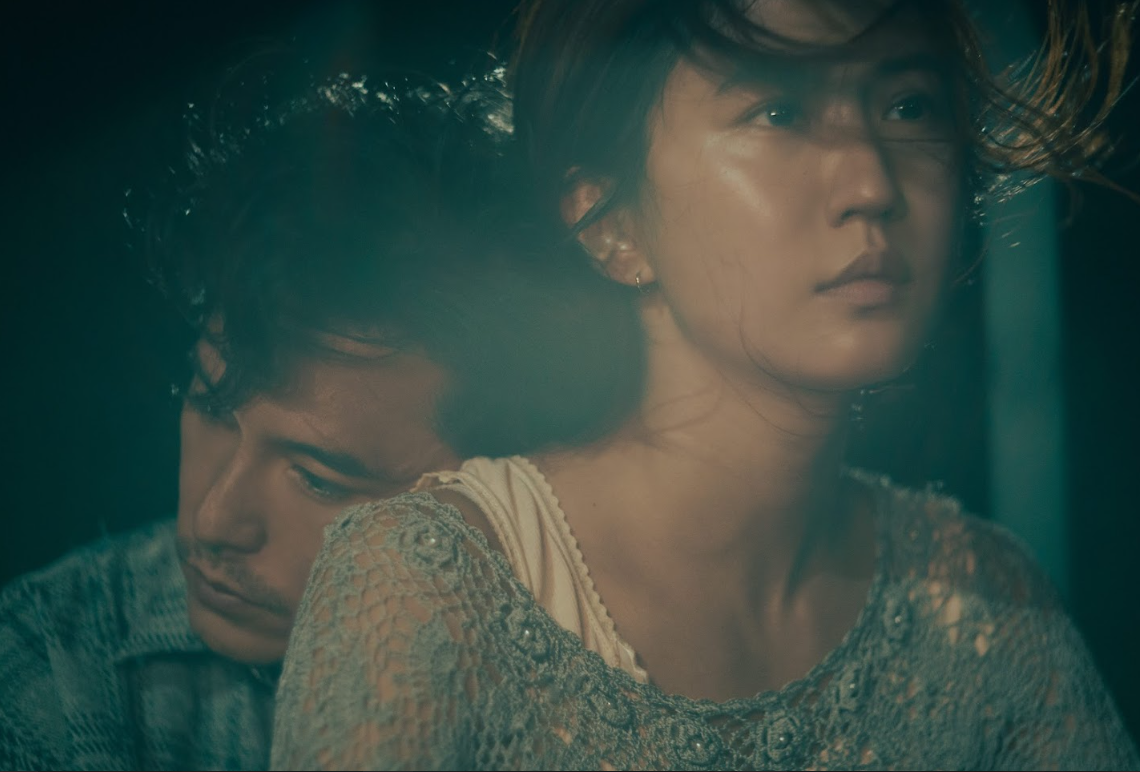
Girl is a coming-of-age film set in the late 1980s, centering around Lin Hsiao-lee (Bai Xiao-ying), an introverted girl whose quiet and secluded life changes when she meets a new friend Li-li (Lin Pin-tung). With her lively and carefree nature, Li-li embodies the dreams Hsiao-lee suppressed.
However, Hsiao-lee's aspirations are challenged by her mother's (Joanne Tang) past, trapping her in a cycle of despair as she struggles to find her way between her family legacy and her desire for a free life.
The film also marked Shu Qi's first attempt at scriptwriting, which she shared was inspired by her tumultuous and traumatic childhood.
She said: "While writing the script, I didn't put much of my pain and grief into it, because there are a lot of Lin Hsiao-lees in this world. The story isn't really about reconciliation with family — it's not a must to do that — or self-healing, but rather, to look at it from another angle. Some of us have childhood trauma and they could hurt and stay with us, and these past experiences make up who we are.
"So, while writing the script, I am peeling myself apart like an onion, but while facing those scars, I am thankful to myself for who I am today."
The viewers here also engaged with Shu Qi in a Q&A session, where one asked if her actor-director husband Stephen Fung gave her any advice and why she didn't cast him as Hsiao-lee's alcoholic and abusive father.
"Because the language spoken in this film is Taiwanese Hokkien (Minnan dialect) and my husband is from Hong Kong and doesn't know how to speak it, he was disqualified," she replied cheekily.
As to whether Stephen, 51, gave her advice, she responded lightheartedly: "My husband directed a film which I acted in before, and he felt I was too difficult to handle. So, when he knew I was going to direct this film, he gave me a smug look and said, 'Your day has come'."
'Life must go on'
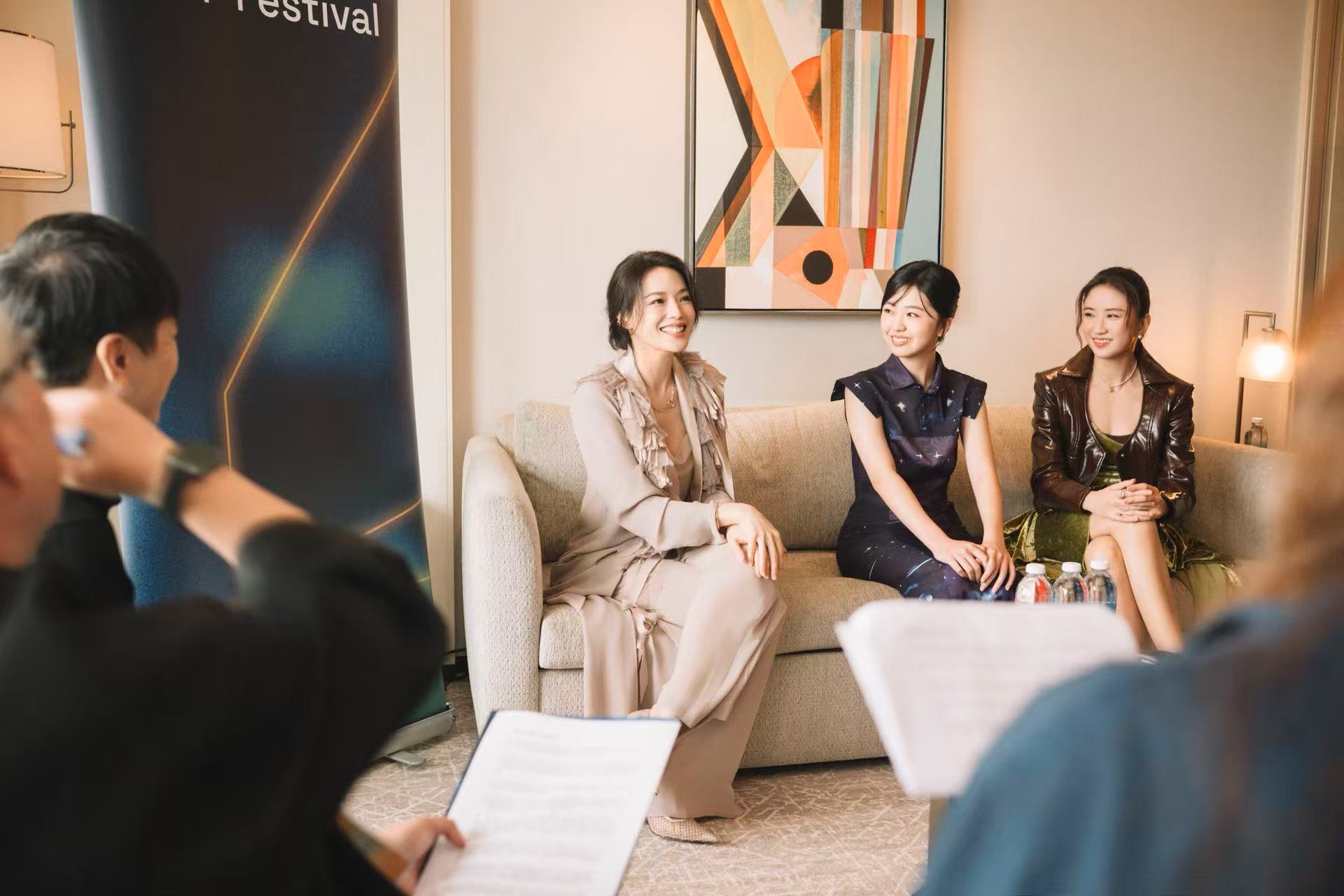
Shu Qi also delved more into her creative process and routine during a media interview yesterday.
She shared: "It started with a few of the scenes appearing in my mind, and I began by jotting them down and combining them together for the storyline."
When she was weaving the scenes together for a complete storyline in 2023, she would write for three hours in the morning on her home's balcony and continue writing a few scenes throughout the day.
"After dinner, I would review my day's work over a glass of red wine and shed a few tears, thinking I have done a great job," she added wittily.
When asked if she has reconciled her childhood trauma, she revealed: "I think it's nothing about reconciliation. It's just that life must go on and we would get used to certain things eventually.
"I used to hide in the wardrobe when I was young, so I have serious claustrophobia. I didn't dare to take the lift or live on a high floor, but I must face these things every day, such as boarding a flight or taking the lift. Although I know nothing will happen, I can't hide the fear in my heart, but I have to step out, move towards my goal and believe in myself.
"Maybe one day when I look back, I would think it was nothing and wonder what I was afraid of, but at least I stepped out bravely."
Bringing Girl to life
Shu Qi also recounted the tedious process of casting Taiwanese actors Roy Chiu, Bai Xiao-ying and Joanne Tang in the leading roles.
She shared she first invited Roy, 44, to play Hsiao-ying's father because while the character is an alcoholic and abusive man, she still wanted to feature a good-looking actor who can portray the role well. Roy accepted the role within two days.
When finding a young actress to play Hsiao-lee, she looked through many clips of Taiwanese child actresses between the ages of eight and 16 to look for one with a suitable physique and appearance.
"When I saw Xiao-ying, I decided it had to be her, because she had dark circles under her eyes, which suited Hsiao-lee who sleeps in her wardrobe every night," Shu Qi shared.
Finding an actress to play Hsiao-lee's mother was the toughest for Shu Qi, because she wanted to look for a younger actress with youthful vigour and able to portray her eagerness towards autonomy in life but is ultimately trapped by her family.
Shu Qi found 35-year-old Joanne, who also goes by the name 9m88 as a singer, only a month before filming started when she visited Taiwanese director Chen Yu-hsun on the set of his film A Foggy Tale (2025).
She said: "I saw Joanne on the monitor and as director Chen asked me about how well he filmed the scene, I asked him who she is. Later, when I was introduced to the lovely Joanne, I thought she was great and would suit the role.
"I am very lucky that my casting invitations were all accepted."
Shu Qi also said the film doesn't fully explain all aspects of what happens in the story, because the subject matter could be relevant to everyone but the details of the situation are different for every family.
"Everyone can find a shadow of themselves in the film, so some of these open endings are for audiences to reflect on and fill in how similar situations may happen in their own life," she said.
Shu Qi added: "The film Girl is not just talking about Lin Hsiao-lee; while I was writing from her point of view, all women were once girls as well, including myself, where I still have a girl living in my heart. So, I feel Girl represents all women."