SINGAPORE — As a couple raising four children, Luke Tan and Candice Chaignat are deeply intentional about their health. Tan, a 46-year-old Singaporean, wakes up before 5am to carry out breathwork exercises and red-light therapy to regulate his circadian rhythm.
Chaignat, his 45-year-old Swiss partner, wakes up a little later, at around 6am. They cycle together to a nearby gym, timing their session to catch the first light of the day. "We try to get morning sunlight as early as possible," says Tan, describing it as a natural cue for the body to wake.
Afterwards, they return home for a slower ritual: walking barefoot in their garden to "ground" themselves, a practice they say helps calm the body. Depending on their schedules, the morning may also include meditation, journalling and sound healing.
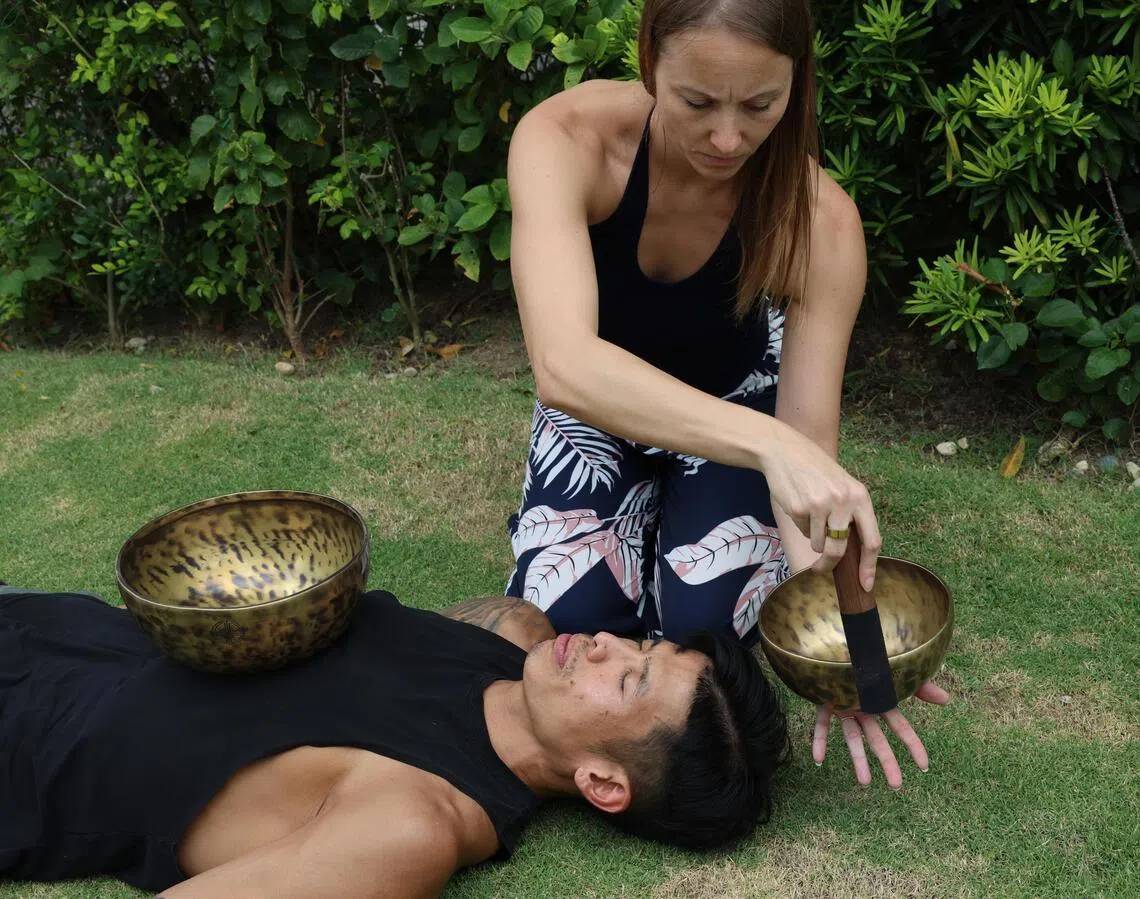
"We have a holistic view of living that starts with the mind, the body, the relationships," Chaignat says.
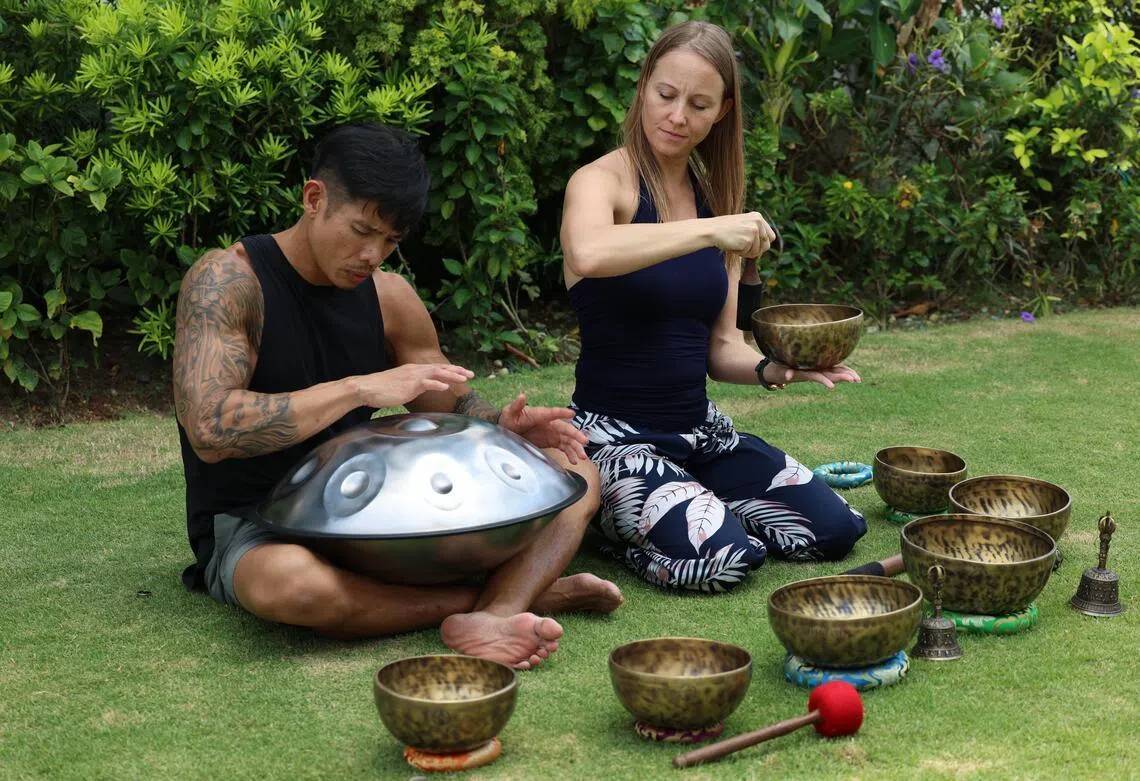
Their home is filled with health-focused devices, such as red-light therapy panels, blue-light blocking glasses and grounding sheets on their beds. There are also simpler, more “analogue” tools, such as weights, pull-up bars and Himalayan singing bowls.
Like other high-performing city dwellers, they use wearables such as Oura rings to track their health metrics, as well as small interventions — mouth tape and nasal tape, for instance — to encourage nasal breathing while they sleep.
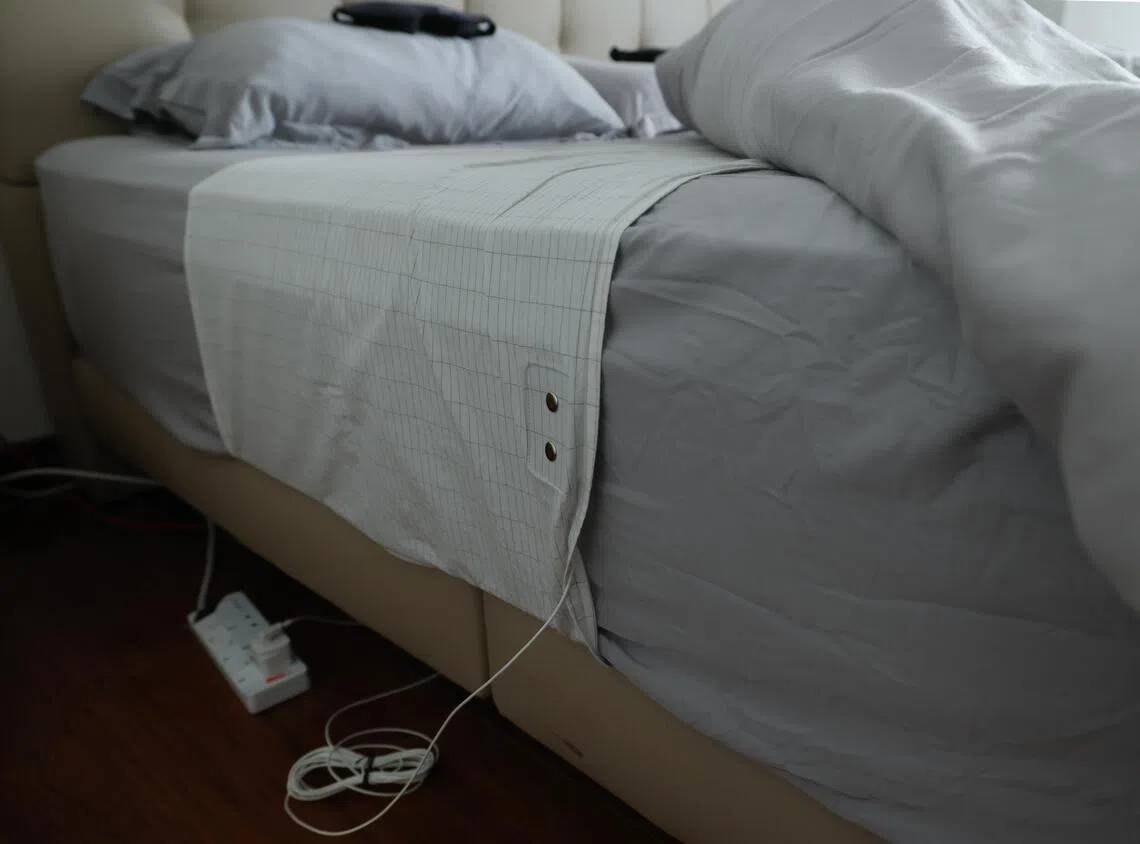
They practise a strict "3-2-1 rule": no food three hours before bed, no water two hours before, and no screens in the final hour.
To the outsider, it might appear as if they’re chasing health trends. But Tan, who works as a breathwork architect and lifestyle optimisation coach, says: "What we’re doing is simply finding the things that work for us and sticking to them."
Tools of the trade
Interest in wellness trends — from ice baths to infrared saunas — has surged in Singapore. But Tan and Chaignat are among those taking it a step further, bringing these practices into their homes and offices, and turning their living spaces into extensions of gyms, spas and recovery studios.
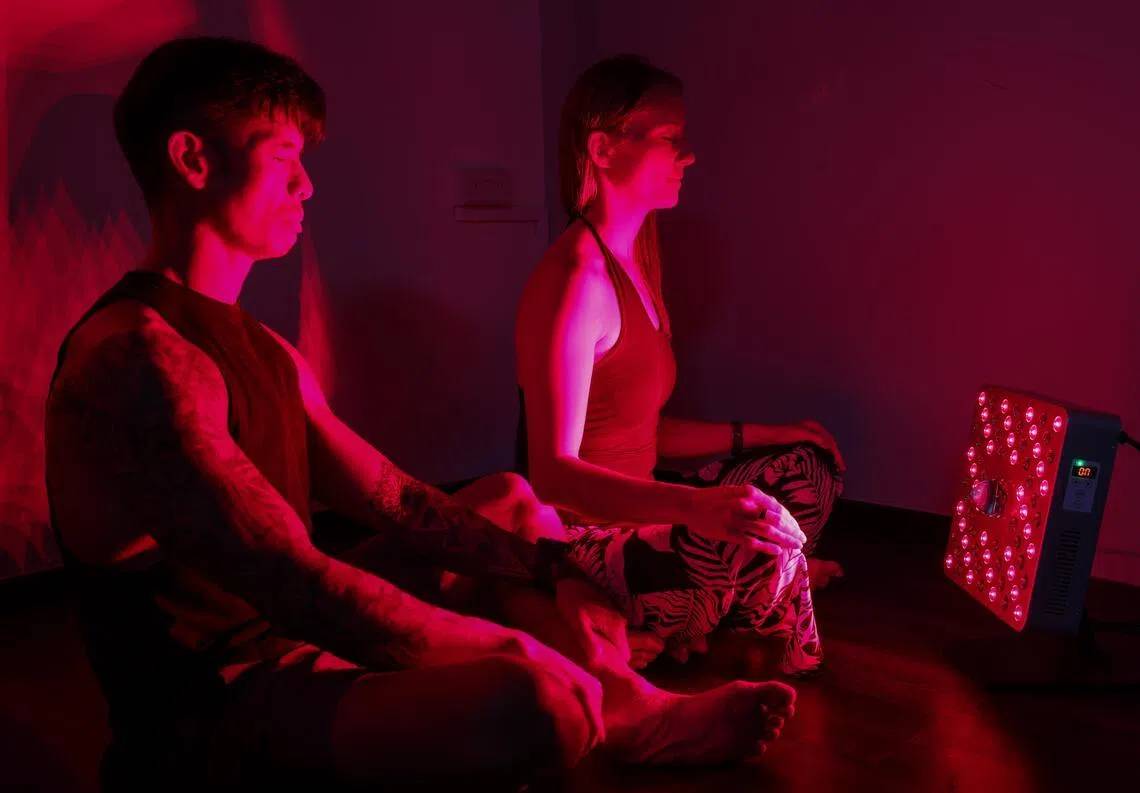
Some of these tools — such as light therapy for circadian regulation or oxygen therapy for specific medical uses — are backed by established research.
Others remain more experimental, with evidence still evolving.
These tools span a wide price range, from $8 for mouth tape and $350 for a red-light panel, to as much as $100,000 for a hyperbaric oxygen chamber.
But for the health-conscious, price tags are secondary to their need for sharper focus, faster recovery and, ultimately, longevity.
Just ask Harvey Chen. The 38-year-old fintech director owns two hyperbaric oxygen chambers, with one in his Singapore home office and the other in his Dubai office.
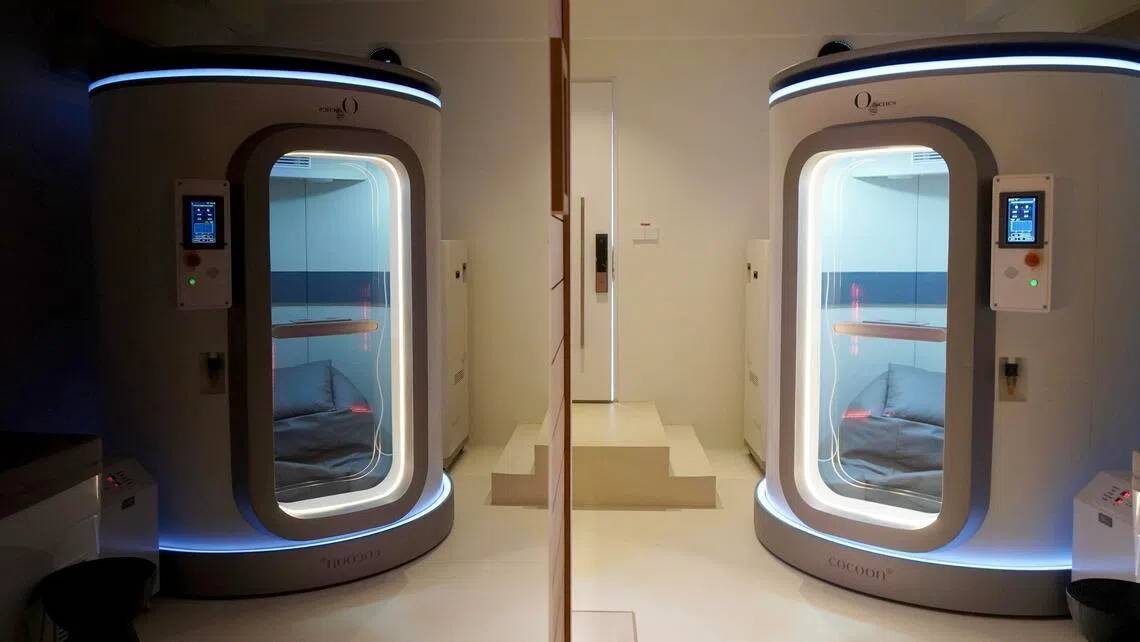
After years as a client at wellness centre O2genes, he decided to purchase the chambers outright for a six-figure sum, treating them less as a luxury than as a tool for performance — even though they can be leased for about $3,200 a month.
"I have as many as 15 meetings a day," Chen explains. "After lunch, those two to three hours are really not productive. But when I get into the chamber, I don’t feel that after-lunch sleepiness; I can stay alert the whole day."
The chamber has become a place of rest and focus. He takes calls from inside it, turning downtime into productive time. He even uses it when he has a hangover: "I go into the chamber for an hour. When I walk out, I feel normal again."
Chen is quick to temper expectations, though. Hyperbaric therapy, he insists, is only one piece of a much larger system — and not the most important one.
"Sleep is the most beneficial compared to anything else," he says. "If I don’t get a good night’s sleep, no matter what I do, I just feel terrible."
His daily routine reflects this hierarchy. Mornings begin with weight training and cardio, afternoons include 60 to 90 minutes in the chamber, and evenings often end with sauna and ice baths.
Underpinning it all is a tightly managed regimen of blood tests, supplements and, more recently, testosterone replacement therapy — which he credits with jump-starting his return to fitness after years of fatigue, unwanted weight and low motivation.
"Self-care saved my life"
Bong Siewcheong, an entrepreneur who runs the buzzy My Awesome Cafe in Telok Ayer, arrived at his health routine in much the same way: through a health crisis. In 2018, a bout of chronic depression forced him to step away from work entirely.
"My body just asked me to stop," he says.
What followed was not a dramatic overhaul, but a gradual rebuilding. He began introducing small, repeatable acts of self-care — morning meditation, cold plunges and more deliberate rest — which, over time, became essential to how he functions day to day.
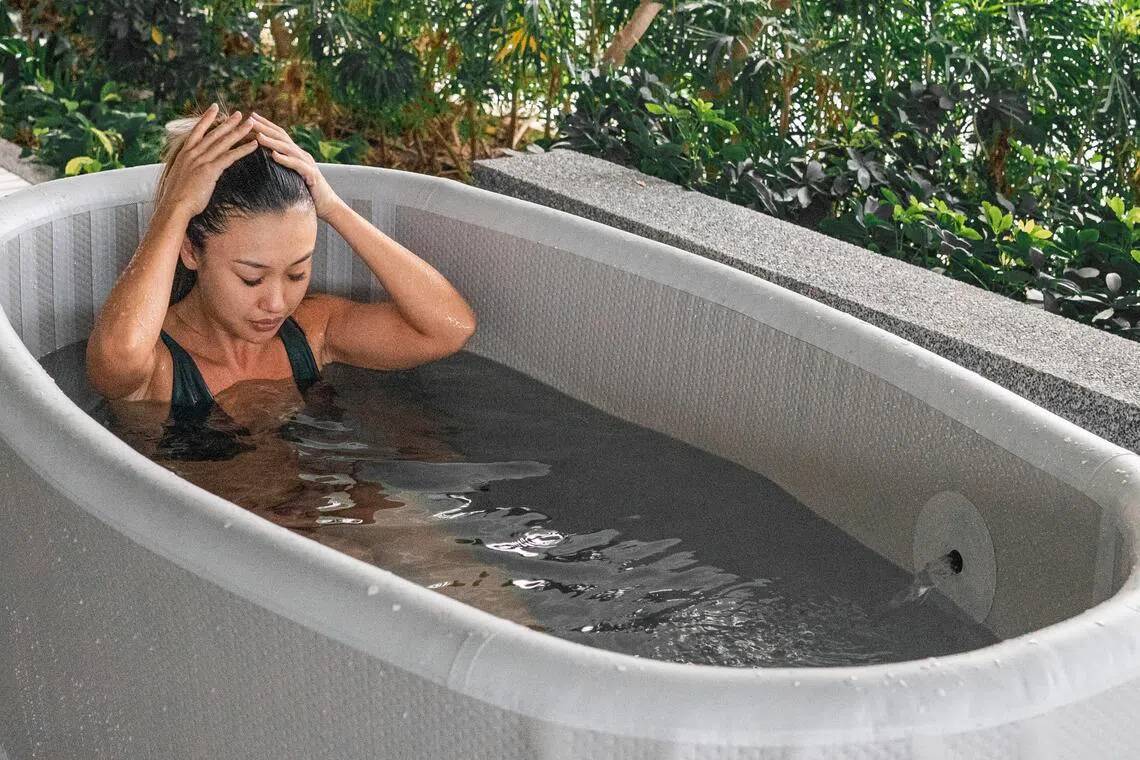
Now, his mornings begin before dawn with light meditation, followed by a cold plunge at three degrees Celsius. The first 90 seconds, he says, are "very primal… You get signals like you’re dying." Then something changes. "The senses kick back in and say, 'You’re not dead yet.' And when you emerge from the cold plunge, you feel ready for anything."
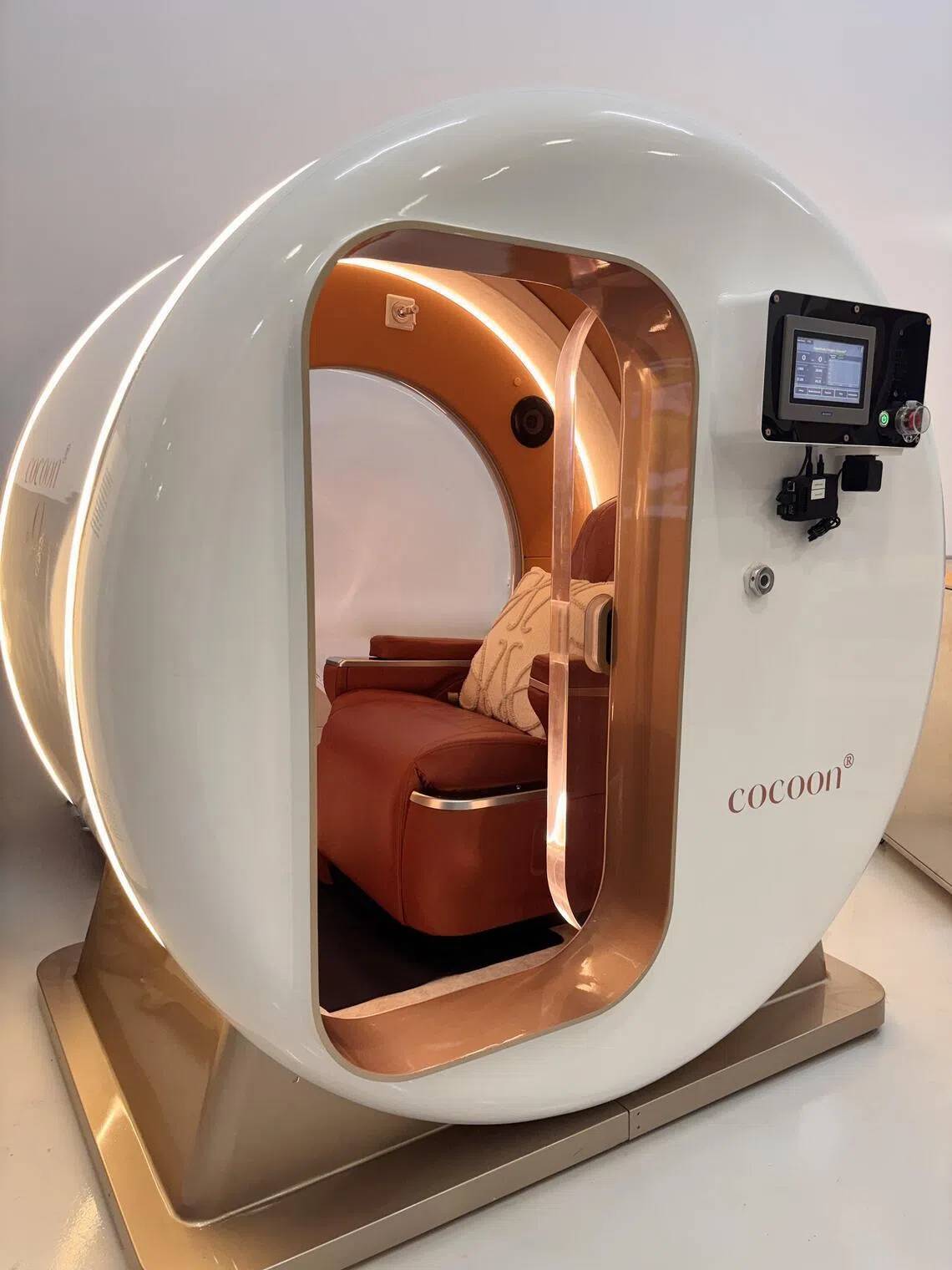
Bong is planning to install a hyperbaric oxygen chamber from O2Genes in his bedroom, which he expects to use at least five times a week. "After calculating the cost of regular visits outside, it just makes sense to have it at home."
But unlike some health-conscious folk, he does not track every variable or obsess over biomarkers. Instead, he relies on a simpler measure: how he feels.
"If the metrics are showing positively, but I feel crap, it’s irrelevant," he says. "What matters more is how I feel today."
His days follow a steady rhythm: a midday workout, an early dinner and a strict no-screen rule after 8.30pm. But sleep, he admits, has been a longstanding struggle. The goal is no longer perfect sleep, but consistent recovery — enough to feel steady again the next day.
Don’t ignore the basics
To be sure, some therapies still sit in a grey area, with varying levels of scientific backing. The interviewees are aware of this, but are willing to experiment.
Tan, for one, says he does not mind being "a guinea pig" for new interventions, testing them against his own biomarkers and refining his routine in consultation with his doctor. But for all the tools and devices now available, he is clear that the fundamentals still come first.
"We’ve moved from pharmaceuticals to supplements to biohacking," he says. "But we’re still not addressing the root cause sometimes."
In his view, as much as 70 to 80 per cent of health comes down to basics: how one eats, moves, sleeps and manages stress. The rest — from red light to ice baths — are there to offer incremental gains.
Chen agrees: "The most important thing is sleep. Then exercise. All these other things are good, small additions that aid you once you get into a routine."
Bong traces it back to something simpler. "The underpinning is always self-care," he says. "There’s no endpoint; you just have to keep showing up for yourself every day."
[[nid:520235]]
This article was first published in The Business Times. Permission required for reproduction.



