

On this date in 1826, Robert Fullerton became the first governor of the Straits Settlements

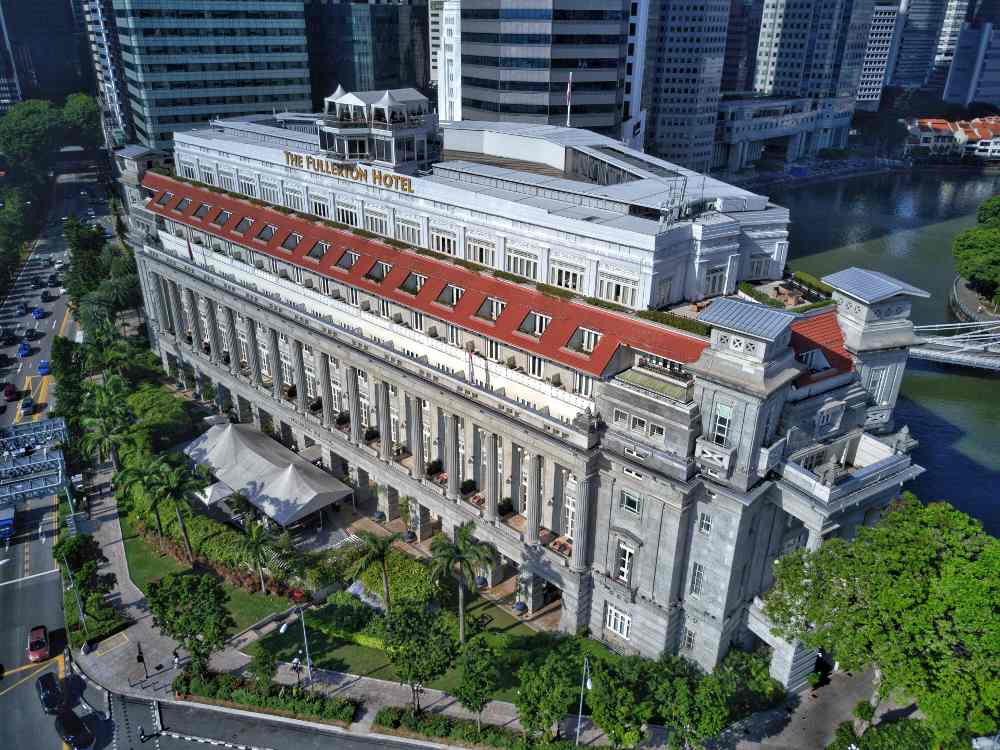
This National Monument was named after Robert Fullerton.
PHOTO: Instagram/The Fullerton Hotel Singapore, Wikimedia Commons

Before Singapore became a bustling city-state, it was part of the Straits Settlements — a British administrative group that included Penang, Malacca, and our very own Lion City.
And the first Governor of the Straits Settlements was Robert Fullerton, who was appointed today 199 years ago (Nov 27, 1826).
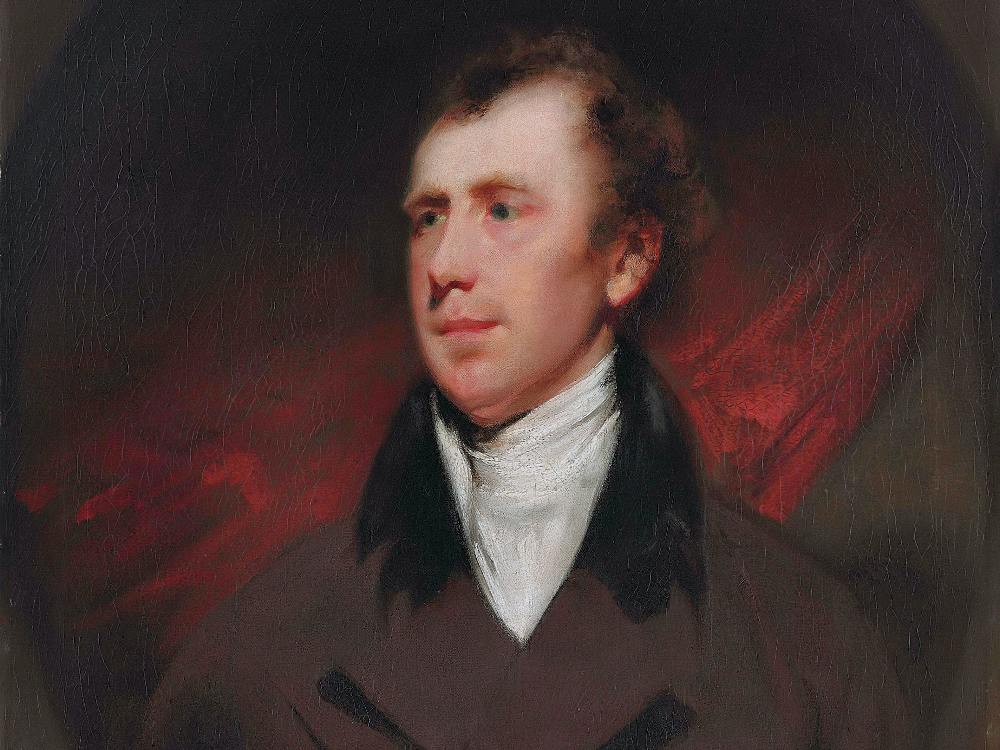
Born in 1773 in Edinburgh, Scotland, Robert Fullerton served as the Governor of Penang from 1824 to 1827. He was officially appointed as the first governor of the Straits Settlements in 1826. As Governor, he was supported by three resident councillors from Penang, Malacca, and Singapore.
The Governor's main role was to make the Straits Settlements self-sufficient. He proposed taxes on land and houses, fines in law courts, and a retrenchment scheme.
But his proposed export duties and a tariff on Chinese and Indian immigrants returning to their homeland were opposed by the merchant community and colonial officials who wanted to protect the Straits Settlements' free-port status.
By 1829, governor-general of India, William Bentinck was forced to intervene. He reduced the Straits Settlements' administration to a residency dependant on the Presidency of Bengal in India.

Fullerton is credited with laying the groundwork for the municipal system in the Straits Settlements. In 1827, he created "The Committee of Assessors", a group responsible for keeping the streets of Penang clean, safe, and in good repair. It was the beginning of organised governance we enjoy today.
Fullerton returned to Europe in 1830 and was succeeded by Robert Ibbetson. He died in London in 1831.
In 1829, Robert Fullerton commissioned Fort Fullerton at the mouth of the Singapore River to defend the town. The fort was expanded in 1854 but demolished in 1873 after merchants preferred the prime area to be used for trading purposes.
The Fullerton Building was built on the site of the old Fort Fullerton. It was opened on June 27, 1928 by the then-Governor, Sir Hugh Clifford, who suggested the building be named after Robert Fullerton.
It was commissioned as the General Post Office, and became a Japanese military base during World War II. Post-war, it was the home to several key government departments. Singapore's founding Prime Minister, Lee Kuan Yew, held several political rallies here from the '50s to the '80s.
Today, it is a luxury 5-star hotel and the 71st building to be gazetted as a National Monument of Singapore.
[[nid:723401]]
This article was first published in Wonderwall.sg.