

Renovating your home? An interior designer reveals the red flags to avoid

PHOTO: Stackedhomes

It seems like every other month or so, we hear stories on the news or through social media about home renovations gone wrong. More than enough of these renovation horror stories have circulated that some may wonder how people keep succumbing to them.
A recent case was a homeowner whose initial $80,000 renovation budget ballooned into a $216,000 nightmare, and the homeowner was left saddled with a half-renovated unit when his contractor vanished five months after receiving the payment. The interior design (ID) firm has also reportedly gone into liquidation.
Their story, while horrendous, is not unique. In the first half of 2026 alone, CASE logged 402 of these types of renovation-related complaints, while 787 complaints were lodged against renovation contractors in 2025.
The good news is that prepayment losses have fallen sharply from around $729,000 in 2024 to $191,000 in 2025, which CASE attributes to more homeowners choosing CaseTrust-accredited firms.
But renovation scams persist, and how can homeowners avoid budget blowouts, missed deadlines, and poor workmanship? We spoke to one interior designer to find out what homeowners should keep a lookout for.
The main reason why errant firms can get away with deception is partly due to low-ball quotations, which don't fully encompass the amount of work that needs to be done, says Lawrence Ho, founder of PRDT Interiors.
"Most homeowners usually just compare the bottom-line figure, not individual line items. A firm that leaves $20,000 out of scope looks $20,000 cheaper and usually gets the job," he says.
Beyond the line items, a quotation should state the legal company name and UEN, the HDB licence number, validity date, payment schedule, warranty terms, with exclusions and terms for variation orders clearly spelt out.
Another red flag is high front-loaded payments or deposits around 40per cent or more, and Ho says that errant ID firms usually use that money to finish someone else's flat.
So, how much should a typical renovation cost?
Taking into account prevailing material and manpower costs today, a bare-bones renovation of a four-room Build-To-Order (BTO) flat may cost around $40,000 to $55,000. On the other hand, the renovation of a resale four-room flat could set you back $55,000 to $75,000.
As a buffer, Ho advises BTO homeowners to set aside 3-5per cent of their planned renovation budget to cover unexpected expenses, while resale homeowners should set aside 8-10per cent of their budget.
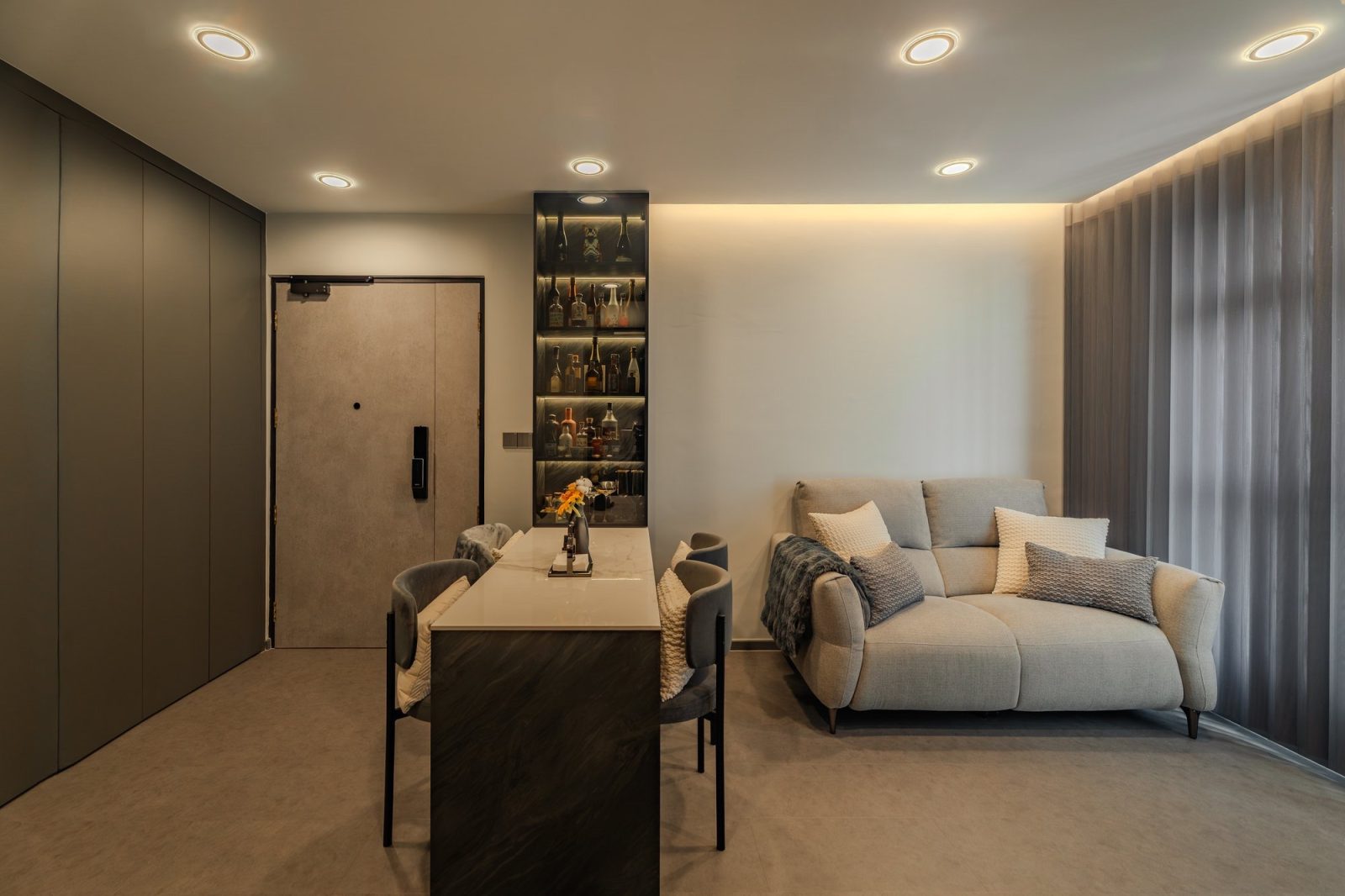
Remember that there is a wide disparity in service, build quality, and construction calibre among contractors and renovation firms.
The HDB Directory of Renovation Contractors and CaseTrust accreditation are two public resources where you can verify the track record of the company you want to work with.
Renovation firms under the CaseTrust Renovation Scheme are required to purchase a deposit performance bond, which safeguards consumer deposits in the event of the firm's bankruptcy.
After you have decided on a firm, ensure that the company has cleared HDB requirements and obtained the necessary permits before work begins.
When it comes to finalising the scope of work, all items that were discussed with your interior design firm should be stated in the quotation.
Based on his experience, Ho says that homeowners should ask for a written workmanship warranty and a defects reporting window of around seven days after handover.
Any variation order must be documented, agreed and priced before work starts via a written agreement. As a general rule of thumb, Ho says that homeowners should not make a deposit of more than 20per cent, while ensuring that progressive payments are tied to material progress that you can verify during in-person inspections.
A suggested timeline could be:
Each payment should be paid to the company's corporate account matching the name on the contract, by PayNow to the company UEN, bank transfer or crossed cheque.
Some ID firms, including PRDT Interiors, have terms that state that they are not liable for cash handled outside their premises or transfers to unauthorised accounts.
It is important that this is conveyed clearly in writing, since it is a common reason behind many renovation scams in the past, and how homeowners can lose money.
When it comes to communicating your preferred colours, finishes and storage ideas, AI-generated images and Pinterest references can be helpful.
On the other hand, AI images do not factor in HDB guidelines and may not reflect actual dimensions, structural restrictions or practical requirements.
For instance, Ho has come across homeowners who want to put a window in a structural wall, hack a bathroom in a two-year-old BTO, and install a 3.5-metre island in a 2.4-metre-wide kitchen.
"In general, we approach the client's initial design inspiration as a mood brief, not a drawing; and the first thing we do is lay it over the actual floor plan and mark out what is realistic," says Ho.
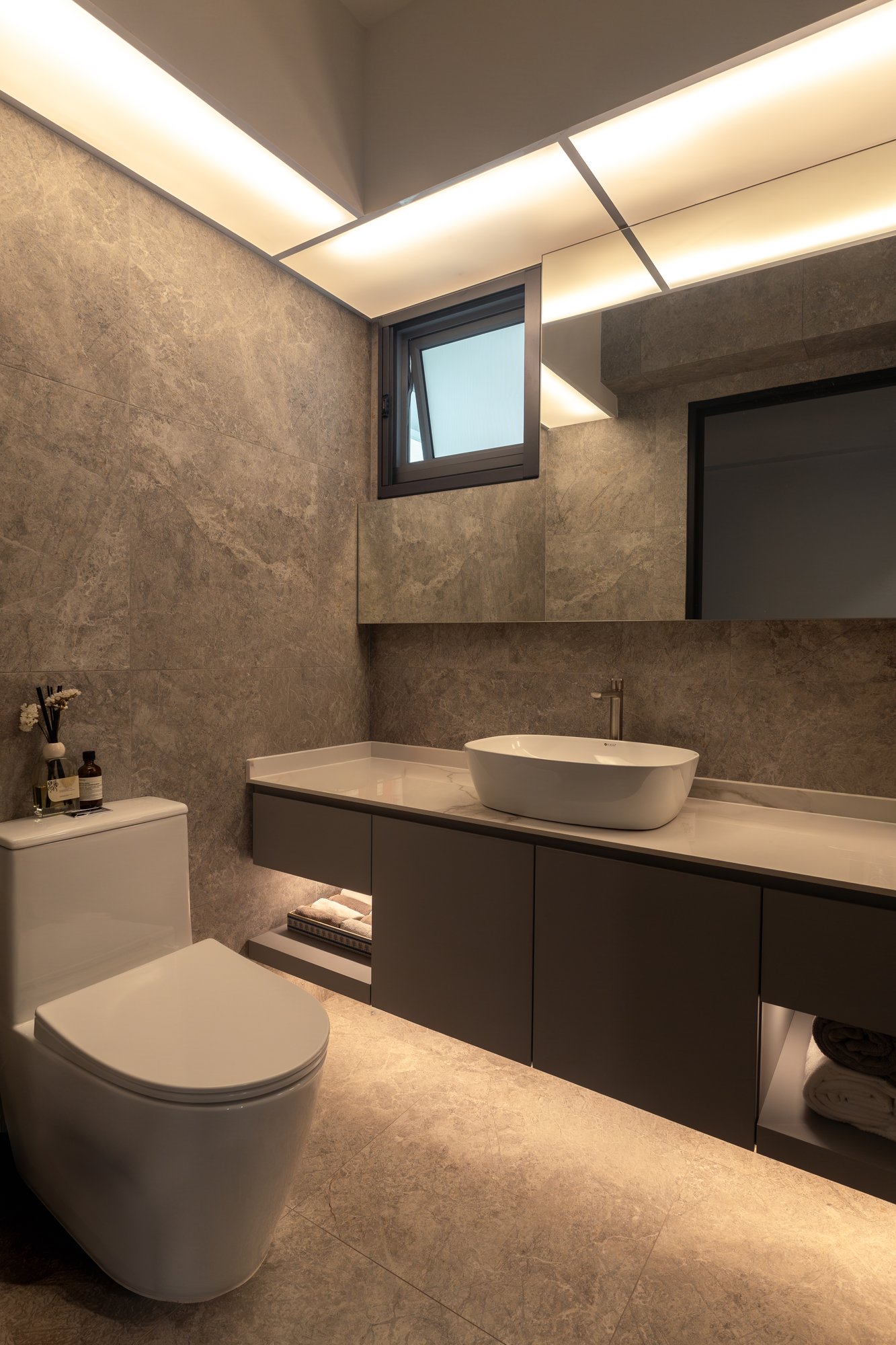
Warm neutral colours, layered lighting, functional storage and semi-open kitchens can create a comfortable, versatile home.
Before investing in feature walls or elaborate built-ins, consider your long-term needs, available space and maintenance costs. Prioritise the essentials such as safe wiring, reliable plumbing and good ventilation over other items.
Confirm your layout, tiles, laminates, colours and fittings early. Late decisions can delay work and increase costs. Get a written, week-by-week renovation schedule, and check the site after major stages such as tiling and before carpentry installation.
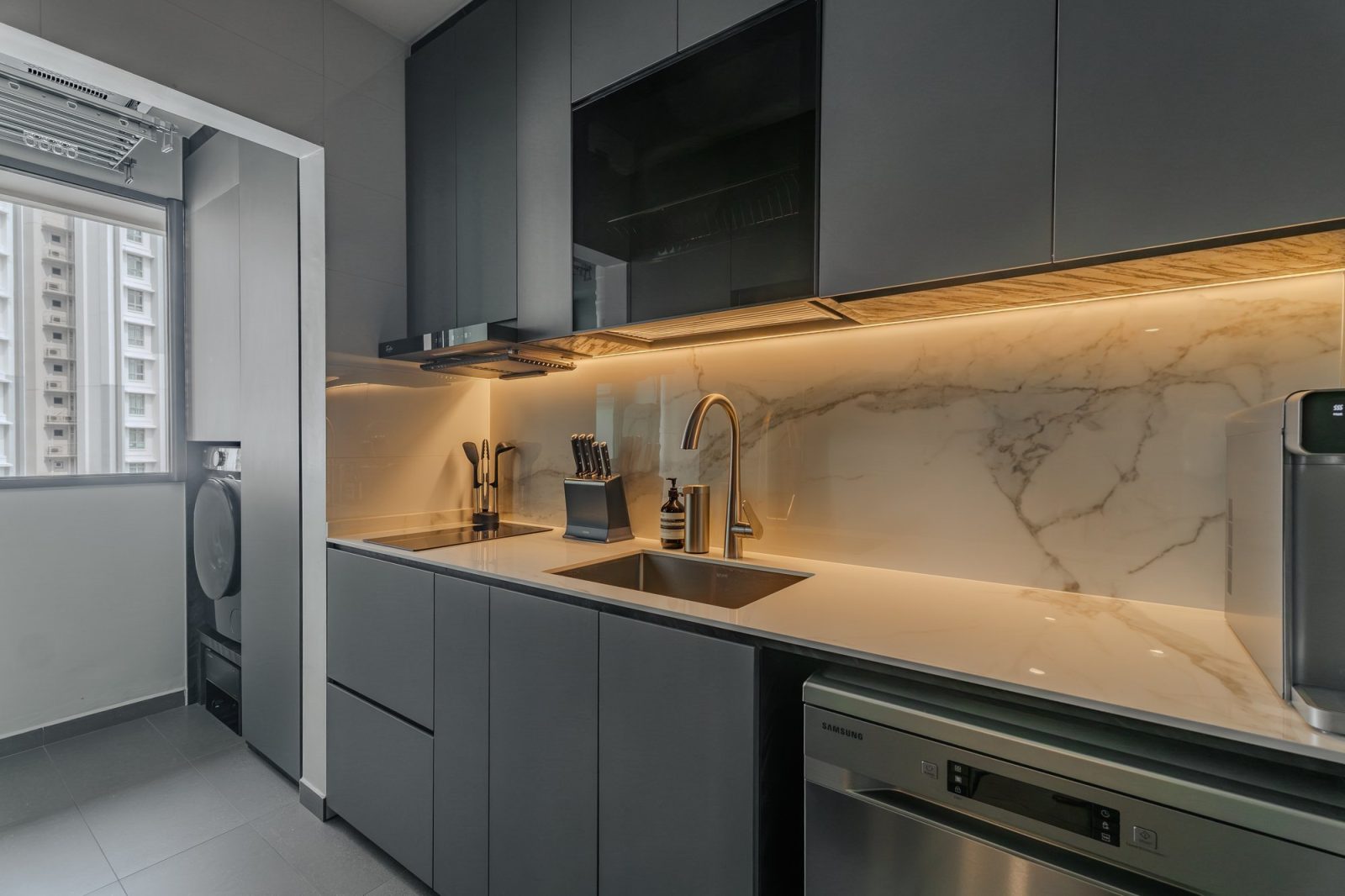
Adapting a resale flat to changing life circumstances has its unique challenges. Thankfully, these can be resolved with some forethought and proper planning.
Ho shares a few common scenarios where minor renovation would be necessary. A tip is to hack less and build flexibility into the home.
For many homeowners, the desire for more space may result in hacking away a wall in the living area. But your space needs may change when kids enter the picture, which means the home needs to cater for these shifting lifestyle and family needs.
The good news is that the wall does not need to be reinstated. According to Ho, a typical retrofit for a four-room flat could cost between $9,000 and $15,000, and if it is a properly planned renovation, most of that cost goes towards carpentry.
Here are some tips for creating a flexible play and study area:
A proper renovation quotation should clearly itemise each stage of work, from demolition and masonry to carpentry, flooring and cleaning. Every line should include a specific description, quantity, unit rate and total cost so homeowners can compare quotes fairly.
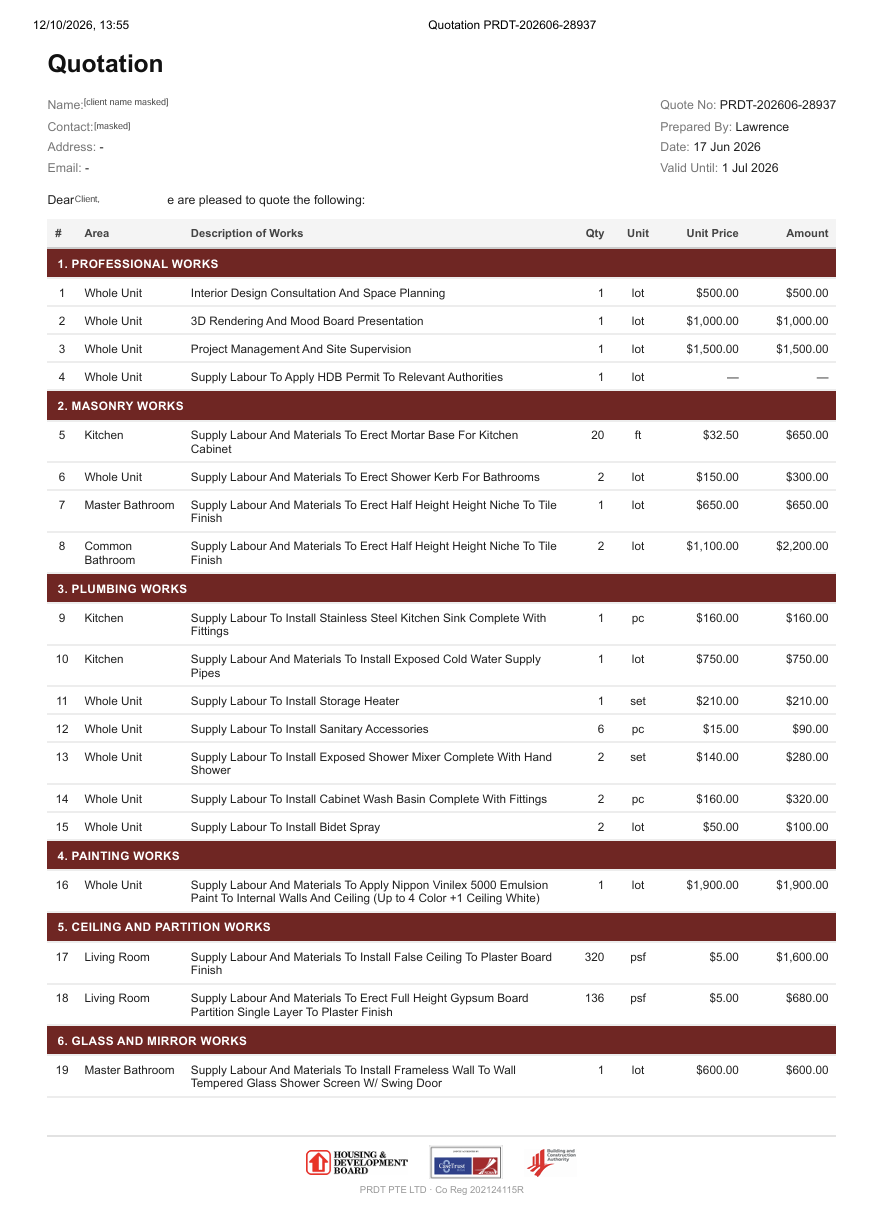
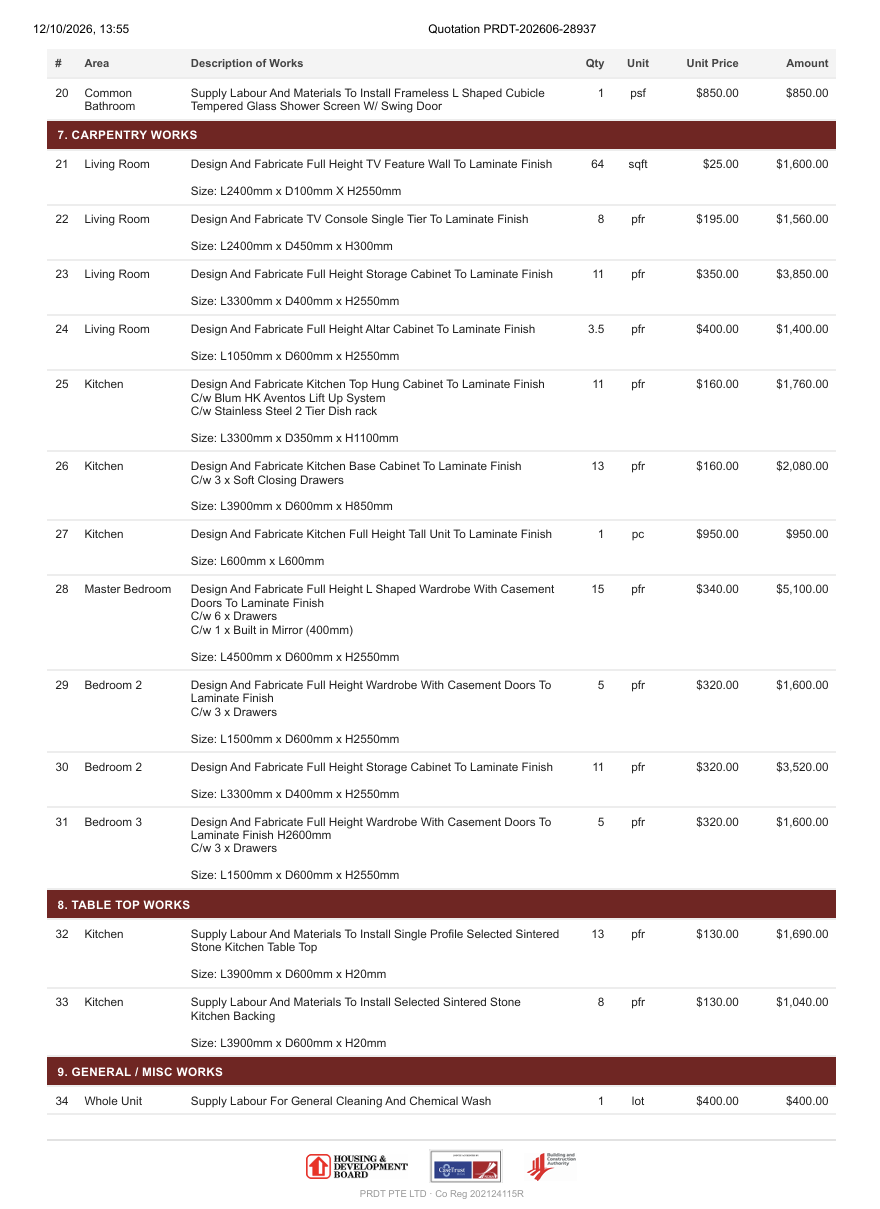
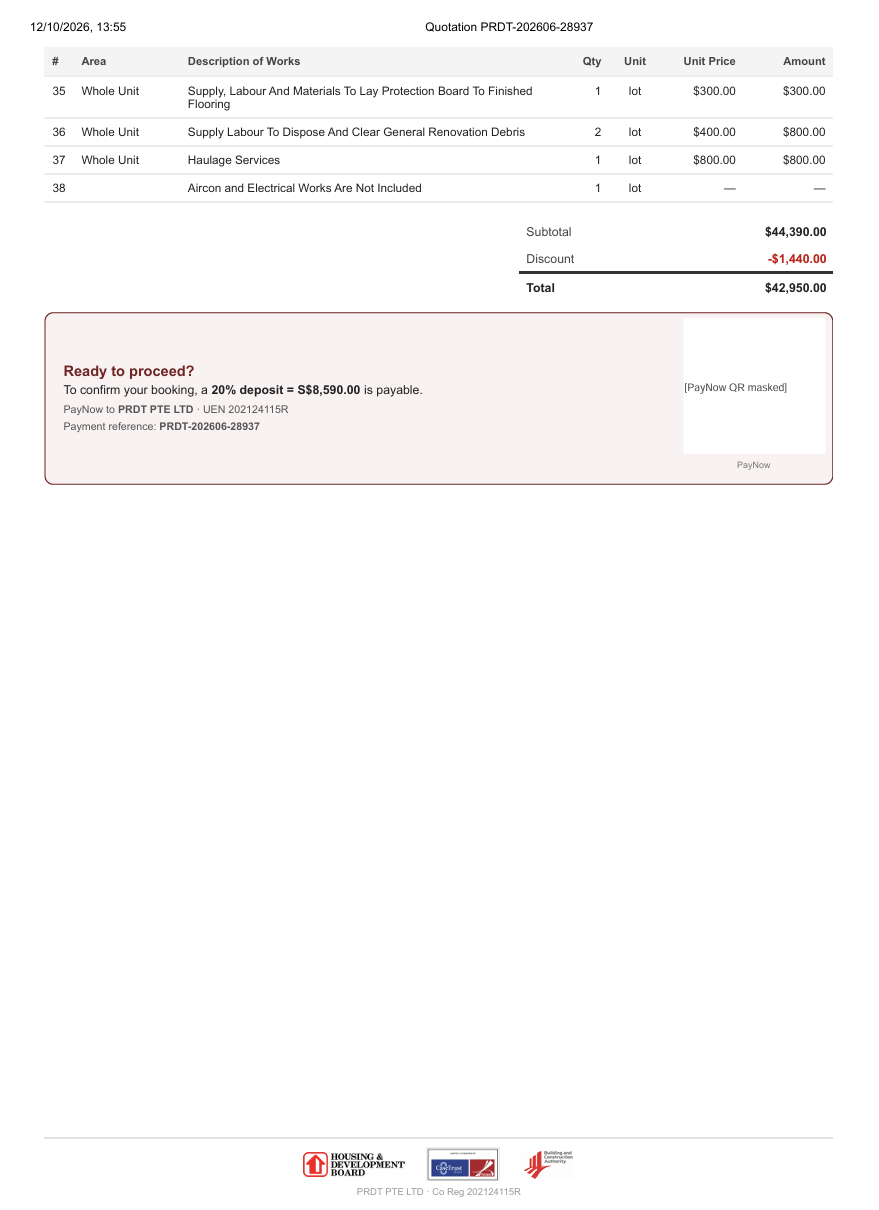
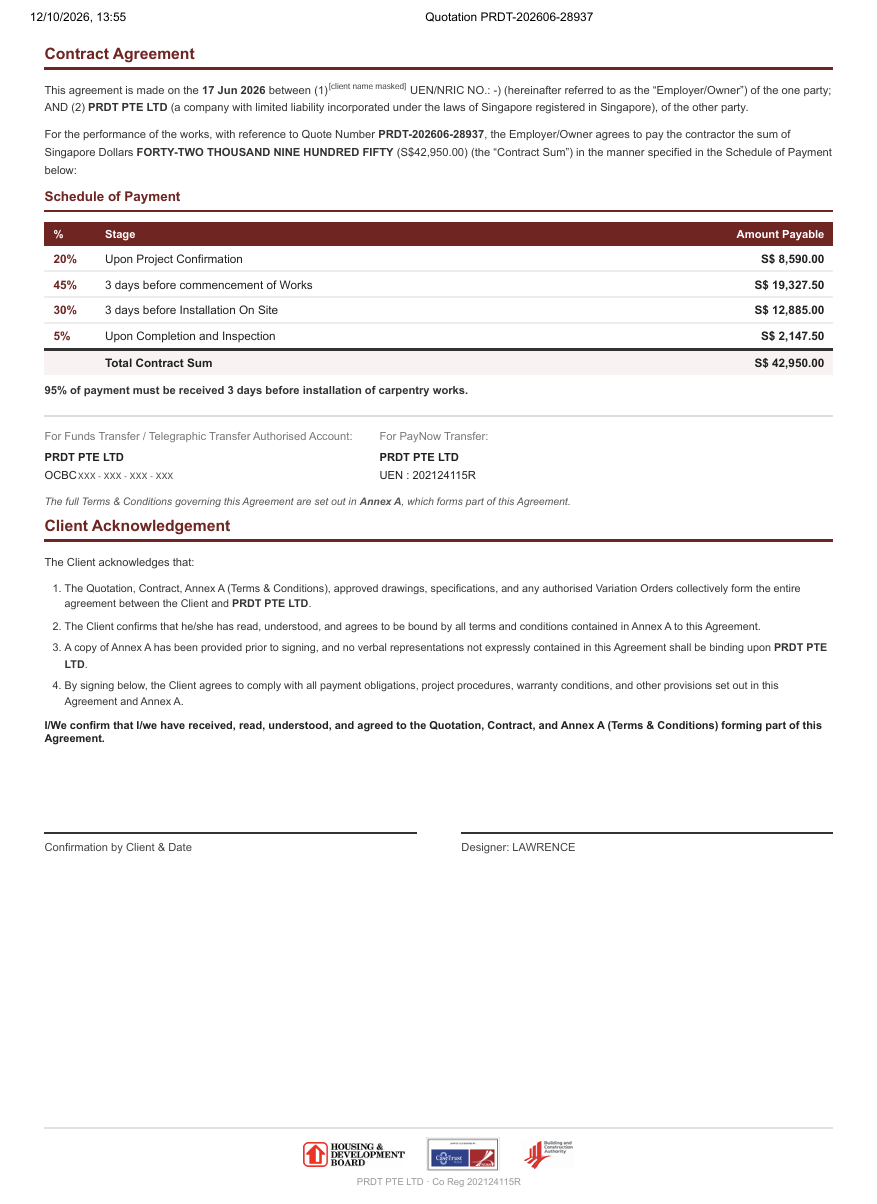
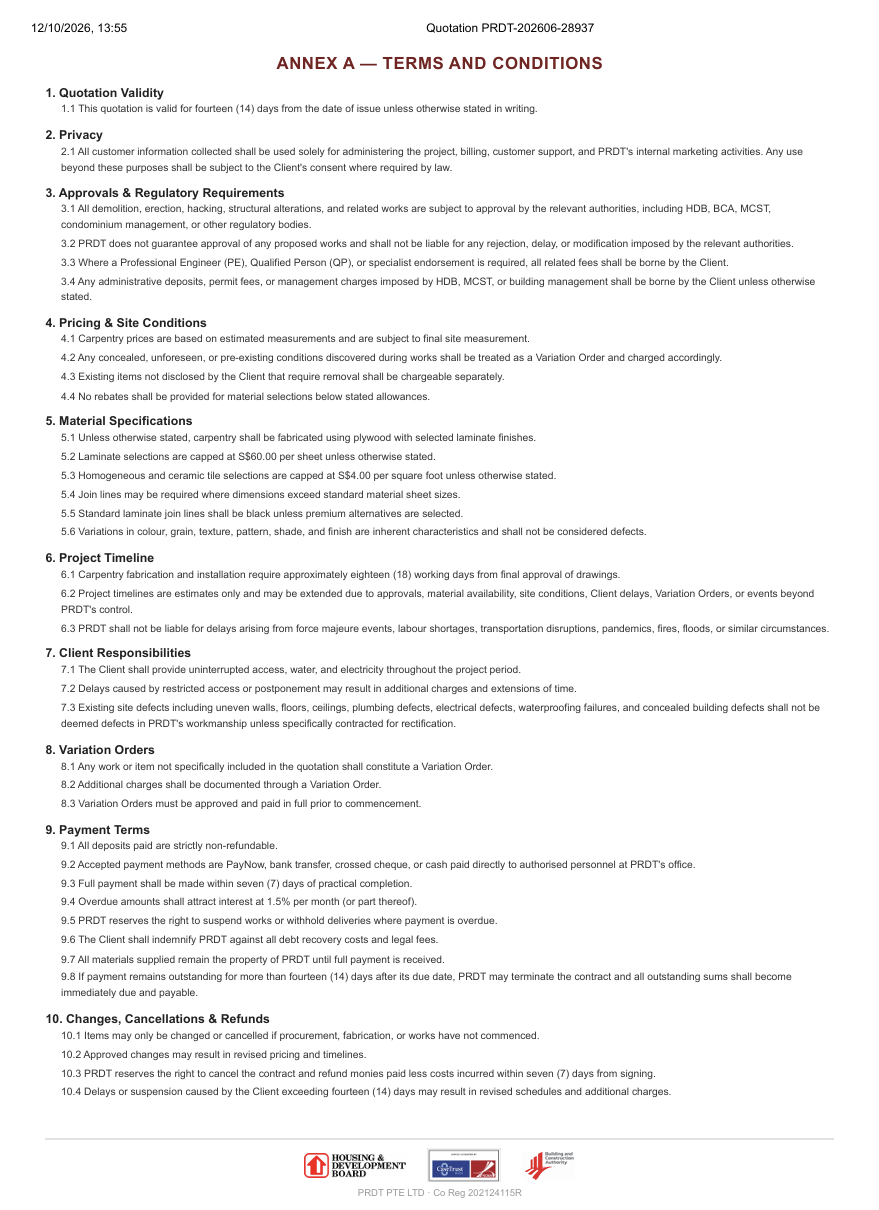
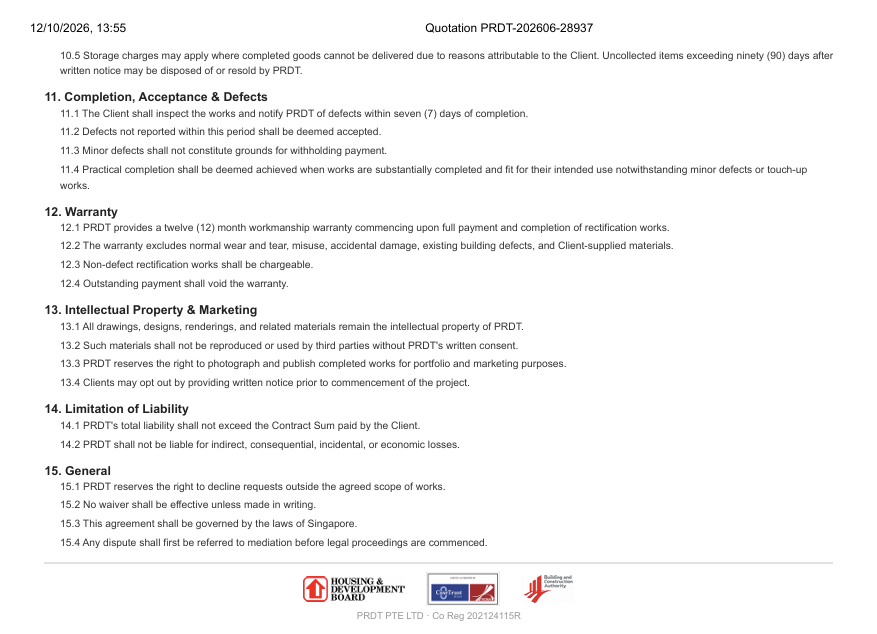
Using the above quote as an example, there are three things to note:
Other examples of add-on exclusions:
Ultimately, renovating a resale flat often requires a larger budget compared to a newer BTO flat. It's good practice to set aside a contingency fund to deal with unexpected issues like ageing wiring, plumbing problems, failed waterproofing and uneven surfaces.
While new BTO flats generally require much less demolition and fewer repairs, homeowners should check which fittings are included, understand bathroom renovation restrictions and (where possible) allow HDB to rectify outstanding defects before work begins.
By understanding the differences and planning for potential delays, homeowners can hopefully make more informed decisions and avoid being blindsided by unexpected costs, as well as falling victim to renovation scams.
[[nid:747949]]
This article was first published in Stackedhomes.