

'It's a part of who I am': Meet the youths keeping Singapore's heritage alive

Adrian Ong, 34, was one of six recipients of the Outstanding Youth in Intangible Cultural Heritage Award 2025.
PHOTO: AsiaOne/Fitri Salleh

 PUBLISHED ONMarch 19, 2026 6:55 AMBYBhavya Rawat
Depending on who you ask, the term "heritage" has a variety of definitions — some see it as history, while others see it as an integral part of their identity.
For some youths in Singapore, heritage lives on through various traditions and cultural practices, such as art forms which are passed down from generation to generation.
One such person is Adrian Ong, 34, whose earliest memories regarding Chinese puppetry include his late grandmother.
When he was a child, she would regularly bring him to performances by a Chinese opera troupe at an open field in Hougang.
After he graduated from the Institute of Technical Education, Adrian's grandmother was a major source of encouragement for him when he started performing Chinese opera as well as practising Hokkien string and glove puppetry.
"She would ask me when my next show was, look at the photos and compliment my Chinese opera make-up. Even though she never directly said that she supported me, she showed it with her actions and by taking interest in my craft," he told AsiaOne.
"I think about my grandmother a lot when I perform and teach. She passed away about two years ago, but the support and encouragement she gave me keep me going."

When asked what sparked his interest in a traditional art form seldom practised by youths, Adrian said: "It was amazing that I could control a puppet with just my fingers and some strings to tell a story."
"Puppetry was a way for me to learn more about what life was like for our ancestors. It showed their values and wishes for the future, which helped me understand life back then better."
"It's a part of who I am as a Hokkien person and keeps me connected to my roots," he added.
Adrian is one of six recipients of the inaugural Outstanding Youth in Intangible Cultural Heritage (ICH) Award 2025, held by the National Heritage Board on Wednesday (March 18).
The award recognises those 35 and under who practise and promote traditions or living expressions that contribute to Singapore's heritage.
Besides a trophy and a certificate, award recipients have the option to tap into a $20,000 project grant, which can be used within the next three years to promote and teach their art form.
This award complements the existing Stewards of ICH Award, which recognises individuals and groups who promote ICH practices and have made outstanding contributions in their field.
Recipients of the Outstanding Youth in ICH should also showcase leadership skills and be a positive example to other youths through regular community engagement efforts to raise awareness about their fields, according to NHB.
Another youth who received the award is Banupriya Ponnarasu, who has two decades of experience in Indian dance forms such as Bharatnatyam and Kathak.
Describing herself as a creative who "wears many hats", the 35-year-old told AsiaOne that one of her primary roles is a dance educator at Mandala Arts, which she founded over six years ago, and at Ministry of Education schools.
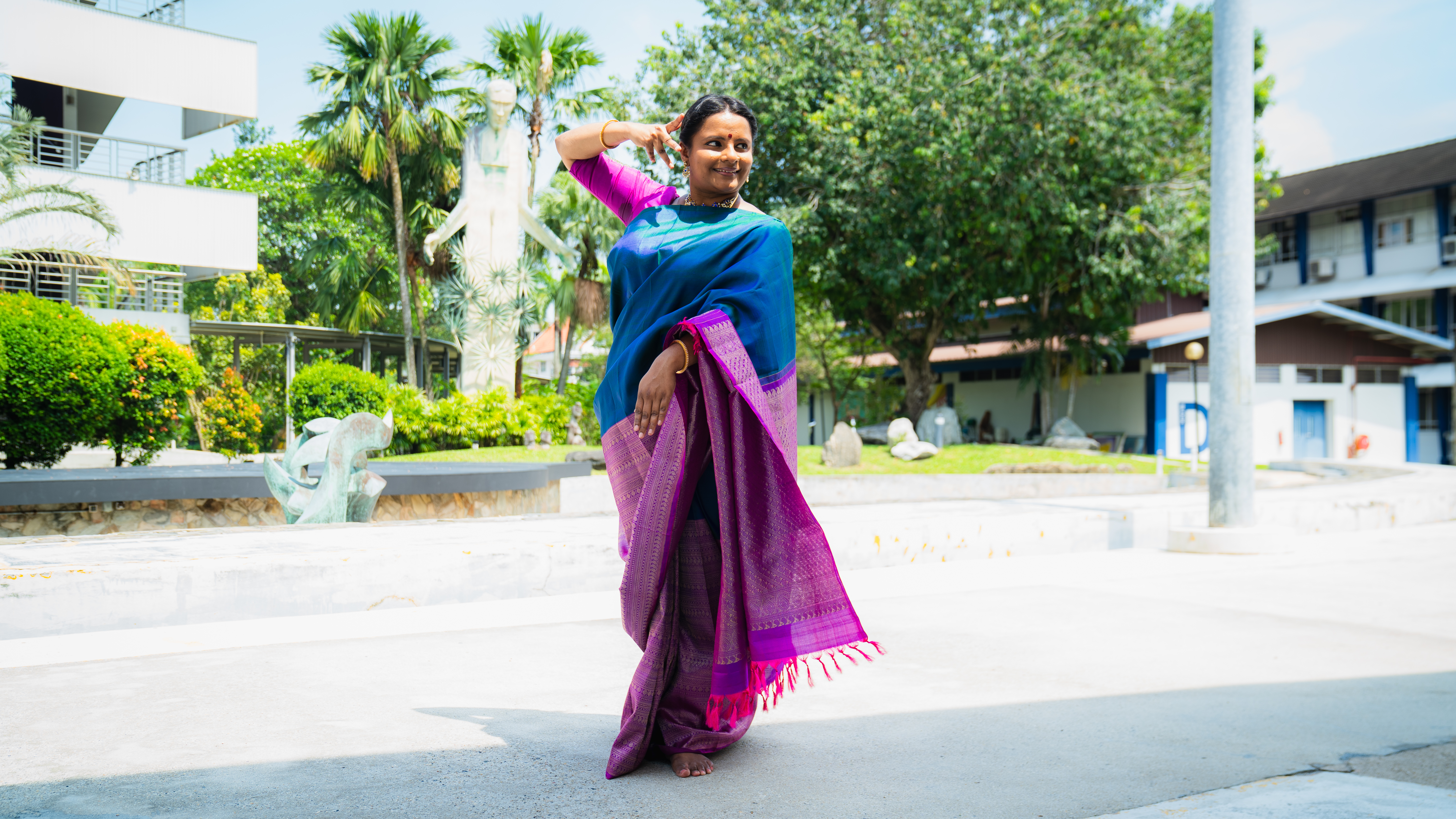
When asked how educators like her can encourage youths to take an interest in ICH fields, Banupriya stressed the importance of being adaptable and "changing with the times".
Noting that the younger generation tends to have a shorter attention span and a greater need for instant gratification, Banupriya said the traditional or "old" way of teaching might no longer work.
"Tradition itself, or cultural art forms, have actually evolved and grown over time — and withstood the test of time," she explained, adding that educators have to find new methods to engage youths and develop their passion.
Banupriya also said that learning is a two-way street, and youths have to be open to understanding more about ICH for these art forms to be preserved and passed down.
Addressing youths who wish to pursue their passions, Banupriya said: "Never do something because you want an award, do it because it has a huge purpose for you."
"This way, that fire in the belly will keep you going and you will want to continue to do more for your work."
Banupriya's call for adaptability was echoed by another recipient of the Outstanding Youth in ICH Award, Syafiqah 'Adha Sallehin.
Syafiqah is a musician who performs and teaches Malay Asli music (Traditional Malay music) using Western classical instruments.
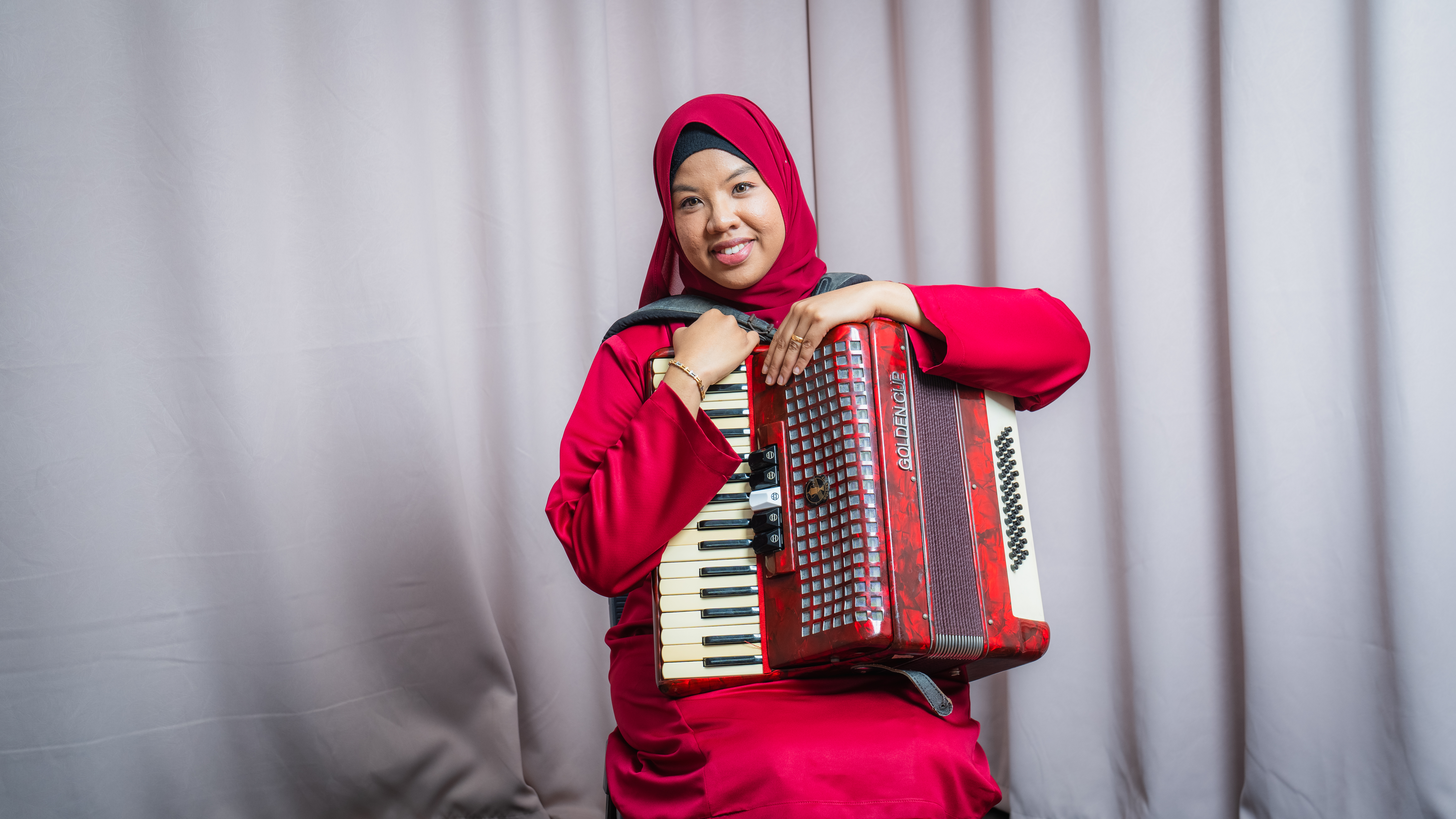
While the 35-year-old first started out with piano lessons in primary school and enrollment in the Music Elective Programme in secondary school, she has had an affinity for music for as long as she can remember.
"It was my calling," she told AsiaOne, adding that her parents would find her humming and moving to songs on the radio when she was a toddler.
Syafiqah considered pursuing Malay Asli music in her teens after she watched a traditional Malay band play at her sister's wedding, taking an interest in the accordion because it "looked like a piano".
She has been playing the accordion for over a decade, and now mentors young students in the Malay Fusion Ensemble at the School of the Arts and Gendang Akustika's junior ensemble — all of whom play Malay Asli music using Western classical instruments such as the violin, harp and piano.
"It's a way of modernising this traditional art and making it accessible to more people," she said.
"In fact, the accordion is not a Malay instrument. The local Malay people adopted it into their culture. So why not expand Malay music in the same way?"
The Outstanding Youth in ICH Award was presented by Acting Minister for Culture, Community and Youth David Neo during a ceremony held at the Stephen Riady Auditorium @ NTUC on Wednesday (March 18) evening.
In his opening address, the minister said that through this award, the government hopes to foster youth engagement and participation in promoting and safeguarding intangible cultural heritage in Singapore.
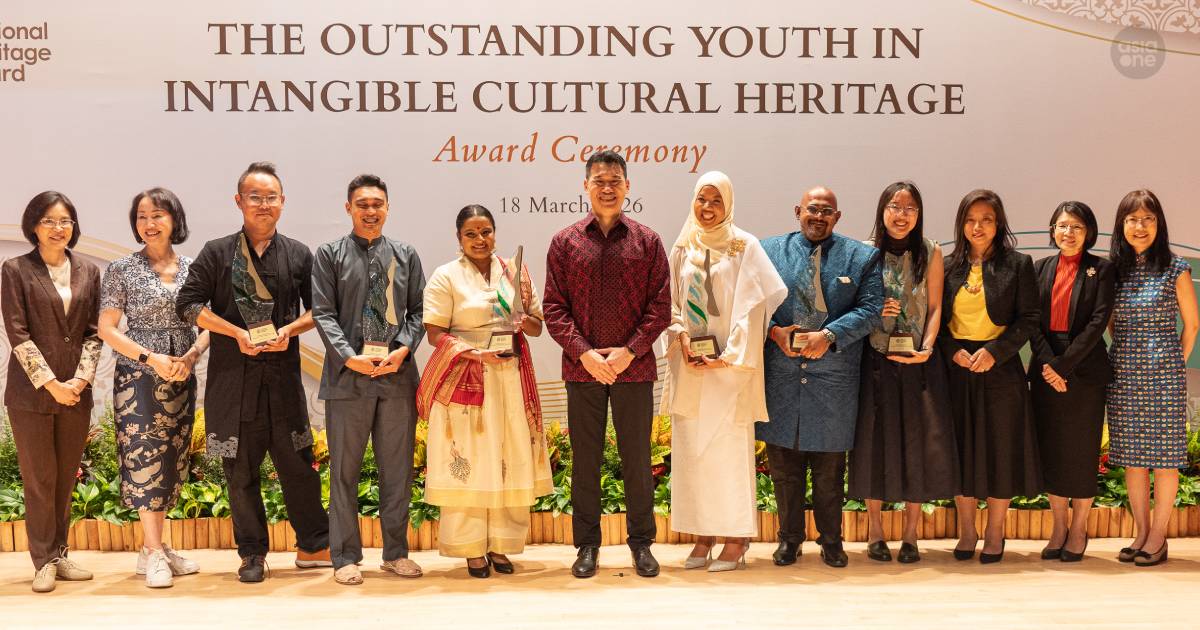
Intangible cultural heritage is "the living part of our culture that gets passed on from generation to generation," he said.
"It connects us to our families and our communities. And in Singapore's context, our multicultural and multi-religious identity is a key part of our intangible cultural heritage."
"Singapore's multicultural tapestry is the foundation of our national strength and identity," he added.
Meanwhile, NHB's director of heritage policy and research Melissa Tan said that the Youth in ICH Award is a meaningful step towards nurturing the next generation of cultural custodians.
"Through the award, we celebrate not just achievement, but more importantly, passion and effort."
[[nid:731437]]
No part of this article can be reproduced without permission from AsiaOne.
bhavya.rawat@asiaone.com