Plug-in hybrid electric vehicles (PHEVs) are a middle ground solution for those who want to experience electric motoring, but are not quite ready to commit to giving up internal combustion engines (ICEs) fully.
Where PHEVs differ from regular hybrids is in their batteries. PHEVs have bigger batteries which can be plugged in and charged like an electric vehicle (EV).
This allows PHEVs to be driven in pure electric mode for longer distances than regular hybrids. In theory, if you don't cover long distances regularly, you'll probably end up driving it in electric mode most of the time.
But if you do need to go on the occasional long road trip, the engine in a PHEV is there to cover the distance. You can then drive it like a normal car without worrying about it running out of range and needing to find a charger.
PHEV technology has been around for a while, but they've never really been a popular choice in Singapore until recently. It appears that more Singaporeans are now becoming more aware of the benefits of PHEVs, and there have been several such models launched here over the past few months. Here are five to consider:
BYD Sealion 6
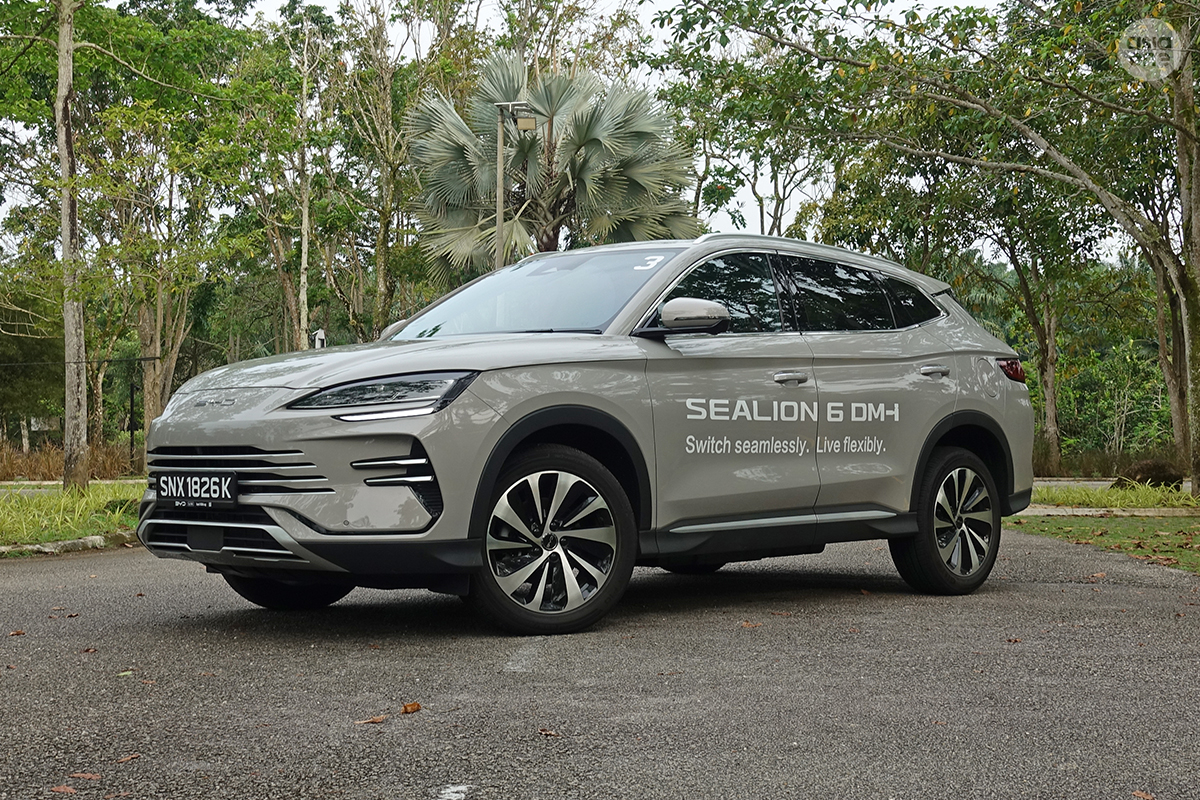
What is it? BYD's first PHEV model for Singapore, the Sealion 6, is an SUV that should suit many drivers here.
Why is it worth considering? If you want to jump on the BYD bandwagon but are not yet ready to embrace the EV life yet, then the Sealion 6 is the PHEV for you.
BYD Sealion 6 1.5 DM-i
- Battery size: 18.3kWh
- Electric range: 80km
- Total range: 1,100km
- Combined power: 218hp
- Combined torque: 300Nm
We drove the Sealion 6 on a road trip across Malaysia, and found it adequate for the task. It's mostly comfortable and refined, though it does struggle if you're going uphill with a full load of passengers and luggage.
The interior of the Sealion 6 is spacious and well-equipped, but it doesn't feel quite as premium as its fully-electric Sealion 7 sibling. It does, however have lots of storage, as well as useful features like two wireless chargers and a panoramic sunroof, so it is still a relatively nice space to be in.

As a PHEV, the Sealion 6 is very much up for the job. It's not spectacular or sparkling in many areas, but it's functional for its intended purpose.
Its asking price of $233,388 with COE (as of October 2025) is perhaps slightly on the higher end, but at least you'll get a competent PHEV from a trusted brand like BYD, so you won't go far wrong there.
Jaecoo J7

What is it? Jaecoo's J7 PHEV offers rugged looks with spectacular long range capability.
Why is it worth considering? One of the biggest potential benefits of a PHEV is their ability to offer impressively long driving ranges, if the electric drivetrain and combustion engine is properly engineered to do so.
The Jaecoo J7 is the finest example of this, with the car having one of the longest claimed ranges of any PHEV on the market currently.
Jaecoo J7
- Battery size: 18.3kWh
- Electric range: 90km
- Total range: 1,200km
- Combined power: 341hp
- Combined torque: 525Nm
You could feasibly drive from Singapore to Thailand in the J7 on a full charge and tank of fuel, if you adopt a conservative driving style.
But that would mean restraining yourself from using the J7's generous power, which gives the car a surprisingly sprightly drive. Overtaking is effortless in the J7, and there's plenty in the reserve to cover lots of ground at speed.
That said, it does have its imperfections. The car is mostly refined and quiet, but the suspension feels overly soft most of the time, yet oddly bumpy when going over rough surfaces.
It's not the most dynamic handler, but that is to be expected for an SUV like this. The brakes too can be improved, with the pedal feeling inconsistent in its application.
As an SUV, the J7 definitely hits the mark. Its blocky design, with its large chrome grille up front, gives the car an imposing stance. Together with its slim headlights and taillights, the J7 feels almost like a mini Range Rover.

The interior follows the minimalist style of many Chinese cars today, with the dashboard dominated by the large 14.8-inch touchscreen set in portrait orientation. The software itself is relatively easy to use, and that goes a long way to mitigate the lack of physical buttons.
It's also extremely spacious, with lots of room in the back for passengers, along with a cavernous boot with 500 litres of capacity, expandable to 1,265 litres with the rear seats folded down.
The J7 may not be the most exciting car to drive, but it definitely fits the bill for those looking for a roomy and rugged-looking PHEV that can go the distance. For all that you're getting, the J7's asking price of $239,999 with COE (as of October 2025) almost seems like a steal.
Mazda CX-80
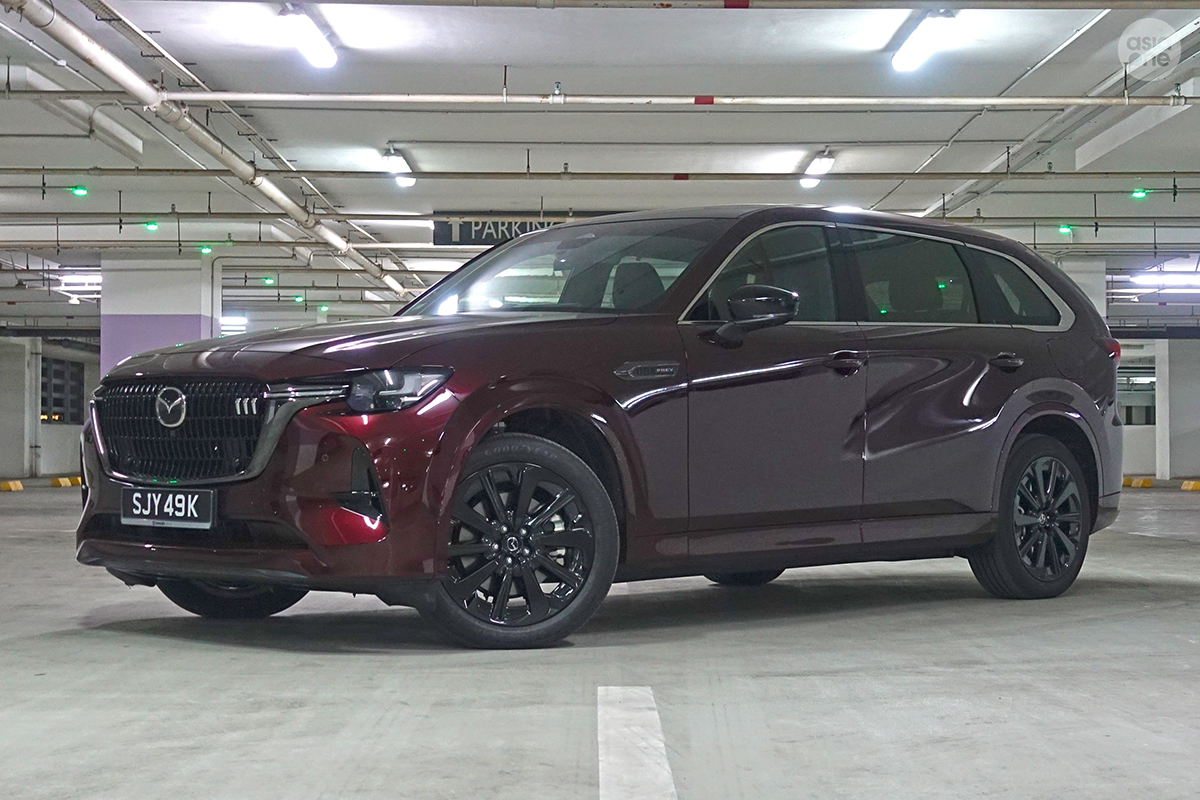
What is it? Mazda's first-ever PHEV for Singapore, the CX-80, combines seven-seater capability with a premium interior.
Why is it worth considering? The Japanese have not been as quick to embrace PHEV technology as other carmakers, and Mazda is one of only two Japanese brands to offer PHEVs on sale here, with the other being Lexus.
The CX-80 is Mazda's first foray into the PHEV game in Singapore, and at first glance, it looks like a seriously impressive offering.
Mazda CX-80 2.5 Luxury Sports
- Battery size: 17.8kWh
- Electric range: 60km
- Total range: Not available
- Combined power: 323hp
- Combined torque: 500Nm
Mazda does not provide a figure for the CX-80's full driving range, but perhaps that could be due to the way the system is set up.
While it can travel for around 60km on pure electric mode alone, most of the time, the car functions like a regular hybrid, switching between electric and petrol power as it deems most efficient.
It seems to always maintain some level of charge in the battery, and there's no option to drive using just the engine only. The constant toggling does appear to put quite a bit of stress on the engine, and you get the sense that the CX-80 feels more comfortable when the electric motor is in play.
Aside from that, the CX-80 is a pleasant drive. Power is delivered smoothly, and the car copes well enough at speed. It also handles fairly well for a large SUV, with its neutral poise that doesn't invoke too much drama.
Most impressively, the CX-80 offers an excellent ride quality, with the suspension smoothing out all but the harshest of road surfaces without a fuss.

The interior gives off an upmarket ambience, with soft leather everywhere, and premium materials like wood and chrome to give the car a luxurious look. There's a pleasant old-school charm to it too, with no large touchscreen, and lots of physical buttons everywhere.
Space is plentiful for those in the second row, while the seats can be folded down easily for access into the third row. Most people should be able to fit in there comfortably, but taller people might find it a bit of a tight squeeze.
The CX-80 is one of the few seven-seater PHEVs on the market, which makes it a great choice for those with larger families. However, its price tag of $368,888 with COE (as of October 2025) is rather exorbitant, even with its excellent all-round qualities.
Volvo XC60 T8
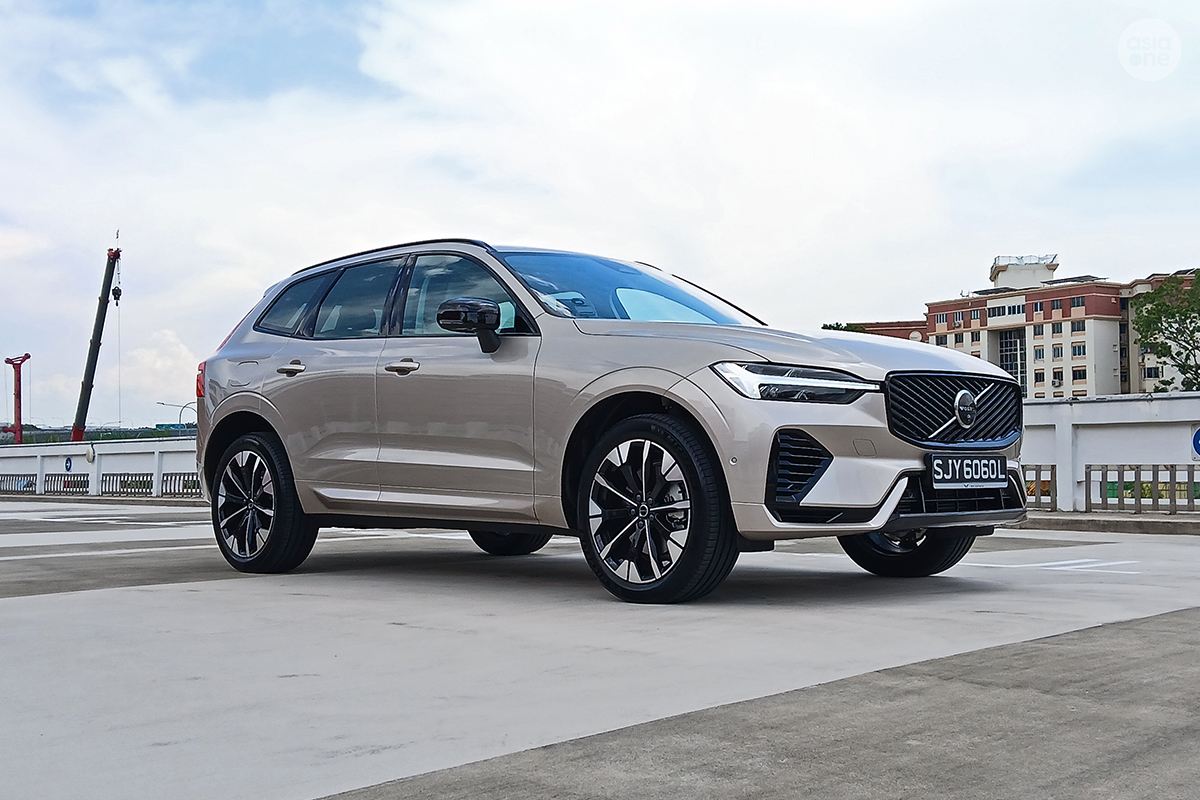
What is it? Volvo's facelifted XC60 PHEV brings with it updated tech and lots of power.
Why is it worth considering? The XC60 is Volvo's best-selling model of all time, and a drive in the new facelifted version demonstrates why.
The T8 plug-in hybrid model is arguably the best version of Volvo's popular SUV, thanks to its generous power and easy-going nature.
Volvo XC60 T8 Plus
- Battery size: 18.8kWh
- Electric range: 67km
- Total range: Not available
- Combined power: 455hp
- Combined torque: 709Nm
Like the Mazda CX-80, Volvo does not state a figure for the car's total range. But that's probably because the XC60 T8 appears to be built more for performance than efficiency.
The car is more powerful than a base model Porsche 911 Carrera, and it nails the 0-100km/h sprint in just 4.9 seconds.
It does so with aplomb too, with the engine giving off a soulful rumble as you floor the accelerator and leave traffic behind.
Handling-wise, the XC60 has never been the most engaging SUV to drive. Instead, it strikes a fine line between comfort and sportiness, and the car behaves with a well-mannered assuredness that inspires confidence if you don't push it too hard.

The interior of the XC60 has been mildly updated, with the key change being the new 11.2-inch portrait-style infotainment screen that runs on Google's Android Automotive operating system.
It's surprisingly easy and intuitive to use, but disappointingly, Apple CarPlay is only available via a wired connection.
Other than that, the interior is pleasant enough to be in, with neat touches like the gear selector crafted from crystal glass.
At $379,000 with COE (as of October 2025), the Volvo XC60 T8 is not exactly cheap. But given its explosive power available on tab, it's probably worth it if you want a practical PHEV SUV with sports car performance.
Land Rover Defender 110 PHEV
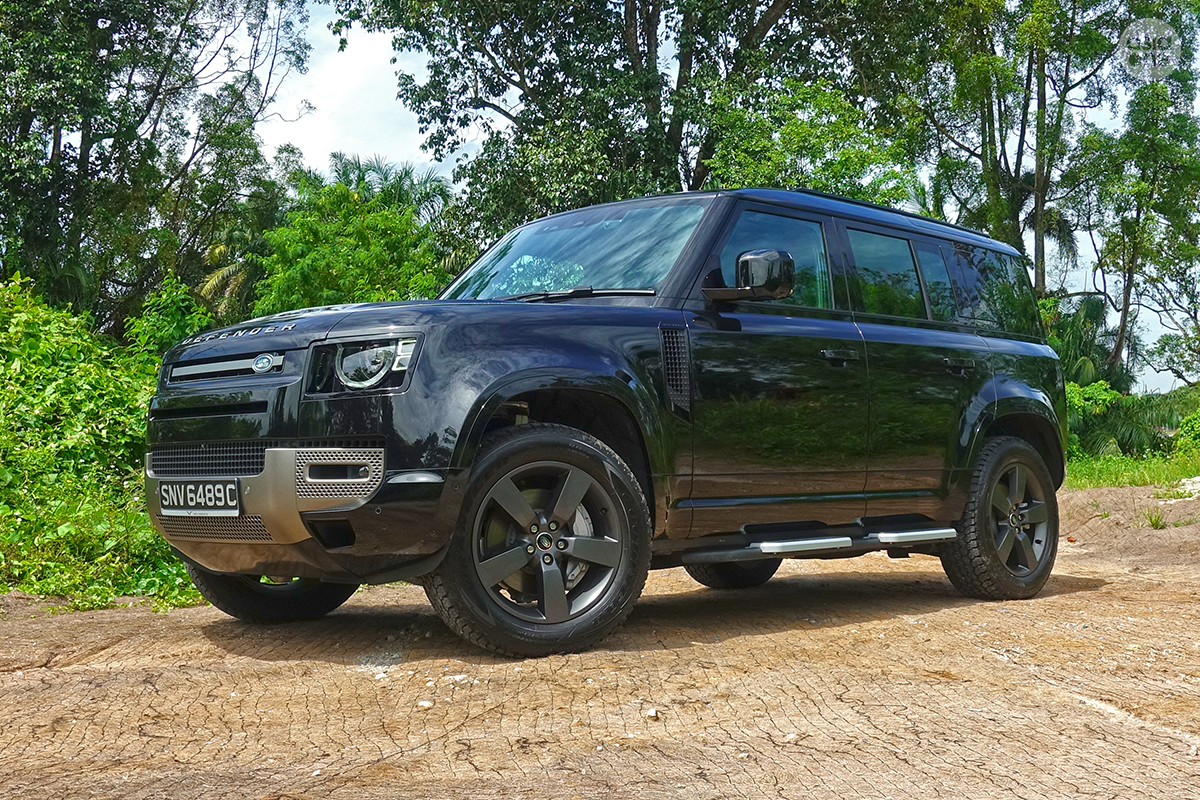
What is it? Land Rover's iconic Defender off-roader gets a plug-in hybrid drivetrain for the first time.
Why is it worth considering? Of all the cars available out there, the Land Rover Defender is probably the one you'd least expect to come with a plug-in hybrid drivetrain.
After all, this is a car that is supposed to be able to climb mountains and cross rivers effortlessly as it tackles the roughest terrain imaginable. After all, where are you going to find a charger out in the wilderness?
And yet here we are, and it's a sign of the times that even the Defender now has a PHEV variant.
Land Rover Defender 110 2.0 X-Dynamic HSE
- Battery size: 19.2kWh
- Electric range: 38km
- Total range: Not available
- Combined power: 296hp
- Combined torque: 625Nm
Compared to most of the newer PHEVs out there, the Defender has a relatively shorter pure electric range of just 38km. It's probably an indication of where the car's priorities lie, in the sense that while you can drive it in electric mode for a short while, you'll be utilising the petrol engine most of the time instead.
The 2.0-litre engine is not the most powerful around, but it does manage to haul the Defender's 2.5-tonne weight reasonably well. The car can get up to speed with relative ease, even though it's probably more at home on an off-road course than on the racetrack.

The rest of the car is like any other Defender model, with the same chunky styling and hardy interior that presents a tough look and yet is still suitably modern at the same time.
This is absolutely a car you can take camping in the forest and not worry about whether it will hold up against the elements.
Land Rover's local dealer Wearnes Automotive lists the Defender PHEV at $336,888 without COE, which actually makes it the most affordable Defender variant currently available.
However, at current COE prices, that means the final asking price will still be nearly $480,000 or so.
That's a lot of money definitely, but then again this is a different sort of PHEV, one that can do things that few others can.
[[nid:722532]]
ben.chia@asiaone.com
No part of this article can be reproduced without permission from AsiaOne.



