Once upon a time, an executive working his way up the corporate ladder would aspire to own something like a BMW 3 Series or a Mercedes-Benz C-Class as his first car. Indeed, the executive sedan has long been seen as a status symbol, and viewed as a first step on what is hopefully an upward trajectory on the path of success.
These days, however, sedans are mostly regarded as passe, and SUVs are now all the rage. Their larger size and stature, along with their greater practicality, means that SUVs hold much more appeal over the traditional sedan, at least for the younger set of drivers.
For the rising executive, the premium mid-sized SUV would probably be the modern-day equivalent of the 3 Series of generations past. But even among the offerings from the usual suspect brands, each one holds their own unique appeal.
The best-seller — BMW X3 xDrive20 M Sport
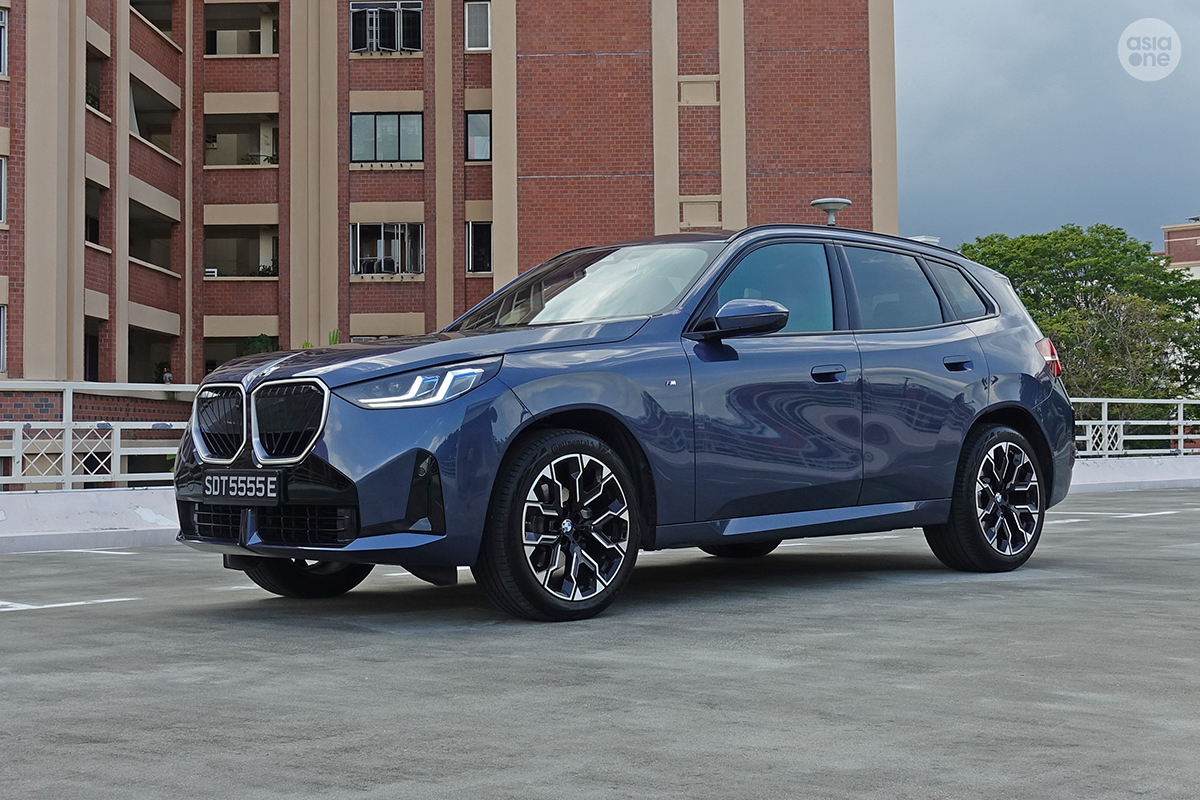
Although the 3 Series has long been BMW's best-selling model worldwide, the X3 actually emerged on top of the brand's sales charts in 2023.
While the 3 Series has since regained the crown, it only serves to illustrate how much the market has shifted towards SUVs, and X3 is certainly a very important model for BMW indeed.
The latest fourth-generation X3 was launched here at the tail end of 2024, and its mission is to cement its position as BMW's most popular SUV. With more than 2.5 million X3s sold over three generations, the newest version definitely has a lot to live up to.

It certainly looks the business, with its sharp and clean-cut lines that embraces the minimalist style that seems to be trendy nowadays.
The flat surfaces and slim lighting elements mark a departure from the chunky look of its predecessor, while the illuminated grille does give the car plenty of presence, especially at night.

It's the same story inside too, with the dashboard dominated by the large double screens, which BMW calls the Curved Display, with most functions accessed via the 14.9-inch central touchscreen.

The cabin is further highlighted with the extensive ambient lighting, which BMW dubs the Interaction Bar. Depending on your point of view, it either looks classy or tacky, but there's no doubt that it is certainly a talking point.
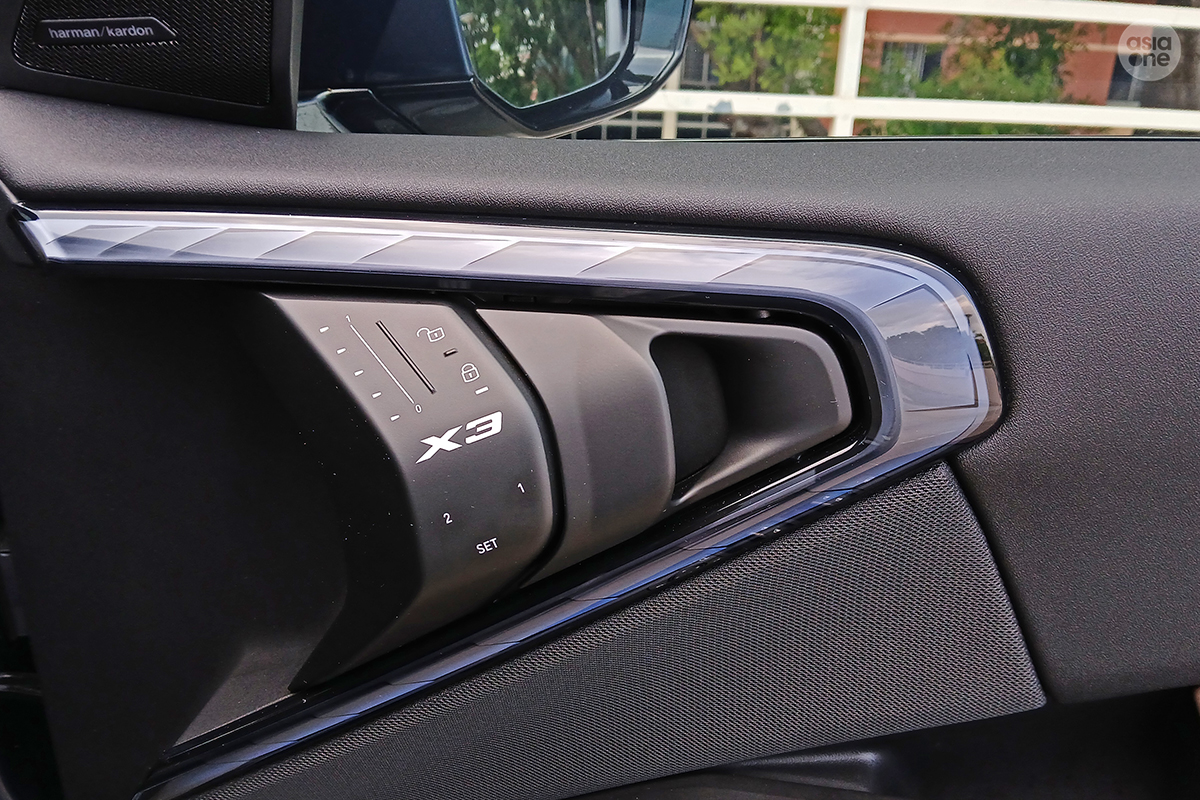
A particularly jarring element though is the plastic panel on the door which contains the control for the air con vents and the buttons for the memory seats and to lock and unlock the door. It looks quite out of place in a premium car like this, and the plastic material feels a bit cheap to the touch.
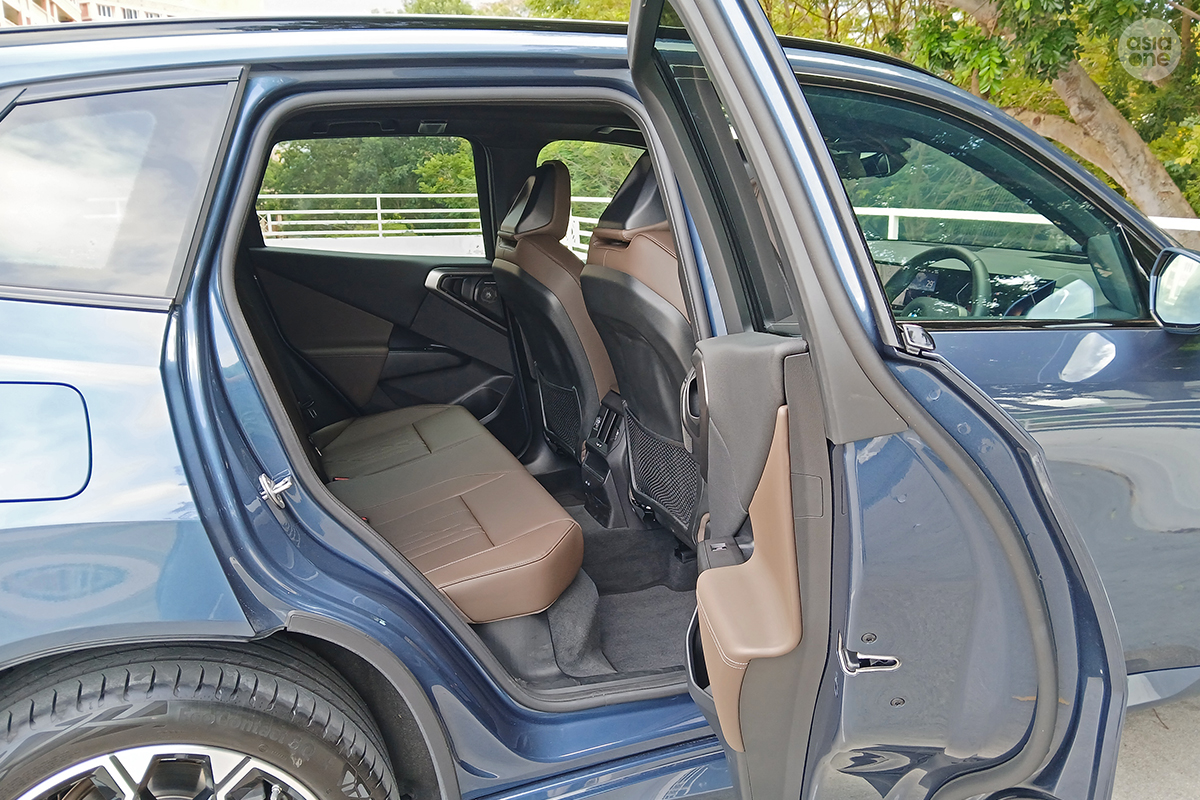
At the rear, the X3 offers plenty of space, although the middle passenger does have to contend with the rather high transmission tunnel which impinges on legroom somewhat. To compensate, there are a couple of USB-C charging ports down by the centre air con vents, which are mighty useful for charging your devices on long trips.
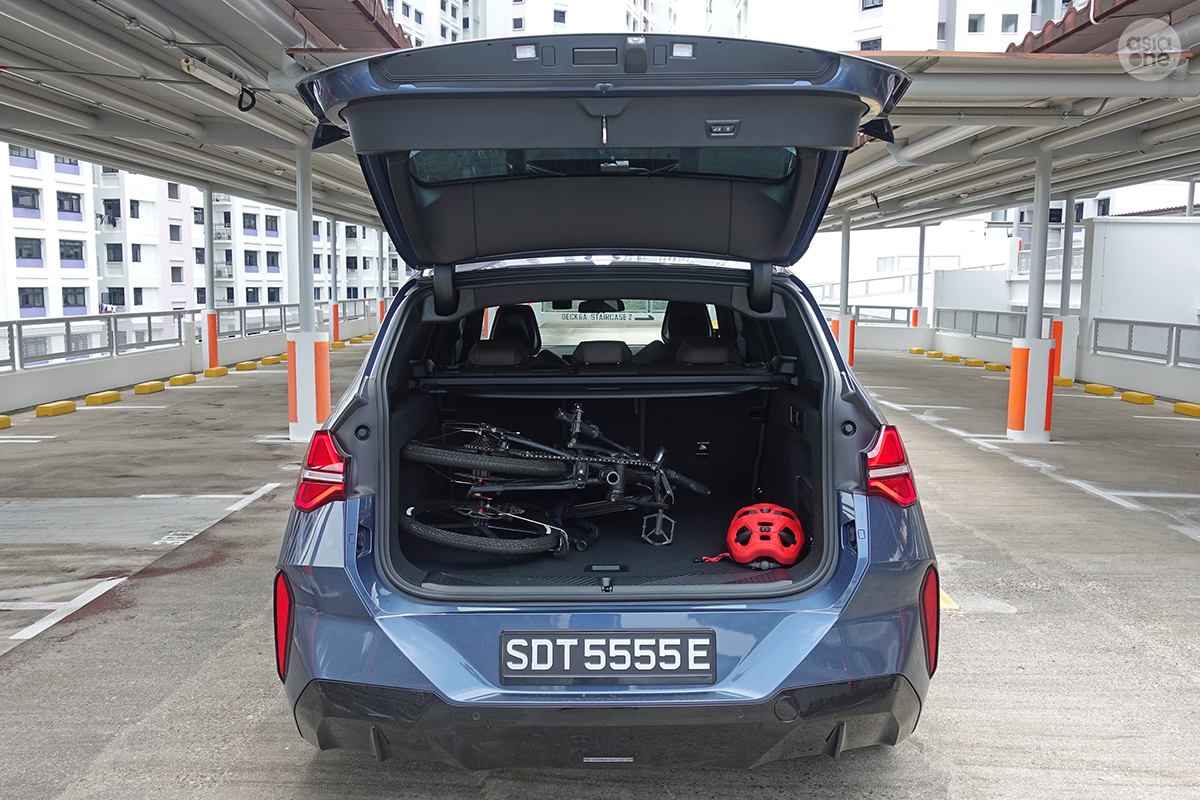
Boot space is a generous 570 litres, expandable to a massive 1,700 litres if you fold the rear seats down. Certainly enough to accommodate a couple of mountain bikes, or a weekend haul from Ikea.

For Singapore, BMW currently offers the X3 in three flavours.
The base model is the X3 xDrive20, with a 2.0-litre turbocharged engine that produces 190hp and 310Nm of torque.
Then you have the X3 xDrive20 M Sport featured here, which uses the same engine, but adds an M Sport suspension and 20-inch wheels, along with a premium Harman Kardon sound system.
Those with a need for power, and have a bit more money to spend, would probably want to opt for the high-performance X3 M50 though, which we'll talk about later in this list.

But back to the X3 xDrive20 M Sport. While it does feature mild hybrid technology that assists with acceleration a little, it's quite clear at higher speeds that it struggles to move the nearly 2-tonne X3 along.
It is smooth for the most part, but push the engine hard and it protests with a loud drone that suggests you take it easy.

On the plus side though, the car does handle quite impressively for an SUV. It doesn't feel bulky or clumsy, and there is a nice balance that makes the X3 feel rather car-like when you push it through the corners.

A notable weakness though is the ride quality, with the M Sport suspension never really feeling comfortable or settled, especially over rough surfaces like construction zones. It's not really that big an issue under most circumstances, but it can get quite annoying sometimes. We suspect the regular non-M Sport X3 xDrive20 might fare a bit better in this aspect.
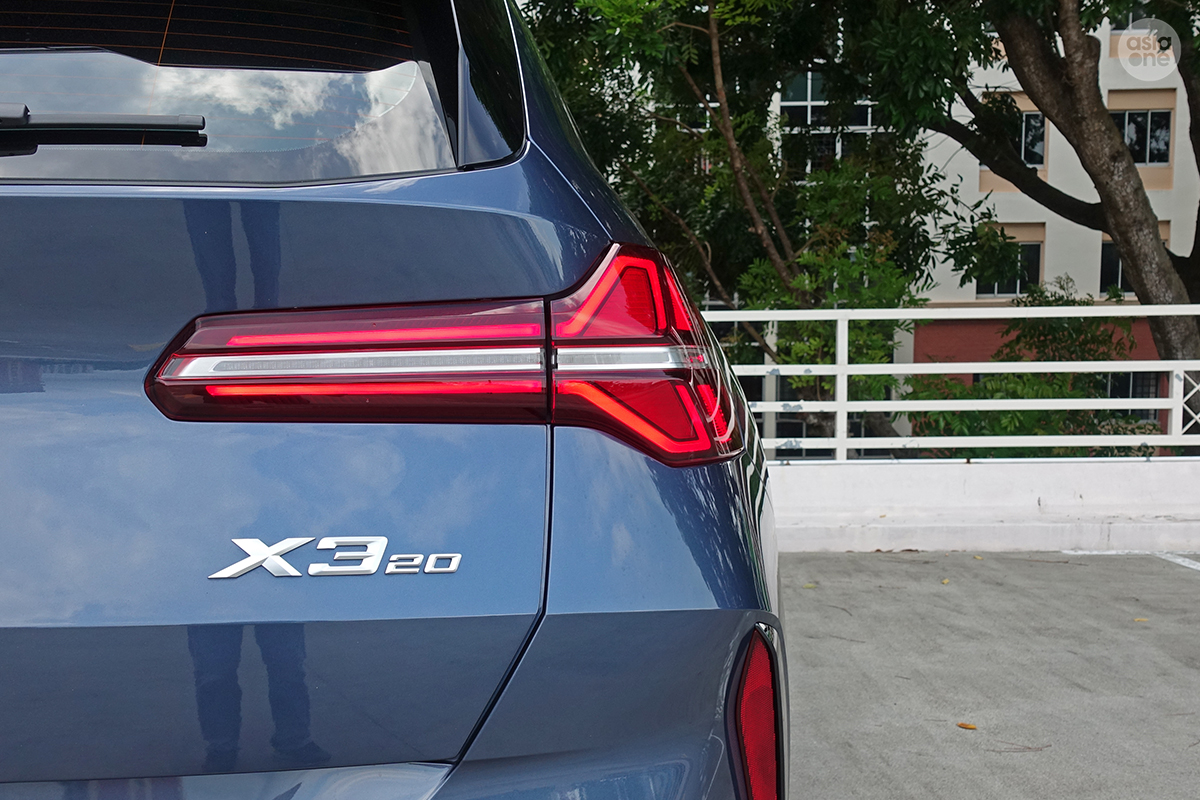
Nevertheless, the latest X3 does hold plenty of appeal for executives looking for a mid-sized SUV that's stylish inside and out, and still delivers an engaging drive.
The xDrive20 M Sport goes for $364,888 with COE (as at August 2025), but we would recommend checking out the non-M Sport variant which is 13 grand cheaper at $351,888 with COE, for it would probably be slightly more palatable for day-to-day use.
The plush and refined option — Mercedes-Benz GLC200
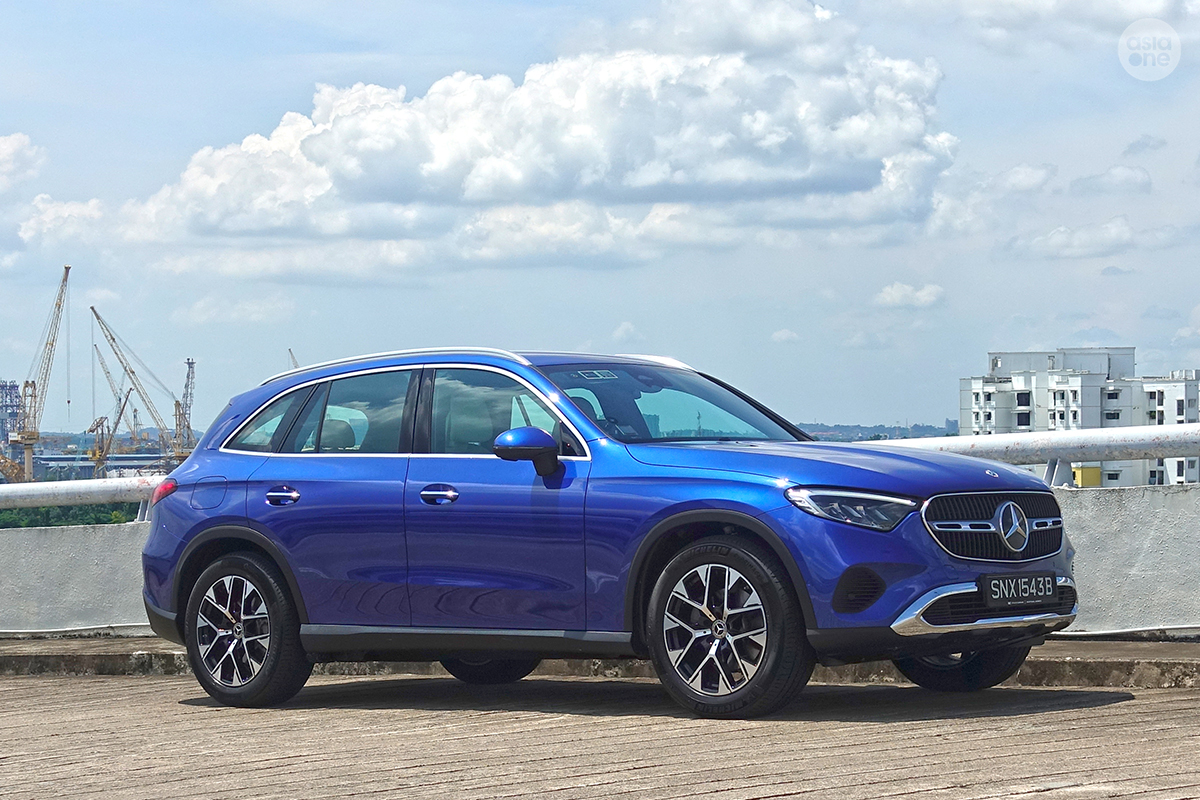
BMW's biggest rival is, of course, Mercedes-Benz, and the GLC is Merc's equivalent to the X3. While Mercedes-Benz doesn't quite sell as many SUVs as their competitor, it does at least offer a credible option for those who prefer the Three-Pointed Star.
The recently-introduced GLC200 goes straight up against the X3 xDrive20, and it matches its rival almost like-for-like in terms of spec.

Where the Merc differs though is how it approaches things. The GLC takes a slightly more conservative route, with its low-key design that, while handsome, doesn't particularly stand out from the crowd. The slim headlights and soft curves are neat, but otherwise the car looks fairly anonymous from afar.

The interior though feels like a particularly classy place to be in.
The wood and aluminium trim on the dashboard is certainly a few notches up from the plasticky feel of its rivals. The 11.9-inch central infotainment touchscreen, set in portrait orientation, is distinctive, and is actually quite ergonomically-designed, being within easy reach of the driver.

Back seat passengers enjoy plenty of space too, although it suffers the same fault as the X3 with the high transmission tunnel running down the middle. Like its rival, it also has two USB-C chargers down by the air con vents, a practical touch that seems to be a necessity for SUVs these days.

Boot space though is a noted strength of the GLC, with a massive 620 litres available, a significant increase over the X3. Fold the rear seats down and you get 1,680 litres of capacity, which is still impressively generous.
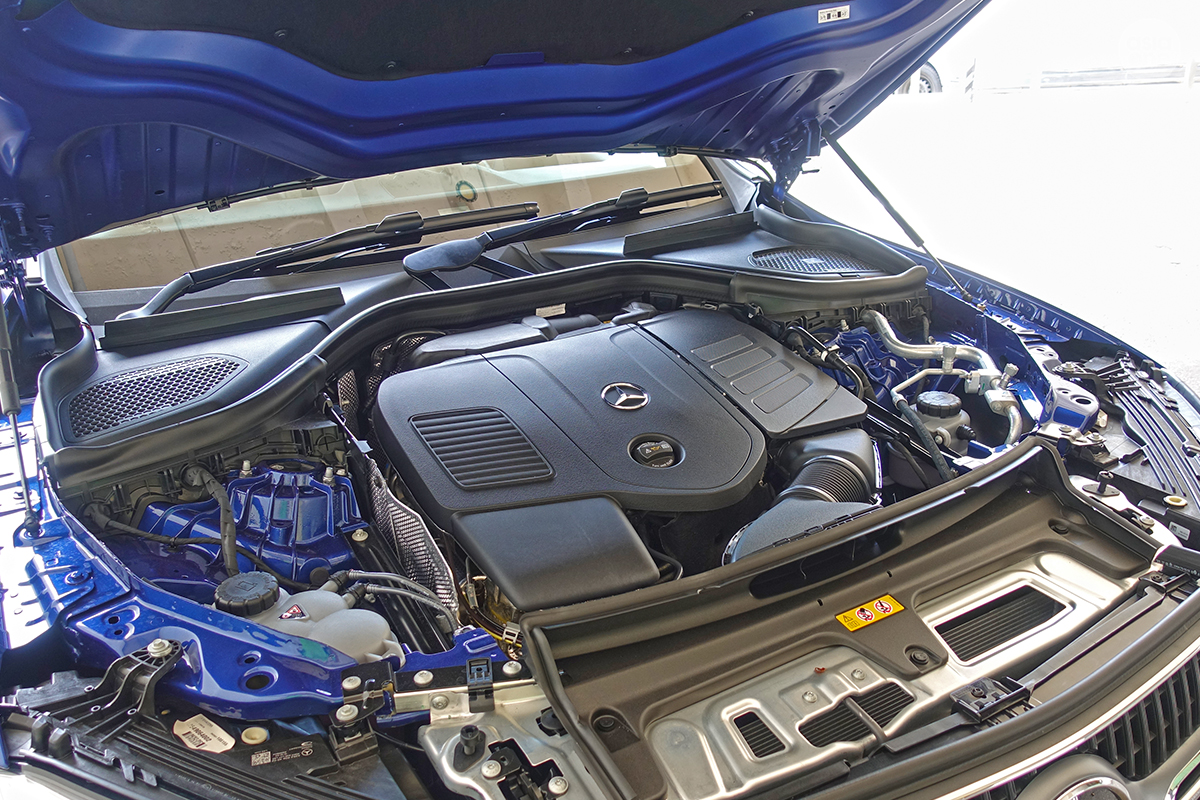
The base GLC model is the GLC200 tested here, which has a 2.0-litre turbocharged engine that produces 204hp and 320Nm of torque. It's just that slightly bit more over the X3, at almost the same weight, so don't expect this car to set any sort of performance records.
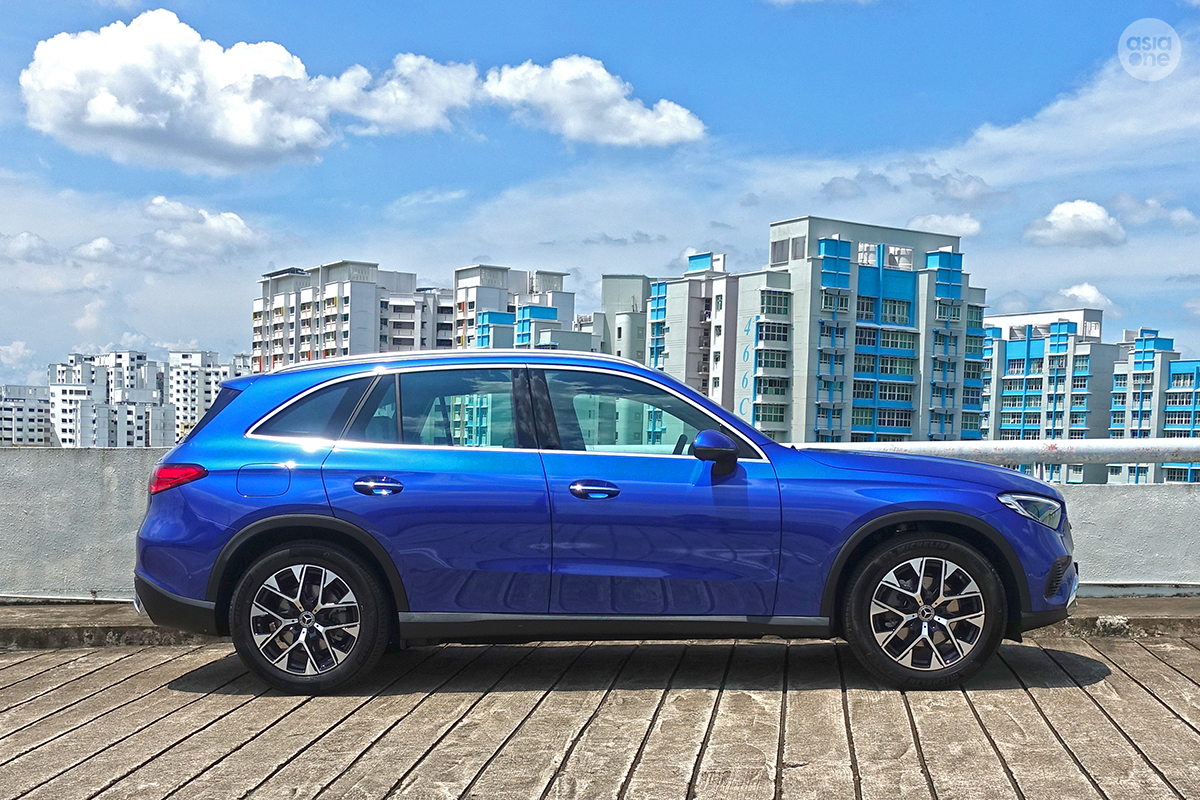
Instead, the GLC majors on refinement. Nearly everything, from its mild hybrid system to the nine-speed gearbox, feels seamless in its operation, and the GLC feels like a car that goes about its business with minimal fuss.
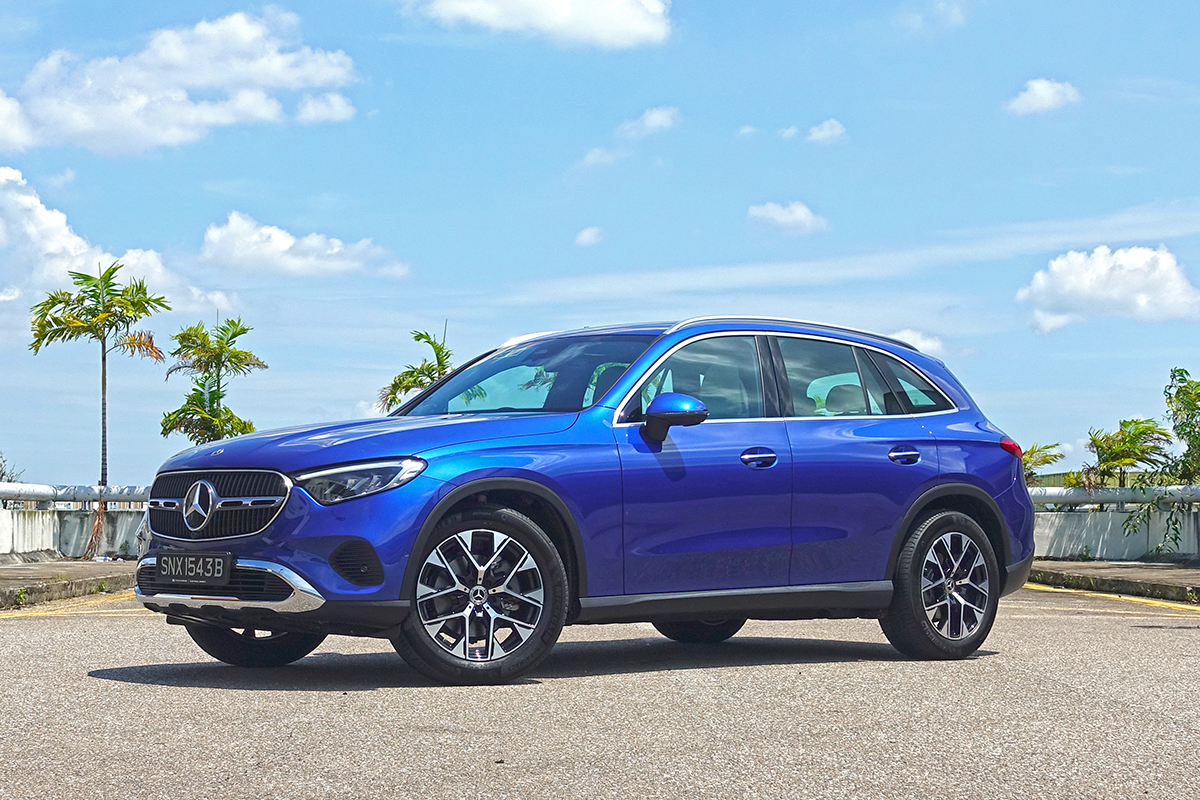
The engine builds up speed in a linear, progressive fashion, and doesn't implore you to rush it. It marries this with a well-damped ride that is extremely comfortable over most surfaces, and you get the sense that the GLC is a car that you can take on long trips and emerge at the end still fresh as a daisy.

For all that excellence though, the GLC200 does come with a hefty price tag, at $367,888 with COE (as at August 2025). But if comfort and refinement is what you're looking for in a premium mid-sized SUV, the Mercedes-Benz GLC is certainly hard to beat.
The classy plug-in hybrid — Jaguar F-Pace PHEV
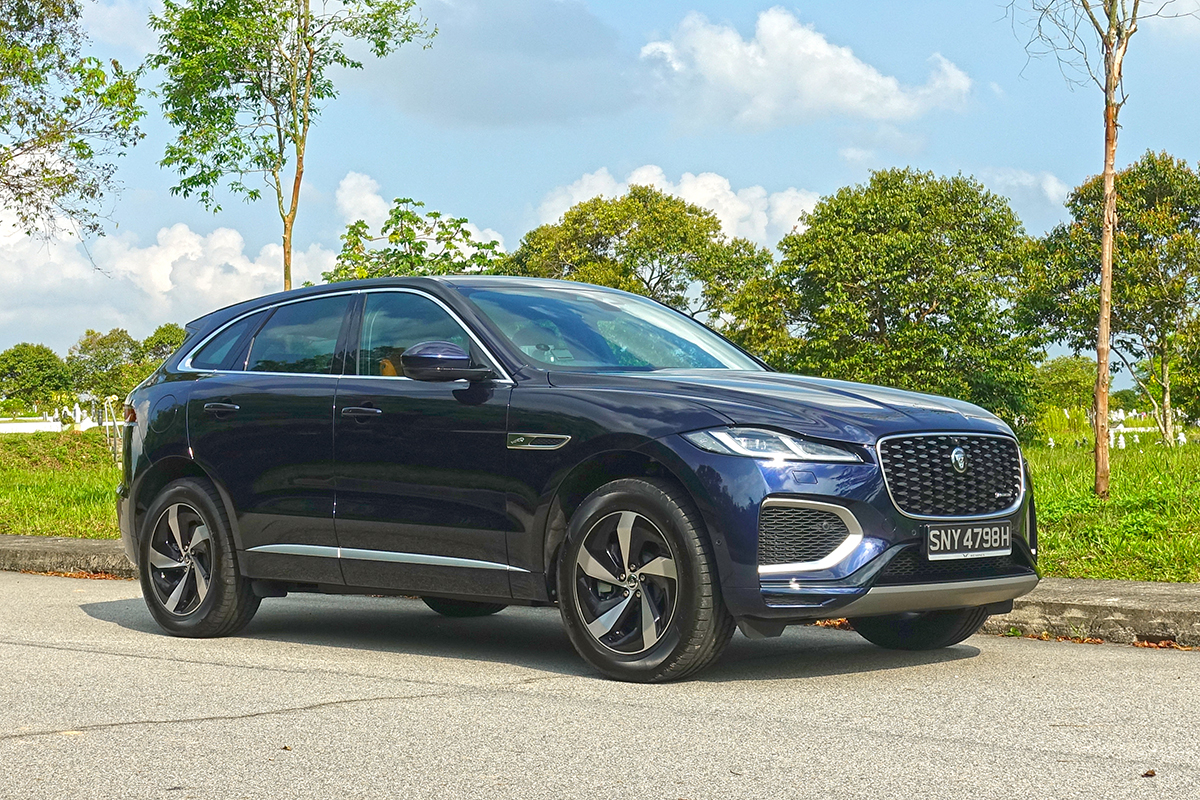
Jaguar is a brand that has fallen off the radar in recent years. It hasn't launched an all-new model since the I-Pace electric car in 2018, and most of its models are being phased out while Jaguar undergoes a major rebranding exercise.
For Singapore, its sole 'new' model left remaining to fly the flag is the F-Pace SUV, now available with a plug-in hybrid drivetrain.
It isn't even all that new, with this particular variant having debuted globally in 2021, and only making its way here now due to various production delays.
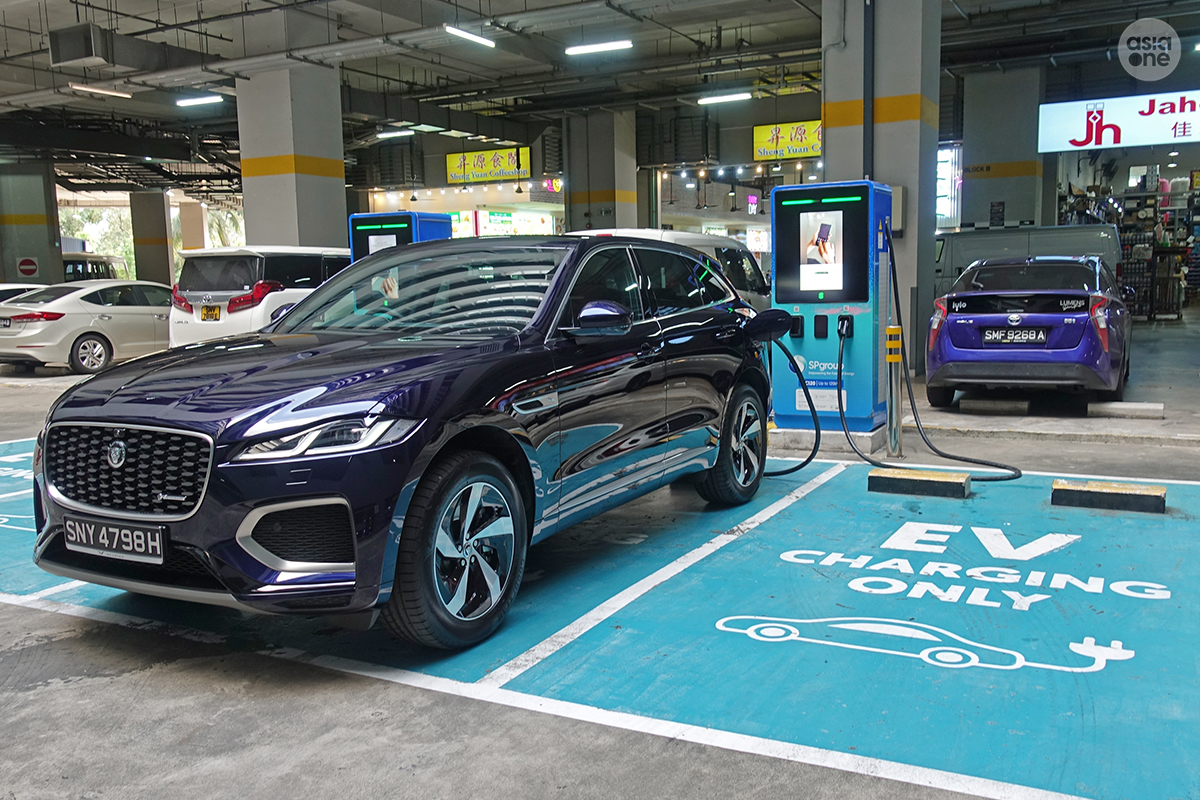
The F-Pace itself has been around since 2016, and received a minor facelift in 2020, so to describe it as being long in the tooth is quite the understatement.
Still, despite getting on in age, the F-Pace still has its appeal, especially for those who want an alternative from the usual German choices.
That 2020 facelift gave the car a few styling tweaks, like slimmer headlights and taillights, and an updated grille and bumper design, and the overall effect serves to soften the car a bit from its previously aggressive look.
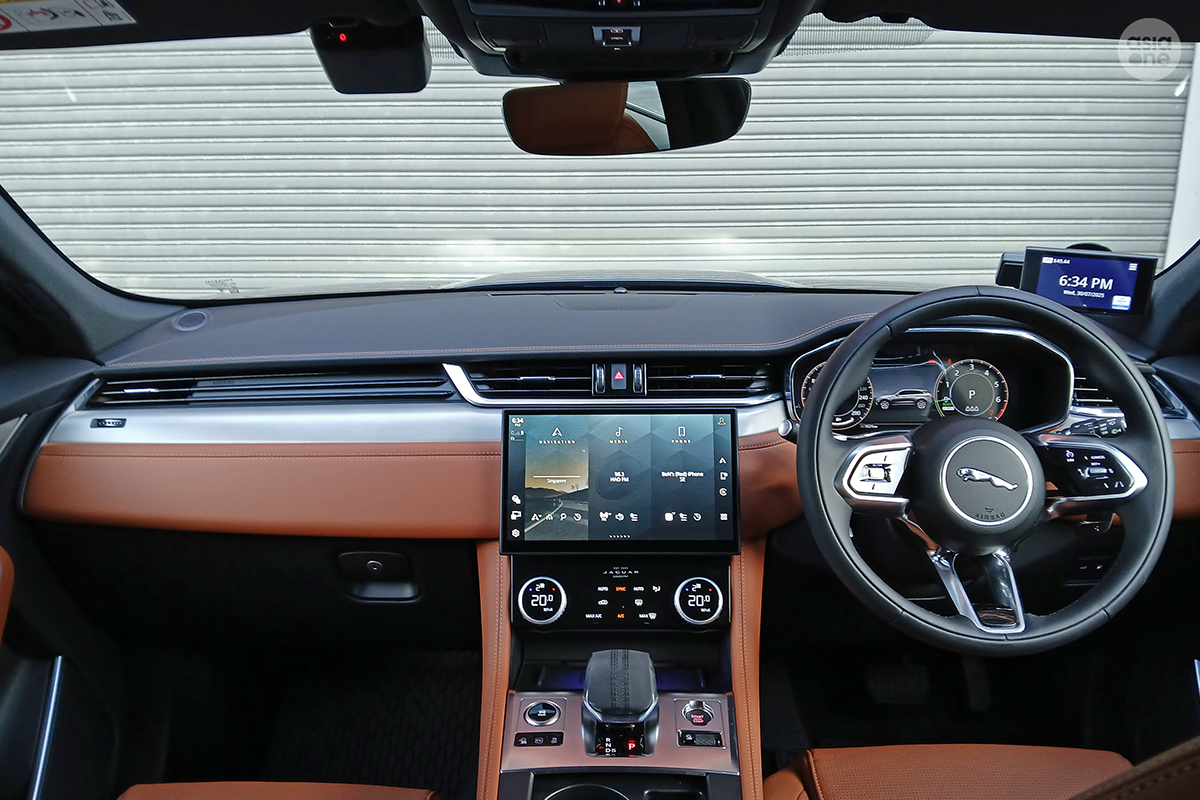
Inside, the F-Pace does show its age a little, with the presence of physical dials and controls a stark departure from the minimalist style of some of its rivals.
That's not necessarily a bad thing though, because functions like adjusting the aircon feels much easier to operate via a switch or button as compared to prodding a touchscreen.
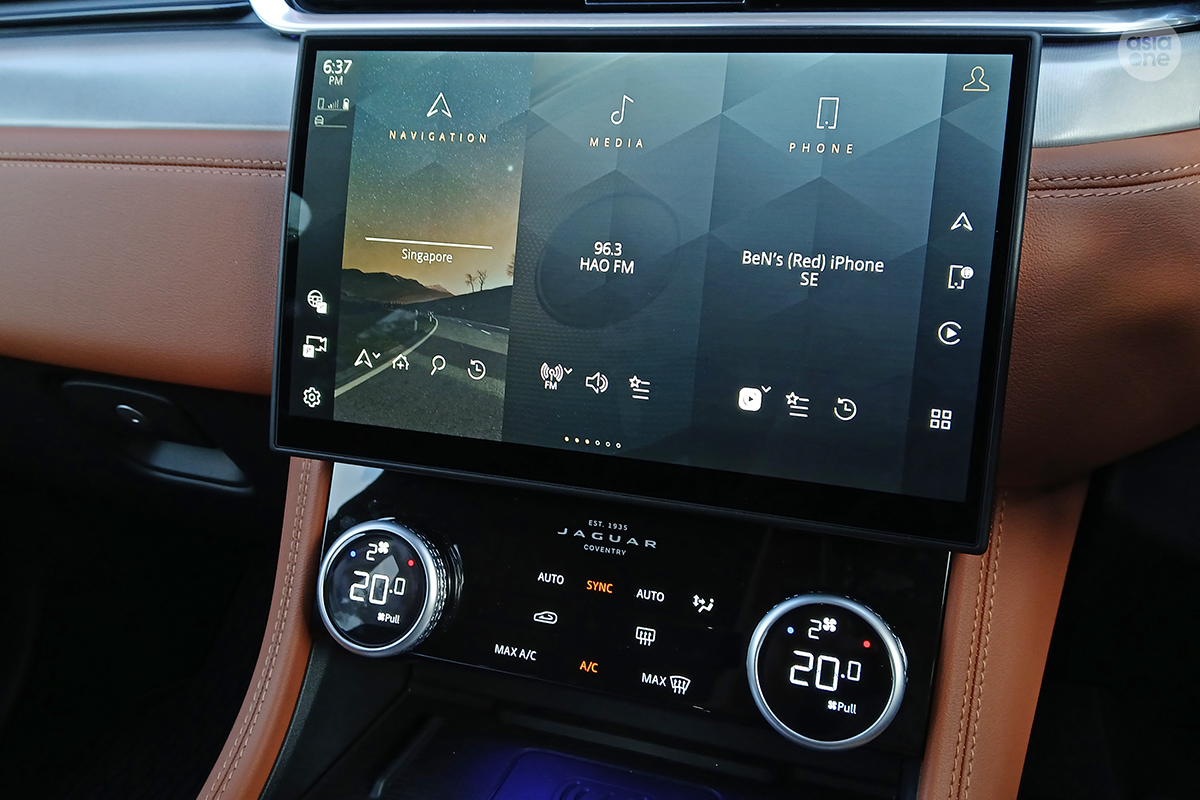
In any case, the interior design of the F-Pace does give the car quite an old school vibe, and the ambience is enhanced through the way it uses its materials.
There's a good mix of well-made leather and high-quality plastic that somehow feels just right in a car like this, and it doesn't come across as trying too hard to appeal to the younger generation.

Rear passengers enjoy plenty of room, too, although again, the one sitting in the middle has to content with the raised transmission tunnel that affects where you put your legs. The F-Pace also comes with a panoramic sunroof as standard, a feature which is surprisingly absent in its rivals.

Boot space is a fairly generous 619 litres, which is pretty similar to its main competitors, although it could have been more if not for the fact that it has to accommodate the hybrid system's battery under the boot floor.

What really makes the Jaguar stand apart from the rest though is its plug-in hybrid powertrain, which combines a 2.0-litre turbocharged engine with an electric motor for a total output of 404hp and 640Nm of torque.
That's quite a significant bump over the X3 and GLC, and effectively puts it in another league performance-wise.

0-100kmh comes up in a brisk 5.3 seconds, and you can definitely feel the rush as you put your foot down. The instant torque from the electric motor does a lot of the pulling upon initial acceleration, and the engine seamlessly takes over once you pile on the revs at higher speeds.

Being a plug-in hybrid means that you can drive the F-Pace in full electric mode if you want, although the range is only about 50km or so before the battery runs out. It doesn't regenerate charge as aggressively as other PHEVs too, so you do need to plug it in to charge it every now and then.
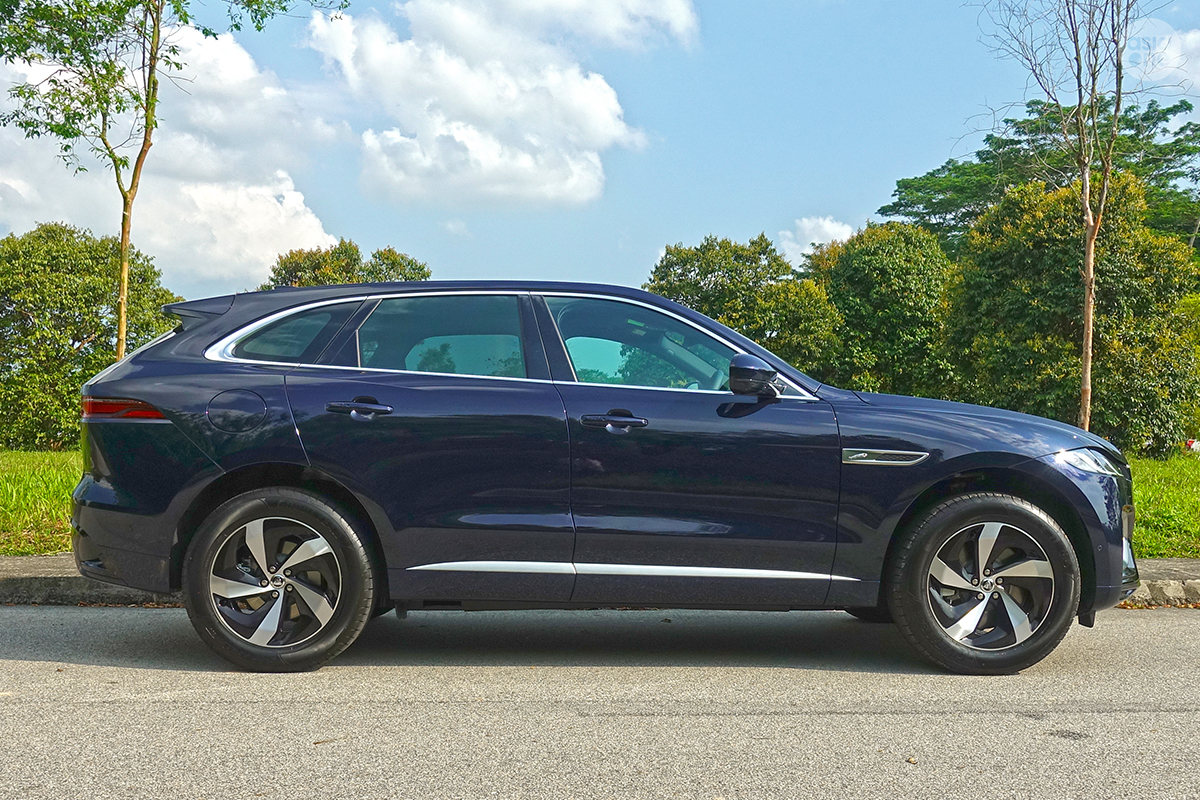
Nevertheless, the F-Pace offers a smooth and refined experience when you want to go on an easy cruise, and plenty of performance when you're feeling the urge to go a bit faster.
The ride and handling balance is competent and well-controlled too, with a comfortable and quiet ride matched with sporty handling through the corners.
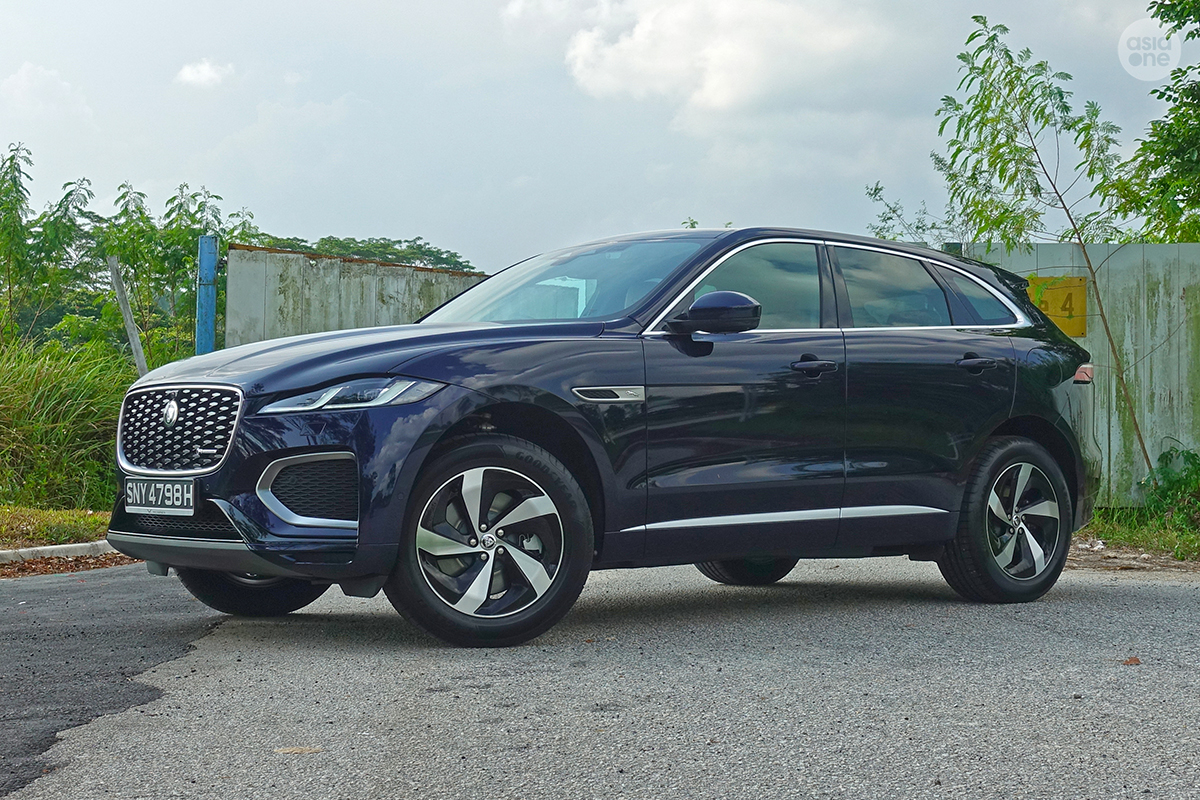
Jaguar's local dealer, Wearnes Automotive, prices the F-Pace PHEV at $237,888 without COE, and with Cat B COE premiums hovering around the $120k range, that means it would cost slightly over $350,000 or so to put the car on the road.

That's just about on par with its German rivals, but the F-Pace does seem to offer so much more substance, if you don't mind the dated looks and relative lack of tech gizmos. Certainly, if you're looking for a classy and somewhat old school option, it's worth giving the F-Pace a closer look.
The performance choice — BMW X3 M50

Perhaps you've been given a huge raise, or you've netted yourself a generous bonus over the past year.
You might be thinking of splurging it on a car that offers a little bit more over the regular premium mid-sized SUV choices, but without going overboard and ending up with something too extreme.
Well, the X3 M50 might just be the answer. It's essentially an X3 with more power, but without the outlandishness that high performance cars tend to be. Instead, it prefers to deliver its prowess in a more low-key fashion, only acknowledging it to those in the know.
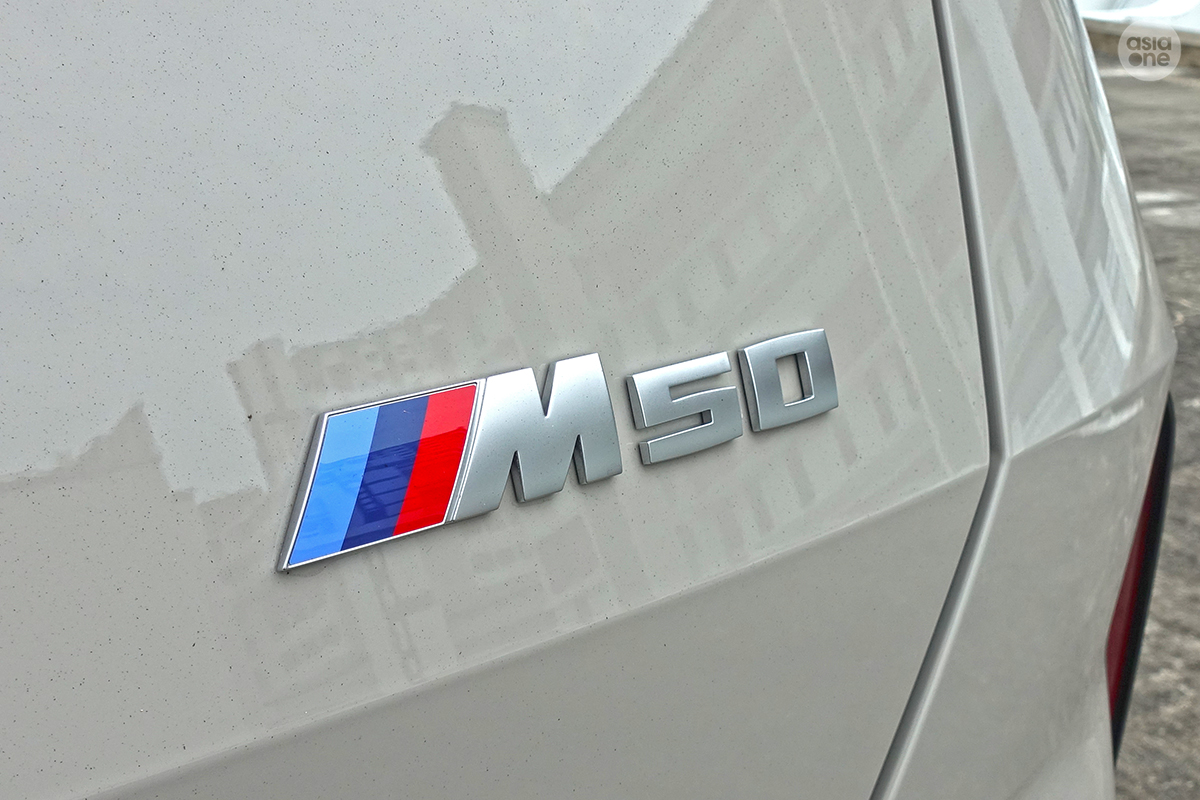
The X3 M50 is part of what BMW calls the M Performance range, which means it is more powerful than a regular model, but is not a full-blown BMW M car. It very much suits those who like their fast cars to be subtle, instead of shouting about it all around town.

To that end, there are very few external signs that this is a car that can go toe-to-toe with a sports car. You get a few M badges, slightly more aggressive-looking bumpers, larger 21-inch wheels and visibly bigger brakes with red callipers, and that's about it.

Likewise, the interior gets a slightly different M steering wheel, unique bucket seats, and M logos in a few places, but otherwise you'll only know that this X3 is the more powerful variant when you start the car up and delve into the infotainment software.
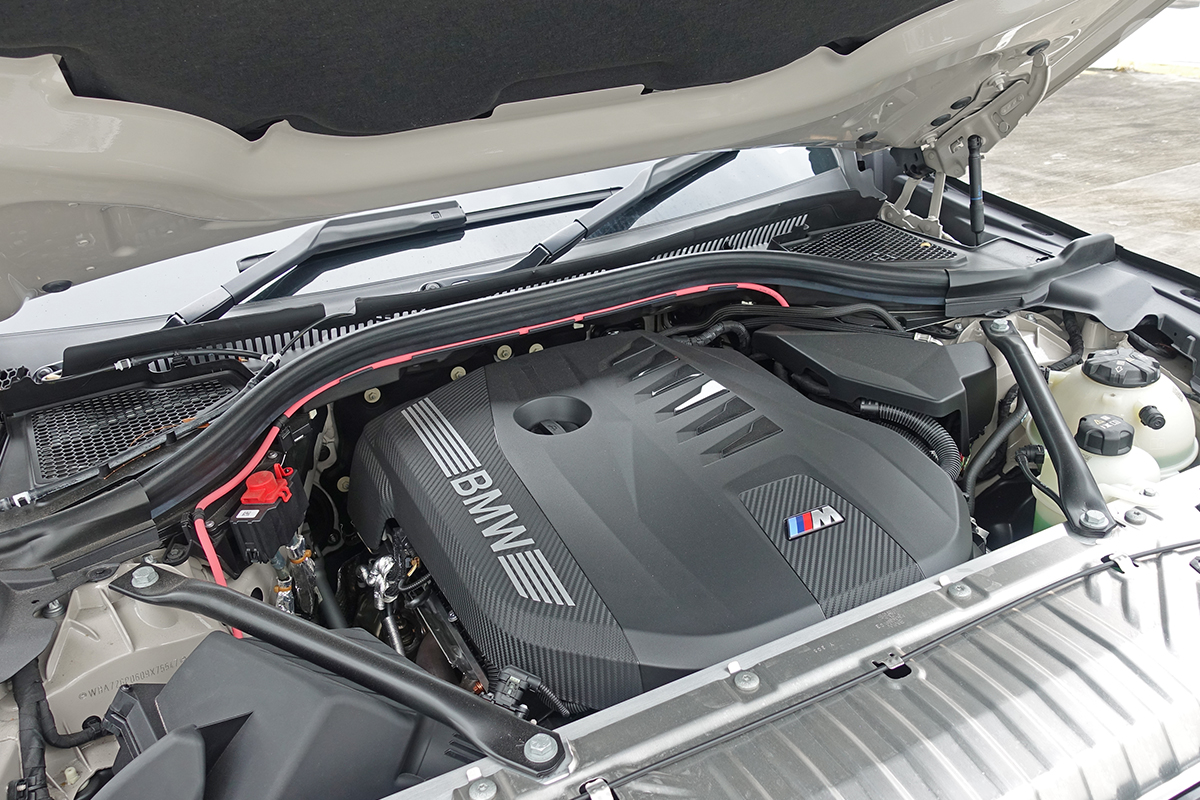
It's when you get going though that the X3 M50 truly demonstrates its prowess. Its 3.0-litre turbocharged straight-six engine puts out a massive 398hp and 580Nm of torque, and the result is a car that can rocket from 0-100kmh in just 4.6 seconds.

It also further builds on the X3's already-impressive handling capabilities with its adaptive M Sport suspension, which allows the car to corner remarkably flat and with great poise and control.
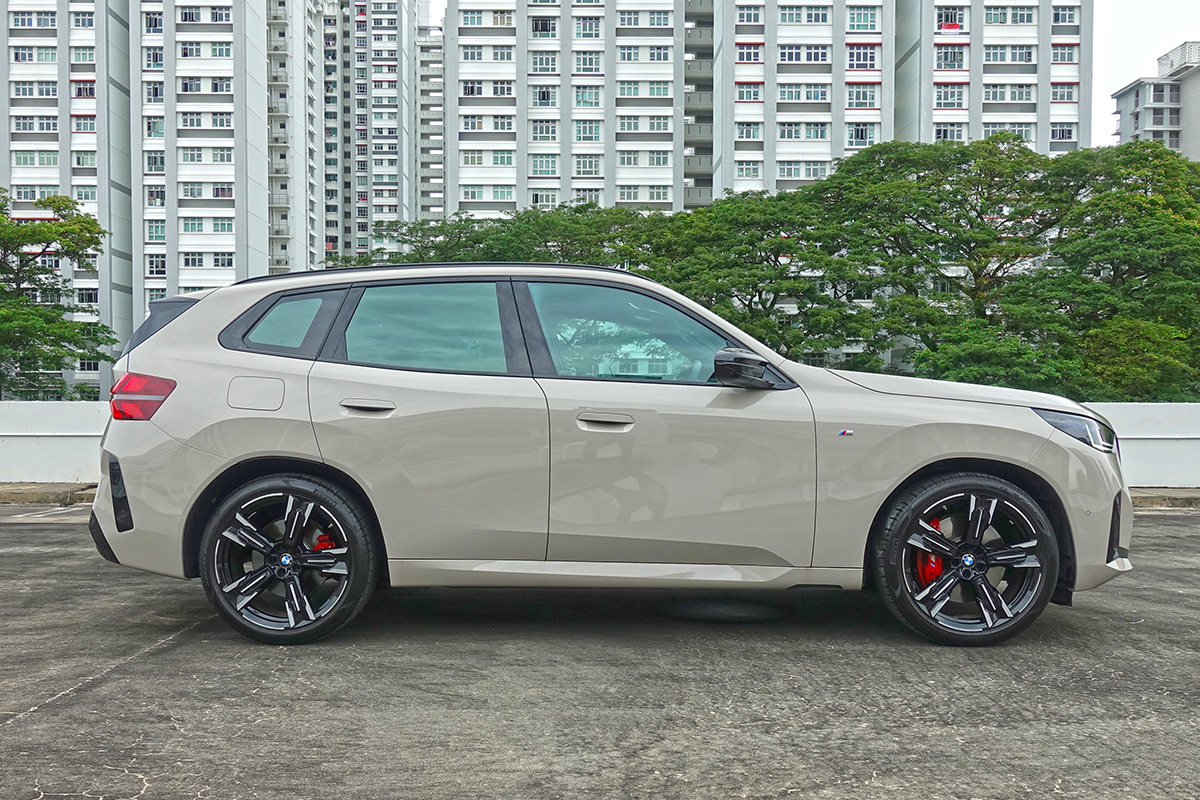
At the same time, the adjustable suspension settings means that you can have the ride quality feel more pliant than the X3 xDrive20 M Sport if you wish.
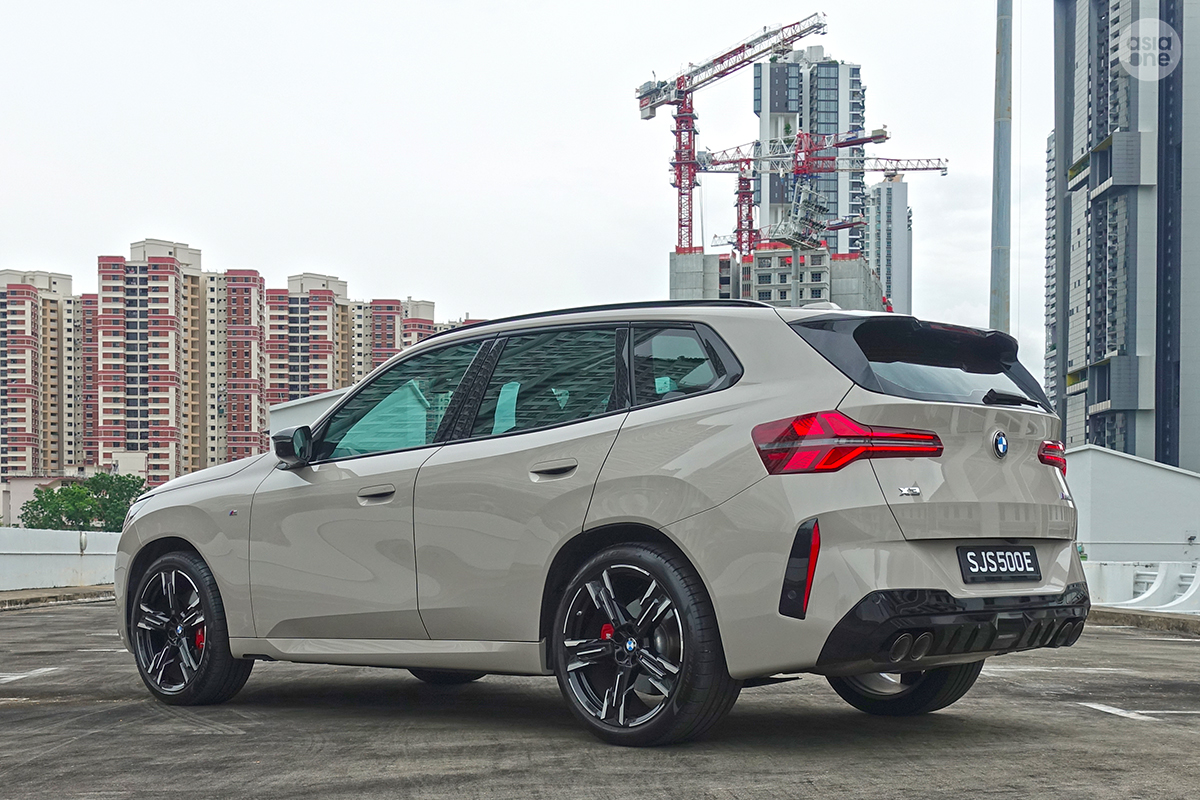
Of course, great power comes at a price, and the X3 M50 will set you back a sizeable $454,888 with COE (as at August 2025).
If you have the money to burn though, then the X3 M50 is certainly not a bad way to spend your bonus.
[[nid:712018]]
ben.chia@asiaone.com
No part of this article can be reproduced without permission from AsiaOne.



