

South Korean moves from New Zealand to Singapore, shares why this is home truly

Vicky has lived in Singapore for two decades.
PHOTO: Vicky Choi

 PUBLISHED ONMay 22, 2026 11:30 PMBYMelissa Teo
 When South Korean native Vicky Choi listened to Kit Chan sing Home during the SG50 National Day Parade in 2015, she cried.
She may not be Singaporean, but the song tugged at her heartstrings because she felt a deep sense of belonging to the little red dot.
The Singapore permanent resident moved here from Auckland, New Zealand, in 2006 with her sister, and now lives with her husband and two children. Her parents used to live in Singapore with her, but in 2013, they packed their bags and moved back to South Korea to retire.
While Vicky was not born and bred in Singapore, she told AsiaOne in an interview on May 12 that she feels like Singapore is home because of all her experiences here.
"I spent the most important years of my life here, which are my 20s and 30s. Most of the time, your life starts shaping up during this period because you start working, building your career, and building relationships at work," she said.
The move to Singapore wasn't Vicky's first relocation.
The 42-year-old was born in South Korea and in 1993, she and her family uprooted their lives to move to New Zealand.
Vicky and her sister Clara Choi lived there for 13 years. During their last semester of university, when they were deciding what jobs to apply for, they agreed that it would be best to relocate.
She shared that after working several part-time jobs in New Zealand and taking a year off to work full-time as a team leader at travel retailer DFS, she realised that she didn't have much of a future in New Zealand.
"While I was working there, I realised [New Zealand's] economy was very small," she said.
"It really depends on how you perceive it. Some people will say that the work-life balance is good, and I agree. But at the same time, there are fewer opportunities in terms of growing exponentially, because it's just so enclosed."
The sisters considered other places such as Hong Kong but settled on Singapore because it felt like a more "subdued and quiet" version of Hong Kong with less competition.
They also felt that Singapore's work environment for women was more favourable.
Vicky had tried applying for jobs while in New Zealand but received no responses. As her New Zealand passport gave her a three-month-long holiday visa in Singapore, she took advantage of that to fly to Singapore and applied for jobs here instead.
This worked, and she received several interview offers, eventually landing a job at courier company DHL.
After her three-year stint there, she went into banking, where she worked for 15 years before leaving the industry in 2024.
Since then, she has been focusing on her passion project and business, Vicky En France, which specialises in sustainable beauty.
She works together with her husband, a stem cell scientist, to develop products such as collagen jelly, sheet masks and ampoules.
Vicky also pointed out that she was able to start her own business because Singapore is a great place to do so.
"It is very easy to start one here," she said.

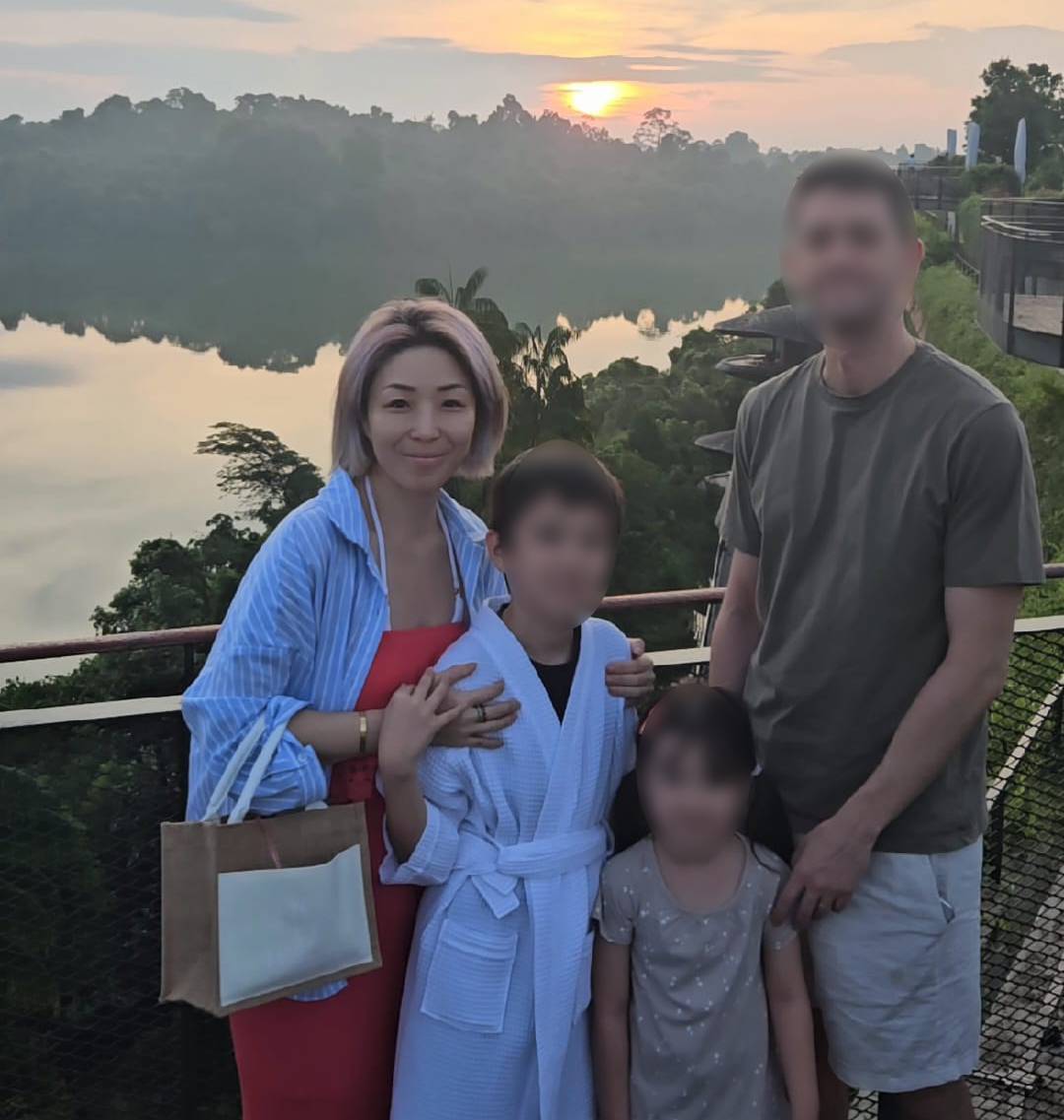
When she had her two children in Singapore, Vicky and her husband, who is from France, agreed that they should apply for permanent residency for the whole family.
"After having kids, we liked Singapore even more and decided to become Permanent Residents, knowing that our son has to do National Service, which we don't think is a huge issue," she shared.
When Vicky first relocated to Singapore, several things immediately left a good impression on her.
The one that stood out most was the transportation system.
"When I first came to Singapore, I was amazed by the MRT because the public transport system was efficient and clean," she praised.
"New Zealand doesn't have subways. They have buses, but the buses come every 20 to 30 minutes, and the taxis are very expensive."
She explained that most people there get around by car because it's affordable to own cars in New Zealand.
Another thing was Singapore's rich hawker and food scene.
"Initially, I was quite taken aback by the hawker centres. I questioned the cleanliness," she admitted, adding that she was also concerned about dining outside in the sweltering Singapore weather.
"But that quickly went away and within six months to a year, I got used to it. Now, I love hawker centres, I love eating there, I love kopi-c."
Vicky praised the food options in Singapore too, as these range from affordable hawker centre eats to luxe Michelin-starred restaurants.

"You can enjoy both sides in Singapore, which I think is a really, really big benefit. Because even in New Zealand, 20 years ago, if you go to a food court, it was already NZ$15 (S$11) for fried rice."
Vicky added that because shops and restaurants in New Zealand close very early, unlike in Singapore, it's very normal for people to just cook and eat dinner at home with the family.
"Singapore has that balance where it isn't a metropolitan city that doesn't sleep 24/7, but also has restaurants and shops open till late. Whereas in New Zealand, even the biggest city, Auckland, feels very much like a countryside," she explained.
She also pointed out that Singapore is always changing and improving itself.
"When I went back to New Zealand after my first year of living in Singapore, I found that there was no change at all in Auckland. The people, the houses, everything. It is a very, very slow life there.
"Whereas in Singapore, there is always something new and it is constantly developing."
She cited the example of Marina Bay Sands, which did not exist when she moved to Singapore.
"When I first came, there was nothing there. And then one day, there was this huge, iconic building," she said.
"Things move, very, very fast, and there is a continued need for development and self-development, which is important, because you don't fall behind and become irrelevant or unrelatable. Singapore stays relevant but not overly competitive."
In terms of cost of living, Vicky didn't have much of an issue adapting in Singapore despite it being "expensive", as New Zealand has a pretty high cost of living too.
"New Zealand has to import a lot of things and the costs build up, so things like groceries are expensive," she said, adding that in Singapore, one can still get daily necessities affordably at supermarkets.
However, not everything was rosy at the start and when Vicky first moved to Singapore from New Zealand, she did encounter a few challenges.
Apart from feeling pangs of homesickness, she struggled to understand the Singapore accent.
"The taxi driver didn't understand what I was saying," she recounted.
She also struggled with the humid weather and developed acne for the first time in her life.
"I have actually never had acne because my skin is naturally very dry. But when I first came to Singapore, I started having pimples all over the place," she revealed.
However, she got used to these within less than a year and properly settled down.
There are many factors that have kept Vicky in love with Singapore throughout her past two decades living here.
Aside from common ones such as cleanliness and safety, she praised our climate and said that it is good for parents with kids.
"If you have to raise children in the winter, the amount of extra clothing in the laundry will be a lot," she said.
She also shared that while it took her some time to understand Singlish, Singapore is an English-speaking country, which made it easier for her to navigate daily life.
"The process of looking for rental units, talking to agents, opening bank accounts, creating a Central Provident Fund account, and all those necessities were very straightforward," she said.
She also didn't have difficulties fitting in, making new friends or bonding with colleagues.
"I didn't feel like a foreigner when I came to Singapore, because there are already diverse races and nationalities here," Vicky shared.
The diversity also has played a huge role in her children's upbringing.
"I love how my kids can speak a bit of Korean and a bit of French, with their main language being English. They're learning Mandarin in school as well, so they speak four languages," she said.
"For them, it is so natural to be among multicultural people speaking multiple languages, and switching between languages is just normal for them. I think it's a very big benefit because you want them to know it's normal for people to be different, which I think will get them very far."
But it doesn't come without its cons.
"There are lots of benefits about living in Singapore, such as safety for girls, jobs, proximity to everything. But of course, it can get quite expensive to live here," said Vicky.
Housing and car prices are very high, she laments. She also pointed out that the humidity and weather make clothes decay faster.
"When I first came from New Zealand, I brought a suitcase of clothing. After a couple of months, I opened up a drawer and everything was mouldy," she recounted.
"After that, I stopped buying expensive clothing unless I really needed to."
Another con she and her family experience as Permanent Residents is receiving fewer benefits as compared to Singapore Citizens.
She said that Permanent Residents are not entitled to Community Development Council (CDC) vouchers, subsidised rates for SkillsFuture courses, housing subsidies and medical subsidies.
Vicky also pays more to send her children to a local school.
Despite these factors, Vicky still loves Singapore.
She also encourages those moving abroad to go with an open heart and take it all in.
"At the end of the day, I think it's really beautiful to be able to experience different cultures, and that's how you can appreciate what you have," she said.
"You may even find a new home, which is really amazing as well. So please, go and explore."
[[nid:724605]]
melissateo@asiaone.com