This article is part of a package produced by a group of final-year undergraduates from Nanyang Technological University's Wee Kim Wee School of Communication and Information, for the programme Going Overseas For Advanced Reporting, or GO-FAR. They reported from Hong Kong in July and August 2026, where they found the city, almost 30 years after the British handover, grappling with the upheaval of traditions that anchored it.
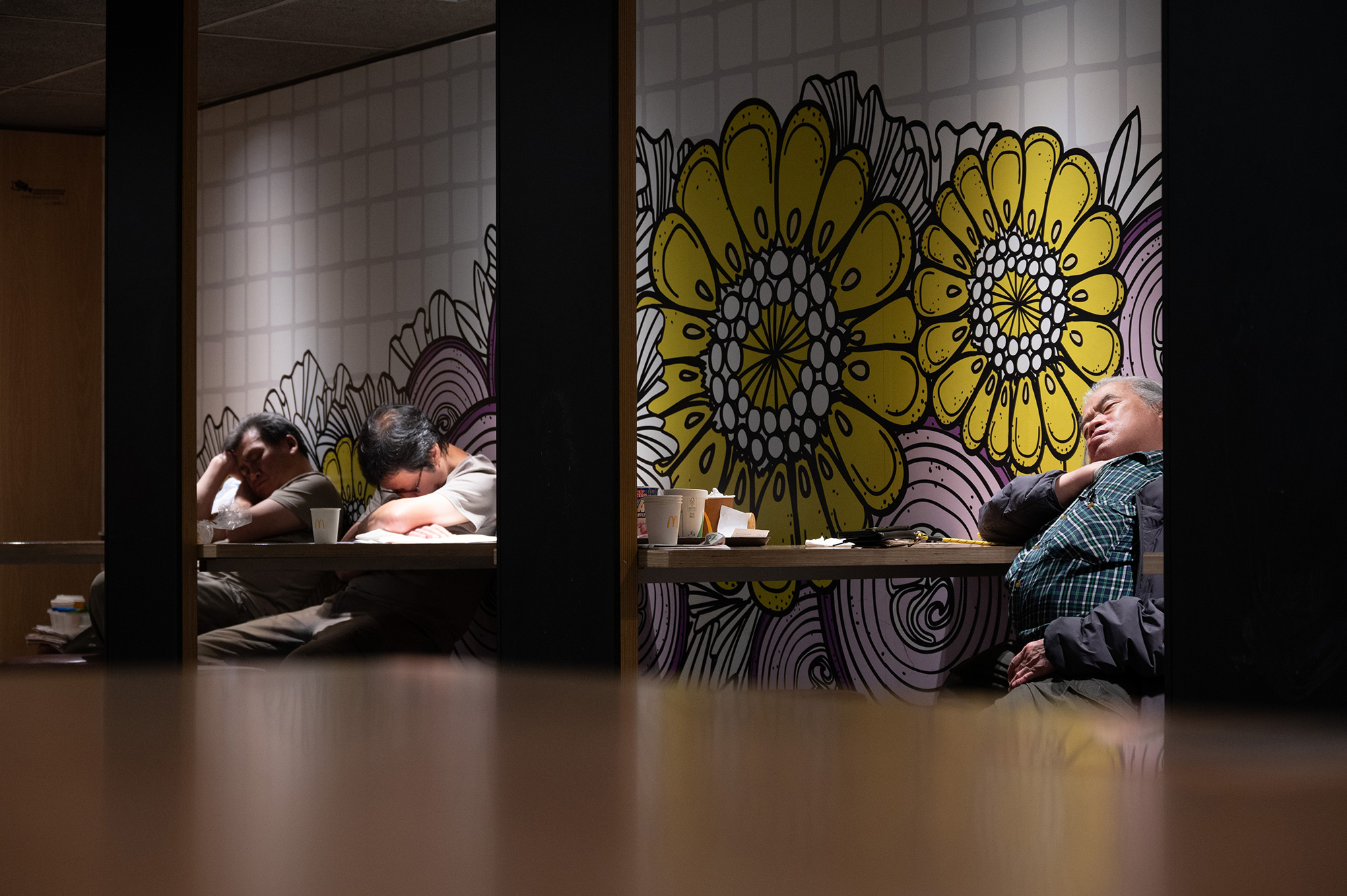
HONG KONG - It was 11pm. Customers were still streaming into McDonald's at Fortress Hill. Sitting against a bright yellow wall were several elderly people fast asleep in their seats.
Dubbed Hong Kong's "McRefugees", these people spend their days and nights in 24-hour McDonald's outlets - not for shelter, but just to get some breathing room.
A 2017 study by think tank Civic Exchange found that the average Hong Kong resident gets about 2.8 sq m of open space - barely bigger than a king-sized mattress.
With so little public space to go around, commercial establishments have quietly taken over the role once played by the city's communal spaces.
The Hong Kong Housing Authority allocated HK$4.6 billion (S$750 million) for large-scale communal area upgrades between 2022 and 2023. The authority expects to expand the budget up to HK$5.5 billion between 2026 and 2027.
In response to the space crunch, local architects and designers have also taken it upon themselves to revitalise unused spaces.
Indoor spaces for connection
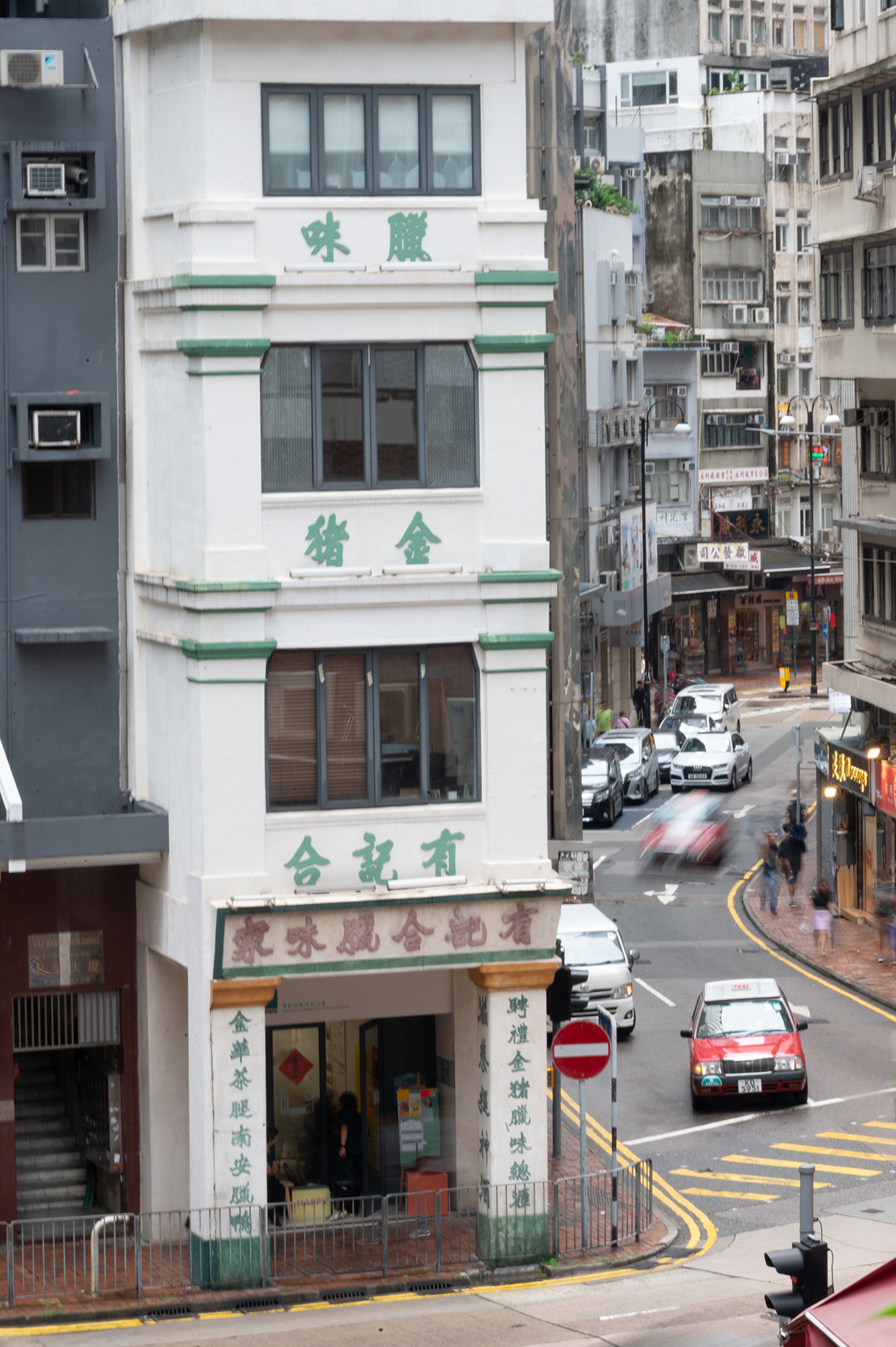
At a street corner in Sheung Wan, the owners of One Bite Design Studio found a solution hiding in plain sight - a vacant tong lau, which is a shophouse suitable for preservation under Hong Kong's heritage framework.
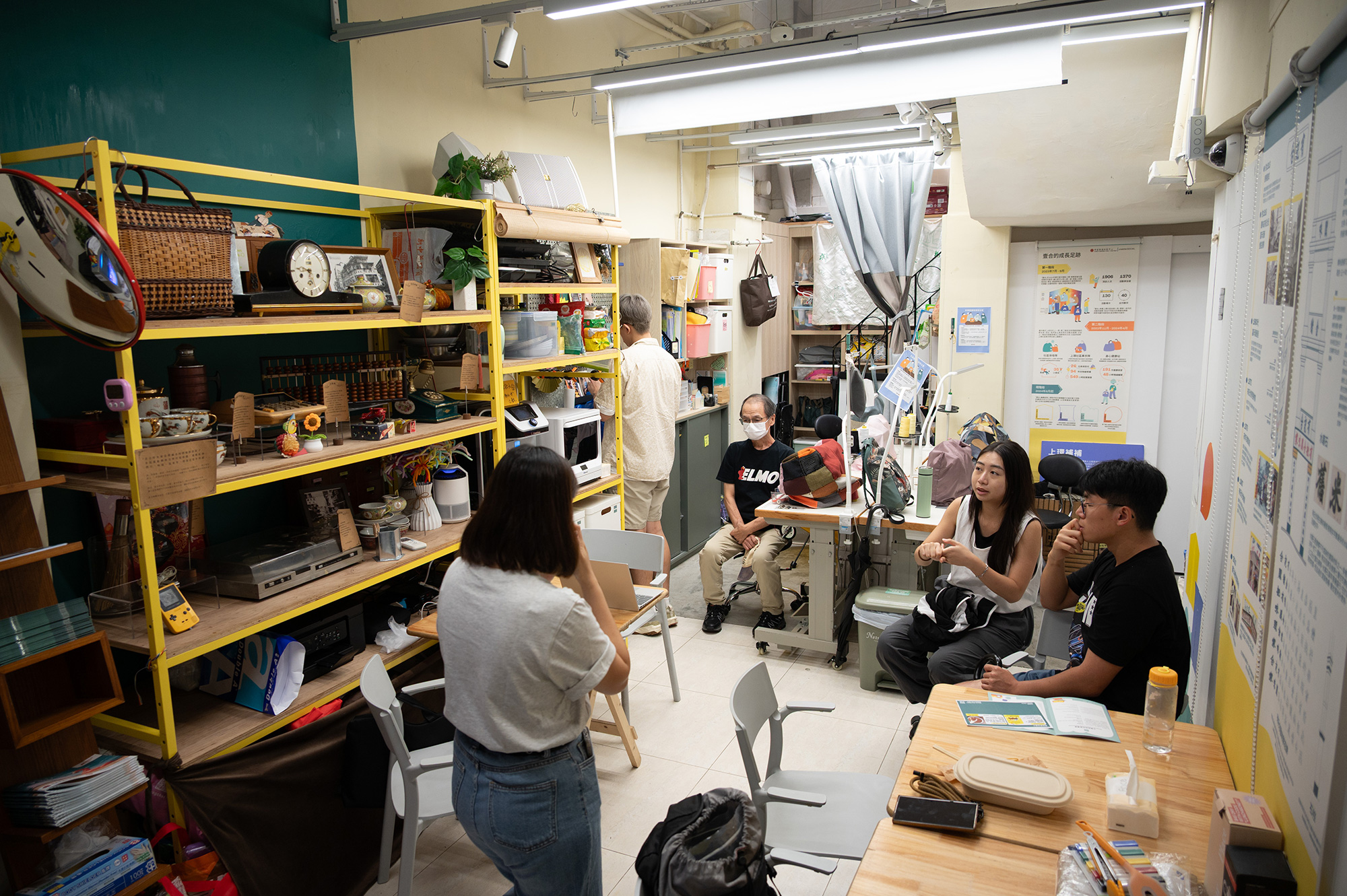
Today, the 30 sq m ground floor of the building has been transformed into a community space called Project House @1QRW. Equipped with vintage gaming consoles and traditional sewing machines, the space hosts weekly activities for anyone to join.
With the elderly in mind, the space offers health check-ups, and occasionally even livelier activities such as small concerts and football screenings.
Working with Caritas Community Centre, Alan Cheung, One Bite Design Studio's co-founder who is in his 40s, imagined the space as a hub for the elderly to mingle, keeping them occupied in their silver years.
[[nid:749277]]
The small floor area of the tong lau makes renovations complicated and expensive, but the firm was still attracted to its potential.
"Many community spaces in Hong Kong are hidden amidst high-rise office towers. With a ground-floor shophouse, the space is more visible to the public," said Cheung.
The shophouse caught the attention of retiree Chow Po Wah, 68, who stumbled across it on a stroll.
Since then, he has become a regular volunteer at Project House @1QRW's free flea market, where Mondays come alive with chatter. Arranging goods on display, he barters with customers, trading clothes and toys for other trinkets.
"For seniors and the homeless, some of them isolate themselves," said founder Cheung. "If we can create a welcoming environment, then they'll really be attracted to come and join our kind of community."
A breath of fresh air
It is not just indoor spaces that are being redeveloped; outdoor spaces on all levels - from the ground floor to the rooftop - are getting a facelift.
From 2021 to 2023, One Bite Design Studio built four micro parks in the underutilised spaces of residential districts, in collaboration with Design Trust Futures Studio and two government departments.
Micro parks are on average three times smaller than conventional parks and are nestled in neighbourhoods as opposed to designated, planned open spaces.
One such park is Yi Pei Square in Tsuen Wan. Once a desolate area surrounded by subdivided flats, it now has play equipment, exercise gear, and seating areas that invite the community to step onto its colourful flooring.
[[nid:737641]]
"I've studied public spaces in Hong Kong for 11 years. I've seen new spaces that are more colourful, but Yi Pei Square is still the liveliest," said Massimiliano Dappero, 48, founder of Persone Studio, a local design studio that studies the dynamics between people and the built environment.
It has been two years since the launch of Yi Pei Square. Dappero returns to the square each year to document its changes for a study.
"The colour of the place is fading, but the life of the community is actually evolving," he said.
Stores have reopened, selling old-school stationery to traditional snacks; eateries deck their storefronts with outdoor seating as the sound of sizzling oil fills the square.
"You should have seen the mood of the space. It was almost like a festival every night," said Dappero.
Seeking new heights
In districts like Tin Shui Wai, even underutilised concrete squares are a luxury. One Bite Design Studio found that northern Tin Shui Wai residents had less than a square metre of open space each, an area that can barely fit a washing machine.
This puts Tin Shui Wai near the bottom of Hong Kong's 18 districts for open space per person, and well below the government's 3.5 sq m benchmark goal.
"When there are no spaces for people to gather, neighbours don't really get to know each other. There is less communication. Life mostly just happens inside the apartments," said Katie Ng, a graphic designer at One Bite Design Studio in her 30s.
With limited vacant ground-level space, One Bite looked upwards and perched a playground on the rooftop of a three-storey mall in Tin Shui Wai.
Lo Yan Han, 30, lives nearby and brings her two sons to the playground fortnightly. She pushed one of her sons on the swings, while the other ran off to jump on a mini trampoline. Meanwhile, Liu Man Hoi, 58, sat down on a shaded bench while watching his granddaughter wobble towards the swings.
Because its research found that the town has a high proportion of young families, One Bite decided to go with a brightly-coloured, wetland-themed playground to better meet the neighbourhood's needs.
"Seeing the kids enjoy the rooftop like it was their own living room - laughing and interacting with the graphics we designed - made me feel like the work was worth it," said Ng, who is also a resident of Tin Shui Wai.
Revitalised tong laus, micro parks and rooftop playgrounds may not immediately resolve Hong Kong's lack of public open spaces, but they are one step.
"When we design a space, making it Instagrammable is not the key. The key is the basic things we need every day," said Dappero. "They're not glamorous, but that's the key to life."
[[nid:748481]]
editor@asiaone.com


