

$1 pau expensive? Tanjong Rhu Pau second-gen owners on challenges of running heritage business

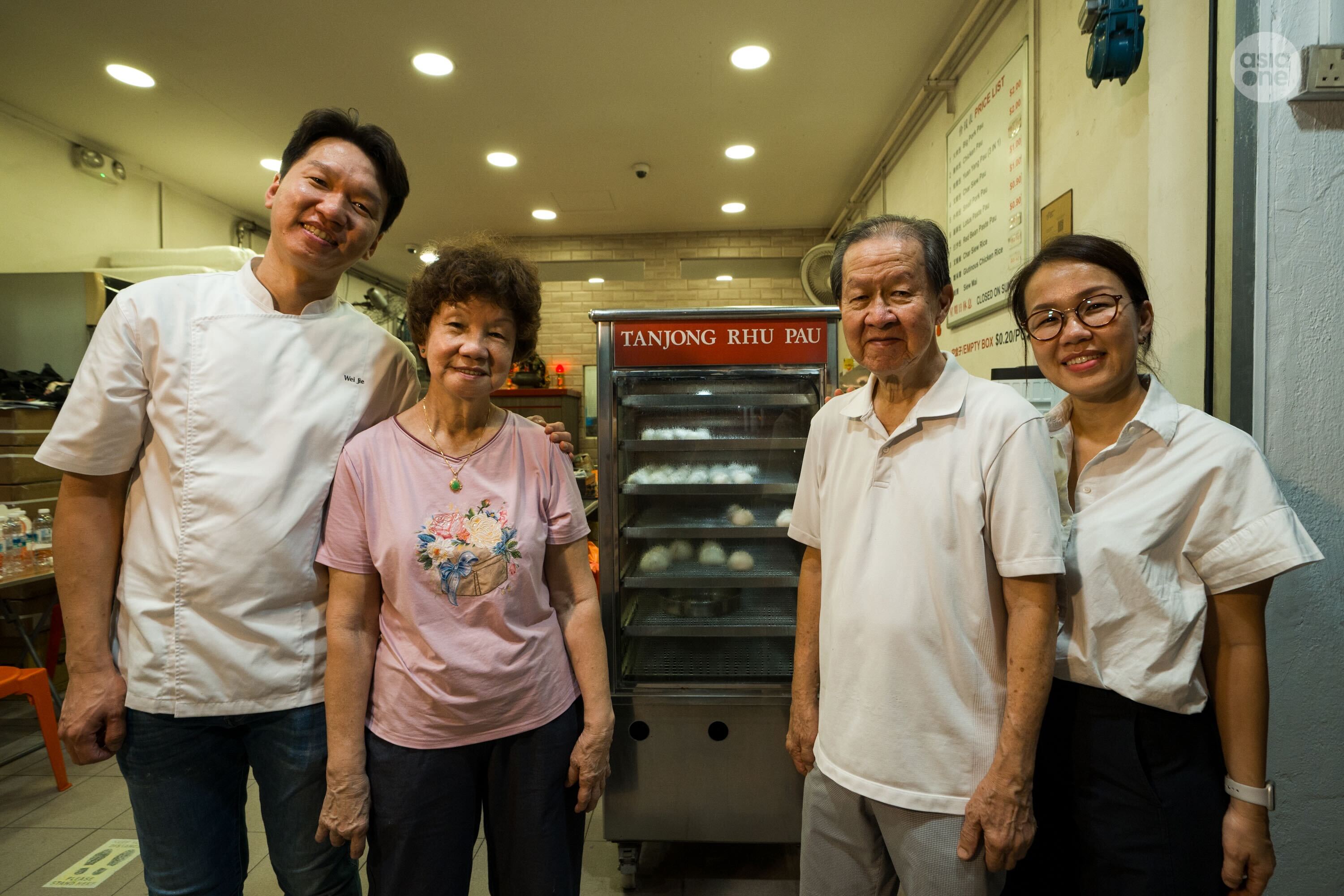
Yap Wei Jie and Chloe Yap have been running the heritage business since 2015.
PHOTO: AsiaOne/Darren Wong

 PUBLISHED ONFebruary 27, 2026 9:05 AMBYBhavya Rawat
How much will you pay for a snack?
Some people are unwilling to pay more for a traditional snack like pau (steamed bun), second-generation owners of the popular Tanjong Rhu Pau told AsiaOne on Thursday (Feb 26).
"People always say that for pau, $1 is expensive but they're willing to spend $4 on a croissant or $3 on a muffin," said Yap Wei Jie, 43.
His sister Chloe, 48, chimed in: "Not to say that other snacks don't deserve that high value, but they don't think paus warrant a higher price even though the amount of work that goes into making them is a lot."
"We're just hoping that people will be more receptive to what a pau can offer them. We have protein inside, it can even be a meal in itself," she added.
This is one of the biggest hurdles they face while running a business that's been serving up freshly made, handmade pau for over three decades.
Steamed buns at this heritage eatery are priced at 90 cents for Lotus Seed and Red Bean paus, $1 for Mini Char Siew Pau and $2 forYuan Yang and Big Pork Paus.
The siblings took the helm from their father, founder Yap Peng Wah, in 2015.
Another challenge they face is having to live up to the comparisons that customers make between present-day steamed buns and those of the past.
Wei Jie recounted feeling disheartened when he received feedback that their paus had gotten smaller over the years.
"In our minds, we were thinking that the size of the box didn't change. 10 years ago, I was able to fit 10 pieces in there, but now I find it more difficult to fit them in, because our paus actually grew bigger," he explained.
Understanding that this was likely due to the perception of "last time is always better", he said: "We hope to encourage people to come to us with an open mind and give us a try again."
Wei Jie also had a physical obstacle to overcome while running the business.
In 2020, he nearly lost his hand in a dough machine accident. The injury was severe, and he was told by the doctor that there was a high chance his middle finger would be amputated.
Despite this, Wei Jie managed to retain about 90 per cent of his hand's function after two more surgeries.
Following the accident, the business owner struggled to get back to making paus.
It took him three months to rebuild his strength with physiotherapy, and he also had to adjust his technique before returning to the kitchen.
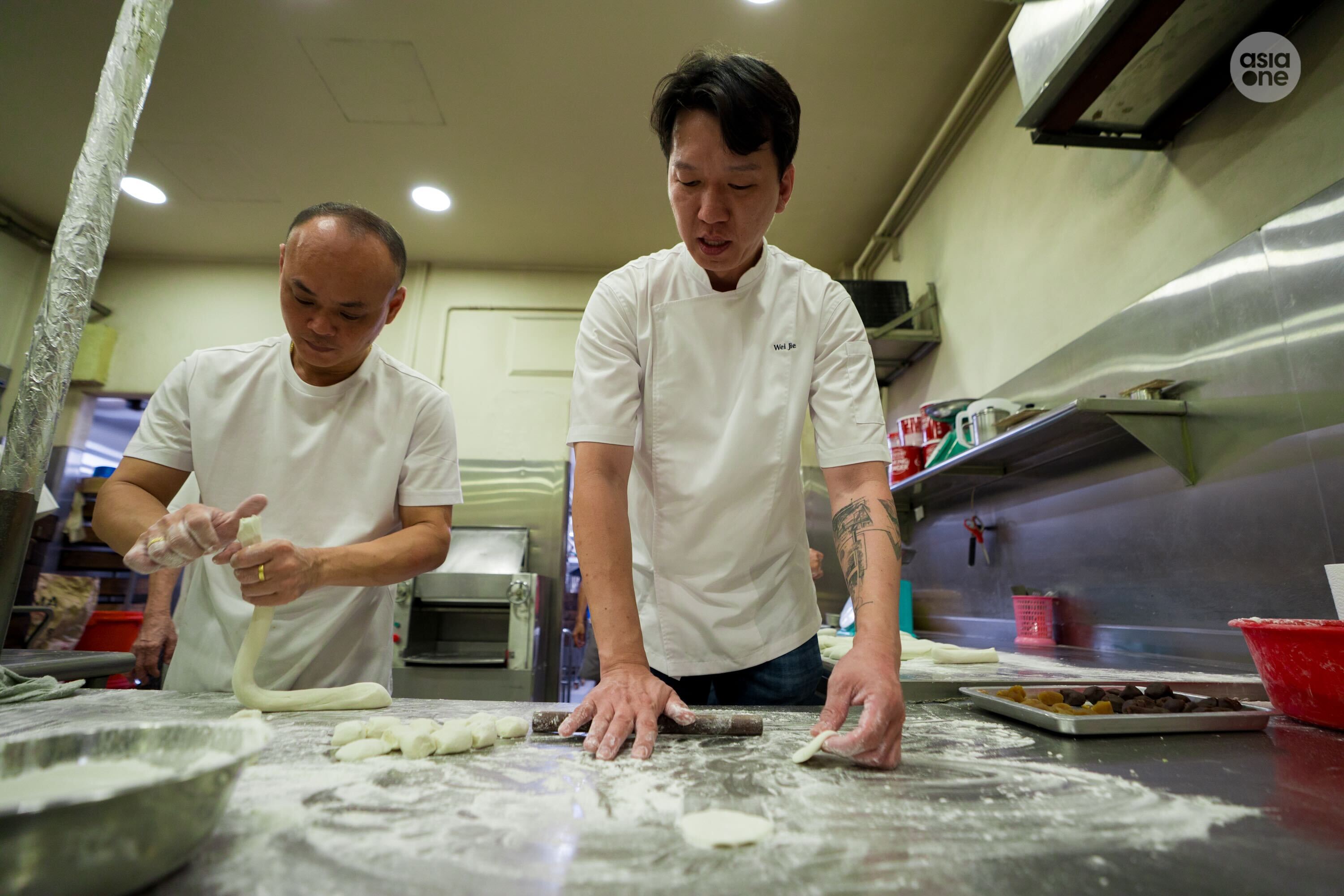
In addition to the physical challenges, Wei Jie had to overcome the mental hurdle of using the same dough machine which injured him.
But this setback did not break his spirit.
"I wanted to contribute to the business physically, so I was motivated to recover as fast as possible," he told AsiaOne.
The accident was also a blessing in disguise because it taught him a valuable lesson in workplace safety and led to the business putting in place measures to prevent further injuries, Wei Jie said.
"Now, when we handle the dough machine, we make sure our fingers are pointing upwards, to protect them."
Besides speaking with Wei Jie and Chloe, I also had the opportunity to try my hand at making Tanjong Rhu Pau's signature bite-sized steamed buns.
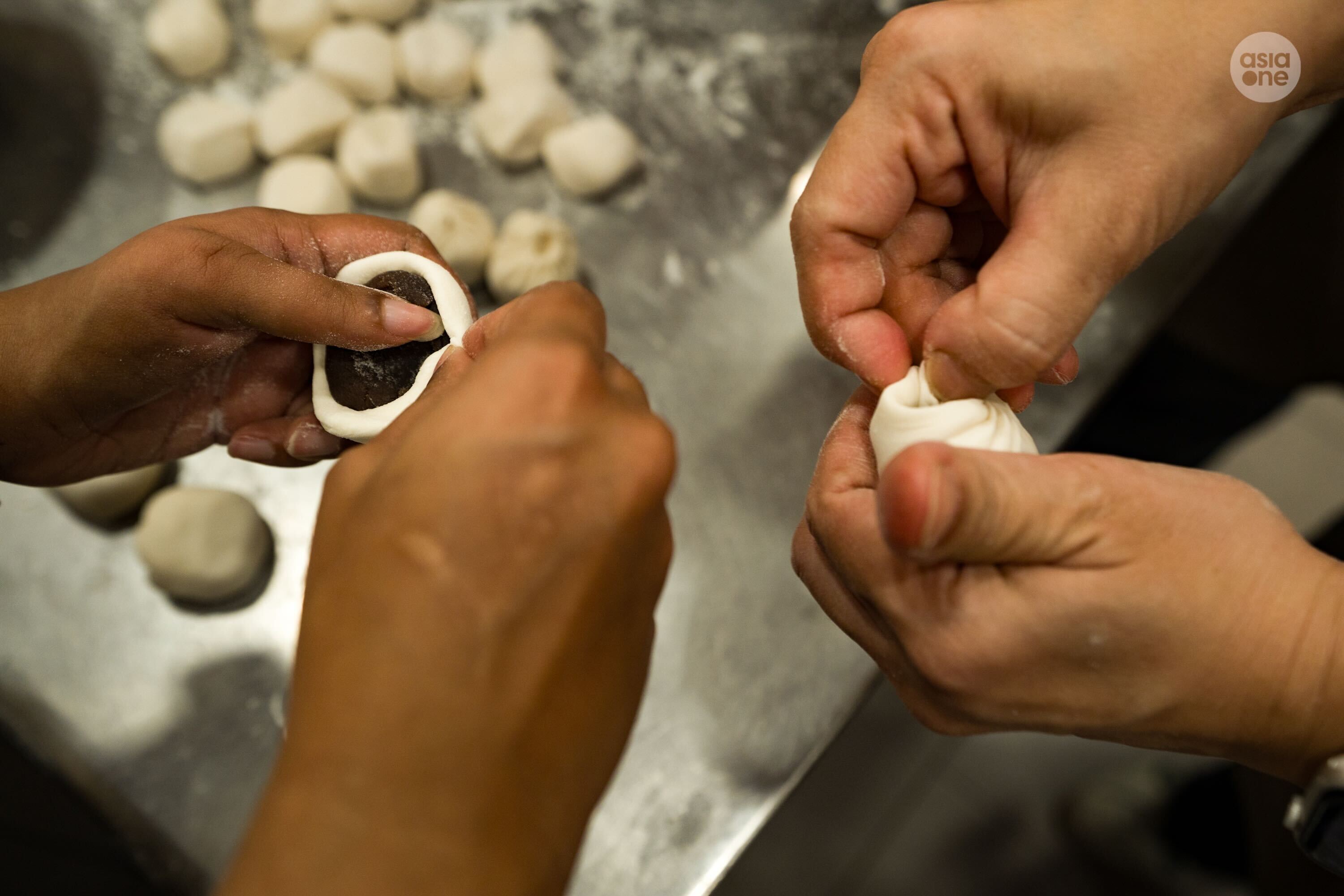
Under the pau masters' guidance, I practised shaping and folding the dough, before filling it with lotus seed paste, red bean paste, and the classic char siew.
It was definitely a steep learning curve for me, as I struggled to create proper folds while keeping the filling from spilling out.
Once I got the hang of it, however, it was really fun and almost therapeutic. I started thinking less and just went with what felt right as I folded a total of nine buns.
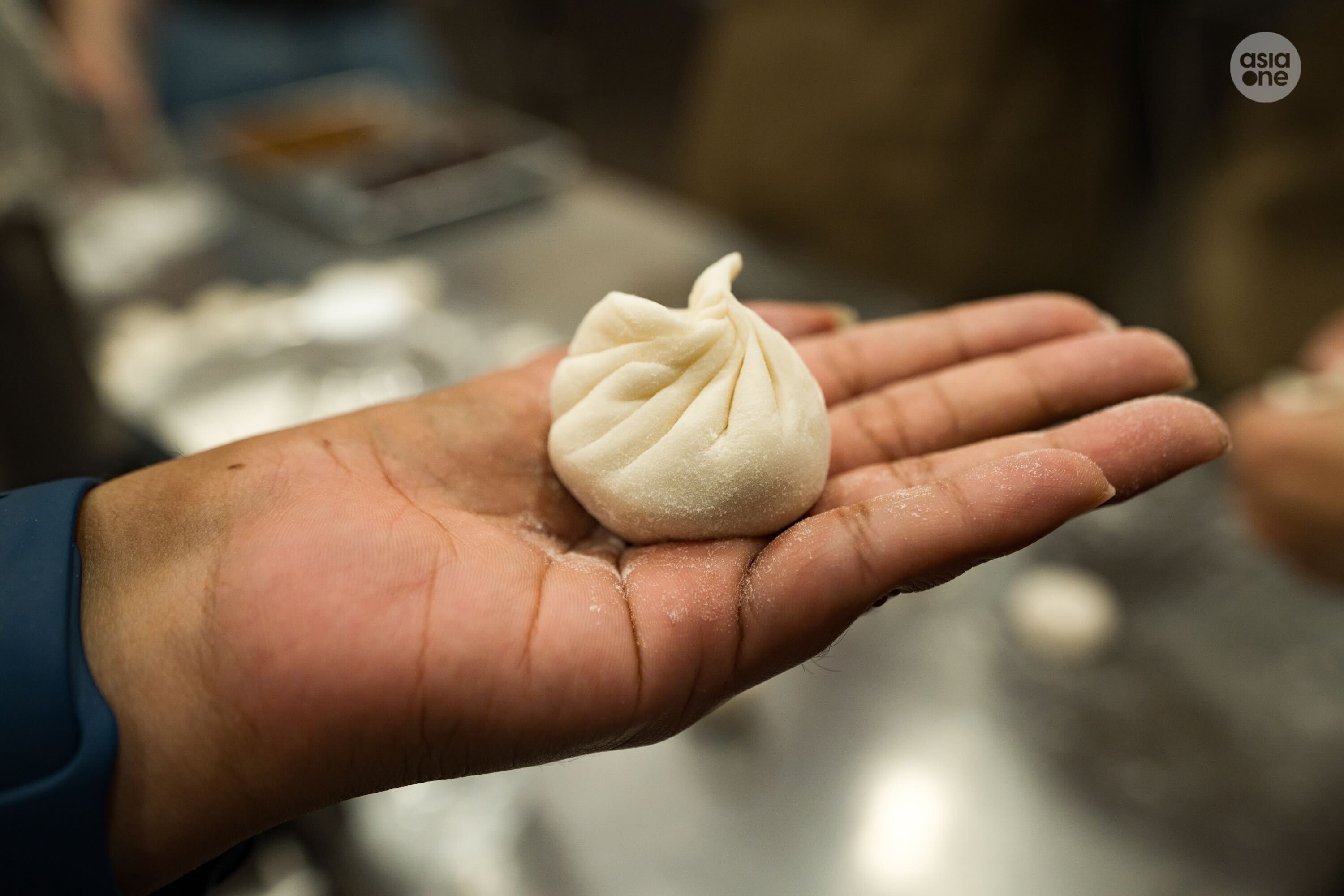
During the process, Wei Jie, Chloe and the pau masters would give me tips on getting better control of the dough as well as words of encouragement.
Chloe even complimented me on my dough folding!
As I waited for my paus to be steamed, I also tasted some of Tanjong Rhu Pau's specialities, such as Yuan Yang Pau ($2), Mini Char Siew Pau ($1) and Siew Mai ($0.60).
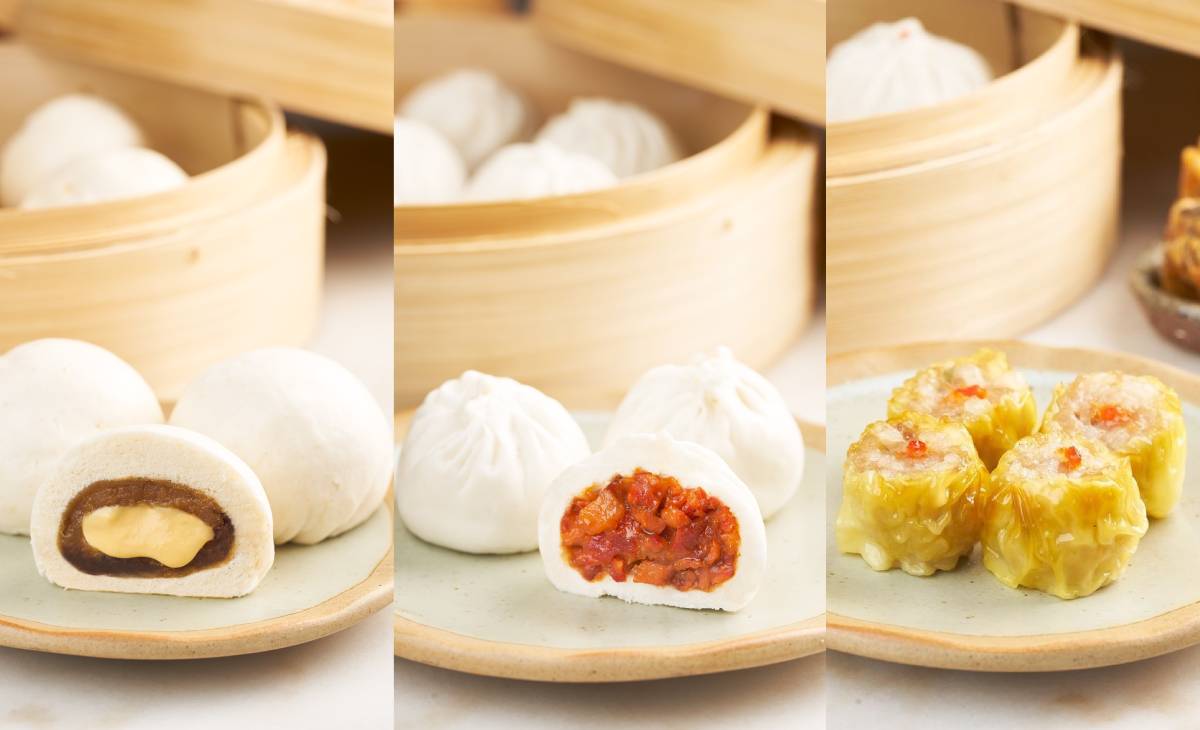
When I bit into the Yuan Yang Pau, which contains lotus seed and red bean paste along with salted egg custard, a burst of flavours filled my mouth.
The rich red bean and lotus pastes were balanced by the slightly more savoury and creamy custard, which created an interesting mouthfeel.
While this innovative snack was a bit too sweet for my liking, I can see it being a hit with those who have a sweet tooth.
The Mini Char Siew Pau, however, was just as delicious as I remembered it to be from my school days.
I ate the pillowy bun in one bite and was greeted by a smoky and savoury flavour from the char siew, which is roasted using a traditional charcoal grill before being tossed in a wok to enhance its flavours.
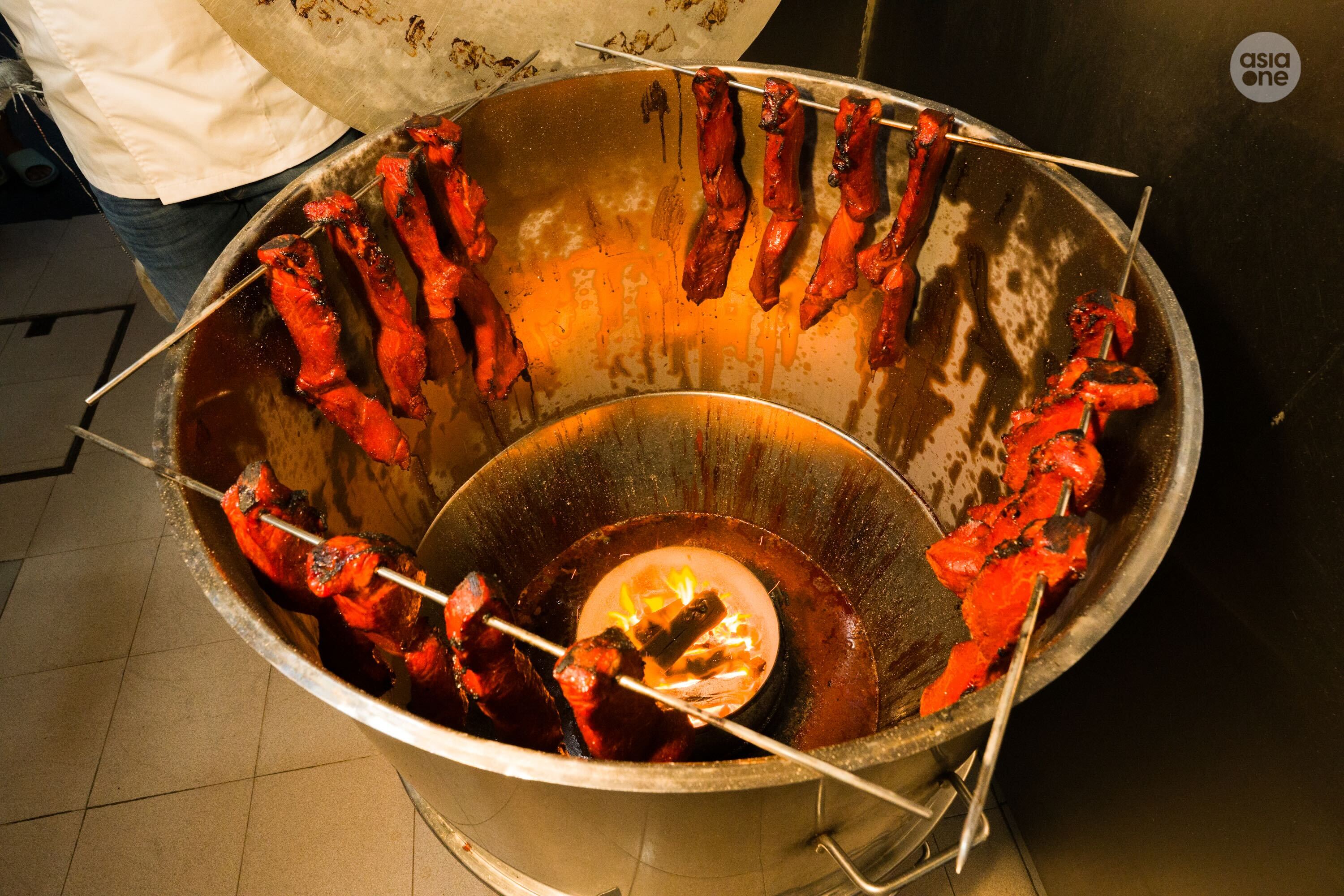
The pork also had a slight sweetness, which was well-balanced with the other flavours and textures of the pau.
As a char siew lover, this steamed bun checked all the boxes for me.
The Siew Mai is another snack offered at Tanjong Rhu Pau and is one of my favourite dim sum dishes.
The juicy shrimp and pork filling was well-seasoned and wrapped in a thin wonton skin.
While the Siew Mai tasted great on its own, dipping it in chill sauce added a fun kick to the dish.
In the 1960s, Yap Peng Wah started selling steamed buns he made at the side of his father's coffeeshop — Chin Sin Huan Eating House — along Jalan Batu.
He then founded Tanjong Rhu Pau alongside a business partner in 1988, where they created Singapore's first "Mini Pau".
Thanks to this bite-sized snack, the brand gained immense popularity during the late 1980s and early 1990s.
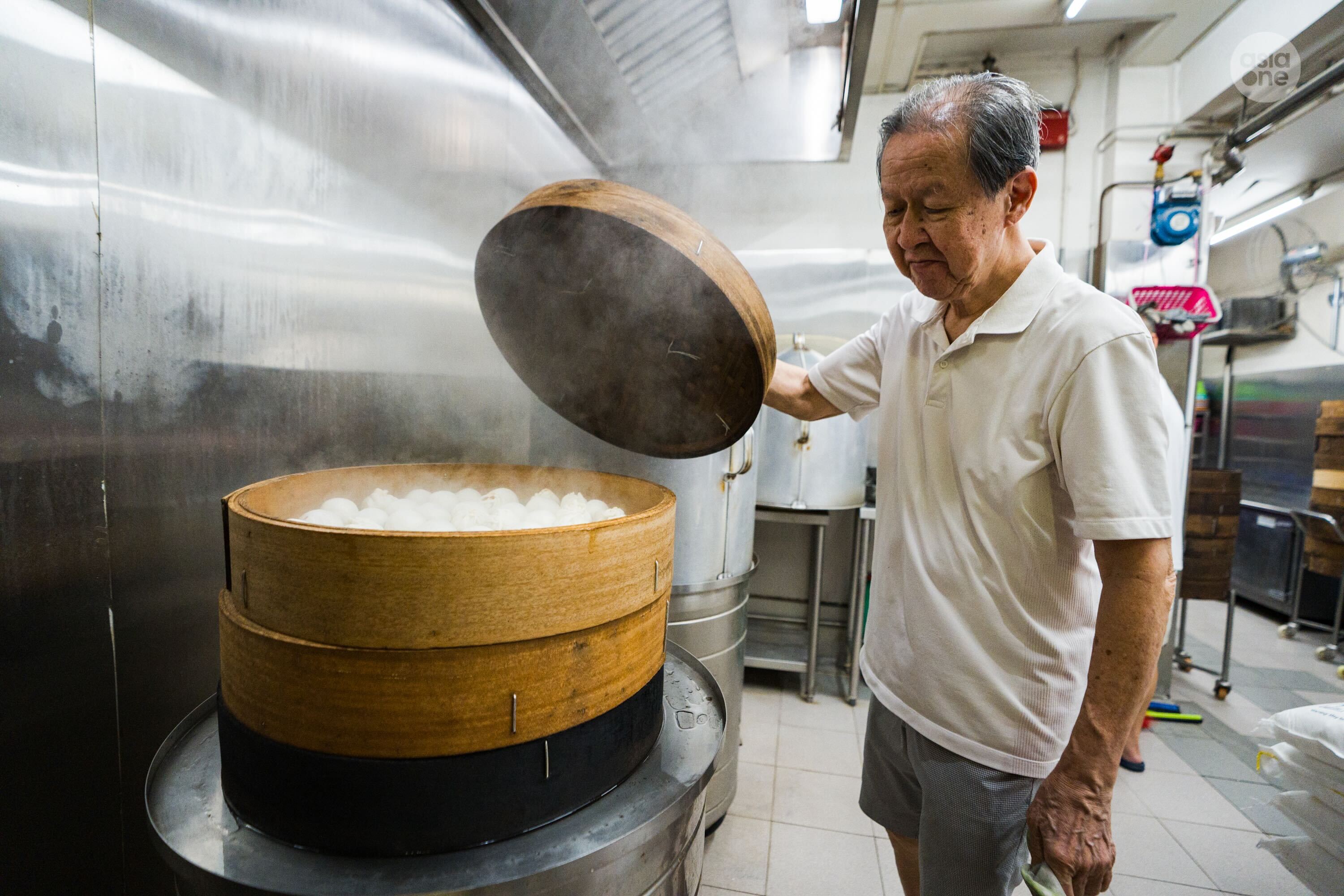
It was even referred to as the shop "without paus in the steamers" as fresh batches would sell out almost immediately upon leaving the kitchen.
Peng Wah, now 78, continued to run the business, which expanded to include shopfronts at Balestier and Guillemard Road, until his children took over in 2015. He continues to help out with the pau-making process.
In recent years, the homegrown brand has opened kiosks at Great World and Tampines Mall, and the siblings also launched a cafe concept, Chin Sin Huan, in Jalan Besar which offers the same traditional steamed buns.
Tanjong Rhu Pau also plans to open two new kiosks — in Food Republic at Mandai and Food Junction at Bishan Junction 8.
In March, it will be offering a limited-time promotion to celebrate this new chapter, where customers who buy eight Char Siew Paus will get two more free (available at all stores except Food Republic at Mandai).
Address: 611 Balestier Road, Singapore 329908
Opening hours: Mon-Sat, 8.30am to 7pm; (Closed on Sundays and public holidays)
[[nid:728919]]
No part of this article can be reproduced without permission from AsiaOne.
bhavya.rawat@asiaone.com