

Toyota Rav4 Hybrid vs Subaru Forester E-Boxer: Which one should eco-minded, outdoorsy drivers pick?

We line up these two popular hybrid SUVs to find out which one should eco-minded, outdoorsy drivers consider.
PHOTO: sgCarMart

Owning an SUV used to mean putting up with higher fuel consumption and possibly less performance, but with more electric SUVs available in the market, this stereotype no longer exists.
However, for drivers who aren't ready to make the switch, a hybrid SUV is the next best thing. They offer lower consumption and emissions compared to an ICE model, so you can enjoy the looks and versatility without compromising efficiency.
With that in mind, we've lined up the Rav4 Hybrid and the Forester e-Boxer for this story. Interestingly, both feature 2.5-litre engines and utilise Toyota's hybrid technology. So, which one should you seriously consider?


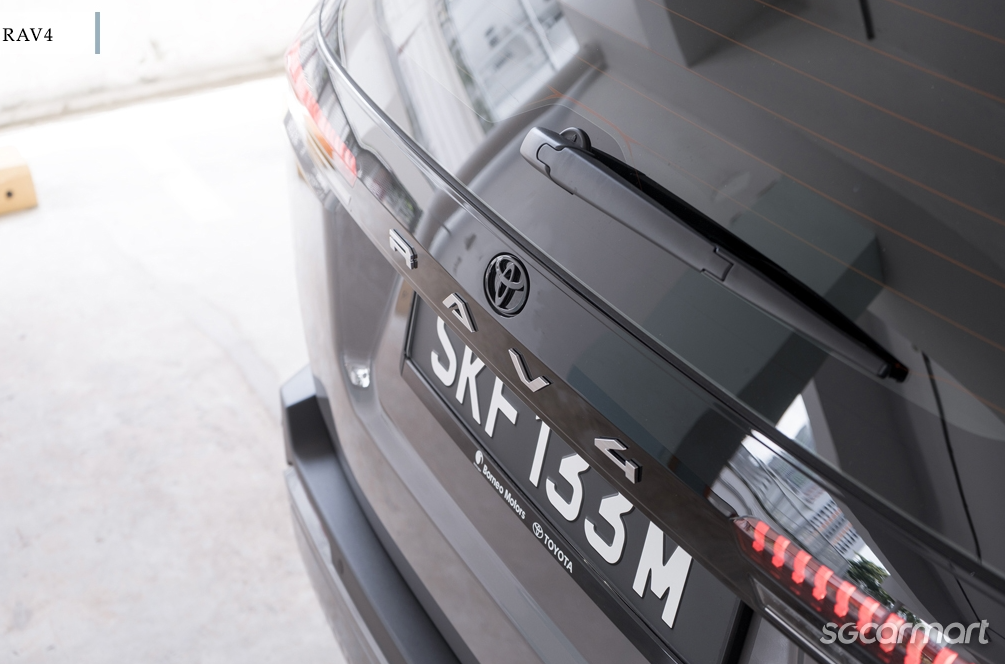
These two cars might look the same from afar, but that's just their paintwork — both are almost the same shade of grey. Between the two, the Rav4 looks bolder with its 'hammerhead' inspired mien and squarish silhouette, complete with chunky fenders.
Its rear is filled with sharp angles as well, and for added presence, large 'R A V 4' lettering. The model's name is surprisingly bigger than the Toyota badge, reflecting the brand's increased confidence with its popular SUV.
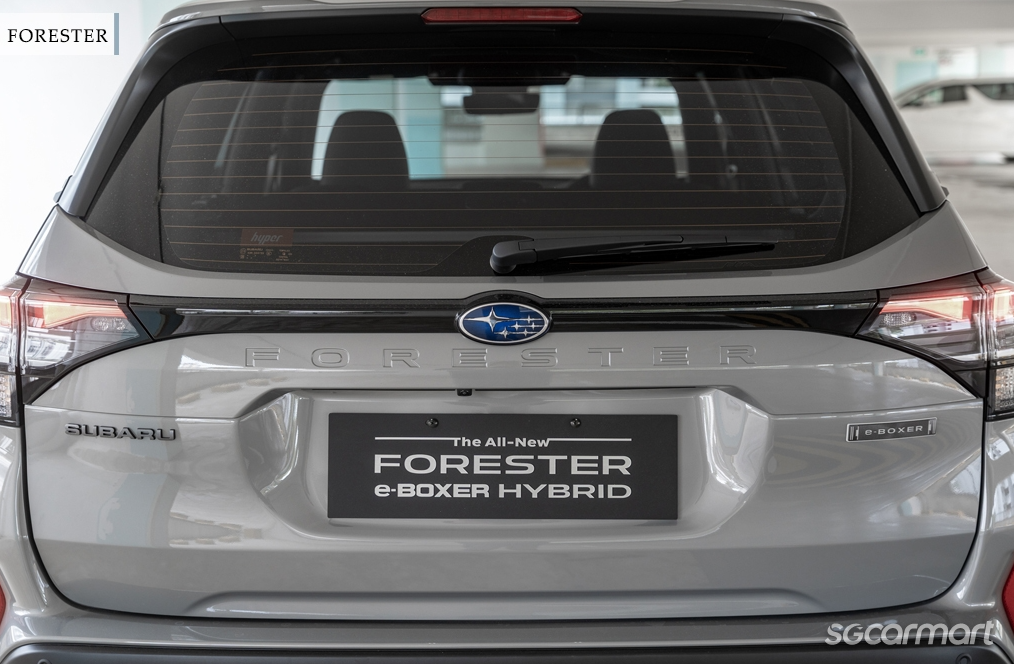
The Forester, on the other hand, is surprisingly understated, deviating from Subaru's usual penchant for unique, though not necessarily immediately attractive cars.
You'll find sleeker headlamps and taillights, along with rounder lines here, reflecting the Forester's approachable vibe.
But hints of its adventurous character can still be found with its upright stance, sculpted wheel arches, and all-wheel drive drivetrain. Size-wise, the Forester is longer and taller than the Rav4 (by 55mm and 50mm), while the Rav4 is wider and has a longer wheelbase (by 25mm and 20mm).

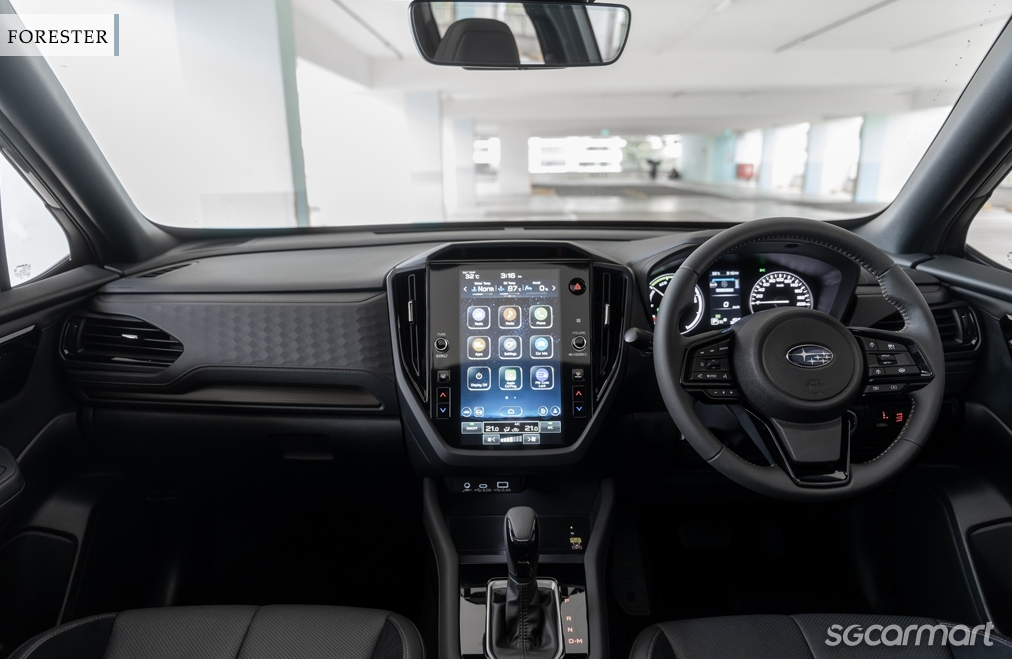
While the Forester's exterior design is unexpected, its interior is typical Subaru, focused on simplicity and user-friendliness. Buttons dot the steering wheel, offering both convenience and directness of controls, two crucial things missing in so many other modern cars.
There's a tablet-style touchscreen, of course, but there are also knobs for the radio tuning and audio volume, and buttons to adjust the air-con temperature.
On the screen are large icons that make navigating easier for first-time users. The space is practical and feels familiar.


The Rav4, on the other hand, is more upmarket and modern. Look past the sombre interior palette and you'll discover that the materials and switch tactility are easily a notch or two higher.
Many of the surfaces are soft, and the cabin feels even better built than the Forester's.
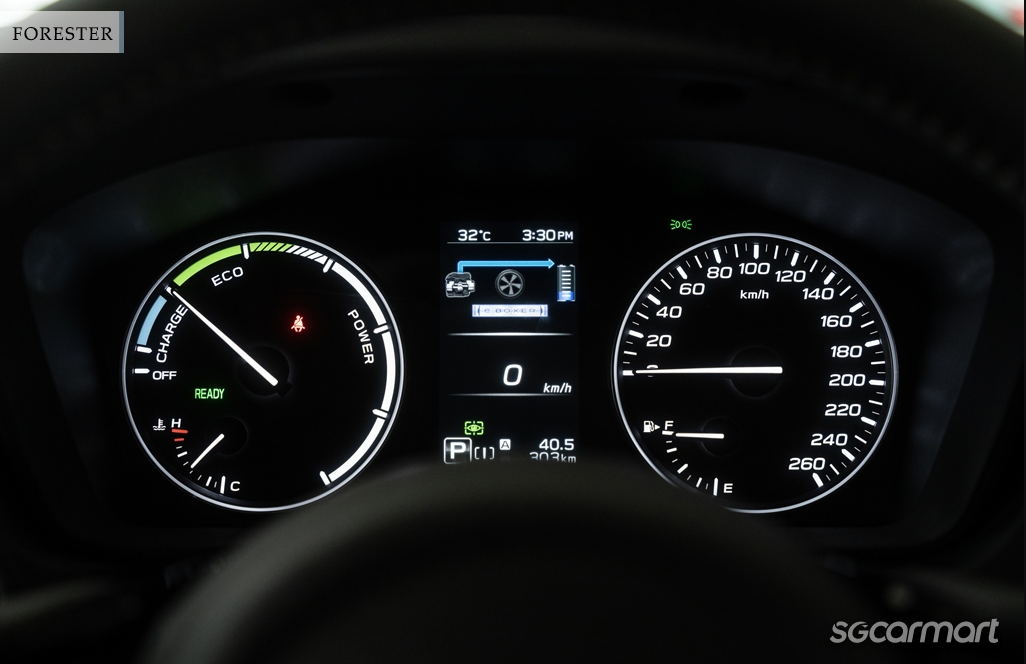
The Rav4 has a digital instrument cluster and tab-like gear selector, while the Forester utilises analogue gauges and a proper gearshift lever.
But although the screens are snazzy and the little shifter saves space, there's still much to be said about the simplicity of conventional meters and a gearshift lever that easily falls to hand.

Although the Rav4 has taken the minimalist approach, it also retains physical controls. And when it comes to connectivity, the Rav4 has modern USB-C ports, whereas the Forester retains the older USB-A + USB-C pairing.
In terms of backseat space, the Forester is better suited to accommodating three passengers, as the lower floor protrusion makes it less awkward for the middle occupant.
And unlike the Rav4, it also has a sliding sunroof that helps brighten the cabin, making it feel more spacious.
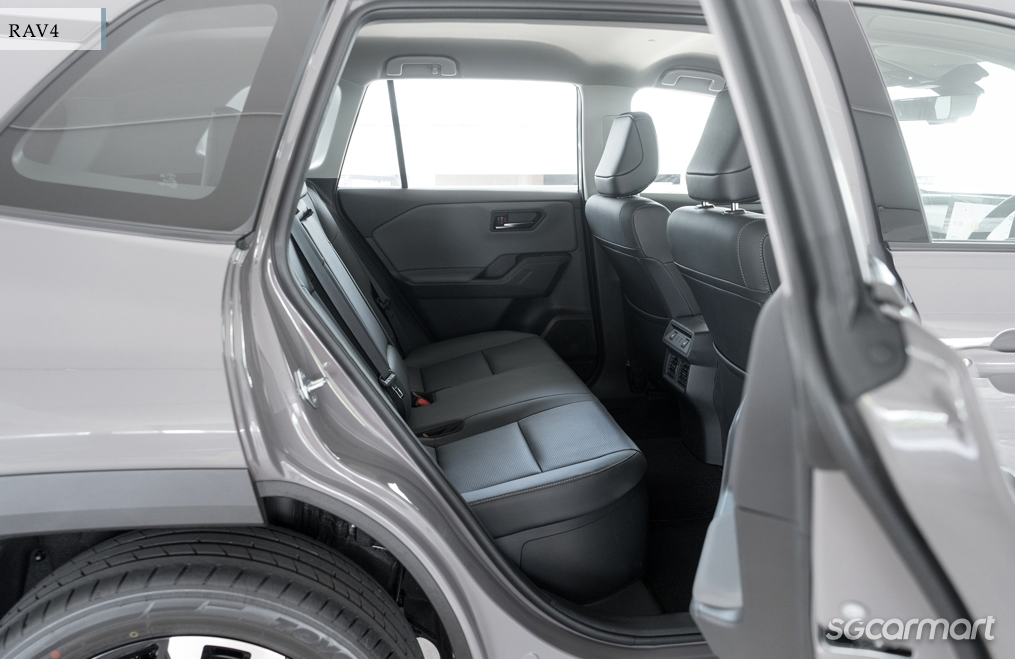

The Rav4's rear bench, though, is cushier and more supportive, thanks to the taller backrests and larger headrests.
Here again, it comes with the convenience of two USB-C ports, instead of the USB-A and USB-C offerings in the Forester. Plus, if passengers here feel cold, the seats can be heated as well.
As for practicality, the Rav4's 749-litre boot capacity edges out the Forester's 487-litre cargo volume.
It has a lower loading height as well, making it easier to load/unload heavy items. However, though smaller, the Forester's boot is more convenient as it has remote backrest releases and more tethering points.


On paper, the Rav4 and Forester have a few things in common: Their engines have a displacement of 2.5 litres, and the Forester uses Toyota's hybrid system.
But that's where their similarities end, because while the Rav4 prioritises efficiency, the Forester focuses more on driveability.
Driving the Rav4's front wheels is a 2.5-litre in-line-four and an electric motor. With a combined output of 215bhp and 221Nm of torque, the Rav4 clears the century dash in 8.0 seconds.
What's truly impressive, though, is that you're able to achieve — and even exceed — the claimed average fuel economy of 19.6km/L.
The Rav4's other strength is its refinement. Although there's some engine roar if you push hard, the powertrain is otherwise unobtrusive, switching seamlessly from electric to ICE and vice-versa. The ride quality is also quieter and more comfortable.

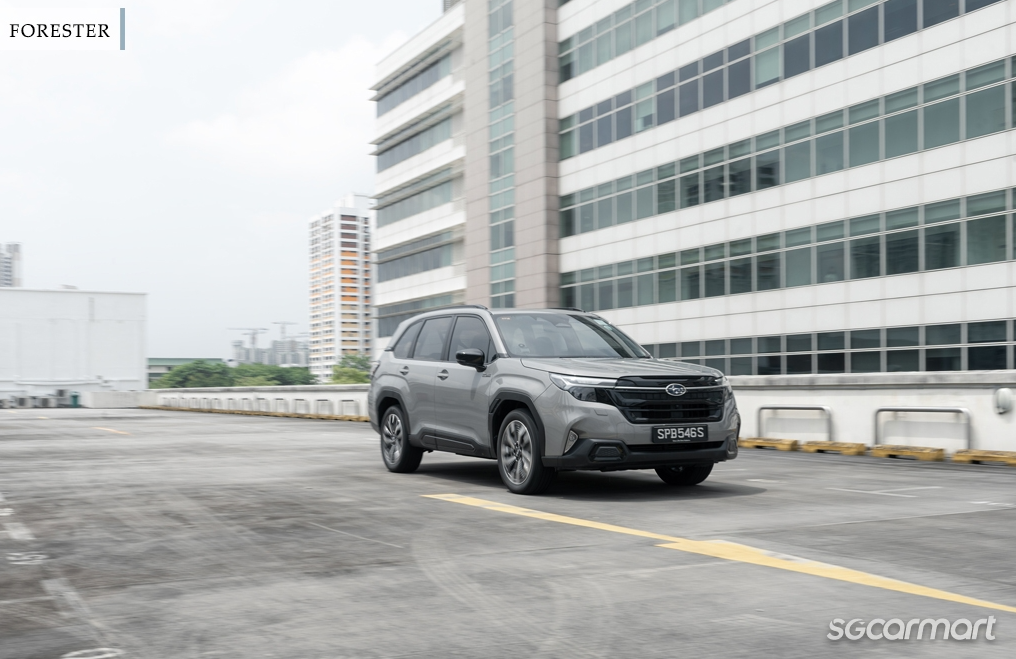
The Forester's hybrid powertrain, in comparison, delivers 194bhp and 209Nm of torque, along with a zero to 100km/h time of 9.4 seconds.
Subaru claims an average consumption of 16.9km/L, but I only managed 13.3km/L. Longer highway runs, as experienced by my colleagues, improves this.
Although slower than the Rav4, the Forester shines when it comes to driveability. Its naturally balanced flat-four engine is buttery smooth, while the all-wheel drive system makes it more surefooted across a variety of surfaces.
Further boosting the driver's confidence is the all-round outward visibility, which is better than the Rav4's.

Apart from being more upmarket, the Rav4 also offers greater practicality, along with higher performance and efficiency. It is convincing, but with a list price of $245,888, also demands a significant premium over the Forester.
This makes the Forester, which starts from $205,800, an even more compelling proposition. Despite neither being as refined nor as efficient as the Rav4, the Forester nevertheless impresses with its ergonomic cockpit, spacious backseat, useful boot, and overall driveability.
The Rav4is an easy pick if you can afford it, but you should still give the Forester a go — it may just change your mind.
[[nid:741668]]