

Volvo ES90 Ultra review: Luxe experience focused on comfort, quality and restraint

PHOTO: sgCarMart

This is the brand new Volvo ES90, and it's Volvo's executive sedan gone electric. Except, it's not exactly a sedan anymore?
Built on the SPA2 platform shared with the Volvo EX90 and Polestar 3, the ES90 occupies the space in Volvo's product lineup previously occupied by the S90 (in Singapore, the ES90 is also now the only non-SUV Volvo you can buy brand new).
So, should it be on your shopping list?

Let's first address what it is: Not a traditional four-door sedan.
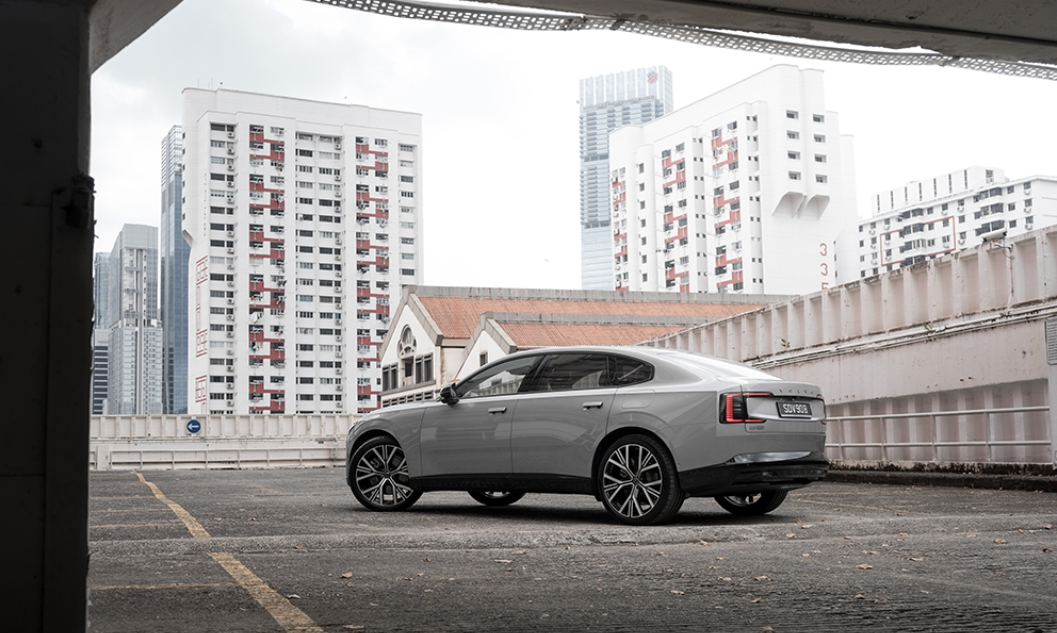
It is a fastback, with a rear liftback opening up to a 424-litre boot. Also, it rides taller than a typical sedan, calling to mind some of Volvo's prior Cross Country models. For context, its 1,546mm height and 178mm of ground clearance is a fair bit taller than the S90 (1,440mm tall and with 148mm of ground clearance).
The ES90 is also a reasonably large car — 5,000mm long and 1,942mm wide (again, slightly longer and wider than the S90).

The increased height and ground clearance lends it an unconventional look, which I actually find reasonably handsome. It's got a stately presence, helped by large flat surfaces, perky backside, and sculpted lighting. This particular paint finish (Aurora Silver) is also quite striking — not quite silver, not quite purple, but certainly distinct.
Is it the prettiest Volvo out there? No, I personally have a huge soft spot for the look of the current-gen S60 (in my eyes one of the best-looking contemporary cars). This ES90 has many hallmarks of Volvo's design language, but interpreted in a way that feels a tad more futuristic.
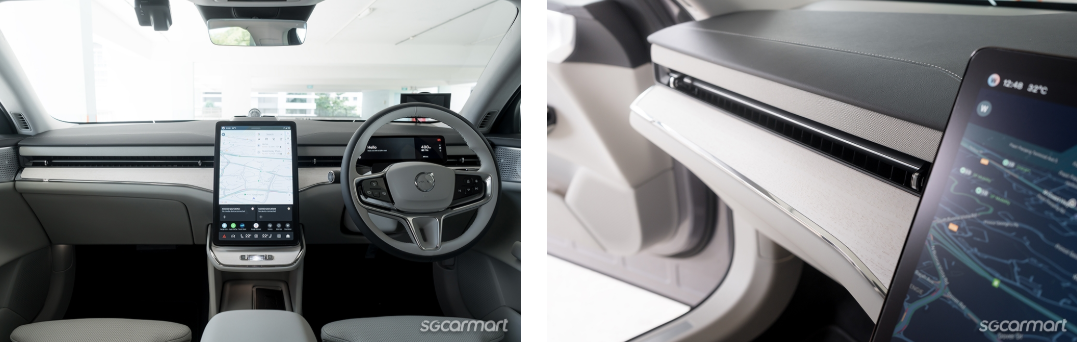
Inside, it is a much more familiar space — immediately there is that sense of Scandi minimalism. The space is uncluttered, light and airy. The Dawn nappa leather upholstery certainly contributes significantly to that sense of lightness, though I suspect the long-term maintenance of a white interior may be cause of concern for some drivers.
It's also a lovely space to be in. Material quality is high, build quality feels high, and there is an immediate sense of restfulness. That's that Scandi minimalism at work, perhaps.
Taking centrestage at the front is a 14.5-inch central touchscreen running the Android Automotive OS, which should be familiar enough to anyone that has recently sat in a Volvo. Operation is fairly intuitive, even more so if you already are part of the Android ecosystem.

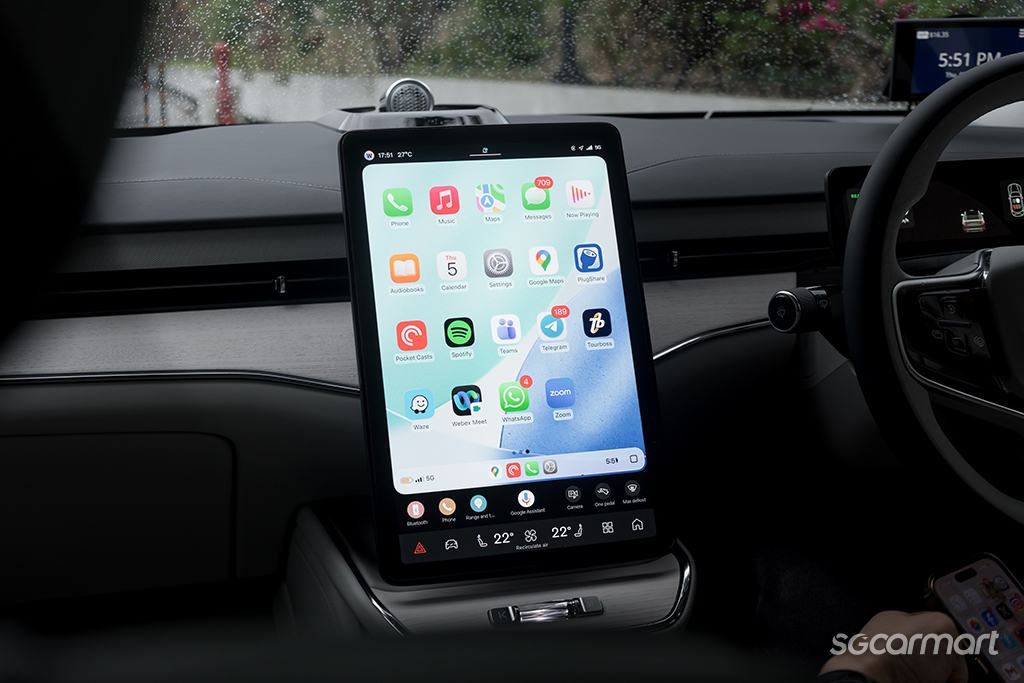
Now, the screen is locally-fitted with a screen protector, and I love it. It's one of those matte-finish ones (like you might get on your phone), and unlike the typical glossy finish, this helps to notably reduce fingerprints left on the screen. And, it also gives the screen a slightly 'softer' tactile feel.
One other update that is notable to me is that wireless Apple CarPlay is now supported even though it is an Android OS (previously, Apple users like me could only use Bluetooth connectivity).
Now, cabin controls are mostly housed inside the touchscreen, and that's not always the simplest. For example, opening the glovebox has to be accessed via the screen, as is adjusting the steering wheel and wing mirrors. Air-con controls are one sub-menu away, and it is slightly annoying that recirculation is default off when you start the car.

I also don't like the window controls — like in VW's ID. models, there are just two rocker switches, and you press a button to toggle between controlling the front and rear windows. The standard four switches would be much simpler. A solution looking for a problem, methinks.
Passengers lounging in the rear will have little to complain about, though. The dedicated EV platform delivers tons of legroom in the rear — space feels much more akin to a larger, segment-up model like an S-Class. Four-zone climate control and ventilated rear seats come standard, and on this variant the rear seat backrests can also be reclined.
This is the higher-spec Ultra variant, and you expectedly get an increased level of equipment and specification.

For example, there is the 25-speaker Bowers & Wilkins High Fidelity Sound System, which sounds absolutely tremendous by itself. Also, the ES90 features something called the Abbey Road Studios Mode.
Developed by Bowers & Wilkins together with the fabled Abbey Road Studios, this feature allows you to "tune" the sound system — from a retro vintage to a deeper, modern sound, narrowing or expanding the stereo sound field, and adjusting the acoustic environment. It's far from an essential function, but I did enjoy playing around with it.
And it certainly works as advertised — the modern-leaning settings deliver much more presence, with better articulation and a more speedy and forward sound. Adjusting the "distance" between the speakers also notably affects sound separation — you can distinctly make out the stereo L/R separation within the track.
As someone who dabbles in audiophilia, I took quite some geeky enjoyment out of this. But one thing I must highlight — you do need to play your music at a reasonably high volume to appreciate these nuances (thankfully, my music is always loud. Some might say too loud).

The high-quality audio is aided by the fact that cabin insulation is top-notch. This Ultra variant gets laminated acoustic glass for the side and rear windows, which do an excellent job of keeping exterior sounds at bay. It's not quite a music studio on wheels, but it helps to elevate the overall sonic experience (Ok, audio review over, back to the car review.)
On this Ultra variant, you also get Light Ash wood trim with a back-lit light pattern inspired by Scandinavian homes, front massage and ventilated seats, as well as an electrochromic glass roof. All things considered, this is a well-equipped cabin, delivering enough creature comforts without feeling over-stuffed.
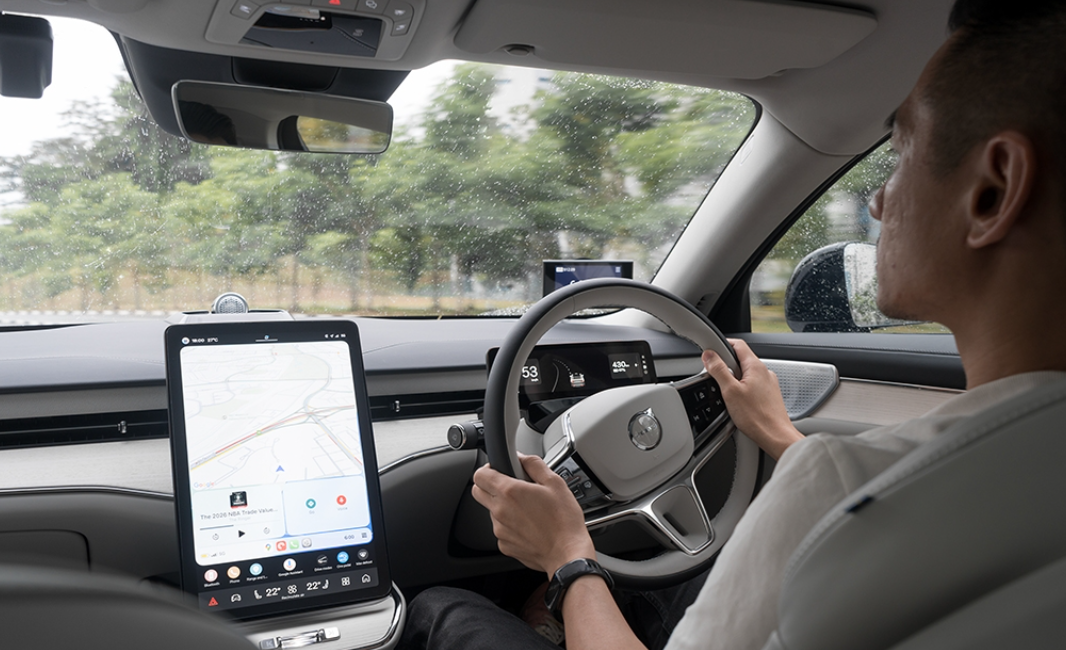
The ES90 is offered locally with just one powertrain option — 245kW of power, 480Nm of torque, rear-wheel drive only. There's plenty of grunt here, allowing the car to sprint to 100km/h in 6.6 seconds if you need.
But you want to be driving the car leisurely, because that's where it truly shines.
This Ultra variant gets active air suspension and active chassis, with the result being a highly compliant and controlled ride at speeds. However, the ride can be a little bit lumpy at crawling speeds when going over poor tarmac.
But get up to some speed and it really is quite a serene drive. Bumps in the road are brushed off easily, while overall body control is good. The excellent noise insulation helps add to that sensation of comfort — you really feel cocooned off from the world.
Handling is also pretty competent (I set the steering feel to 'Firm' for a little bit more weight). The car steers with accuracy, and is fairly easy to place on the road given its size.

Now, the pedal calibration is interesting. It is generally soft — in fact too soft for my own liking. There's a lot of travel on both pedals and the feel is very light. I found myself needing to depress the brake pedal far too much, and there isn't enough "bite" (in most situations the braking is probably done more with regenerative braking than actual mechanical braking from the callipers).
But, when you use the one pedal drive setting, especially in auto, it makes a lot more sense. The softness at the top of the accelerator pedal's travel allows better control to modulate the amount of regen braking. It also allows you to ride the accelerator pedal when you want to coast or just have a tiny bit of acceleration.
With traffic in front of you, the car will also regen brake to a complete stop, and does so in a progressive and well modulated manner. Used as such, I found myself rarely using the brakes at all (only when stopping at a red light).
It appears to me that Volvo has calibrated the pedals to prioritise one-pedal driving. It may take a bit of learning, but I think it's the right way to use the ES90.

However, rear visibility is terrible. The rear windscreen is already letterbox-opening tiny, and it's also obstructed by the headrest of the middle rear seat. This is a car that desperately could use a digital rear view mirror (something the Polestar 4 already has and could presumably be easily ported over).
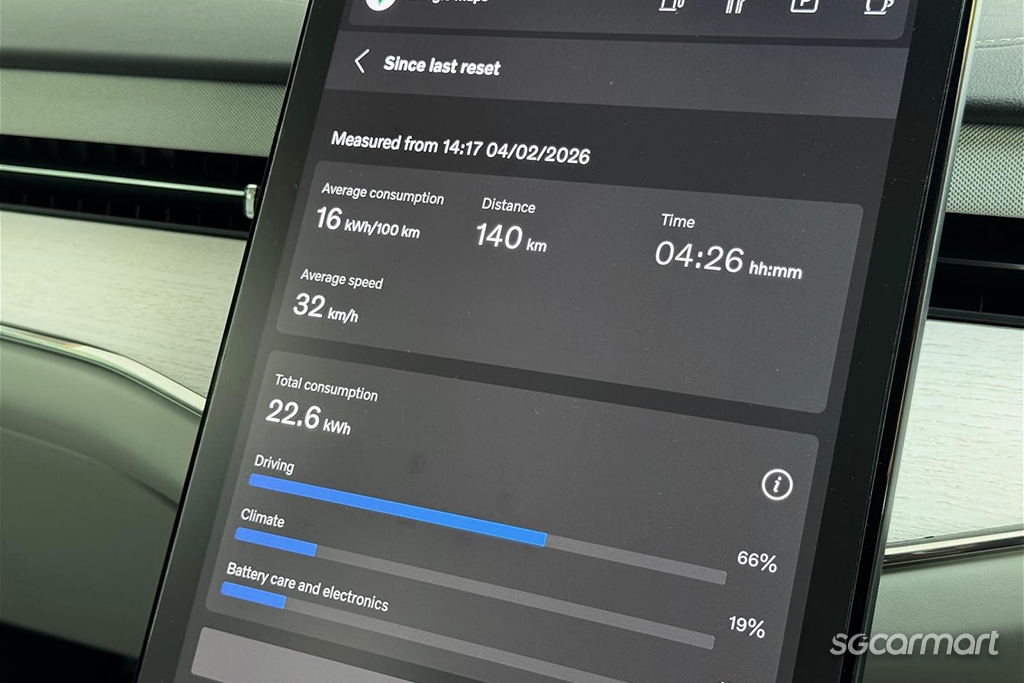
As far as range goes, Volvo claims up to 661km (WLTP, combined) on a full charge of the 92kWh battery. Over three days of driving, I averaged 6.25km/kWh, which is a fair bit higher than the 5.4km/kWh that the ES90 is rated at. That would translate to 575km of real world range, which is pretty good relative to the battery's size.
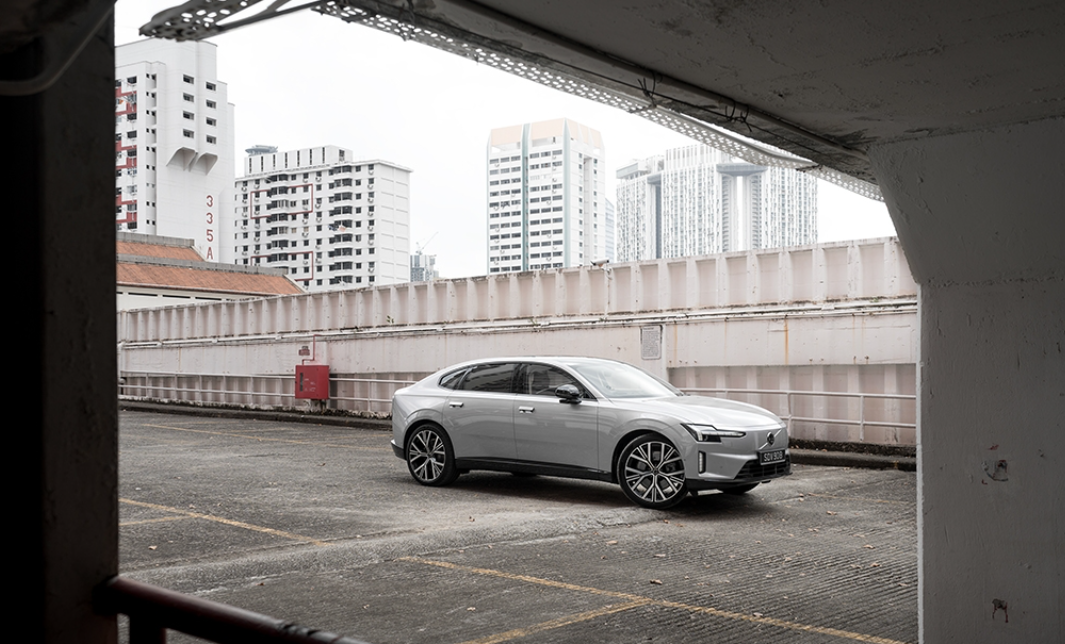
Where I found myself particularly drawn to this car is its gentle nature. Even the "beep beep" when you lock the car is soft and discreet.
Discretion is the name of the game here. Where modern EVs may lean toward over-exuberance, I do like how the ES90 takes a more restrained approach, whilst still projecting quiet confidence. It's never shouty in any area, but the overall package is well-composed and delivers an elegance that I appreciate.
It's not perfect, certainly. There are some UI choices that I would change. But even so, it's a posh-feeling car — it feels high-quality and well-executed.
Now, we get to the price point: This Ultra variant is priced at $380,000, which is actually surprisingly "cheap". For context, the XC60 (different body style and propulsion means, but ultimately a size-down) is just under $360,000, while the EX90 starts at $433,000.
This also means the ES90 is significantly more affordable than other electric premium executive sedans like the BMW i5 ($419,000) and Mercedes-Benz EQE ($419,000), and slightly cheaper than base A6 Sportback e-tron model ($383,000). You could even omit some equipment and opt for the ES90 Plus variant and save $40,000.
So, if you were looking for an electric premium executive sedan, I think the new ES90 should definitely be on your shopping list. Even if it isn't technically a sedan.
What we like
What we dislike
[[nid:729205]]