

What happens when you finally see a 'glass child'?
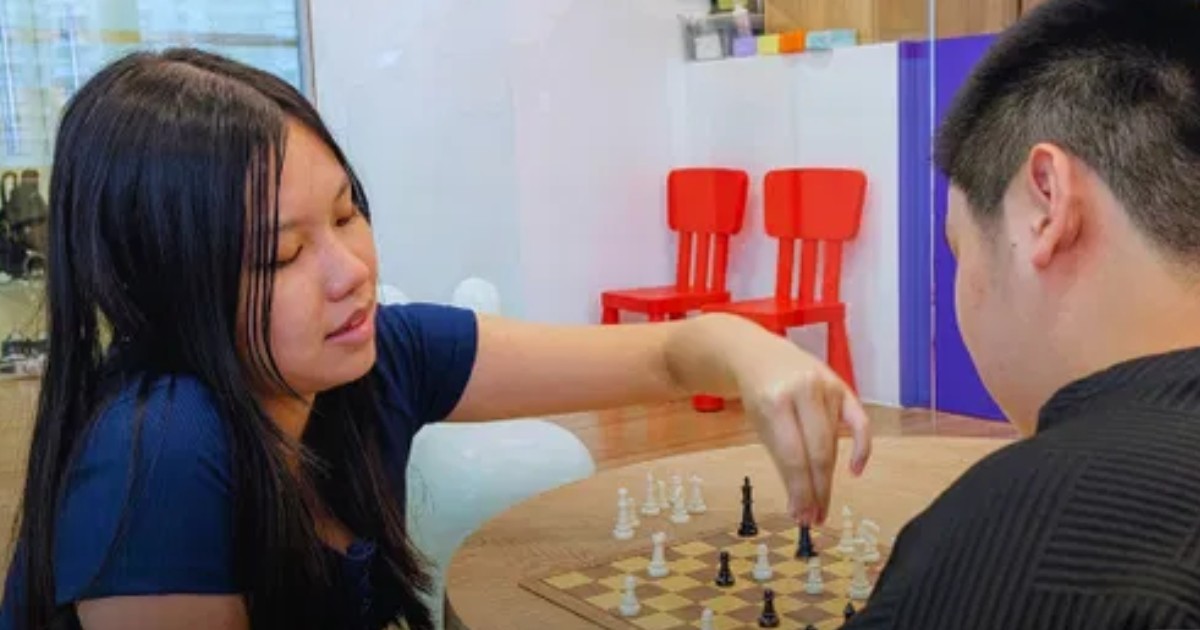
Watching speech therapy change her brother’s life gave her clarity about her future.
PHOTO: Theasianparent

A little girl in Singapore grew up watching her parents' lives revolve around hospital corridors, therapy rooms, and the unpredictable rhythms of her younger brother's special needs.
Dinners were often late, shared with her grandmother, while her parents tended to his care. When schoolwork felt heavy, she swallowed the urge to complain, knowing their energy was already spoken for.
And so she learnt to shrink quietly into the background - not fragile, but transparent, always present yet rarely seen.
Nineteen-year-old Isabelle Lee was what psychologists call a "glass child". Not broken, not neglected, but often overshadowed by necessity.
While her peers chattered about family outings and bedtime stories, Isabelle quietly ensured her brother ate his dinner, completed his homework, and played safely. She carried responsibility far earlier than most children, not out of obligation, but instinct.
She knew her family needed her to be calm, steady, and present.
Yet what could have hardened her instead shaped Isabelle into someone startlingly empathetic. She noticed the small things others missed: the quiet child in class, the tension unspoken in a room, the invisible weight someone else might be carrying.
That sharpened sense of empathy - born from years of being attentive to others - now fuels her choice to become a speech therapist.

"I have a younger brother named Emmanuel, who is 15 turning 16 in November this year," she told theAsianparent.
From the very beginning, Isabelle's family life revolved around her younger brother Emmanuel and his complex needs - hospital visits, therapy sessions, and the daily rhythms of care.
Emmanuel, who navigates apraxia, global developmental delay (GDD), ADHD, and dyslexia, demanded her parents' constant attention and energy.
In those moments, Isabelle grew up in the quiet spaces beside them, cared for mostly by her grandmother, learning early how to be steady, patient, and observant in a household where love was abundant but stretched thin.

"I became the 'easy child,' quiet, obedient, emotionally contained - not because I had to, but because I instinctively understood that my family needed me to be that way," she reflected.
It shaped how she saw the world. Isabelle developed a sharp sensitivity to the unspoken struggles in people around her.
"I've become someone who notices the quieter struggles, the ones that aren't always seen but are deeply felt," she explained.

Like many glass children, Isabelle's awareness of being "different" hit in school.
"During recess, my classmates would talk excitedly about going out with their parents or how their mum or dad helped them with homework. That was when it really struck me - my experience at home was not the same."
Instead of rebelling, she grew into her role. "I became the 'easy child', independent and obedient because I didn't want to add to the stress my parents were already facing."
This early responsibility made her mature quickly. It gave her resilience, but also meant growing up a little too soon.

Does the term 'glass child' resonate with Isabelle? Absolutely. "Yes, the term does resonate with me. It captures that quiet sense of being present, but unseen - like you're there, but much of the focus is always elsewhere."
But Isabelle didn't stay invisible. Over the years, she found ways to express her emotions - through her church, mentors, and eventually her own parents. She recalled a turning point when her mother began intentionally making space for her feelings.
"She began explaining more about my brother's condition and made a conscious effort to help me process my own feelings. Those conversations didn't erase the past, but they helped me heal."
One of Isabelle's most defining memories is hearing her brother's very first word - at age four.
"To most people, it might have seemed like just a small milestone, but to my family, it was everything. It wasn't just a word - it was hope. It was a connection. It was a breakthrough."
For Isabelle, it was also a calling. Watching speech therapy change her brother's life gave her clarity about her future.
"That moment shaped the path I'm on today. It's why I see speech therapy not just as a profession, but as a calling. Because I've seen what one word can do, for a child, for a family, for a sibling holding onto hope."

Growing up with a non-verbal sibling meant Isabelle lived the frustration of communication breakdowns firsthand.
"I remember the helplessness of not knowing what he needed, the frustration when he couldn't express himself, and the silence that often filled the space between us."
Her mother Janice's courage also shaped her journey. After leaving her corporate career to start Bridging the Gap, an early intervention centre, Isabelle saw what leadership through service looked like.
"Her sacrifice, and her vision for a more inclusive society, left a lasting impression on me," said Isabelle.

Now, after job-shadowing therapists at Bridging the Gap and AWWA School, Isabelle is preparing to step into her own career.
"While I've always been drawn to helping professions, speech therapy stood out because it touches something so fundamental - the ability to connect, to be heard, and to be understood."
Through observing therapy sessions across clinics, schools, and hospitals, Isabelle learned that communication is much more than words.
"I used to think communication was only about language and articulation. But through play therapy, I realised it's about connection. I saw children who couldn't speak yet still expressed themselves-through eye contact, gestures, body language, even laughter."
She also witnessed the perseverance of families.
"Therapy is never just about the child. It's about the whole ecosystem - parents, caregivers, siblings, and teachers. I saw how much strength it takes for families to keep showing up."

Despite offers from overseas universities, Isabelle chose to stay in Singapore and dive into the Speech and Language Therapy programme at SIT.
Fresh off completing her A-Levels at Temasek Junior College, she's turning her personal experience with her brother's journey - and all the hands-on exposure she's had - to help others find their voice.
"My brother still requires regular therapy, and I wanted to remain present for him and my family. Choosing to study locally wasn't just an academic choice, it was about honouring the commitment I've always had as a sister and caregiver."
More than that, she wants to serve the local community.
"There is a growing demand for speech and language therapists locally. I want to give back, not just as a therapist, but as someone who truly understands the local context and the needs of our families."

To other teens supporting siblings with special needs, Isabelle had a heartfelt message to share.
"You are not alone. If you're feeling overlooked, exhausted, or even resentful sometimes, those feelings are valid. Loving your sibling and struggling with your place in the family are not opposites - they can exist side by side."
She encouraged reaching out: "True strength is also about allowing yourself to be seen. Talk to someone you trust. Your story matters. Your needs matter. And you deserve support too."
When asked what she hopes to bring as a future therapist, Isabelle said: "To me, giving someone a voice means giving them access to connection, dignity, and opportunity. It's not just about teaching speech or language. It's about unlocking a child's ability to express needs, emotions, preferences, and personality."
Her vision goes beyond the clinic. "When we give someone a voice, we're not just changing their speech, but we're changing their story. And that, to me, is the heart of this work."
Every family has a story. In some, the spotlight burns bright on the child who needs it most. And in the shadows? A sibling who's watching. A sister who's waiting. Growing up faster than they should.
That sibling is the glass child. Not fragile. Not broken. Just unseen. Transparent in the glow of their brother or sister's needs.
But glass doesn't stay invisible forever. It reflects. It refracts. It catches the light. Isabelle is proof that when you finally see the glass child, you don't just find a sibling. You find a voice, a witness, a strength forged in silence.
And maybe that's the lesson for families everywhere - love doesn't always look balanced, and sacrifice often leaves quiet heroes in its wake. Look for the glass child too. Because once you see them, you'll realise they were shining all along.
[[nid:719967]]
This article was first published in theAsianparent.