

Inside Malaysia's gambit to make its pungent durian the most wanted

A customer poses beside a giant durian display at a durian stall in Petaling Jaya, on the outskirts of Kuala Lumpur, Malaysia, June 22.
PHOTO: Associated Press

KUALA LUMPUR, Malaysia — Malaysia is pushing to take durian, whose powerful smell delights its lovers and repels its haters, beyond its roadside stalls and family orchards to convince fans of the spiky fruit that its varieties are worth seeking out.
Devotees savour durians like wine. For Malaysian ones, the taste of their rich and creamy flesh varies widely across types. Some are prized for their sweet custard and fruity notes, others for a hint of bitterness, an alcohol tinge or even a peanut butter flavour.
Malaysians' efforts to elevate the industry can be found in the capital, Kuala Lumpur, at a centre devoted exclusively to the fruit and the growing variety of products made from it.
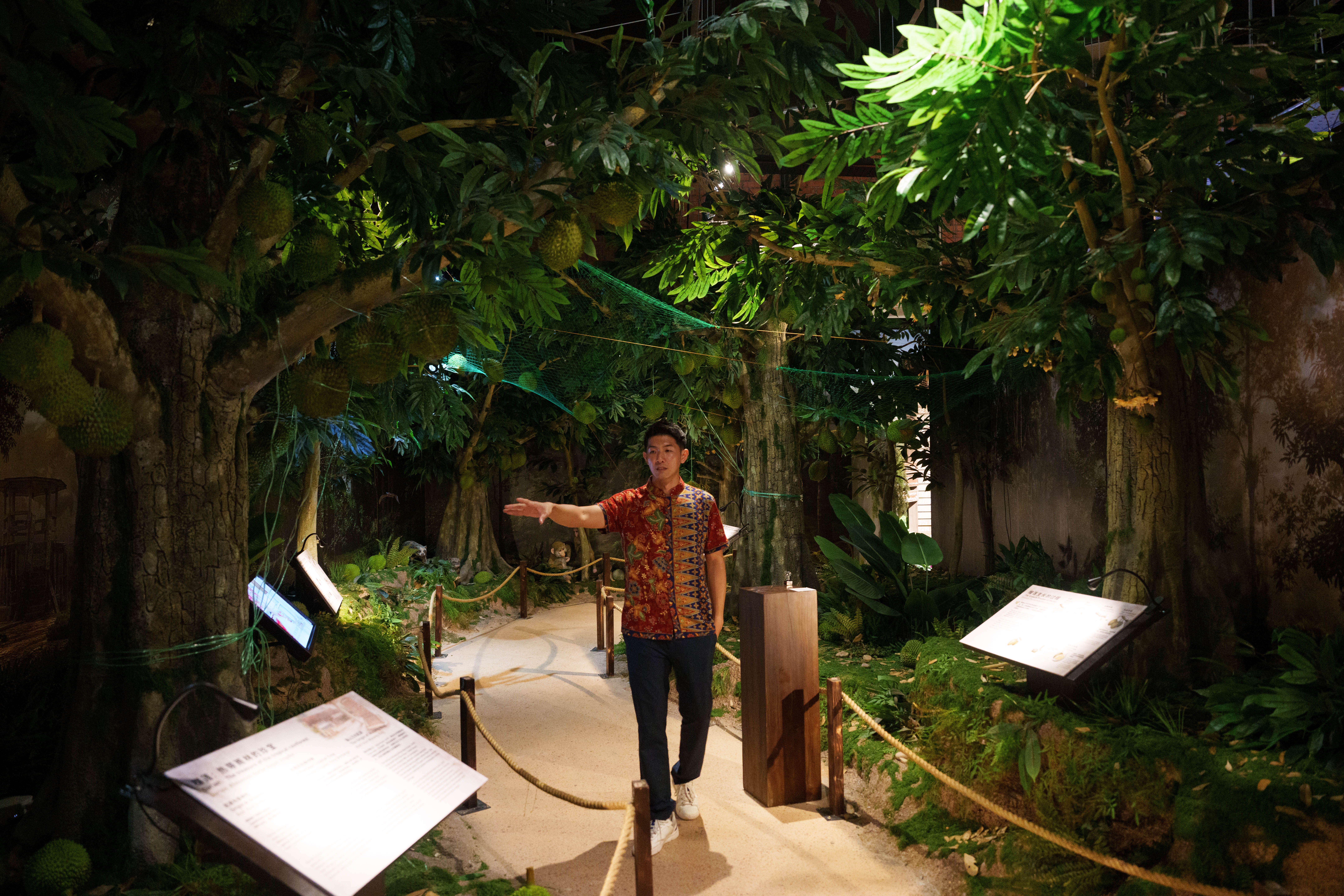
At the Kuala Lumpur Durian Experience Centre, near the landmark Petronas Twin Towers, visitors venture into a replica durian orchard to discover the fruit's culture and history. In another room, a theatre show draws laughter. Downstairs, visitors enjoy platters and egg tarts crafted from it.
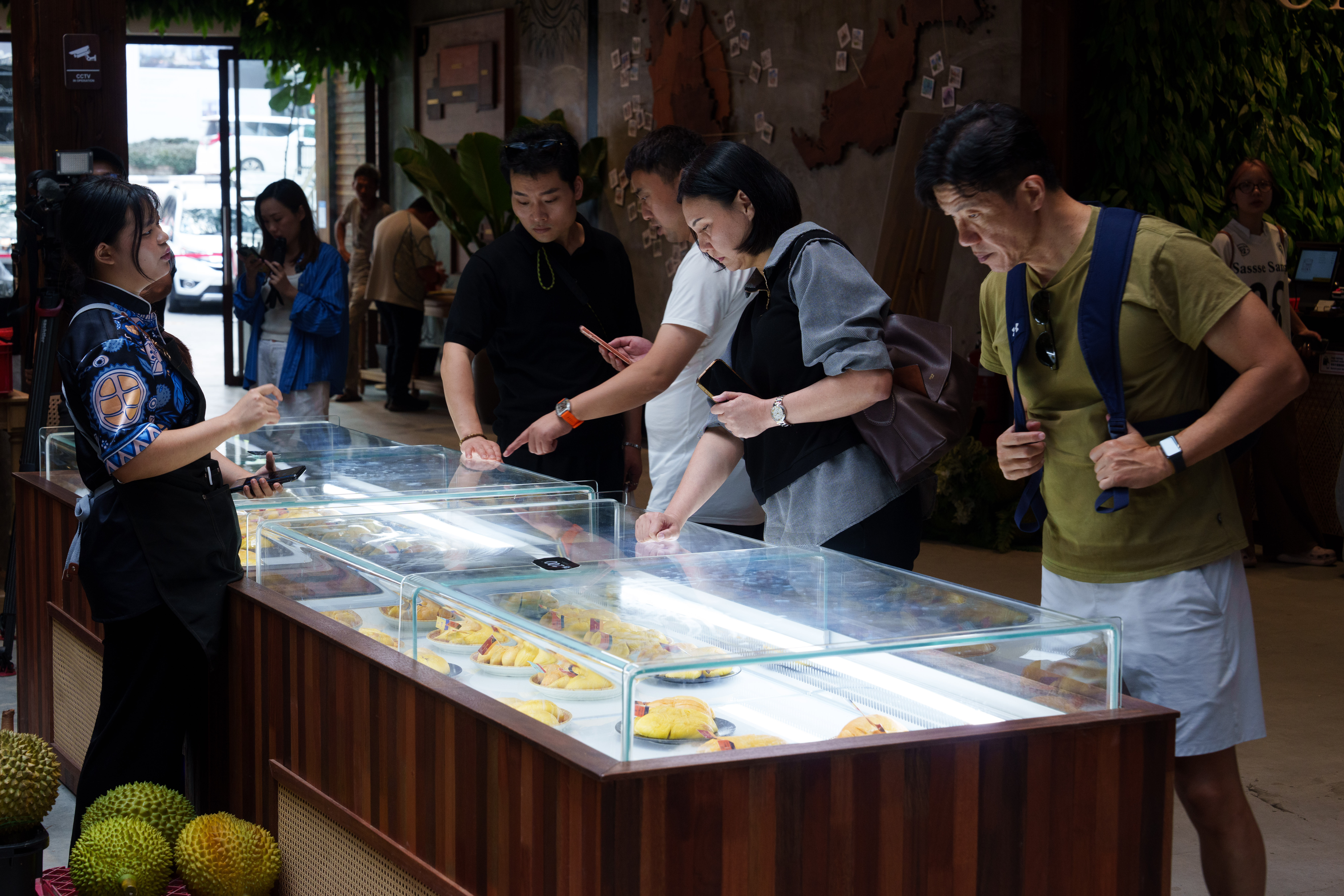
Launched this summer after an investment of nearly US$2 million (S$2.5 million), the two-story centre spans about 1,900 square metres and is open daily. Its durian shop welcomes guests from morning to midnight.
Its founder, Edison Ang, said the centre targets both local customers and tourists, especially those from China, the world's biggest durian importer. He said Chinese palates have long been influenced by Thai durian culture.
"What we actually hope for now is not to get people who don't eat durian to start eating durian," he said. "Instead, we hope consumers who are already eating durian from other countries will switch to Malaysian durian."
In 2025, China imported 1.87 million tonnes of fresh durian worth US$7.5 billion, with volume jumping over six times in the past decade, according to its customs data.
Thailand's earlier entry helped it secure over half that market by value in 2025. Malaysia, which began exporting fresh durian to China in 2024, was dwarfed. But for the first half of 2026, the value of China's fresh durian imports from Malaysia quadrupled compared with the same period last year, pointing to rapid growth.
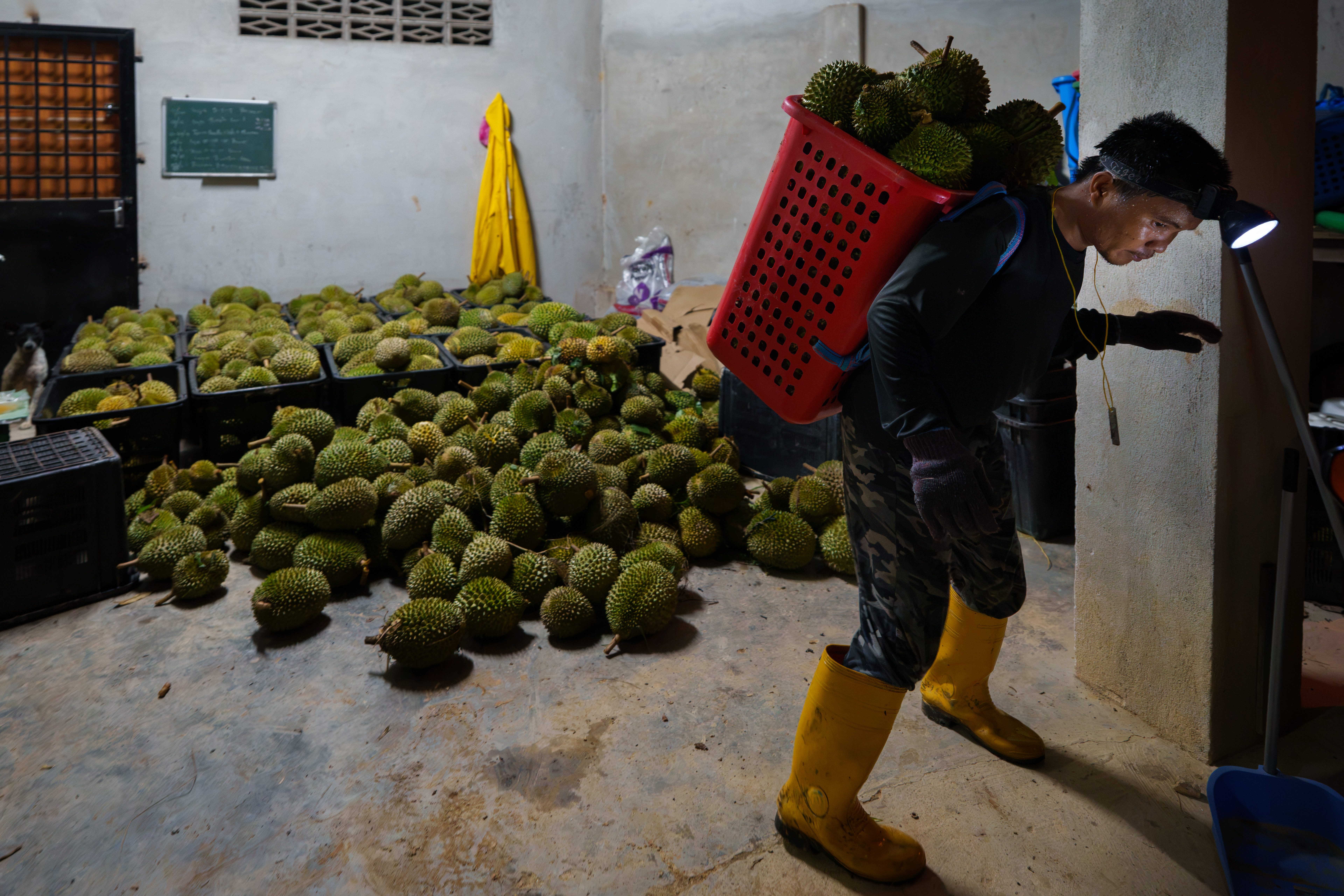
Unlike their rivals, Malaysian growers typically do not harvest early, instead collecting only naturally ripened fruit caught in nets or ropes as they fall.
That's the industry's biggest advantage and also its biggest weakness, Ang said, as sellers have to race against time because the fruit's shelf life is at most two to three days. Any delays would affect its quality. When his stock was held up for several days during customs checks, his refund rate climbed, he said.
Durian sales are also sensitive to economic conditions, said Leron Yee, founder of DKing, whose business covers both export and domestic markets. When the Chinese economy performs well, his business improves, but if the buying powerF of Chinese consumers falls, he needs to find alternative markets, he said.
"It is a luxury, not a necessity," he said.
Businesses are finding opportunities in what the fruit can become. Yee's business sells durian paste, durian-flavoured chocolate and mochi — and even mooncakes ahead of the Mid-Autumn Festival.
DurianBB founder Adrian Choy's company offers durian ice cream, desserts and dried durian at a cafe, alongside coffee flavoured with the Musang King variety and other items. His brand also offers guided farm tours.
In July, Choy's brand went a step further and launched a durian flower perfume that smells sweet and floral.
Choy said branching into other products is important because it will add value to the food itself and differentiate his business, even when others compete on price.
"Food is food," he said. "You cannot sell it like 50 per cent more because your branding is different."
Across China, durian specialty shops have mushroomed, with some specialising in Malaysian varieties. In Beijing, the Jiang Sir durian shop sells platters priced roughly between 300 and 1,000 yuan (about S$57 to $190), depending on the weight of the pulp and the varieties chosen.
Its employee, Hou Yuxin, welcomed the growing number of similar shops and brushed off pressure from competition, saying it would help boost the market for Malaysian durians. She noted many people now want to enjoy durians during their trips to Malaysia.
Back at Ang's centre in Kuala Lumpur, Henry Zhang was one of them. Zhang, a visitor from Shanghai who started eating durian during his university days, saw a durian no bigger than his palm for the first time.
He said Malaysian ones were creamier than those from Thailand and had different flavours. He was impressed by the centre offering more than just the fruit.
"I may still eat durians from other countries. But after eating them, I may miss Malaysian ones even more," Zhang said.
[[nid:739237]]