

30-year-old Singapore investor buys Ang Mo Kio HDB coffeeshop after owning 13 properties
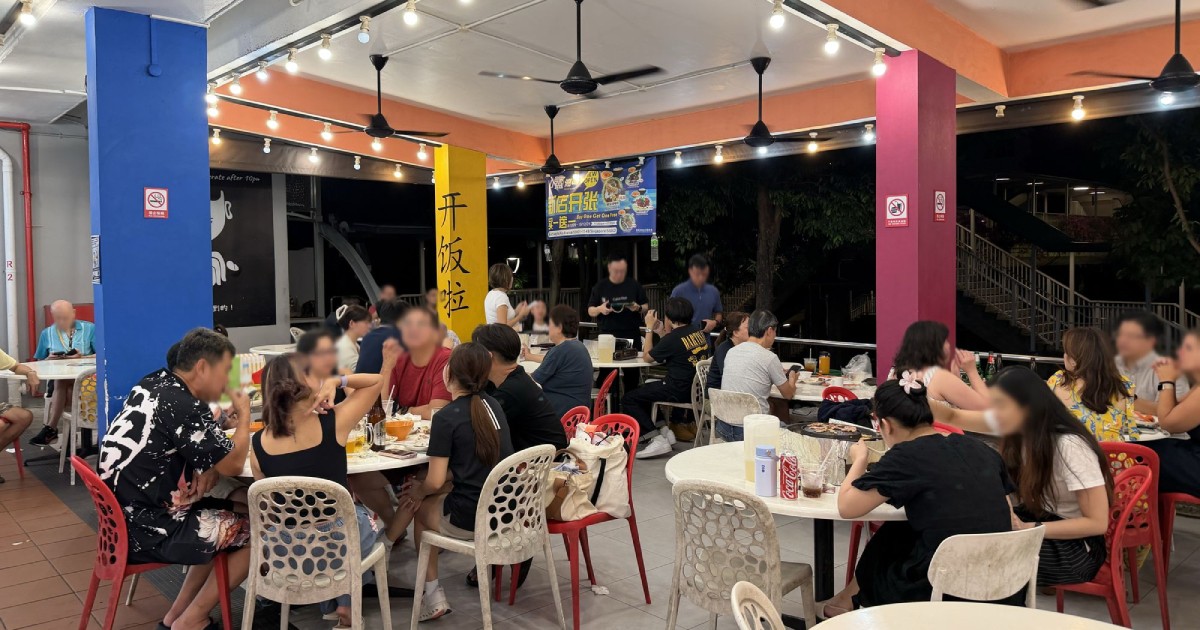
Food Haus is known for signature dishes including black truffle roast duck and Thai mookata.
PHOTO: JNA Real Estate Investments

Most Singaporean property investors in their 30s usually look to the private residential market when they contemplate their next investment.
Not Christian Oh, who recently became the owner of a coffeeshop at Block 421 Ang Mo Kio Avenue 10.
This is the 30-year-old’s first time owning an entire HDB coffeeshop which comprises 10 stalls.
Although his portfolio of investment properties also includes individual stalls in other neighbourhoods, this is a big step up for him as a landlord.
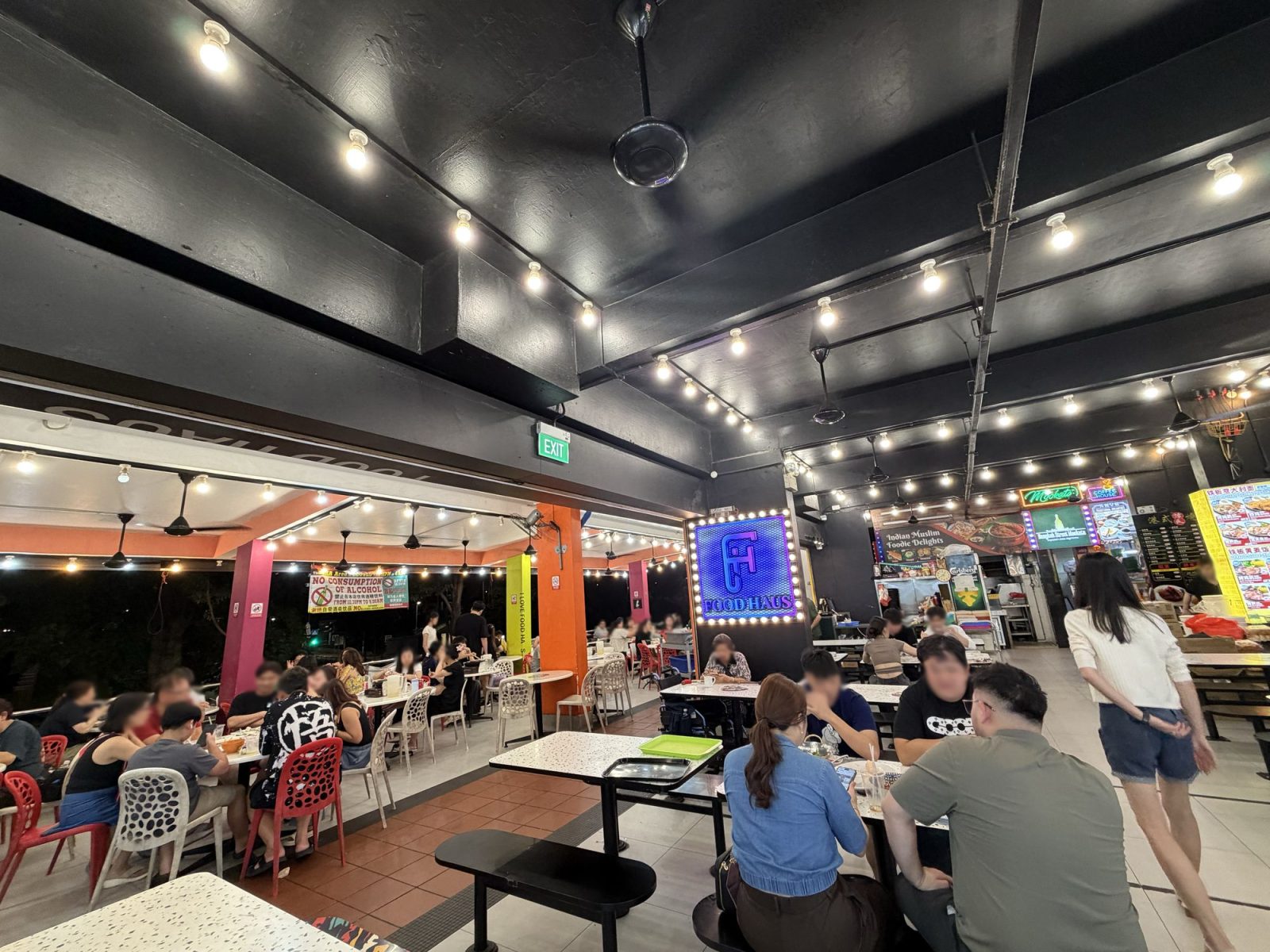
Also known as Food Haus, this is no ordinary HDB coffeeshop and it calls itself Ang Mo Kio’s first ‘Instagram-worthy’ kopitiam.
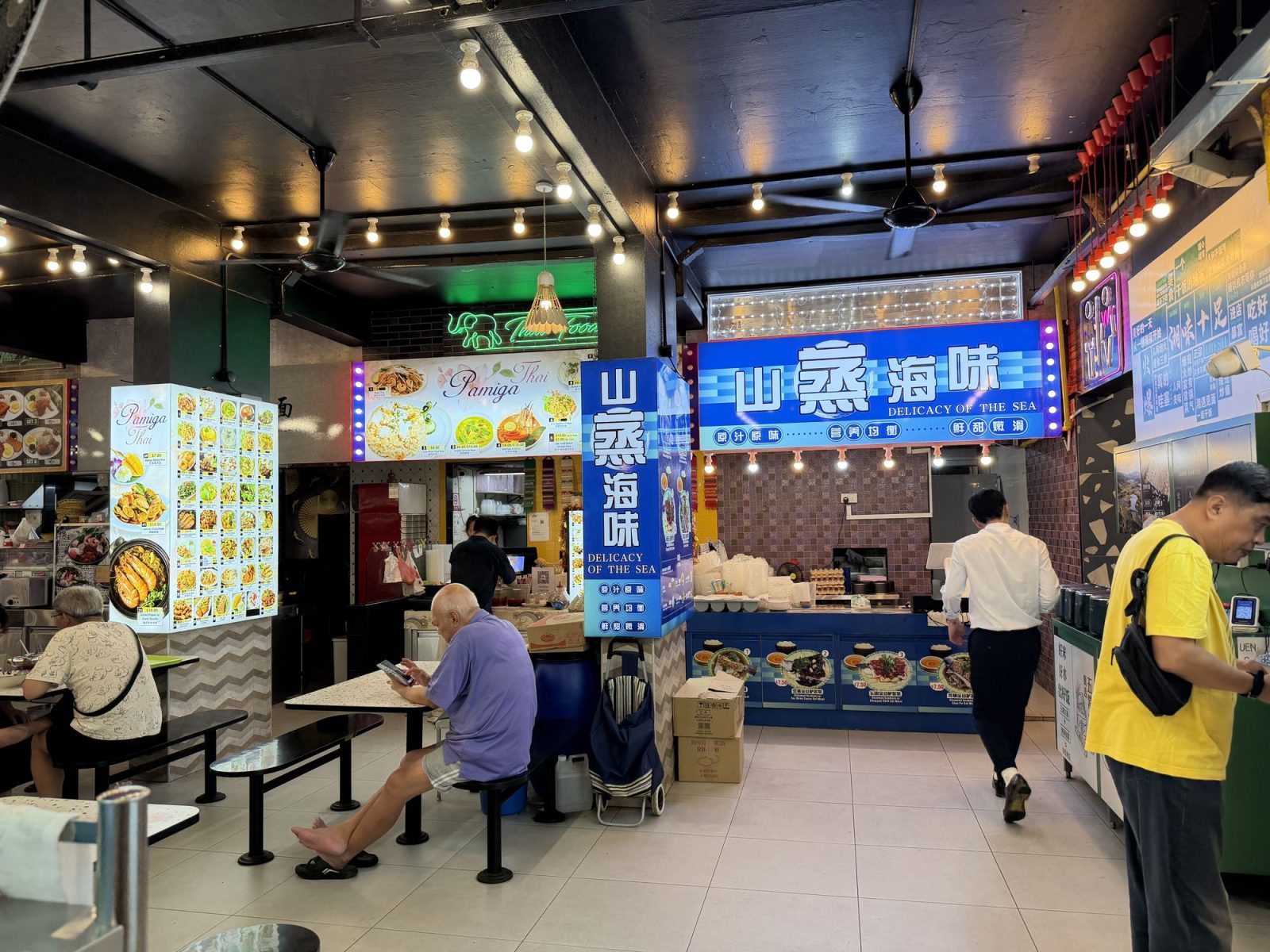
The range of stalls serve Thai mookata, Chinese cai fan, Malay cuisine, Indian cuisine, authentic Thai cuisine, ban noodle, and other Asian dishes like mala and chongqing grilled fish.
Food Haus also claims to be the first and only kopitiam in Singapore to serve black truffle roast duck.
But Oh is quick to dust off the glamour of being a coffeeshop owner, there’s a lot of hard work involved to turn his million-dollar capital investment into the high incoming yielding asset some people perceive it to be.
It certainly helps that Oh is also a property agent and investment director at JNA Real Estate, where the coffeeshop deal came through, and he has been in the game since he graduated university.
He tells Stacked that after he started reaping success as a property agent, his first investments were a mix of residential and industrial properties.
His first investment purchase six years ago was a residential property, and then he started looking for alternative investment opportunities and bought an industrial property.
Last year, his investment portfolio comprised 13 properties, and he recently divested four of them and the remaining assets in his portfolio rake in a monthly rental income of approximately $103,000 across residential and commercial properties.
He says that all of this serves a long-term goal of helping his parents retire comfortably and to save up a nest egg for him and his family.
Three years ago, Oh bought his first HDB shop in Macpherson, which was untenanted.
In his view, there are some advantages with starting on a blank slate with a vacant unit, compared to getting a unit that has an existing tenancy.
“You get to set the rent, select the tenant, and structure the lease terms to suit your investment objectives. It also creates leverage on price negotiation. Sellers with vacant units are often more motivated.
"They’re carrying holding costs without income — and that pressure creates room for a better entry price for you,” he says.
Of course, the downside is real too.
Tenancy is not always a guarantee so the owner needs to be able to carry the unit through a vacancy period.
He adds that investors should be well-capitalised, and have confidence in the location’s leasing demand before committing.
Before he fully delved into investing in commercial properties, including HDB shops and coffeeshops, Oh says that he needed to learn more about the commercial real estate market in Singapore.
The most crucial learning point was how to quickly bridge the gap between theory and applicable investment experience, this is something investment courses don’t extensively cover, he says, adding: “For commercial properties, the overall investment risk is high, so you need to be on the ground to gather data”.
He shares that the first thing he would tell any residential investor who might be keen to diversify into the commercial property market is: don’t assume what worked for you in the residential market will transfer directly in this case.
The market fundamentals and dynamics that ground the commercial market are different, and he highlights some examples.
“Your tenant profile changes, the lease structures are different, and the way you evaluate yield is different,” he says.
Apart from the high capital and other costs such as stamp duties, legal fees and renovation, owners have to be prepared to hold the property for longer, with or without tenancy.
To avoid over leveraging on his investment, Oh set aside a safety net before purchasing the HDB coffeeshop.
Moreover, he adds that commercial properties such as coffeeshops are typically more challenging to divest compared to residential assets, since there is a relatively smaller pool of buyers in this niche market.
He highlights four key learning lessons that he has picked up.
When it came to the coffeeshop at 421 Ang Mo Kio Avenue 10, Oh says that he visited the location at least seven times during various times of the day and night.
He wanted to understand the footfall it attracted, and talk to tenants and nearby business owners.
“Morning visits tell you about breakfast traffic and whether the coffeeshop anchor is operating well. Evening visits tell you about the dinner crowd and whether the estate is alive at night. Weekend visits are a snapshot of the character and profile of the estate,” he says.
Over time, this provides you with a complete picture of the coffeeshop and the residents that it caters to — rather than simply relying on what the seller tells you,” he says.
Before new investors start considering whether to invest in a commercial property like a HDB coffeeshop, Oh suggest that they keep the following pointers in mind:
So, taking the leap into becoming a coffeeshop owner is no mean feat, even for a seasoned realtor like Oh.
Not one to speculate properties, Chris focused on the cashflow, potential returns, and understanding the seller’s intention for selling when analysing potential investments.
The appeal of a challenging property like this is that, when done well, it has the potential to turn into a major cash positive asset.
However, it can be a challenge to find an available coffeeshop that is publicly listed for sale. “Some coffeeshop owners are unwilling to sell as the cash flow that they earn can be pretty good. Even in times of crisis, people still need to eat and will patronise coffeeshops for affordable meals,” says Oh.
The combination of a coffeeshop’s strong fundamentals serving a captive, walking-distance residential population and attractive rental yields compared to shophouses or prime location retail strata units makes it especially appealing to yield-driven investors.
“Personally, the appeal was about building resilient passive income. A coffeeshop anchor tenant paying steady rent, month after month, is the kind of cash flow that gives you optionality in life — and that’s what I’m always optimising for,” says Oh.
When it comes to commercial property, he stresses that timing the sale is the essence, adding that if he were to do it again, he would move faster to close the deal once he was confident of the market research he had put into it.
“When I first started evaluating commercial properties, I was overly cautious. I wanted perfect information before committing, which doesn’t exist. You have to develop conviction through research and then act on it”.
He adds that he would also refine his tenant screening process, since not every tenant who pays rent is the right fit for the long term.
Other factors such as business health, business type, alignment with the community profile of the estate also affect the long-term quality of the asset.
Working backwards from his targeted returns of 11-12 per cent, and with the property commanding an existing yield baseline of 8-9 per cent, gave him the confidence to commit to the purchase.
Apart from strong cashflow and returns, he was also mindful to build trust with the tenants to understand their pain points and concerns.
In the era of the attention economy, the savvy marketer also spotted the gap of coffeeshops not being well established and engaging actively via social media.
With his latest acquisition, he is planning to implement some ideas on social media to increase the footfall to the coffeeshop.
“I have some ideas about how to brand, scale and increase footfall to the shop by using social media. I see this as a win-win approach, whereby the better my tenants’ businesses perform, the less likely they are to switch to a different location."
[[nid:735223]]
Prevailing regulations such as high additional buyer’s stamp duties make it more challenging for younger property investors to build up a sizable portfolio of properties in Singapore.
Thus, many savvy investors are turning to alternative investment options, and owning a coffeeshop can be an appealing option to diversify one’s portfolio.
But given the complexities of owning one, coupled with the high capital cost and steep learning curve, Oh says that investing in residential properties may still be a wiser move for most investors out there.
Nevertheless, for investors who are keen on investing in HDB shops, he advises them to look beyond the physical location.
“The unit itself is just one part of the equation. The trade mix around it matters enormously."
For instance, he points out that community vibrancy is a proxy for tenant demand — and tenant demand is what protects your income.
Compare a HDB shop embedded in a block with an active coffeeshop, minimart, and provision store, with one sitting next to vacancies.
In investment planning, he emphasizes the importance of knowing your entry yield, modelling your worst case (extended vacancy, rental renegotiation), and making sure you can still hold through that scenario.
“I always ask myself — if this unit sat empty for 12 months, can I sustain it? If the answer is no, reconsider the purchase price or pass entirely.
Most buyers will nearly always benefit from a knowledgeable broker with real connections with many entrenched owners, he says, adding: “The deal intelligence — who owns what, why they’re selling, what the realistic re-letting timeline looks like — lives with specialists”.
For example, for a 30-year lease, he says an 8-9 per cent yield would be considered healthy.
In a niche market such as HDB coffeeshops, it’s even more crucial to study the market over a period of time so that when an opportunity breaks out, investors can move quickly to secure it.
In Singapore, most heartland coffeeshops and kopitiams are managed by dominant players like Kimly Group, Kim San Leng, Fei Siong Group and Chang Cheng Group.
As the property owners or the operators who own the master lease, they manage several outlets and sublet the stalls to various tenants. There are also individual landlords who invest predominantly in this asset class for the rental yield.
“Most of the current (HDB coffee shop) owners are in their 50s and 60s, most are also starting to plan out how they can cash out and retire soon. Potential investors need to enter the market at the right time, work out a reasonable price based on the cash flow and create a dual engine from the income to fund other projects,” says Oh.
He estimates that on any given month, the coffeeshop’s monthly rental income is over $30,000.
The commercial real estate market in Singapore has also been bustling of late. Stacked reported earlier on a portfolio sale of five retail units including two HDB coffeeshops, a HDB shophouse, and two strata titled retail units.
Out of the 8,500 privately-held HDB shophouses, only 402 are privately-held and approved for coffeeshop use.
On top of that, HDB has stopped selling new shops since 1998, and units that come with approved F&B usage or as coffeeshops tend to command a rental premium compared to non-F&B units due to the longer approval time.
Starting with a vacant unit allows you to set the rent, select tenants, and structure lease terms to suit your objectives. It also provides leverage in price negotiation, as sellers with vacant units are often more motivated and carrying holding costs without income.
Commercial properties are not subject to ABSD, cashflow visibility is crucial, there are fewer comparables, and management intensity is higher as some tenants are sophisticated operators.
Timing the sale is crucial because commercial properties are typically more challenging to divest compared to residential assets, and the market dynamics can significantly affect the medium-term value.
[[nid:735384]]
This article was first published in Stackedhomes.