SEOUL — Over an 18-year career trading currencies in Seoul, Namkoong Taehun was on the front lines of the collapse of Lehman Brothers, the post-Brexit plunge in the pound, and the won's dramatic tailspin after South Korea's 2024 martial law decree.
Now his job will be stretched around the clock as South Korea's long-cloistered currency opens up to a 24-hour trading cycle from July 6, with banks trialling the system from Monday (June 29).
That's a transition even a veteran dealer like Namkoong calls "daunting", as Seoul tears down safeguards in place since the won's collapse during the 1997 Asian Financial Crisis.
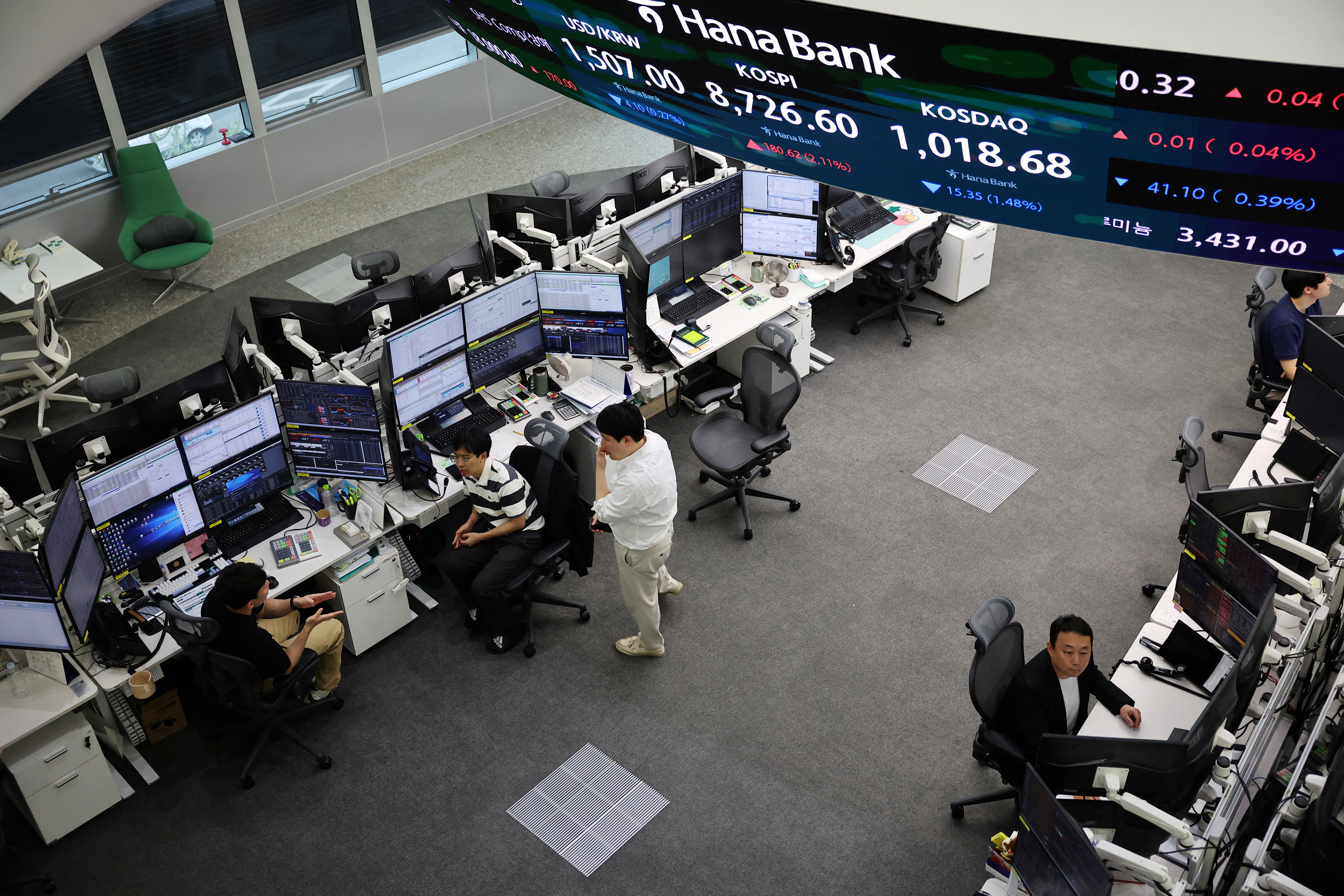
"When I first came to the market, it was a nine-to-three game," said Namkoong, 47, who is part of the 37-member FX trading team at Hana Bank in Seoul, the country's biggest forex bank by trading volume.
"You could count the participating financial institutions on one hand."
"Now, the market has expanded exponentially," he said, surrounded by a dozen empty coffee cups and eight monitors blinking FX conversion orders.
"I'm seeing a significant increase in demand for won assets based on the many financial institutions that are inquiring about them. We are afraid that our workload will increase significantly."
Seoul's priorities have reversed from three decades ago: an open, fully accessible currency is a requirement in its pursuit of index provider MSCI's coveted "developed market" designation, which would raise the country's profile among global investors.
But there are clear risks to an always-on won.
Languishing near a 17-year low versus the dollar, the currency is particularly vulnerable to pockets of thin liquidity that could turn modest flows into disproportionately large price swings.
Ironically, the world-beating doubling of the benchmark KOSPI share index to all-time highs this year is reinforcing won weakness, as the heady gains spurred overseas funds into record selling to book profits or rebalance portfolios.
At the same time, South Korean investors continue to favour US equities, investing at an unprecedented pace.
Won guardrails
To guard against liquidity gaps and trading disruptions, reforms include permits for offshore investors to hold and trade the currency, an offshore won settlement system and an overdraft policy.
"Previously, foreign financial institutions were only able to convert money," said a government official in charge of FX policies, "but through the offshore won settlement system, they will be able to directly hold and utilise the won."
Tight currency restrictions have for years been a major pain point for investors and traders in the country, making doing business slow and costly because of a reliance on derivatives contracts to manage won exposure overnight.
It has only been two years since South Korea extended the won trading day to 2 a.m. to capture the London market.
"Roughly 20 per cent of the spot volume now takes place during offshore hours, concentrated in the London morning," said Shen Li, head of FX sales for APAC at State Street Hong Kong.
"The extension to 24 hours could further enhance this whole liquidity scheme."
'Korea Discount' milestone
Seoul's broader goal is to eliminate what's termed the Korea Discount — the tendency for the country's stock market to trade at steep discounts to global peers due to factors including currency curbs, unpredictable policymaking and opaque governance structures at the country's dominant "chaebol" conglomerates.
MSCI kept South Korea in the emerging market category on Wednesday, citing long-standing accessibility issues and saying onshore liquidity was insufficient even with extended FX trading hours.
The next review will be a year from now.
Meanwhile, banks are preparing for the 24-hour day by adding night shifters to staggered roster systems.
Hana Bank, which runs a three-shift schedule, plans to add three more staff.
Woori Bank will double the size of its UK-based team to four, while Shinhan Bank will add one person in London and KB Kookmin Bank has added two.
The need for constant monitoring was highlighted recently for 35-year-old Hana Bank FX dealer Shin Jae-min.
"Sometimes it gets intense all of a sudden, like the other day when orders flooded in after SpaceX went public," he said while biting into a delivery chicken kebab towards the end of his shift at 9 pm (8 pm SGT).
"Responding to such demand means no break even during some really odd hours."
[[nid:738949]]



