

Looking at buying property in Bangkok, Chiang Mai and Hua Hin? The cheapest option isn't necessarily the best

Here's a look at the property markets in Bangkok, Chiang Mai and Hua Hin.
PHOTO: Stackedhomes

Thailand has not stopped looking attractive to some Singaporeans; the country looks like an appealing place to retire to, holiday in, or a place millennials jokingly consider when property prices in Singapore get too painful to think about.
Recently, the Thai government’s push to attract long-stay foreigners, coupled with a property market that’s relatively accessible by regional standards, have made the country an increasingly popular option for Singaporeans looking beyond the red dot.
Whether you’re a single remote worker, a family looking for a slower pace of life, or a retiree looking to stretch your dollar, the diversity of the real estate market there means that there are options for every life stage.
However, Thailand’s property market comes with its quirks and I wanted to lay them out before you start shopping there.
The first thing about the Thai property market that foreign buyers should know is that foreigners generally cannot own land.
This restriction applies regardless of your visa status, how much you invest, or whether you’re married to a Thai citizen.
So, if you eventually buy a landed home or villa, you’ll own the property but not the land that it sits on.
Instead, the land is typically leased to you for up to 30 years. While many lease agreements include options to renew the land lease, these aren’t guaranteed by law.
In fact, a 2025 Thai Supreme Court ruling clarified that commonly advertised “30+30+30” lease structures aren’t automatically enforceable. Any extension is subject to a fresh agreement when the lease expires.
But condominiums are the notable exception. Foreigners can own a condo unit on a freehold basis in their own name, provided the development hasn’t exceeded its foreign ownership quota.
Under Thai law, non-locals can collectively own up to 49per cent of a condominium’s total saleable floor area.
When that quota is reached, any other foreign buyers still keen on buying a unit in that development may only be offered leasehold units instead. For some buyers, that may be an unpalatable and fundamentally weaker form of ownership.
To me, the ownership restrictions made me think that Thailand is one of the markets where it pays to get in early. But as we continue this investigation, there’s more to be said about foreign property ownership in the country.
Beyond ownership rules, there is another hurdle that often surprises many foreign buyers: that is getting your money into Thailand correctly.
In general, the purchase funds need to come from an overseas source and be remitted into foreign currency. Once received, the Thai bank issues a Foreign Exchange Transaction Form (FETF), which you’ll need when registering the property transfer at the Land Office.
This is a different financial approach compared to Singapore, where home loans are a common part of most property purchases. But in Thailand, foreign buyers typically cannot rely on easy financing.
In fact, most foreign buyers end up paying for their property purchases in cash or taking up the developers payment schedules, since Thai bank mortgages for foreigners are still relatively limited in practice.
Thailand’s rental market is often described as being one of the most foreigner-friendly markets in Southeast Asia. In general, there are no restrictions, no permits, and a straightforward documentation process.
A passport, two months’ deposit, and a lease agreement is typically all it takes to secure a rental unit.
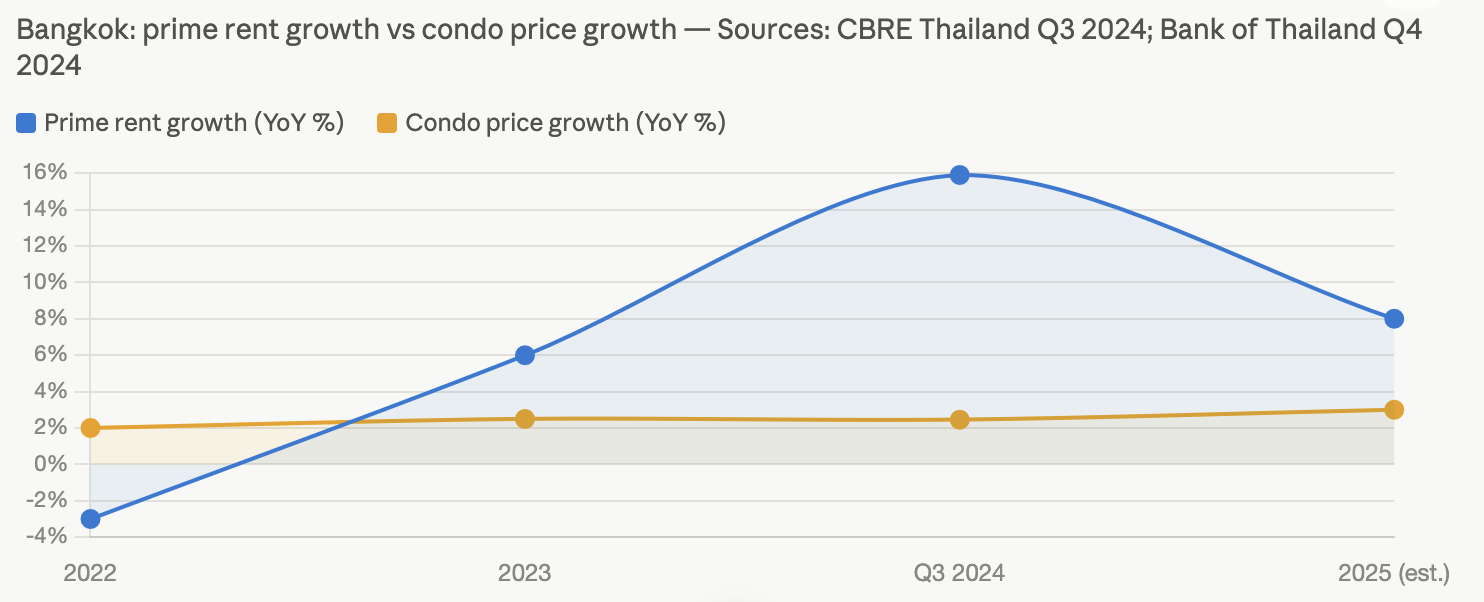
This also means it is one of the most active rental markets in the region, which opens the door to a large degree of volatility.
For example, market research cited by CBRE Thailand indicates that prime Bangkok condo rents jumped 15.9 per cent year-on-year in Q3 2024, while purchase prices grew just 2.46 per cent according data published by the Bank of Thailand.
This gap tells us something: landlords are capturing the income yield, and buyers who hold short periods find they’ve paid significant transaction costs for modest capital appreciation in return.
Let’s look at a simple example. A typical two-bedroom condo in Sukhumvit might rent for around THB 45,000 to THB 55,000 a month (S$1,800 to S$2,100), while purchase prices can range from THB eight million to THB 12 million.
Assuming a purchase price of THB 10 million (S$390,000) and monthly rent of THB 50,000 (S$2,000), the annual rental income works out to about 6per cent of the property’s value.
This is roughly in line with the average gross rental yield of 6.05 per cent for condos in Bangkok.
This means that the rental yield is similar to the cost of buying the property, so the financial case for ownership becomes less enticing. Instead, property owners mainly rely on future price appreciation to justify the purchase, while also taking on transaction costs and ownership responsibilities.
Buying a property only starts to make more sense when the property has a longer holding period.
For example, a couple who purchased a two-bedroom unit at The Nest Sukhumvit 22 for THB 6.8 million in 2019 have since seen comparable units listed at around THB 7.5 million to THB 8.2 million.
The transaction history suggests that the capital gains are not dramatic after accounting for ownership costs, but the draw for these property owners comes after avoiding seven years of rental payments.
For buyers with a seven-year or longer horizon, the equation can start to shift in favour of ownership.
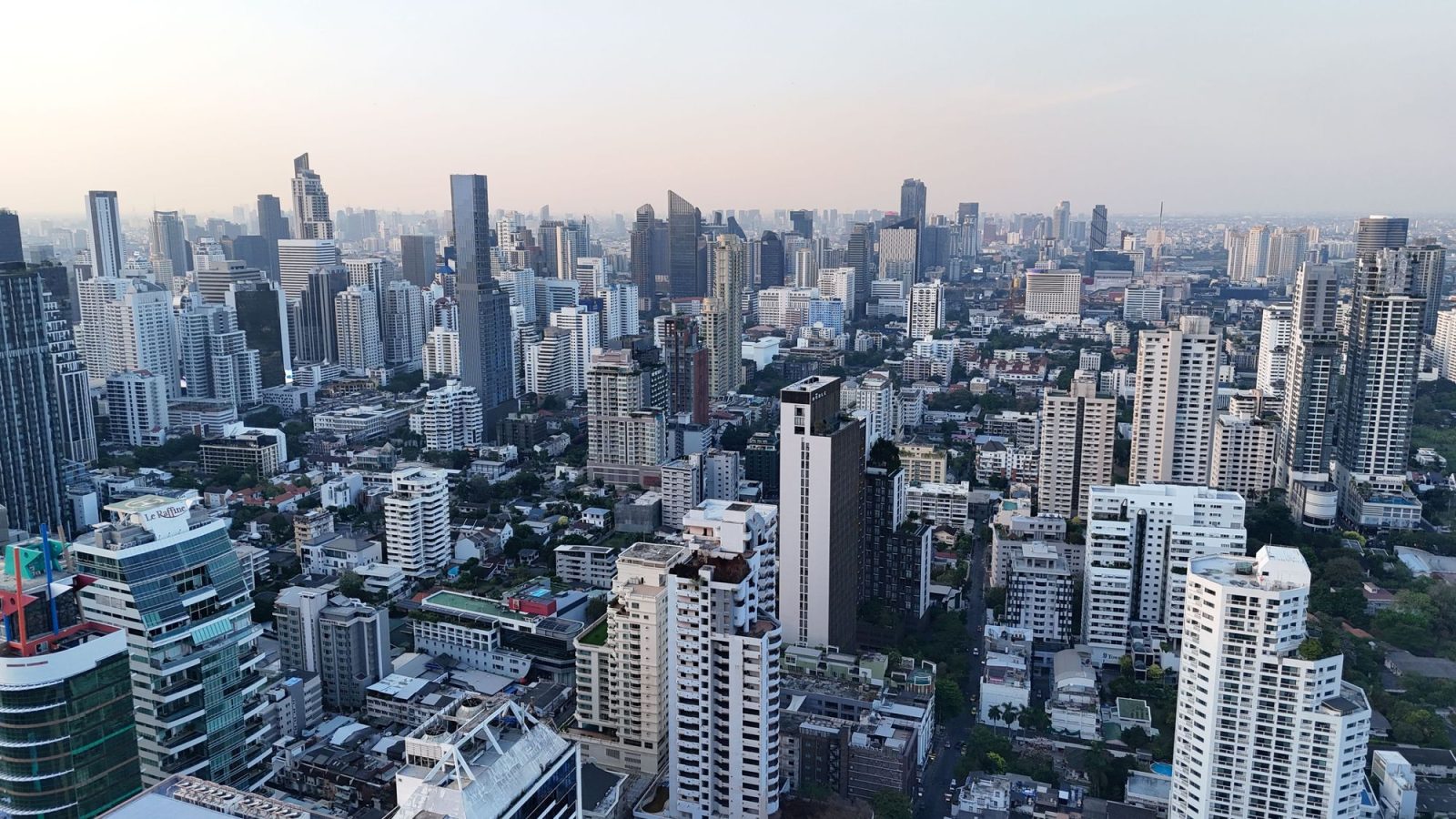
For most Singaporeans looking to buy an investment asset in Thailand, Bangkok is the obvious starting point. It has the most extensive urban infrastructure, home to the largest expat community in the country, and a BTS/MRT network that makes car-free living possible.
Life in the city is also relatively familiar to Singaporeans, with international schools, private hospitals, English-speaking services, and familiar conveniences readily available.
Most foreigners tend to cluster around neighbourhoods like Sukhumvit, Sathorn, and Silom.
Broadly speaking, Sukhumvit offers the widest lifestyle options, Silom is better suited for its proximity to the central business district (CBD), and Sathorn leans towards quieter premium living.
In terms of property prices, the residential market in Bangkok remains attractive.
A one-bedroom unit in most central areas typically rents for around $650 to $1,000 per month, while rents in areas beyond the city-centre, like On Nut, Phra Khanong, and Rama 9, can start from $370 to $550.
Likewise, resale condos in Sukhumvit start from around THB5 — eight million with gross rental yields averaging about 6.05 per cent.
Chiang Mai offers some of the best value property in Thailand. A high-quality one-bedroom condo with a pool and gym in the Nimman or Suthep area typically rents for THB 10,000 to 18,000 per month.
The market also benefits from a structural advantage.
A citywide building height restriction, which generally prevents new developments above five storeys unless they received pre-2016 approvals, limits new supply in the most desirable neighbourhoods.
As a result, foreign ownership quotas tend to be more available than in Bangkok, while prices have remained relatively stable.
Condo prices in Nimman start at around THB three million, with gross rental yields typically ranging from four per cent to seven per cent.
For buyers, Chiang Mai provides one of the most accessible entry points into the Thai property market, combining affordable prices, available foreign ownership quotas, and growing demand from long-stay residents that supports the rental market.
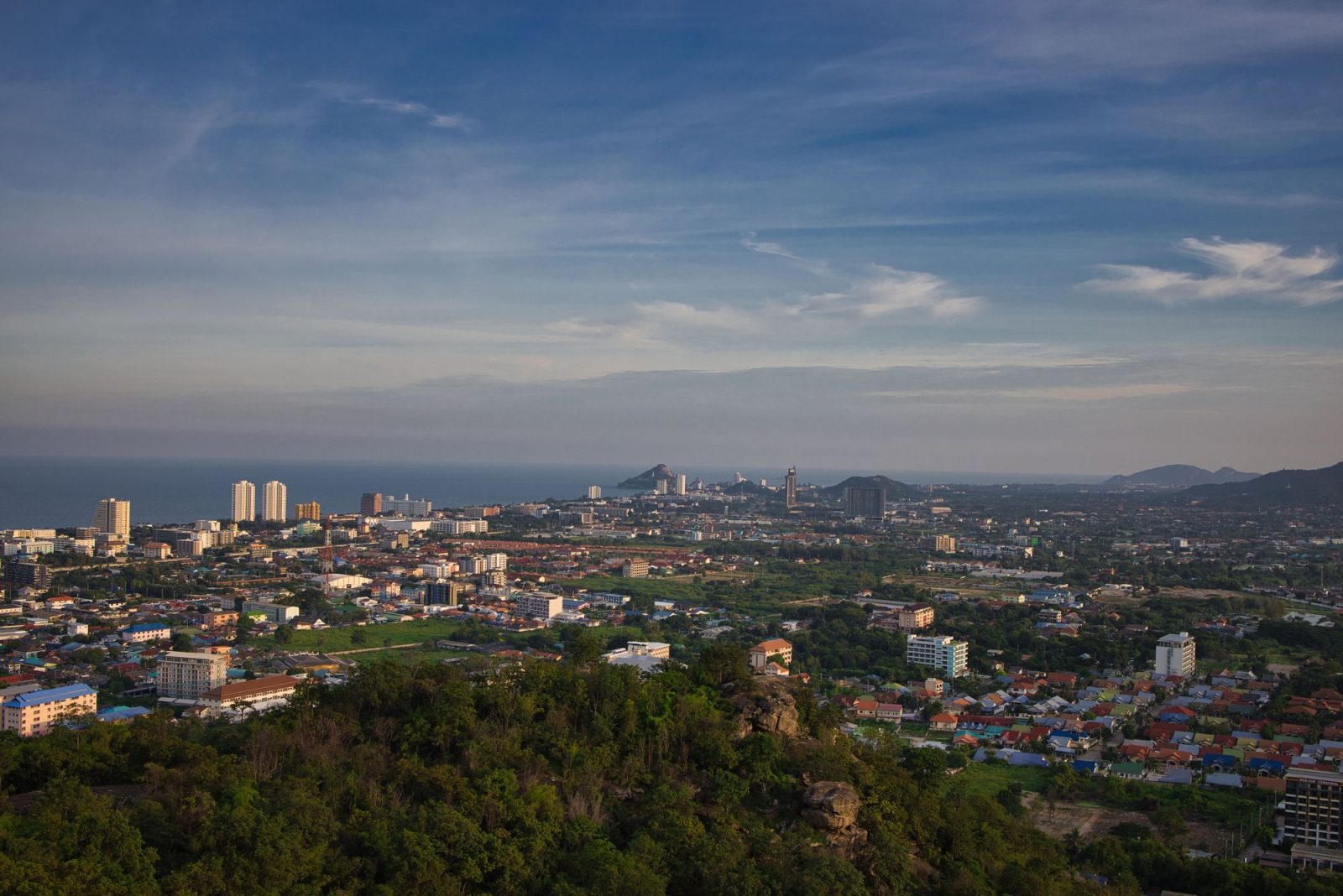
Hua Hin is located about three hours south of Bangkok on the Gulf of Thailand and is popular with retirees and long-stay residents seeking a quieter coastal lifestyle.
Condo rentals start from around THB10,000 per month for a studio, while mid-range villas typically rent for THB28,000 to THB80,000 per month.
Entry-level condo prices begin at around THB two million to three million, making Hua Hin one of the most affordable property markets in Thailand.
The main trade-off is liquidity. The pool of buyers is relatively small and demand can be seasonal, which may result in longer resale timelines.
Hua Hin also has a limited selection of international schools, making it a less suitable option for families with school-age children.
Sources: CBRE Thailand; FazWaz 2025; Chiang Mai Properties 2026; Rumavi Chiang Mai Buying Guide 2026.
For singles and couples, renting first is usually the better option. Spending at least a year living in different neighbourhoods gives you a much better appreciation of the city before committing to a purchase.
For families, choosing the right city is often more important than deciding whether to rent or buy.
Your choice of city determines the range of international schools available, which in turn shapes your education budget and ultimately your housing budget.
Bangkok offers the widest selection of schools but also comes with the highest overall cost of living.
Hua Hin can work well for families with younger children looking for lifestyle alternatives, although the limited choice of secondary schools may become a hindrance later on.
For most buyers, even retirees, purchasing a villa on a 30-year leasehold is difficult to justify if you plan to stay there for less than 10 years.
Transaction costs, the leasehold structure and relatively limited resale demand can all make exiting the investment more challenging. If you want the extra space and garden that a villa provides, renting here while keeping your investment capital in a freehold condominium in the city is often the more flexible approach.
Thailand offers a surprisingly broad range of long-stay visas, with options suited to retirees, remote workers, high-net-worth individuals and frequent visitors.
The most familiar is probably the Thailand Privilege programme, formerly known as the Elite Visa.
It is effectively a pay-to-stay visa, where members pay a one-time fee in exchange for a renewable long-term visa and benefits such as airport fast-track services, concierge assistance and immigration support.
Crucially, your residency visa does not determine what type of property you can own in Thailand.
The country’s foreign property ownership rules apply equally regardless of whether you are staying on a retirement visa, Thailand Privilege membership or an LTR visa.
In short, the visa simply determines your right to remain in the country, not your property ownership rights.
Sources: ThaiEmbassy.com DTV Guide (2026); Thai-Co LTR vs DTV vs Elite comparison (Jul 2025); Thaiger DTV Guide (2026).
After researching the various ownership restrictions and property markets across Thailand, I think that the decision is less about whether Thailand is a good place to own property and more about how long you expect to stay.
Thailand’s property market is generally less suited to short-term investing, and I found that their system offers greater rewards to buyers with longer investment horizons.
If your plans are still evolving, renting offers flexibility with little downside.
If Thailand has become a long-term home and you’ve found the right location, buying can make financial sense.
The important thing is to match your property decision to your timeline, rather than assuming that buying is always the better deal.
Foreigners generally cannot own land in Thailand. They can own condominium units on a freehold basis up to a 49per cent quota, but land ownership is typically through leasehold agreements for up to 30 years.
Yes, foreigners can own condominium units on a freehold basis in Thailand, provided the development has not exceeded its foreign ownership quota of 49per cent.
Most foreign buyers pay in cash or follow the developer’s payment schedule, as Thai bank mortgages for foreigners are limited and not commonly relied upon.
Renting is more common for foreigners due to the straightforward process, no restrictions, and the flexibility it offers in the Thai rental market.
[[nid:740940]]
This article was first published in Stackedhomes.