There are signs that Singapore’s high-end residential properties could be in for a better-than-expected performance in the second half of 2026. The forecast was one of the findings outlined in Savill’s latest World Cities Prime Residential Index report.
The research surveyed the top international residential markets to capture their capital and rental growth in the first half of this year. Savill terms this segment of the market as ‘prime residential’ in its report.
In general, prime residential or high-end properties catch the buying attention of high net worth buyers, and sentiment in this market is less a read on ordinary residential demand than an indication of where global capital expects value to hold up best.
In its report, Savills projected that prime capital values in Singapore, Seoul, and Kuala Lumpur will grow the most out of all other surveyed Asia Pacific (APAC) cities in the second half of this year, with price growth forecasted to increase by 2.0 per cent to 3.9 per cent.
Seoul’s prime residential homes, which fetch current average prices of around USD$1,950 psf, have increased by 4.1 per cent over the 18 months from the start of 2025 to the middle of 2026.
Meanwhile, prime residential prices in Kuala Lumpur, where prices are approximately USD$280 psf, recorded a 2.0 per cent increase over the same period.
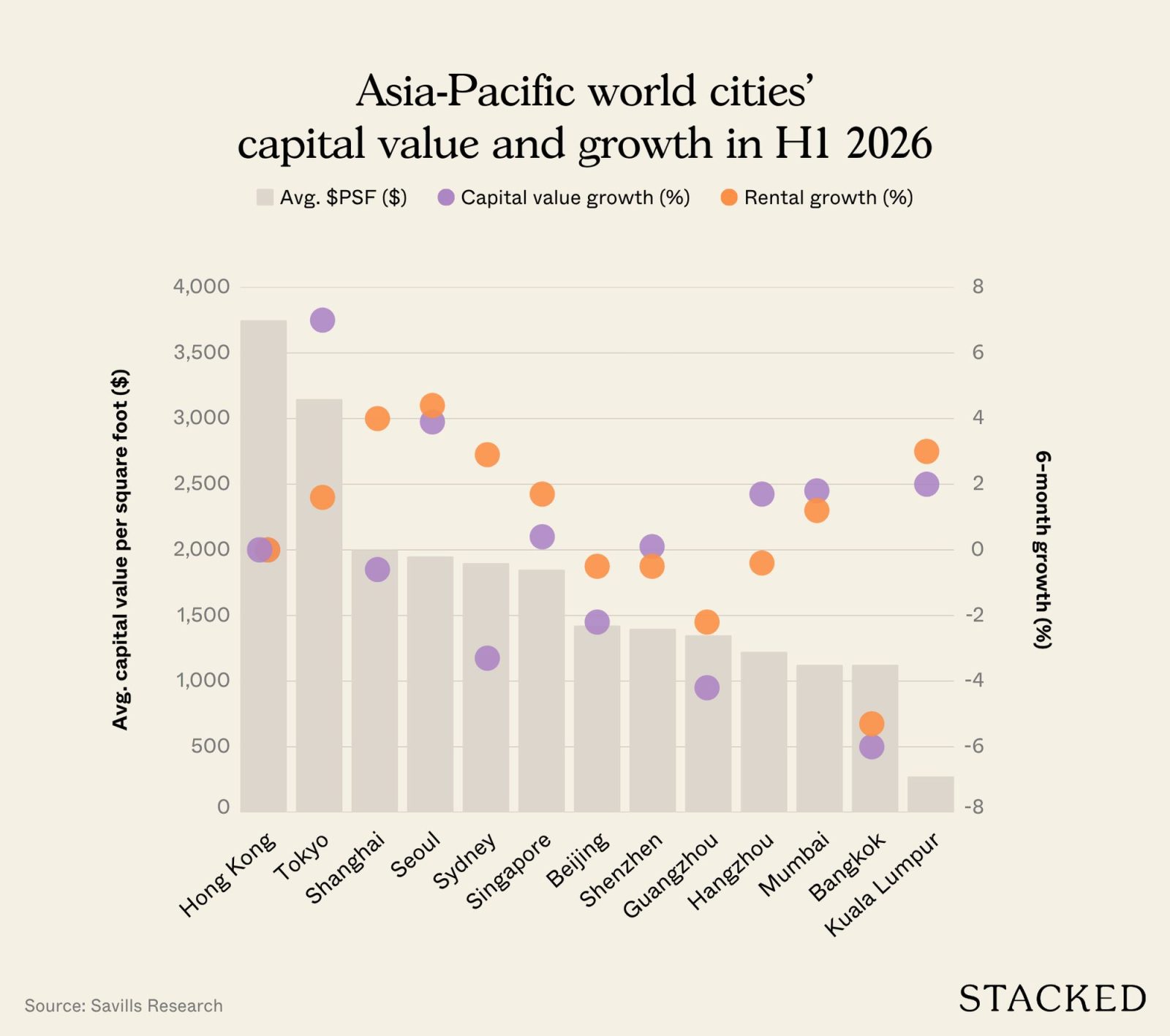
In Singapore, the value of prime residential properties grew 0.4 per cent in 1H2026, and average prices in our high-end residential segment currently fetch an average of US$1,850 (S$2,350) psf.
“The relatively modest growth in Singapore’s prime residential values in the first half masks a market that remains fundamentally well supported,” says Alan Cheong, Executive Director of Research & Consultancy at Savills Singapore.
He adds that since property developers have had to pay high prices for land, this tends to result in a fixed floor for finalised transaction prices. “Against this backdrop, we expect prime residential values (in Singapore) to see stronger growth in the second half of the year,” says Cheong.
If average capital values in Singapore’s prime residential market are able to record a growth rate of more than 2.0per cent by the end of this year, our market would experience a greater increase in capital value compared to Seoul or Kuala Lumpur this year.
Turning to the rental market, rental values for prime residential properties in Seoul and Kuala Lumpur moved more or less in lockstep with their respective capital value growth, indicating that capital markets have already priced in prevailing demand.
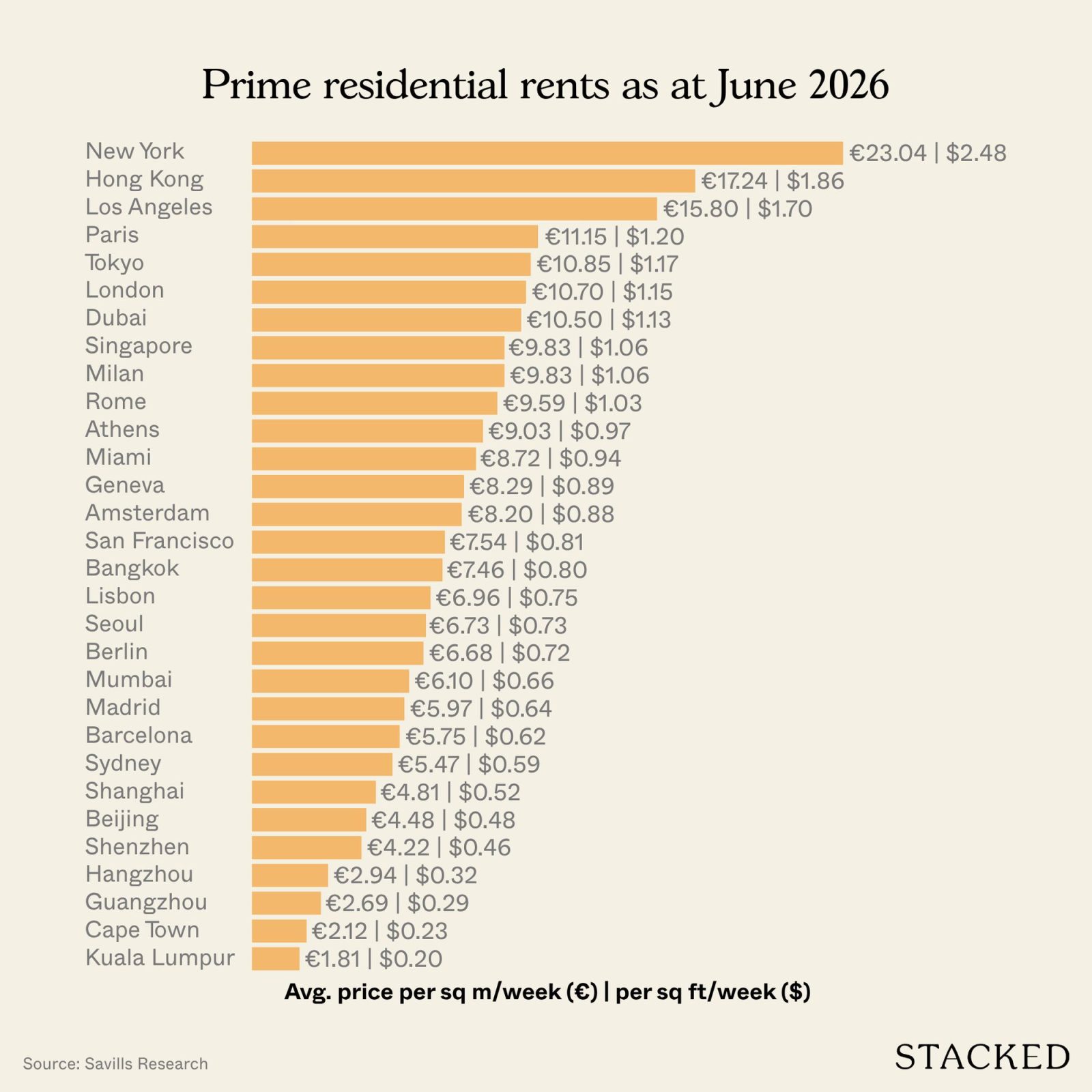
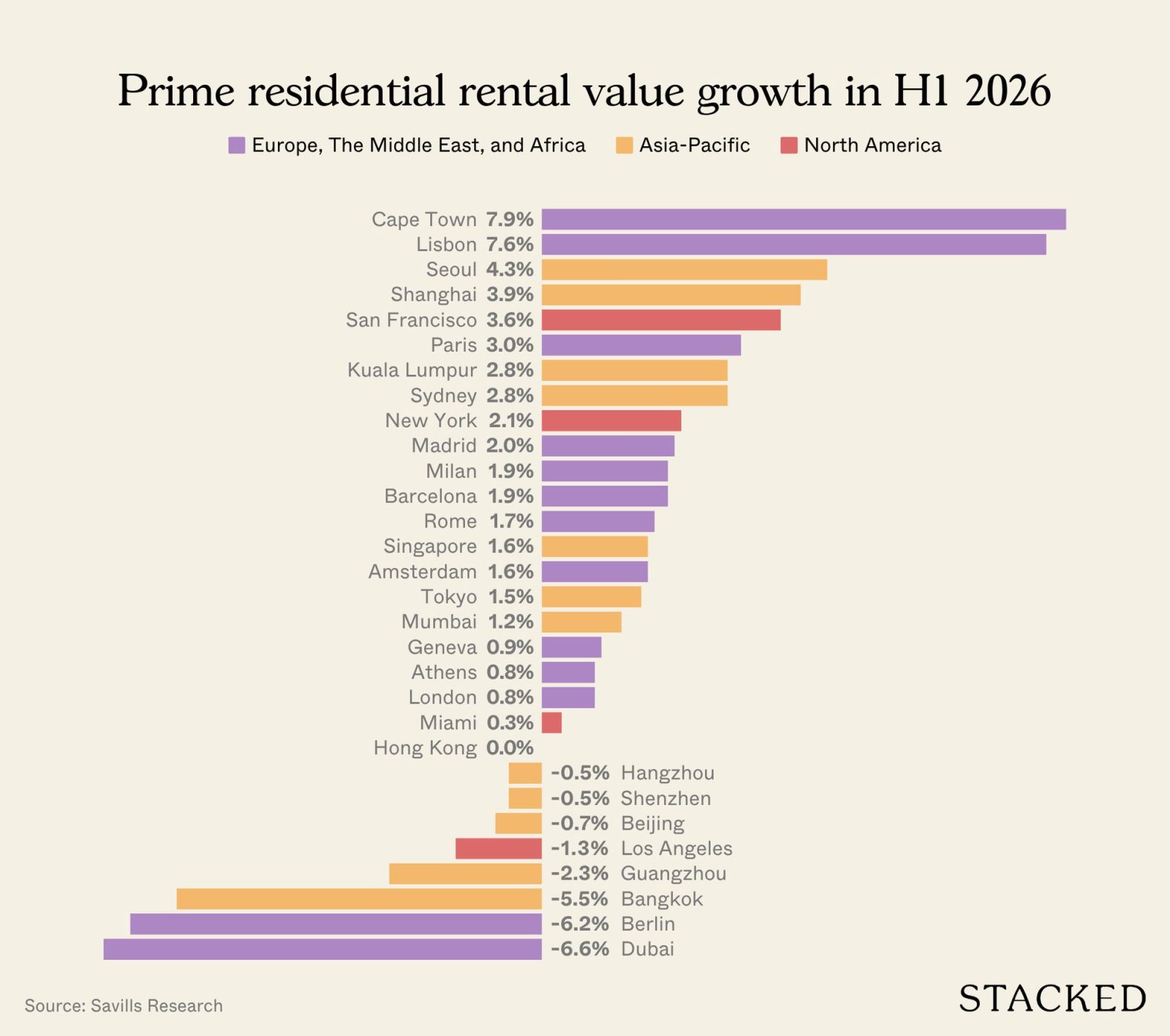
In Singapore, the gap between capital values and rental values was much more pronounced. Prime residential rents in Singapore grew by about 1.7 per cent in the first six months of 2026, which was four times the capital growth rate, and well ahead of the global average rental growth rate of 1.1 per cent over the same period.
A reason why rents have grown at a quicker rate compared to capital values for the same properties is indicative that buying demand and rental demand tend to attract two separate pools of people. It also means that occupancy demand is relatively stronger compared to prevailing buyer demand.
This could cause purchase prices to catch up in the coming months, unless there is a significant — and unexpected — factor preventing high-net worth individuals from acquiring prime residential properties in the city-state.
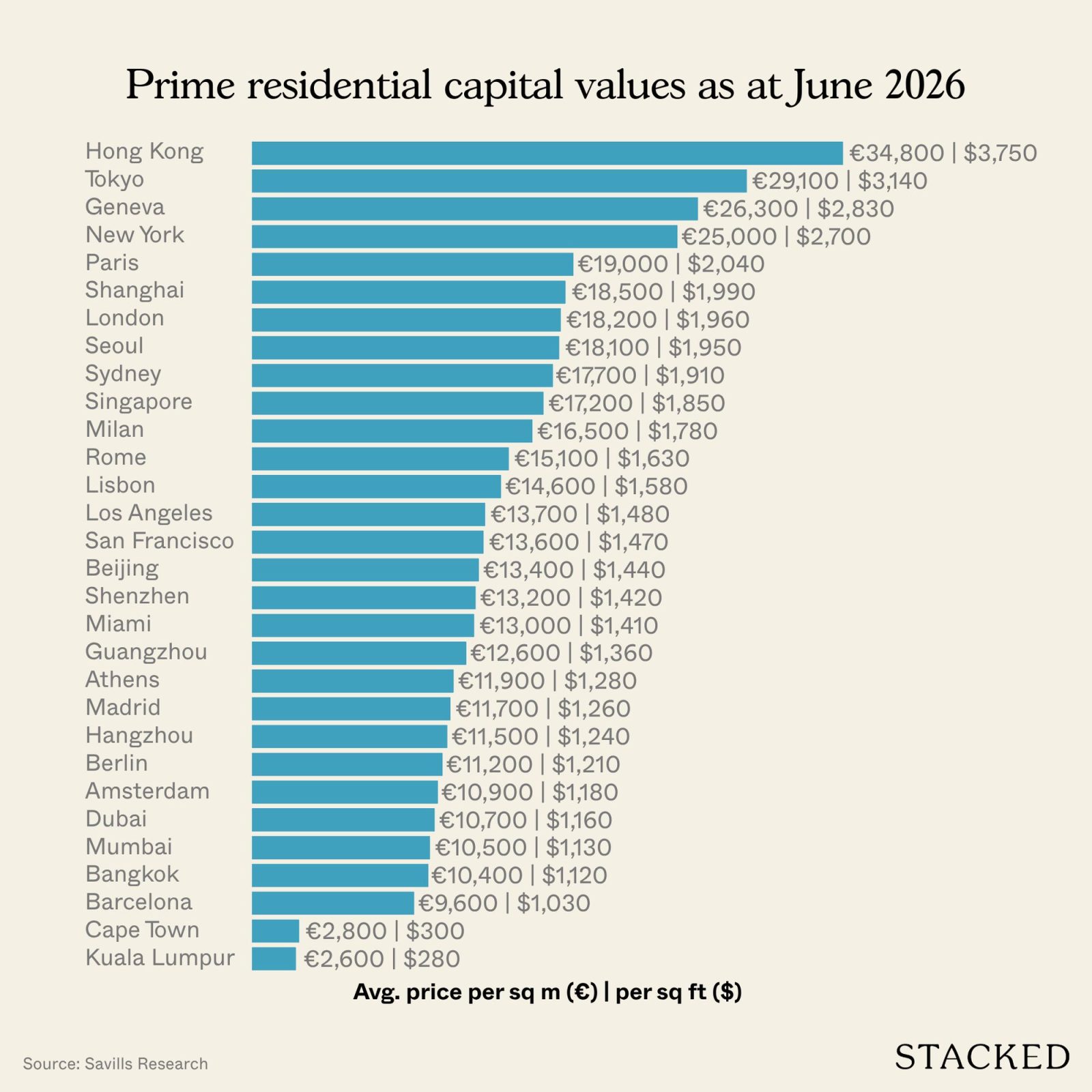
On the other hand, other prime residential markets in APAC aren’t projected to perform as well, according to the Savills report.
Tokyo recorded the strongest capital growth in its prime residential market over the first half of this year, with values rising by about 7.0 per cent over that period.
This was due to strong demand and an acute shortage of prime housing stock, and a prime residence in Tokyo now commands an average price of US$3,140 psf.
But prime residential real estate in the Japanese capital is only projected to see a 1.0 per cent rental value growth in the second half of this year, indicating that occupancy demand is lagging compared to buying demand.
Meanwhile, the market for high-end residential properties in Bangkok plummeted more than 5per cent in terms of capital and rental values, reflecting subdued demand and the repricing of several major projects.
Sydney was the only city where Savills projected a decline in capital values in the coming months. Capital values in the Australian city fell 3.3 per cent in the first half of 2026, while reporting 2.8 per cent rental value growth in the same period.
Kelcie Sellers, Associate Director at Savills World Research, said that the era of “synchronised global growth” appears to be over. Gone are the days when capital gains in APAC real estate climbed and fell together.
“Cities able to combine constrained supply, strong household wealth creation and sustained international demand are likely to outperform, while those with elevated supply or heightened uncertainty may continue to lag,” she says.
She adds that given the prevailing market conditions influencing the global prime residential market, selecting the right city will become increasingly important for investors to keep ahead of capital growth trends and rental yields.
The relative value of high-end residential assets, lifestyle appeal, and long-term economic fundamentals will remain the defining drivers of prime residential performance through the remainder of 2026, says Sellers.
[[nid:742798]]



