

We toured a 999-year landed street in Serangoon Gardens where terrace homes have sold from $4.8m

We toured Hythe Road in Serangoon Gardens.
PHOTO: Stackedhomes

The Serangoon Garden estate gets attention for its food scene and its roundabout at Serangoon Garden Way, known to residents as the Serangoon Garden Circus.
Head further in and the estate’s character changes: noise level drops, roads narrow, and the crowd thins to residents, delivery riders, and the occasional friendly dog walker.
The landed homes along Hythe Road sit on one of those inner streets, about ten minutes on foot from Serangoon Garden Circus along Serangoon Garden Way.
Close enough to walk to MyVillage and Chomp Chomp when you feel like it, but a good enough distance that the roundabout traffic never feels like it reaches your gate.
Part of that walk runs along Kensington Park Road, which is opposite the Serangoon Garden Country Club.
The houses here read more mock Tudor manor than tropical bungalow: steep tiled roofs, dormer windows, stone clad lower floors, arched colonnade porches and wrought iron gates, a different style from the modern style rebuilds deeper in the estate.
I took a tour around the estate to experience a little bit of what it would be like to live in this part of Serangoon Gardens. Here’s what I saw during my walk along the streets, useful property information I picked up, and the parts that don’t make it onto a listing.
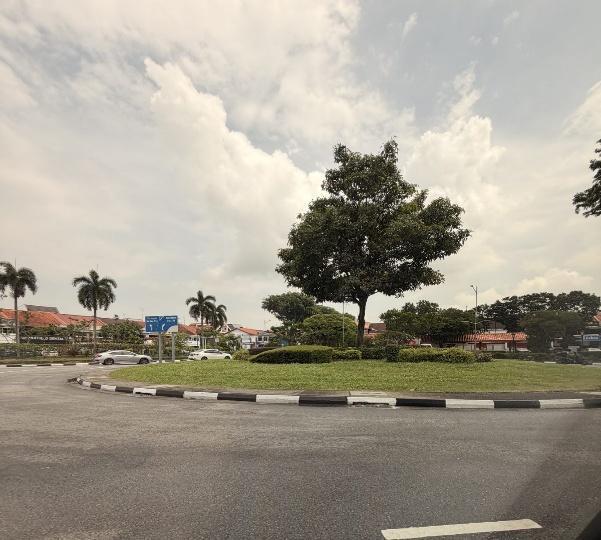
This neighbourhood began in the early 1950s as a private housing scheme by British developer Steven Charles Macey, who bought around 300 acres of former rubber plantation land off Yio Chu Kang Road, according to the National Heritage Board.
The plan was to turn the land into a residential estate with 2,200 homes for lower income white collar workers. By 1954 the company had completed 1,000 of them, and most of the earliest residents were British military servicemen and their families.
Locals nicknamed the area Ang Sar Lee, Hokkien for red zinc, after the roofs on the original houses. Macey named the internal roads after towns back in Britain, which is why the estate has more than 40 streets carrying names like Hythe, Cardiff and Colchester.
After the British left in the 1970s, the estate evolved into a middle and upper income private housing area, and it has stayed one of Singapore’s most established landed enclaves ever since.
The plain green street sign indicating Hythe Road is easy to miss, tucked at the corner where it breaks off from the estate’s outer roads.
It carries a second plate splitting the street into two number ranges, 1 to 33 and 34 to 85, giving some sense of scale before you reach the houses.
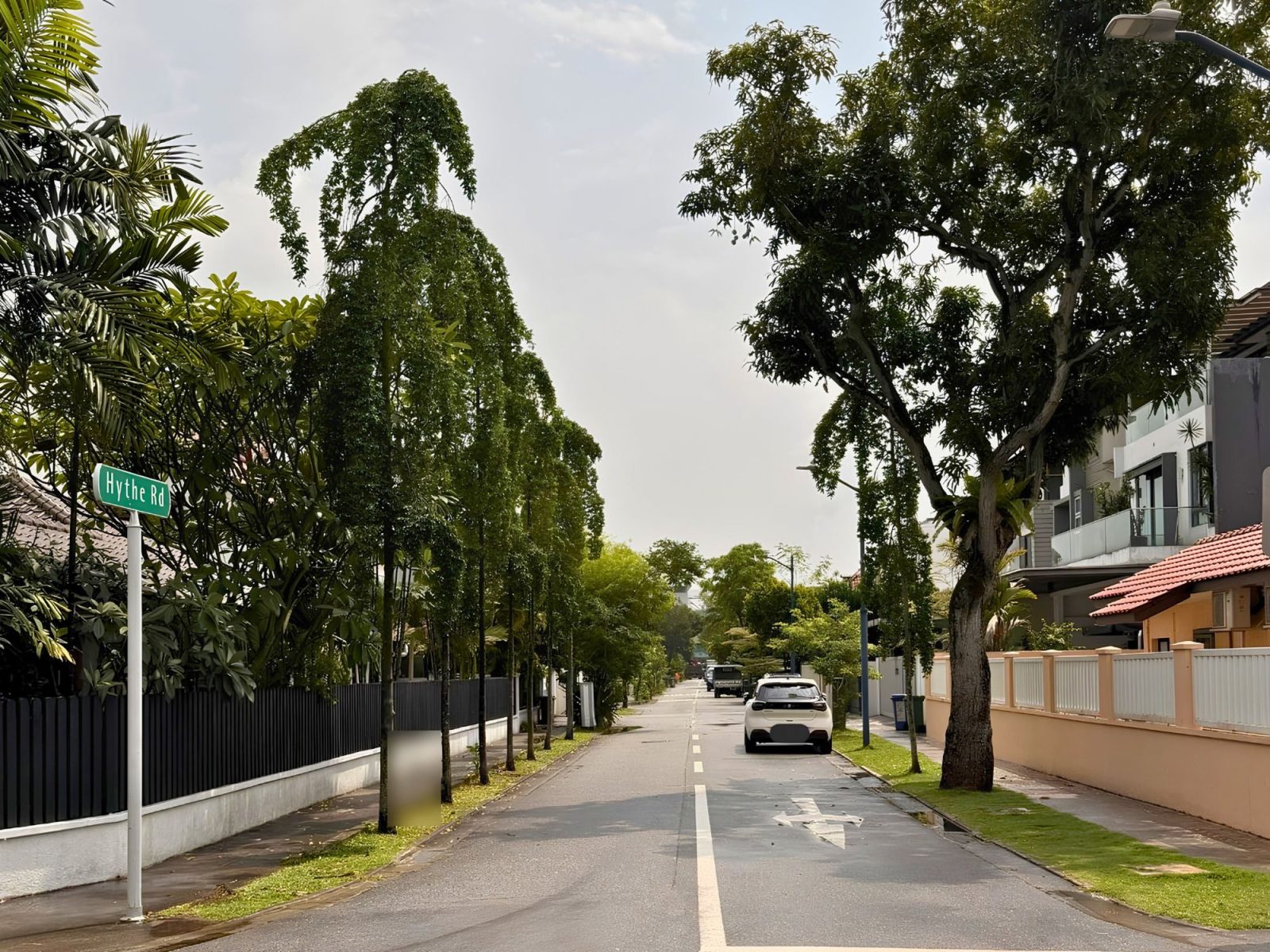
Once you turn onto it, the road runs two ways, in line with Serangoon Garden’s road network. On the day I visited it was calm, only a couple of cars on the move.
Rain trees line both sides, so most of the street sits in dappled shade. It’s the kind of quiet that took me a moment to register after the busy traffic and commotion along the Circus.
But that kerbside parking raised my eyebrows a bit. On most mature, landed lanes in Singapore, residents park along the road itself, which narrows the manoeuvres of cars during school pickup hours or weekend dinner traffic.
I was there on a weekday afternoon, so I cannot speak to peak times, but the habit is common enough across the estate to expect the same here.
This street runs on a certain rhythm: quiet mornings, a burst of activity around school pickup and dinner, then quiet by nine.
Based on the last two years of transaction records, Hythe Road landed homes are mostly terrace houses, with fewer semi detached mixed in.
Every property carries a 999-year leasehold tenure, which is as good as a freehold tenure if you ask me, so lease decay is not a concern. Most land sizes range from around 2,160 sq ft to about 3,720 sq ft.
As I meandered through the streets of this quiet neighbourhood, the mix of homes stood out to me: older red brick terrace houses with low rooflines next to taller, boxier rebuilds in grey render and black cladding, sometimes on the same stretch.
To me it felt as if the area was giving a sort of ‘in between feel’ — part heritage estate that reminded me of its past British residents, but also a foot into the modern with new houses standing proudly alongside.
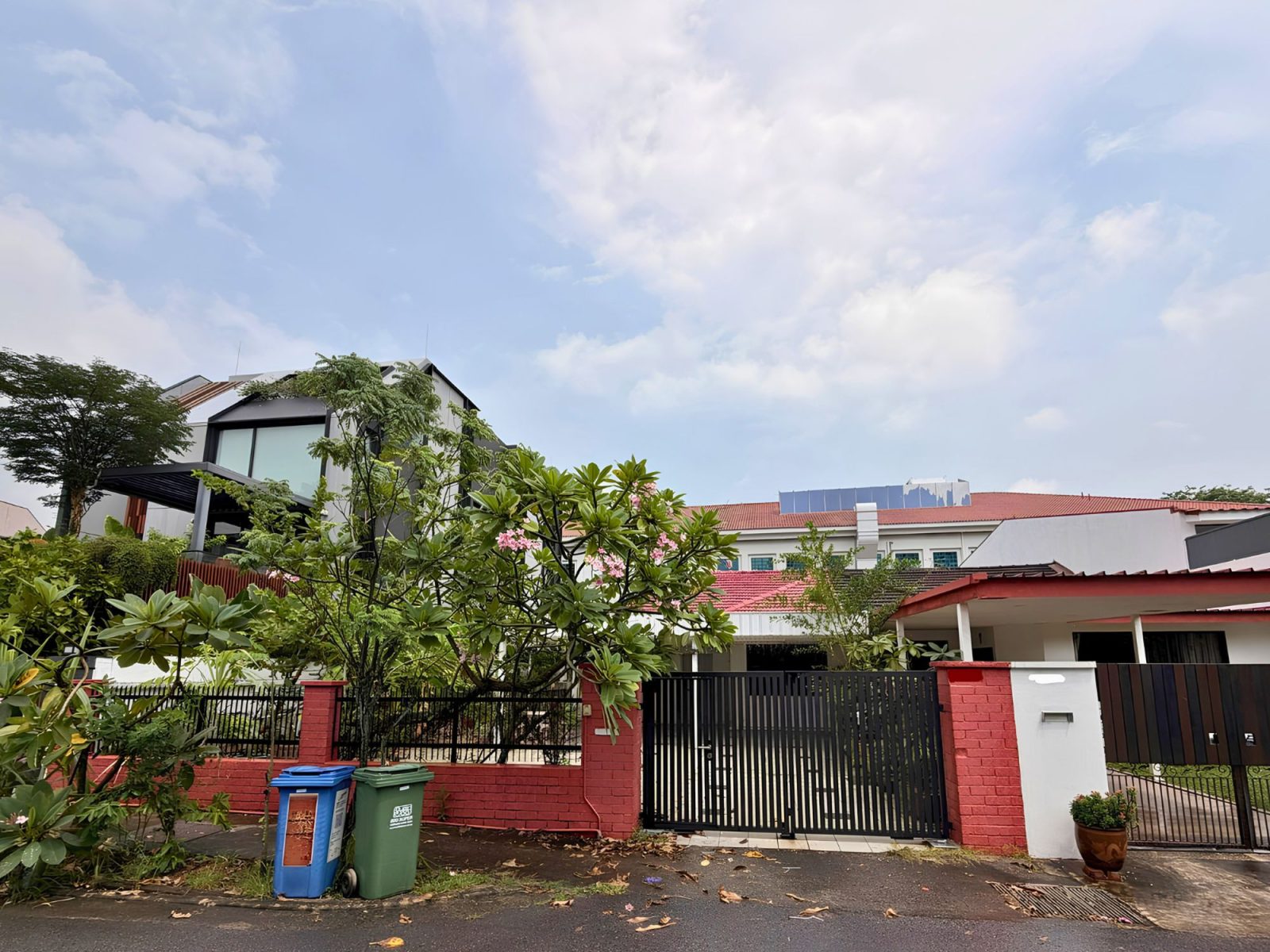
I think the rebuilding restrictions are worth knowing before you start dreaming up a rebuild of your own home here. Hythe Road is designated a two-storey landed envelope on URA Space, which caps the maximum height of the landed homes in this zone to 12m.
As I glanced at some of the new homes being built, that building height limit kept popping up in my head.
New houses can give the impression of looking like they have a full third storey, but within a 12m envelope that height limit usually means this is in the form of a high ceiling or attic, not an extra floor.
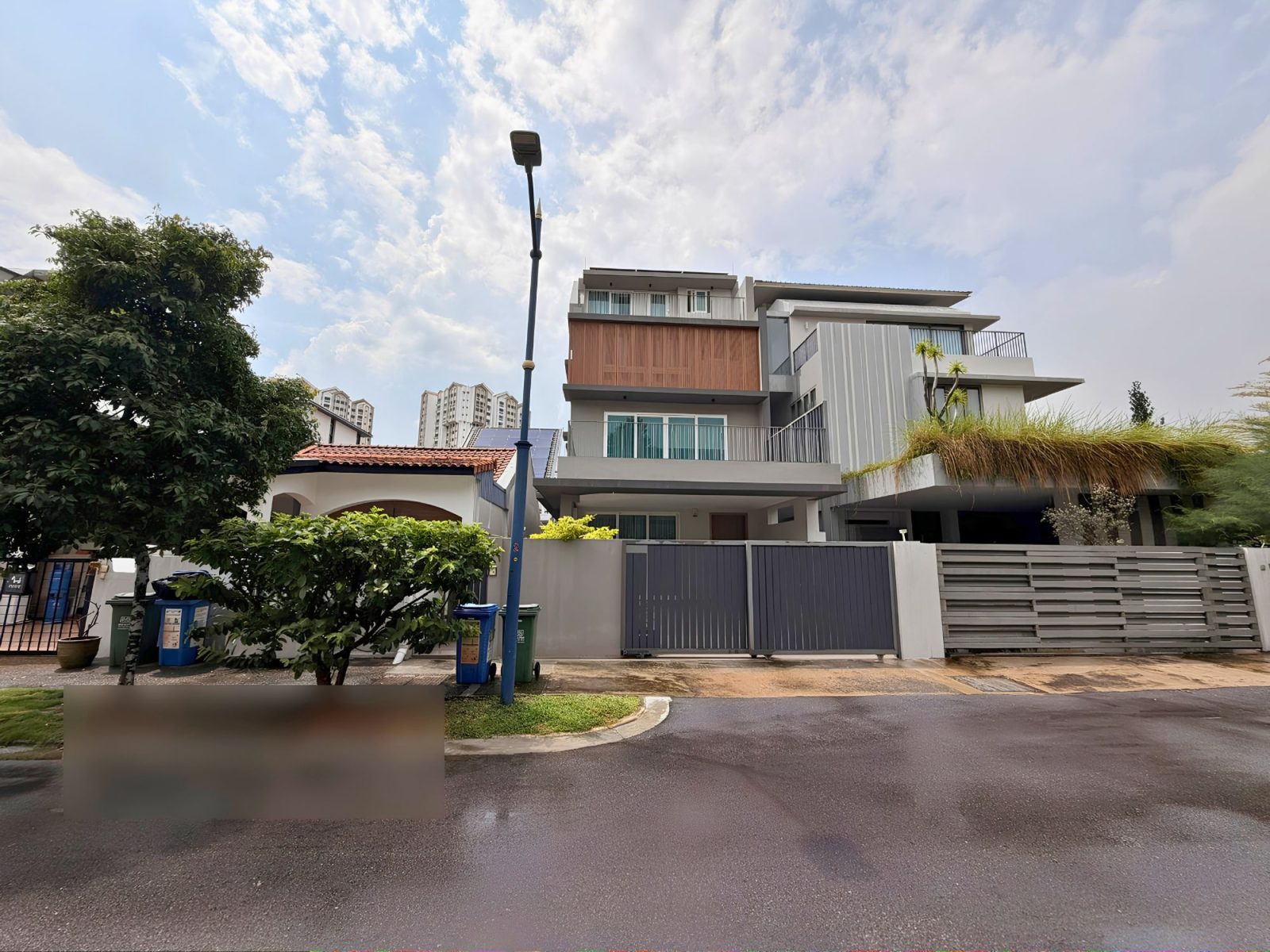
It was the quaintness of the neighbourhood that was my biggest takeaway, especially as I left behind the hustle and bustle of the main commercial hub on my way to the Hythe Road enclave.
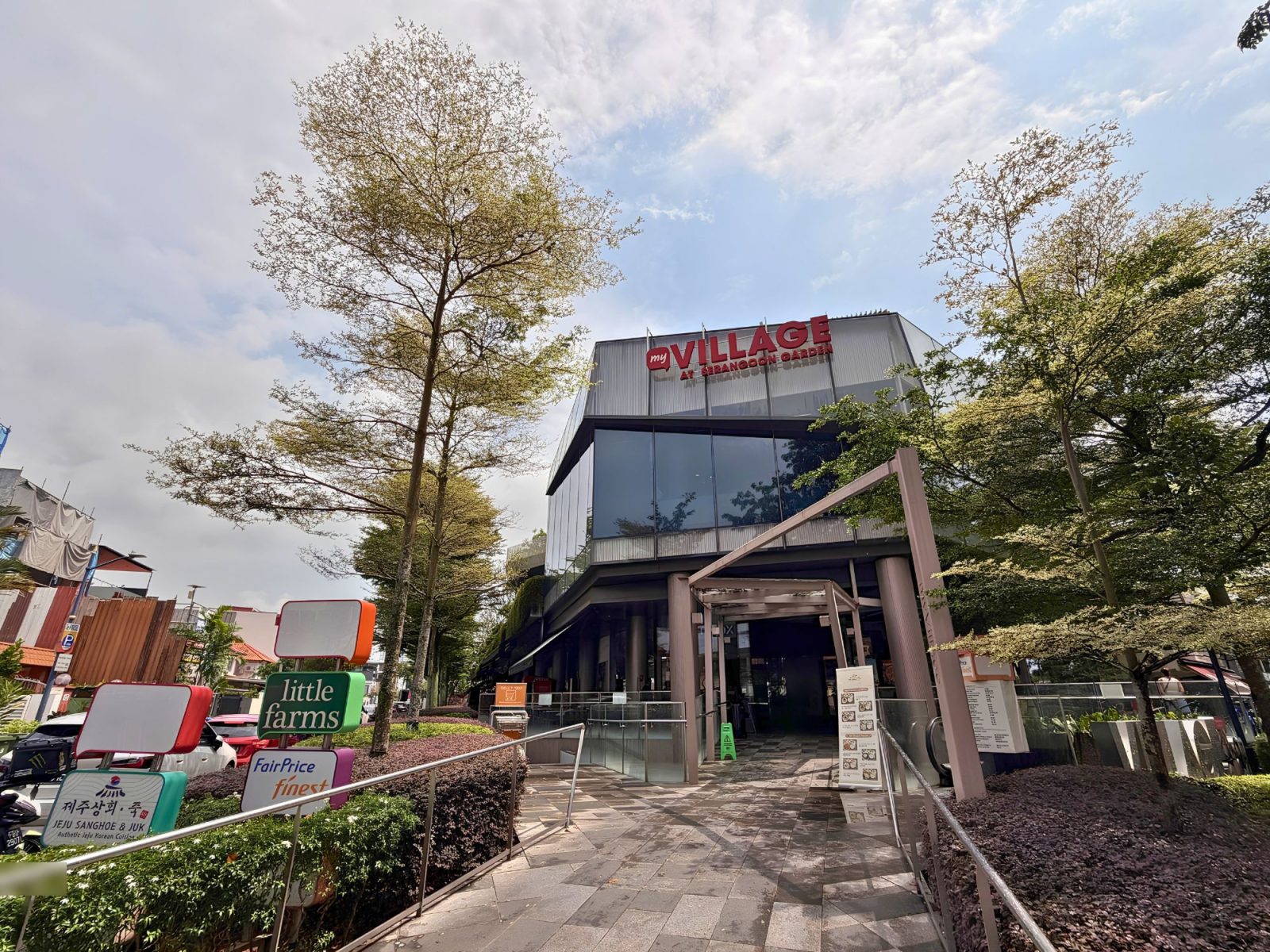
Unlike other corners of Serangoon Gardens, residents along Hythe Road are within walking distance of MyVillage mall, which has a FairPrice Finest and Little Farms, plus the Chomp Chomp Food Centre and Serangoon Garden Market.
On a weekday morning the walk feels so suburban, with joggers and moms wheeling their babies around in their four-wheel thrones rather than city traffic, rare for landed housing this close to the centre.
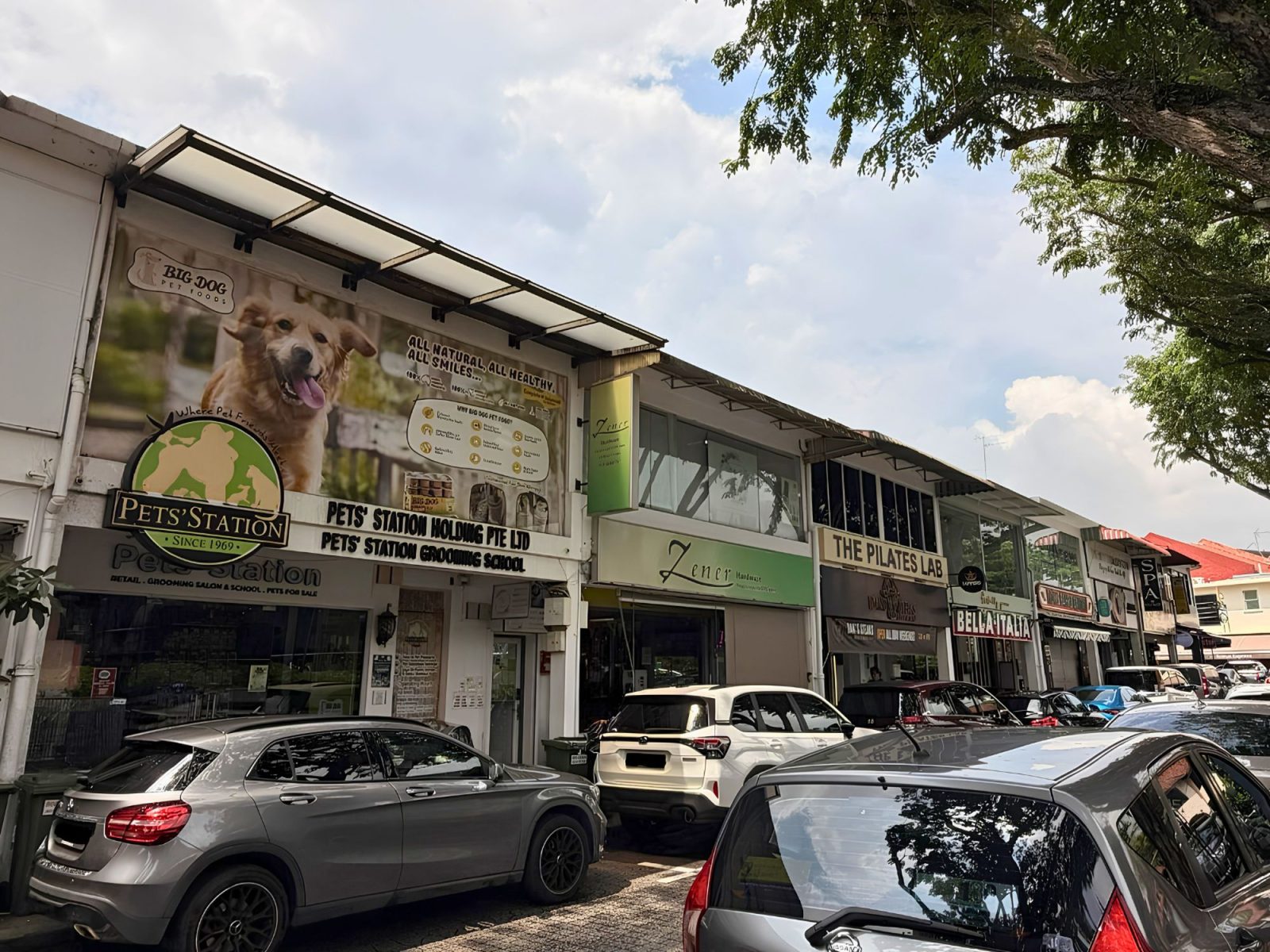
Corridors of older retail shops are still in use, giving the estate it’s lived-in character.
Directly opposite Chomp Chomp on Kensington Park Road: a music school, a family clinic, a Korean eatery, a pet groomer and a speech academy sharing the same block.
Nothing here is trying hard to look polished, and I think that’s part of the appeal and why people keep coming back to this area.
For schools, the International French School sits across Ang Mo Kio Avenue 3, at the estate’s edge. CHIJ Our Lady of Good Counsel is on Burghley Drive, inside the estate. Rosyth School, known for its Gifted Education Programme, is a short drive away in Serangoon North rather than a walk, so do not assume it is on your doorstep.
For many landed estates, public transport has always been one of the weakest attributes.
But Serangoon Garden fares better: a feeder bus loops through the estate, and the bus stop at Serangoon Garden Circus covers a good distance on its own, with services 73, 73T, 136, 315 and 317 all stopping there.
What has been missing is a train station. But we now know that Tavistock and Serangoon North stations, both on the upcoming Cross Island Line, are targeted to open in 2030 along the estate’s edge on Ang Mo Kio Avenue 3.
Although signs of the construction hadn’t permeated into the estate during my visit, just keep in mind that you should expect some construction noise and traffic diversions nearby
There’s one more change afoot: in June 2026, the Singapore Land Authority awarded the former Serangoon Garden South School site at 49 Kensington Park Road to construction firm Top Pave, as covered by Stacked.
The 78,096 sq ft site, vacant since 2007, is set to become a health led lifestyle hub with fitness, physiotherapy, TCM and community programming. The name of the project is said to be Lumina, though unconfirmed.
I don’t think this new lifestyle hub will significantly change Hythe Road’s quiet feel but is a reason to think long term about this part of the estate.
Between May 2024 and May 2026, Hythe Road recorded 11 transactions, based on ERA’s real time transaction data.
Of the seven with recorded profit and loss figures, every one closed at a gain, with holding periods from about a year and a half to eighteen years.
The remaining four had no prior purchase data for comparison, so I am not claiming they were profitable, just that we do not know either way.
By house type, here is the spread:
| Segment | Price range | PSF range |
| Terrace houses (resale) | $4.82m to $7.15m | estimated $1,487 to $2,257 |
| Semi detached houses (resale) | $4.75m to $5.15m | $2,193 to $2,384 |
| Semi detached, newly rebuilt (new sale) | $9.5m | $2,568 |
As I scoured through the transactions, the house at 23 Hythe Road stood out to me and tried to I dig deeper and find out how the property had changed hands in recent years.
It was sold as an old terrace house in October 2024 for $5.5 million. The buyer tore it down, rebuilt it as a modern semi detached house, and sold it again in May 2026 for $9.5 million, a gross gain of $4 million.
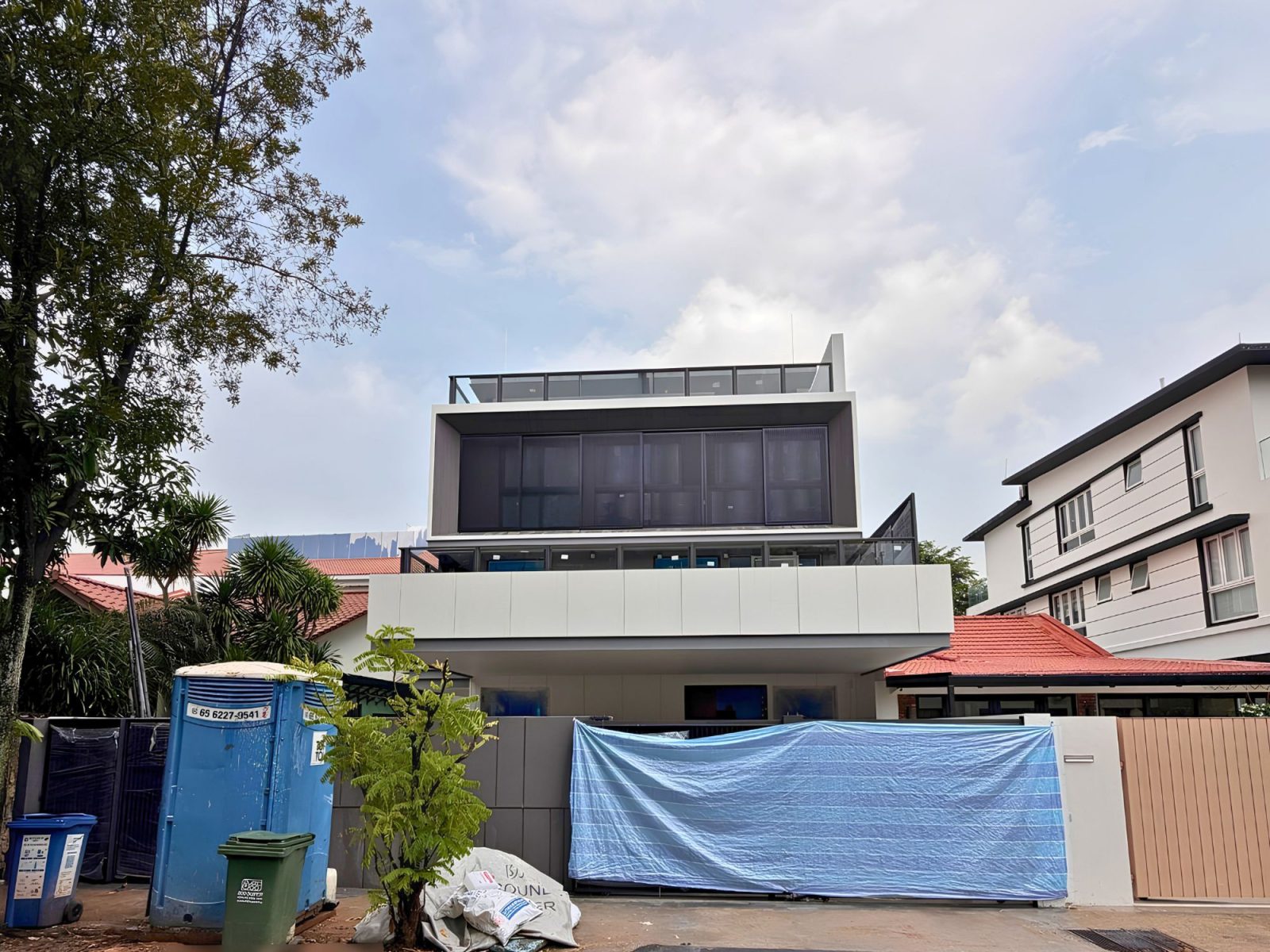
When I went to visit the estate, I made it a point to drive past the actual house. It was still mid renovation, wrapped in tarpaulin with building materials on site, even though the transaction record already shows it as a completed New Sale.
That’s not usual, and we sometimes see redevelopment houses, still mid-construction, get transacted again before the finishing work wraps up.
But there’s a difference between raking in a paper profit for one house flipper (granted one who is redeveloping an old house), and a move-in ready home.
On the surface, it’s impressive to flip the house and make a handsome profit of $4 million. But when we also consider other costs, that figure starts to slim.
From what I could gather, the resale happened within two years of purchase, and because the property was bought before the July 2025 change to Seller’s Stamp Duty rules, the applicable rate under the old three-year schedule was 8 percent on the $9.5 million sale price, or $760,000.
Rebuilding a semi detached house of this size at current market construction rates, roughly $300 to $500 per square foot, would cost $1.5 million to $3 million, depending on finishes and materials.
Net that out and the realistic profit likely sits between $240,000 and $1.74 million over about a year and a half. Still a positive return in most scenarios, just nowhere near the headline $4 million figure.
Nevertheless, I think the most useful bit of information to take away from all of this is the price range of a typical terrace house here.
Most properties changed hands for $4.8 million to $7.2 million based on deals recorded in the past two years, and nearly each recorded deal with a matching caveat closed at a profit.
I reckon that this price range is a more useful yardstick of how most sellers in that estate feel about the value of their homes.
No street is perfect. To start, the parking situation narrows an already modest two-way road, which matters to those of you who own two cars or parents who need to do a lot of school runs.
The construction of the upcoming Cross Island Line MRT stations, while a long term positive, means several years of noise and diversions in the surrounding area even before either station opens.
Lastly, the 12m height cap could trip up some buyers too.
A rebuilt house nearby might look like it has three storeys, but that’s not the case here. A worse scenario is when you draw up building plans that ultimately get rejected by URA, then it’s back to the drawing board with your architect.
I thoroughly enjoyed the relatively short amount of time that I got to spend walking between the houses in the Hythe Road enclave.
The quaint little estate, tucked in a inner street, seems like the idyllic landed neighbourhood that most aspiring (and first-time) landed homeowners dream of.
It’s the sort of area to suit buyers looking for a long-term family home rather than a short-term flip.
The 999-year leasehold tenure of the houses there remove any concern about lease decay, while the schools and malls are within walking distance, and the upcoming MRT stations adds real long term value (even though its a few years out).
With a budget of $5 million to $7 million, I can see how a terrace house gives you room to renovate or rebuild later. But if you’ve got a budget of at least $9 million, a fully rebuilt home gets you a modern layout.
Either way, this little neighbourhood in Serangoon Gardens is certainly worth a closer look if quiet, walkable living in District 19 is what you are after. Now, to be frank, I wouldn’t call Hythe Road exciting. But I would call it a good long-term bet.
Disclaimer: This article is intended for general information only and does not constitute financial, investment or legal advice. Facts, prices and figures were compiled from public and industry sources believed to be reliable and accurate as at the time of writing, including URA, LTA, IRAS, MAS, MOE, the National Heritage Board and ERA’s transaction data, but market conditions, transaction records and government guidelines may change. Readers should independently verify all figures and consult a licensed real estate agent, lawyer or financial adviser before making any property decision.
Hythe Road is designated a two-storey envelope on URA Space, which caps rebuilding at 12m. Houses on the street that look taller than two storeys are achieving that through high ceilings or a loft, not an actual third floor.
Tavistock and Serangoon North stations on the Cross Island Line are targeted to open in 2030 and will sit along the estate's edge. Until then, there is no MRT station within the estate itself.
No. Rosyth School is a short drive away in Serangoon North. CHIJ Our Lady of Good Counsel, on the other hand, is inside the estate on Burghley Drive.
[[nid:741635]]
This article was first published in Stackedhomes.