BANGKOK — Shares retreated Thursday (March 19) in Asia after stocks on Wall Street slumped as oil prices spiked at more than US$113 (S$145) a barrel.
US stocks also sagged due to a report that said inflation was primed to worsen even before the war with Iran sent oil and gas prices spiking.
That, and comments from the head of the Federal Reserve, led investors to expect there's less chance of getting the lower interest rates that they crave.
US futures were little changed, while Treasury yields pushed higher, lending still more strength to the US dollar, which has gained against other major currencies since the war began.
Oil prices have soared because the war has disrupted the Persian Gulf's energy industry.
Iran is intensifying its attacks on its Gulf Arab neighbours' energy infrastructure as it hits back following an Israeli attack on its main natural gas field.
On Thursday, one strike set Qatari liquified natural gas facilities ablaze and the United Arab Emirates had to shut down one of its gas operations.
If the disruptions keep oil and gas prices high for long, they could create a debilitating wave of inflation for the global economy.
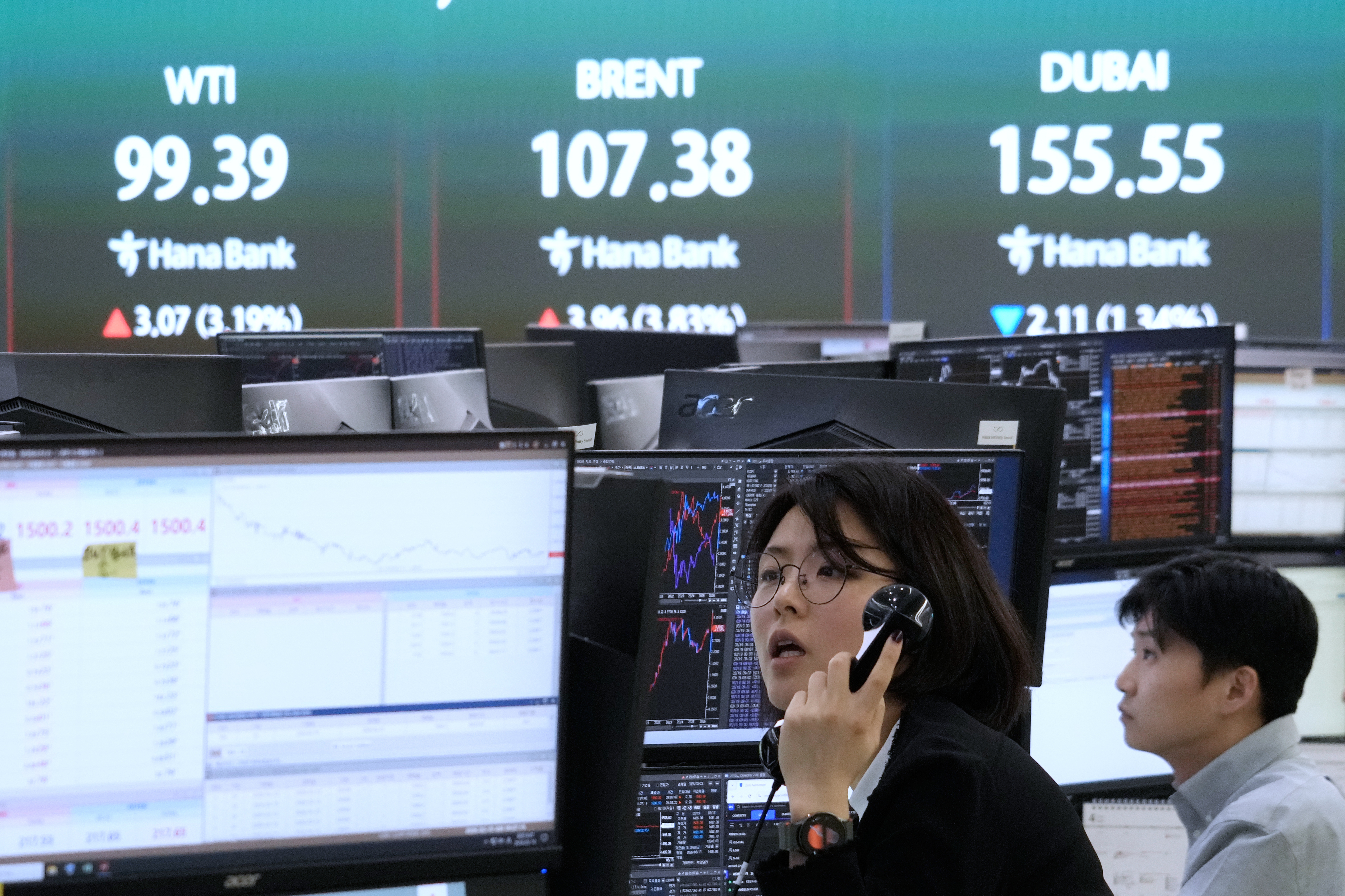
Brent crude, the international standard, was trading at US$113.52 a barrel early Thursday, up 5.5 per cent from a day earlier. US benchmark crude oil gained 1.1 per cent to US$96.45 a barrel.
The Henry Hub future contract, the benchmark for US natural gas, gained 3.3 per cent.
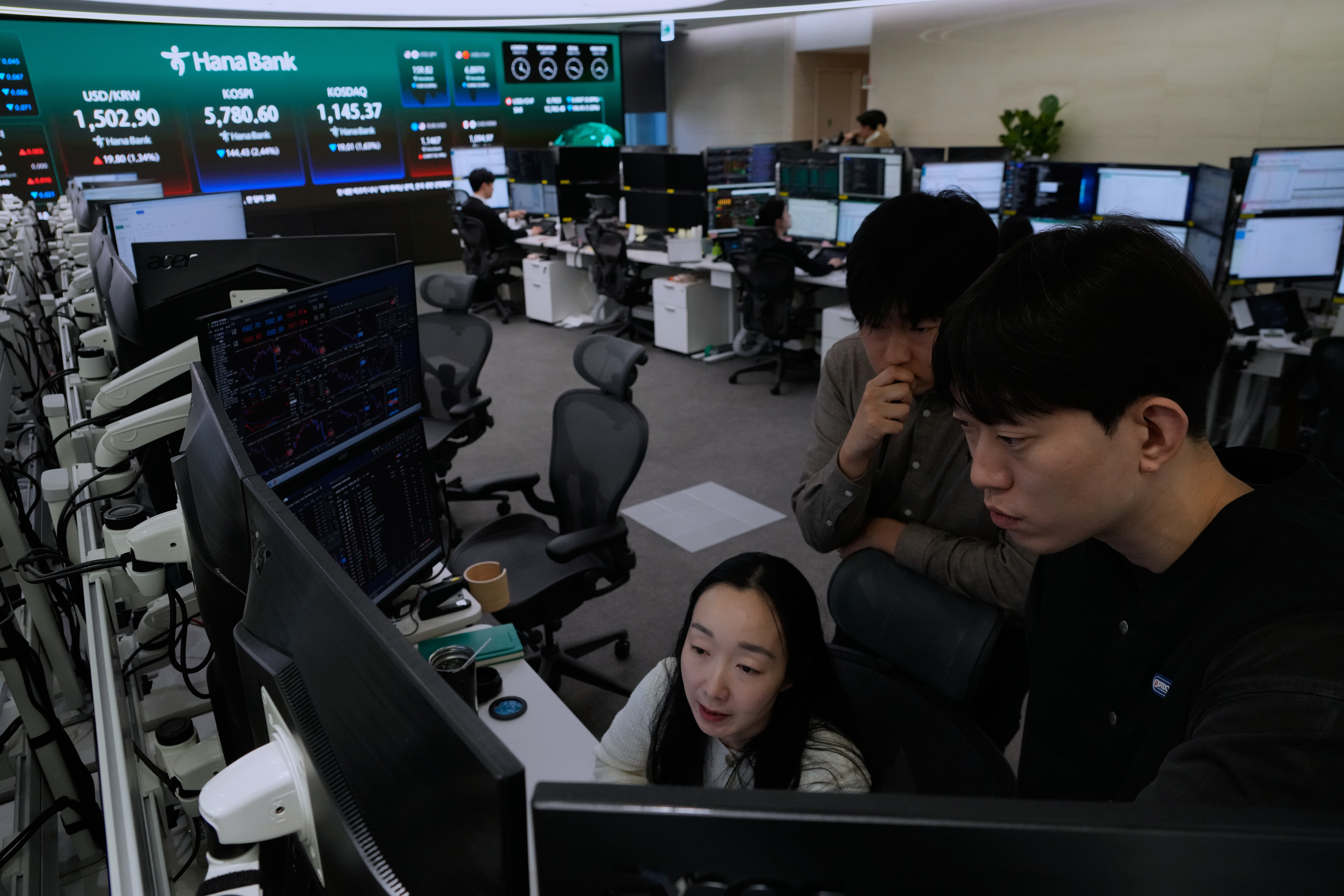
In Asian share trading, Tokyo's Nikkei 225 fell 3.4 per cent to 53,372.53 as the Bank of Japan opted to keep its benchmark interest rate on hold at 0.75 per cent, citing the war with Iran as one factor.
In its monetary policy statement the BOJ said that "in the wake of increased tension in the Middle East, global financial and capital markets have been volatile and crude oil prices have risen significantly; future developments warrant attention".
Higher oil prices are a heavy burden for Japan, which like South Korea and Taiwan depends on imports of most raw materials for industries that rely heavily on oil and its derivatives.
The Kospi in Seoul lost 2.7 per cent to 5,763.22.
In Hong Kong, the Hang Seng slipped two per cent to 25,507.89, while the Shanghai Composite index shed 1.6 per cent to 3,996.44.
Australia's S&P/ASX 200 lost 1.7 per cent to 8,497.80 and Taiwan's Taiex fell 1.9 per cent. In India, which has also suffered from shocks to supplies of oil and gas, the Sensex lost 2.3 per cent.
"The combination of higher oil, rising US yields, and a stronger dollar is acting as a macro wrecking ball across Asian assets and currencies," Stephen Innes of SPI Asset Management said in a commentary.
On Wednesday, the S&P 500 fell 1.4 per cent to 6,624.70, flipping to a loss for the week so far. The Dow Jones Industrial Average dropped 1.6 per cent to 46,225.15, and the Nasdaq composite slid 1.5 per cent to 22,152.42.
The losses deepened after the Fed decided to keep its main interest rate steady, instead of resuming cuts meant to give the job market and economy a boost.
"We just don't know," Fed chair Jerome Powell said about what will happen with oil prices, along with how long President Donald Trump's tariffs will take to work their way fully through the system.
A report released Wednesday morning showed inflation pressures were already building before the war began. It said inflation at the US wholesale level unexpectedly accelerated last month to 3.4 per cent.
In other dealings early Thursday, The US dollar fell to 159.71 Japanese yen from 159.88 yen. The euro rose to US$1.1467 from US$1.1453.
[[nid:731742]]



