

21st-century bachelor pads: Three young Singaporeans on how they made their first homes their own

(From left) Content creators Ian Jeevan, Julio Westby and Daryl Goh in their bachelor pads.
PHOTO: The Straits Times, Daryl Goh

SINGAPORE — Moving out of the family home is a milestone and, for many young Singaporeans, it is also the first chance to create a space that is entirely their own.
More are choosing to fly the coop before they get married or reach 35, the age when singles become eligible to purchase public housing. According to Department of Statistics data, the number of citizens and permanent residents under 35 living alone more than doubled from 10,500 in 2016 to 22,600 in 2025.
The Straits Times meets three content creators who have set up their own places, and finds out how they found, funded and furnished their bachelor pads.
Every morning, content creator Ian Jeevan switches on all the lamps in his living room, turns off the “big” light and plays a video of a crackling fireplace on his TV. As the TV sits against the exposed brick wall of his rented shophouse unit, it looks so convincing that friends often think he has a real fireplace.
It is a far cry from his old routine, when the 30-year-old was always keen to head out or travel. Since moving into the 800 sq ft unit in the east on Sept 1, he would much rather stay home.
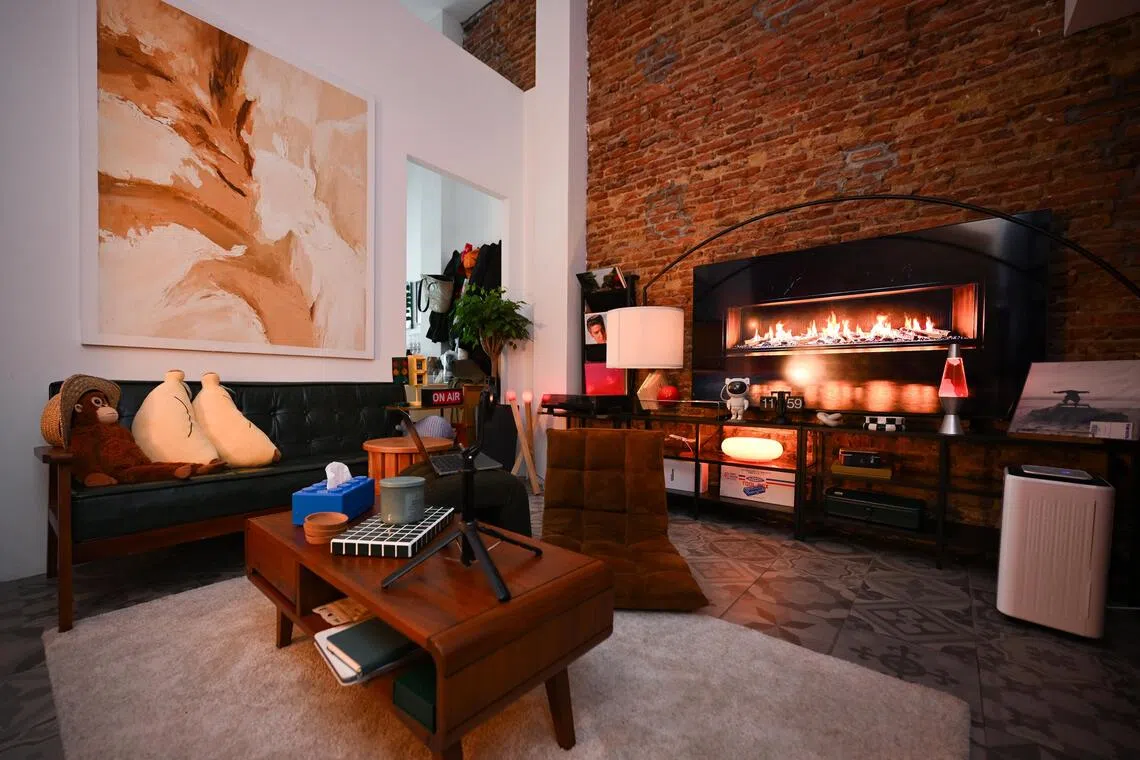
“I really underestimated how much a home can turn you into a homebody,” he says. “It protects your peace and energy.”
Until September 2026, Jeevan lived with his parents, sister and grandmother in a five-room executive Housing Board flat. He has been making content about lifestyle, travel and everyday life for six years, and as the work grew, so did his need for space.
But more than space, he wanted independence. He felt it was time to stop relying on his family to help with chores such as laundry and cooking. “I just wanted to experience that for myself,” says Jeevan, who has been a full-time creator for the past 1½ years.
For two years, he browsed property listings to no avail, until one day in August, he spotted a unit near his favourite neighbourhood, Joo Chiat. He arranged a viewing that day.
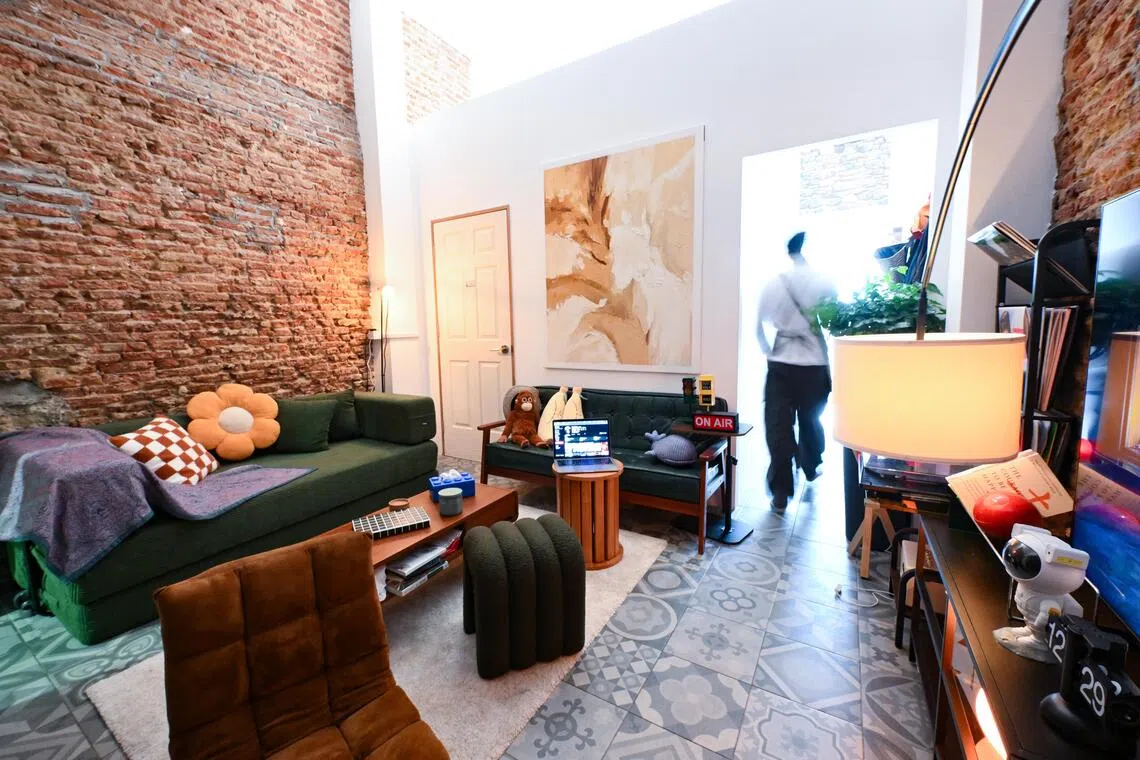
The one-bedroom shophouse apartment comes with its own backyard and takes up one floor of a four-storey shophouse, with each floor rented to a different tenant. Seeing its high ceiling and brick walls, it took just one visit for him to decide.
“I walked in and was just like, wow, I could really envision living here,” he says.
Only after making an offer did he tell his parents.
His family chipped in with appliances. His parents bought him an iron and ironing board, while his sister got him a microwave oven and a dehumidifier. He paid for the rest of the furniture, white goods and decor himself.
He chose to rent as he wanted to enjoy living in a shophouse, and buying one was out of reach for him at present.
“Do I want to wait till I’m in my late 40s to purchase a house or do I want to enjoy living in a shophouse when I’m young?” he asks.
Jeevan declined to reveal his rent, which he pays for with his income from content creation, topped up by savings that he grew through investing, a habit he picked up as a former financial consultant. These savings serve as a safety net, which he considers essential in his line of work.
“As a content creator, there are months where you don’t get any jobs,” he says.
Jeevan filled his home with colour, especially green, his favourite. He favours dopamine decor — a trend that uses bold, cheerful colours to lift the mood — with a touch of mid-century modern. Much of his inspiration came from homes he saw on Instagram, TikTok and at friends’ places.
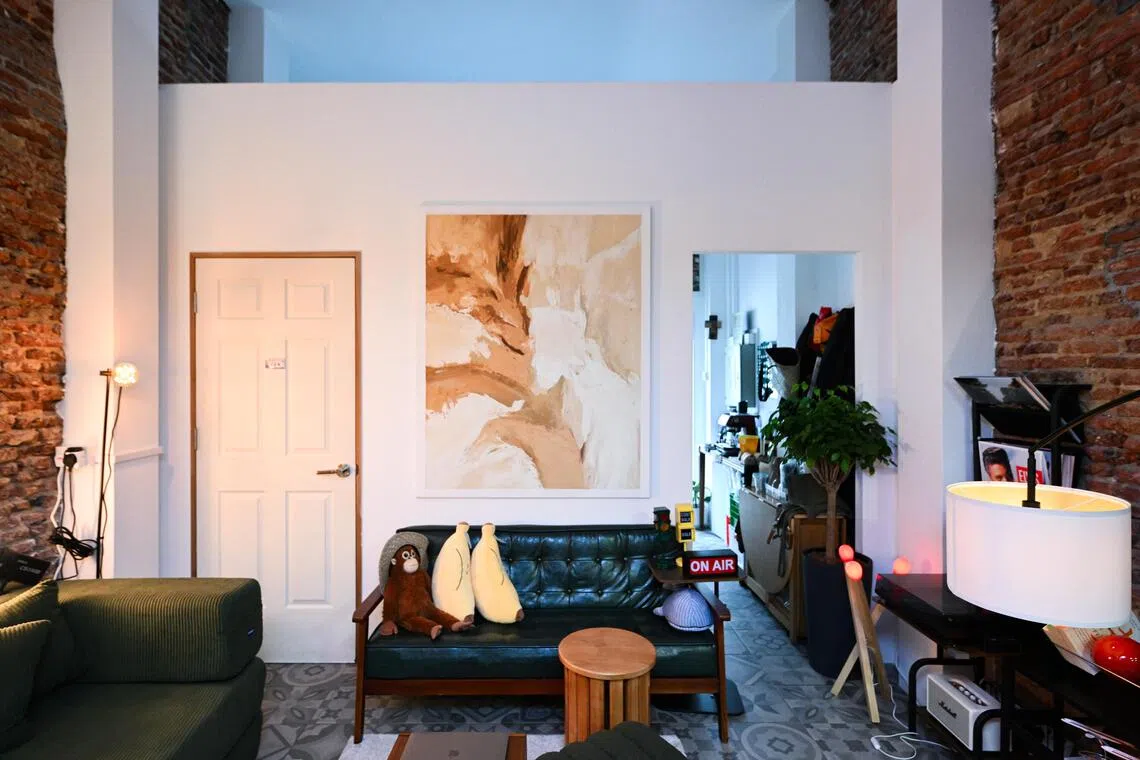
His home houses things he has picked up over time. “I didn’t want a very cookie-cutter home,” he says. “I’m not a minimalist, I’m a maximalist. My friends say I’m a hoarder, but I’ll take it.”
Rather than sticking to one look, he gave each part of the home its own mood.
The living room is retro and eclectic, with pops of colour set against earthy elements — from a lava lamp and glowing matchstick lamp to a vintage bench and an “On Air” sign.
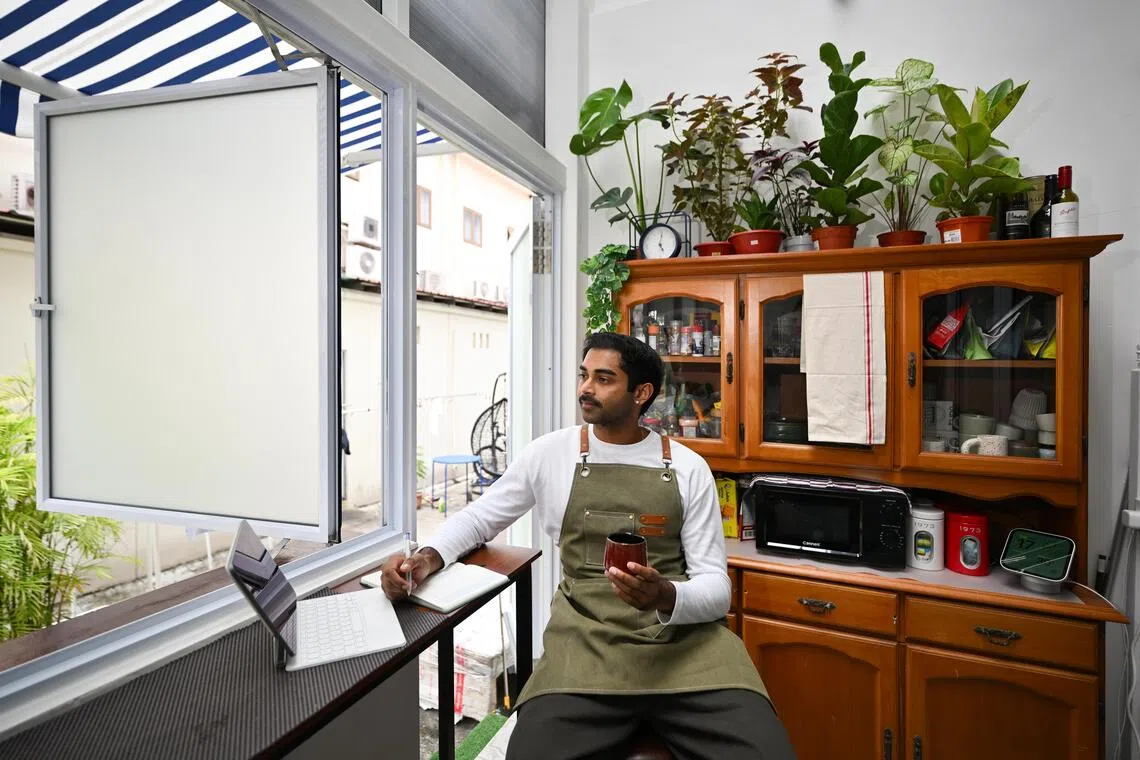
The kitchen is calm and serene, with earth-toned wooden cabinets, plants and natural light filtering in.
The backyard, where he makes his coffee every day, is French-inspired, with blue-and-white awnings, outdoor furniture, a trellis of creeping plants and green artificial grass, along with 30 to 40 plants.
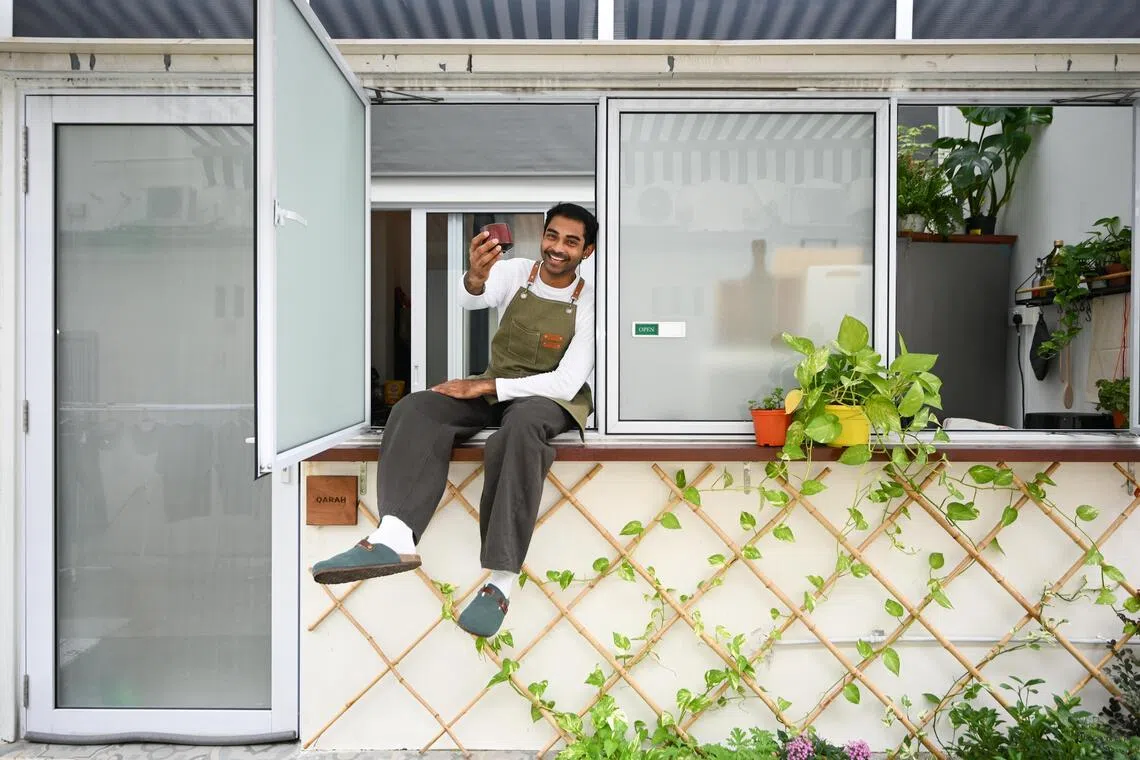
“We are all multi-faceted individuals with different personalities,” he says. “It’s okay to have different personalities in your own home.”
He has spent at least $5,000 on furnishing his home so far. His rule is simple: Spend on quality for things he uses every day and save everywhere else.
He bought his 65-inch TV new, for $999 on sale at tech fair Comex, choosing a big one to suit the high ceiling. He also bought a queen-size mattress for $800.
For most of his furniture, though, he hunted for deals. He found his coffee table for $80 on Carousell and his sofa, which turns into a sofa bed, for $280 on Shopee.
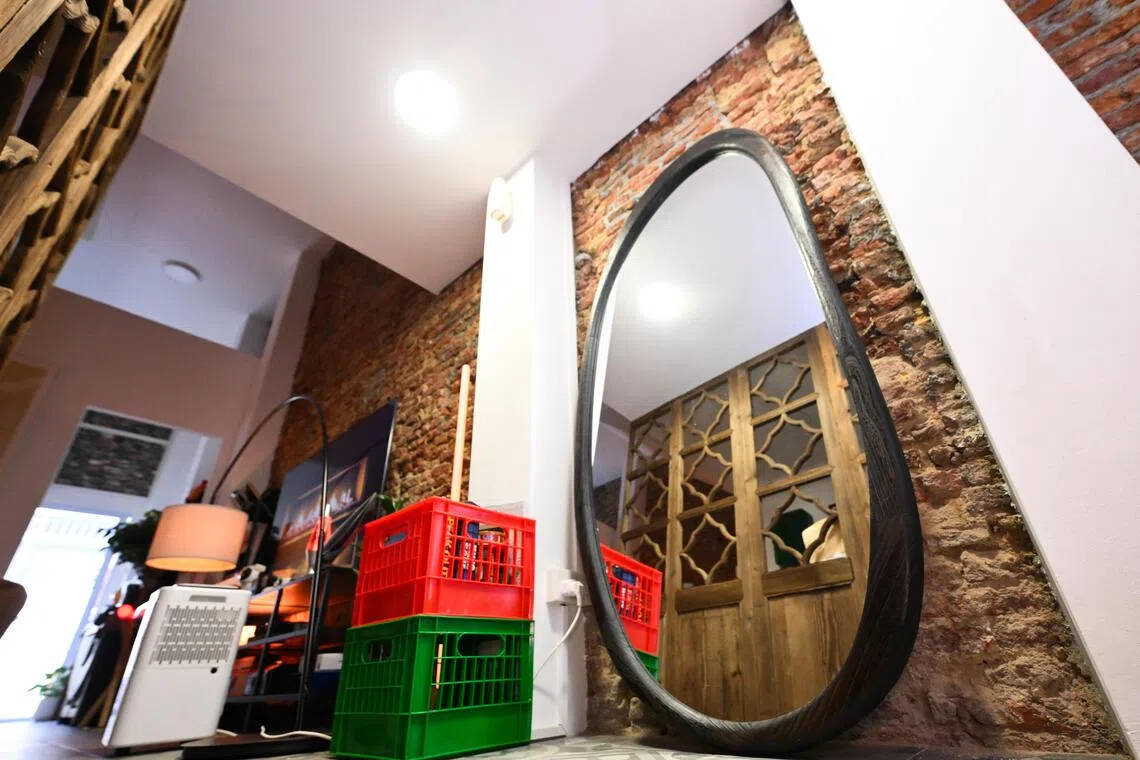
He also has a soft spot for pieces with personality. One of his favourites is a floor-to-ceiling mirror shaped like an espresso bean – a nod to his love of coffee — which he bought for $250 from Malaysian decor and furniture brand Ruma.
He also picked up a painting for $120 on a trip to Bali and had it framed in Singapore for $110.
His biggest saving was on the awning that shelters his backyard. Quotes for a custom-made one came in at $5,000 to $6,000, so he found a supplier online and dealt with it directly. The awning came to $150 and he paid a handyman another $200 to $300 to install it.
And make no mistake — despite his position as a content creator, none of his purchases was sponsored, he says.
Having furnished a home from scratch, Jeevan’s first tip is to think about how a piece will be used, not just how it looks. For instance, his sofa doubles as a bed for guests.
He also advises renters against bulky or custom-made furniture. “You don’t want to get things that you cannot take with you when you move in the future.”
Above all, he says, let your own taste lead. “Some people say I should have got a cream-coloured couch. I could have, but I like the green,” he says.
“At the end of the day, it’s your space, and you’re the one coming home to it.”
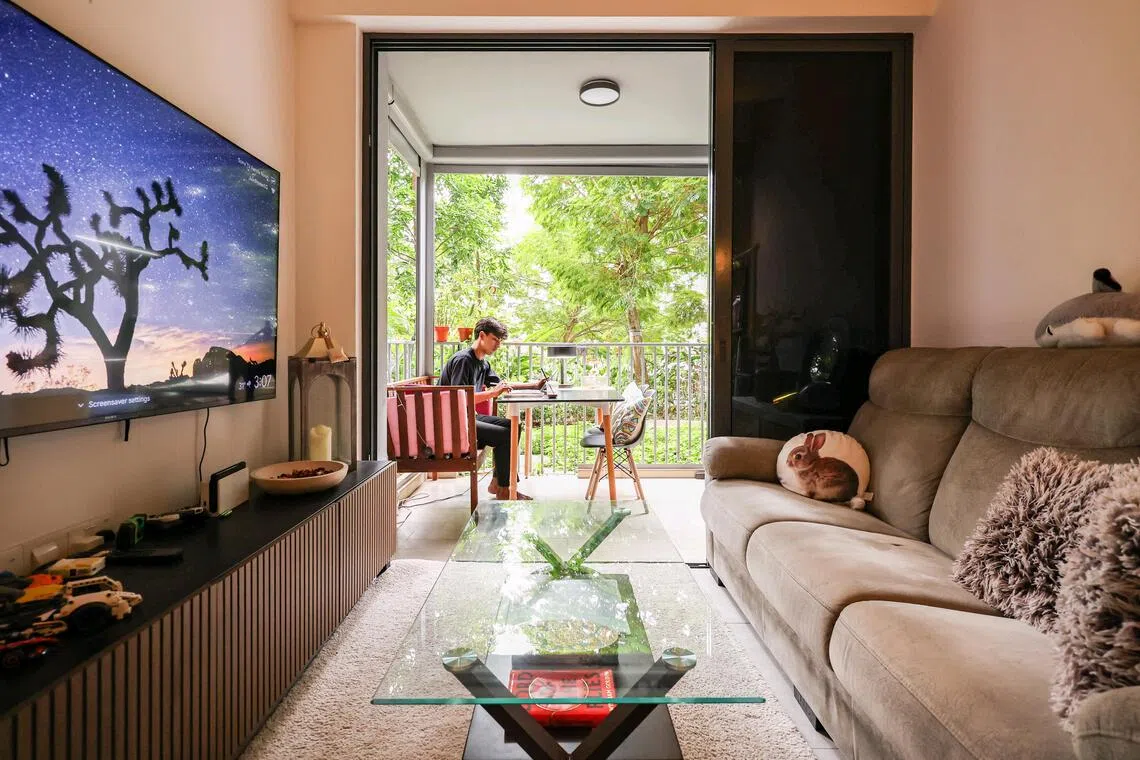
Most mornings, content creator Julio Westby takes his coffee out to the balcony of his ground-floor condominium unit, which looks out onto the development’s garden. He sits on a wooden bench that has followed him from his family home, where he would hang out with his schoolmates at night.
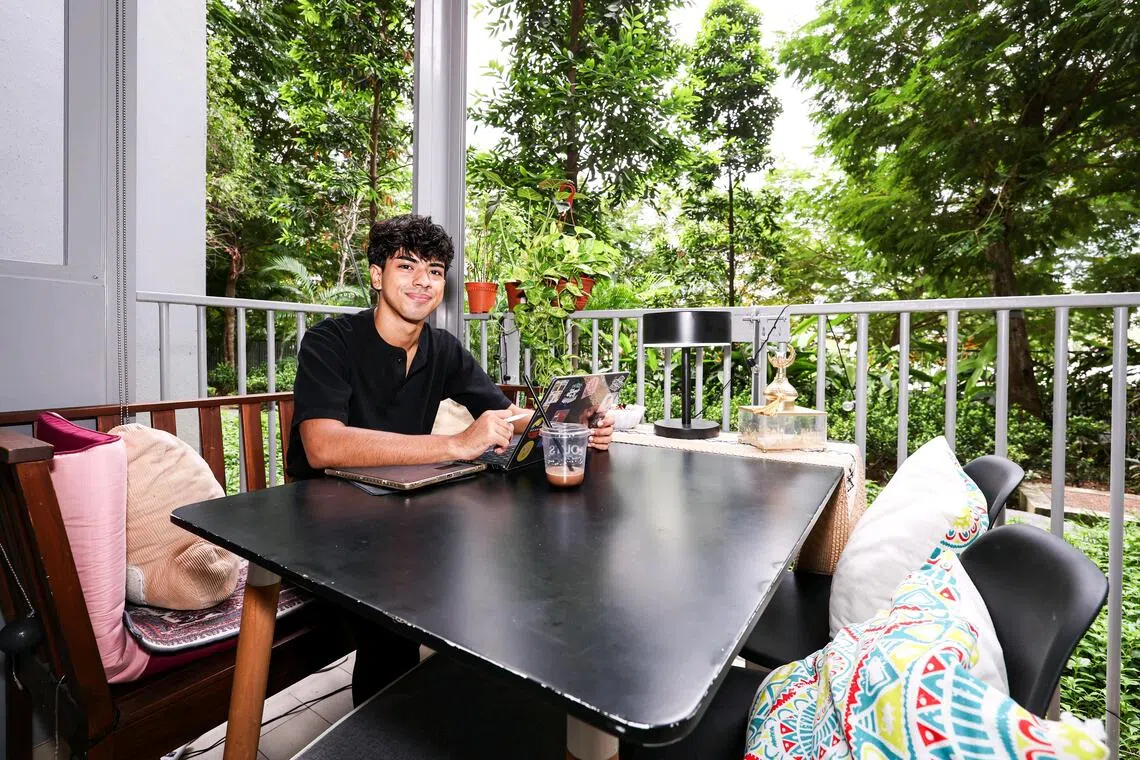
When he moved out, he asked his mother if he could take it along.
“I am quite sentimental when it comes to objects,” says the 21-year-old, a part-time actor and influencer who owns a hair cream brand, Rivelo by JW.
The balcony doubles as his workspace and its view of the greenery was one reason he chose the one-bedroom unit in north-eastern Singapore.
“When I work, I can look out, relax and then continue working,” he says. “It’s really a luxury.”
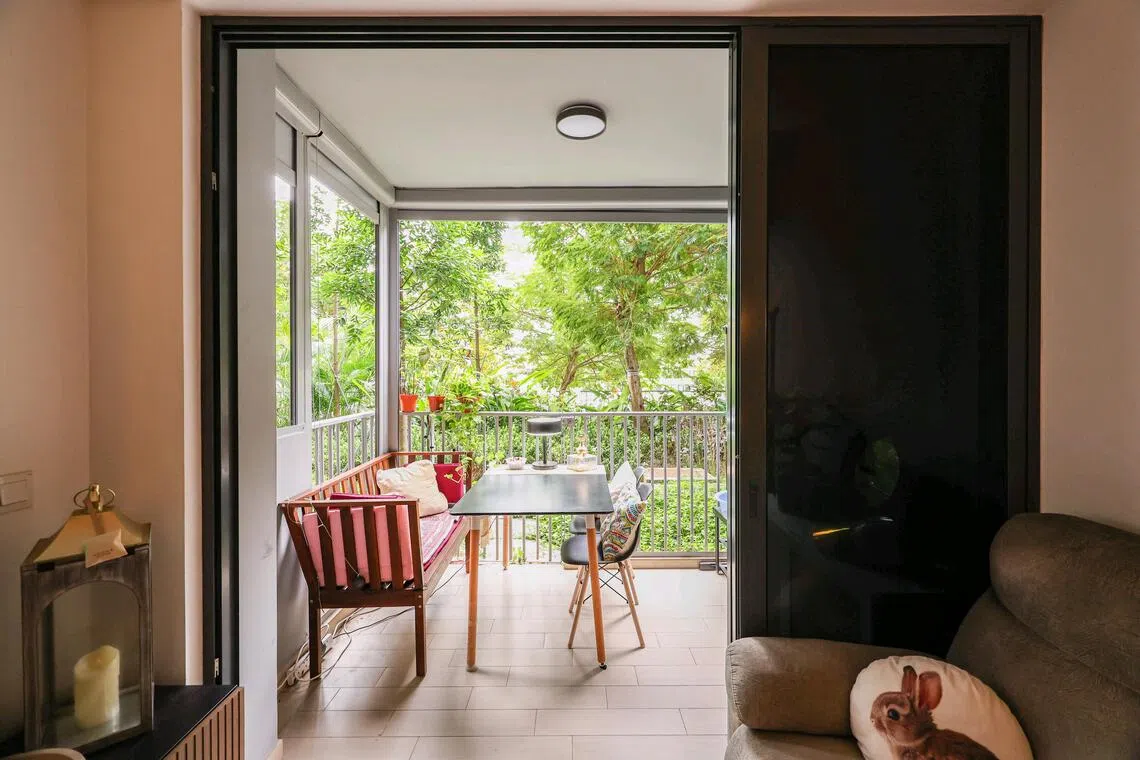
Westby moved out of his mother’s home in July on his 21st birthday. Sharing a room with his two brothers then made it hard to film content. He wanted a space that could double as a filming studio.
With rent high in Singapore, he did not take the decision lightly.
His mother used to handle his laundry and meals, so she doubted his ability to live independently, Westby admits. “But at the same time, she was proud of me,” he says.
She attended viewings with him and encouraged him to choose his current condo before negotiating with the agent and helping him clean and set up the place.
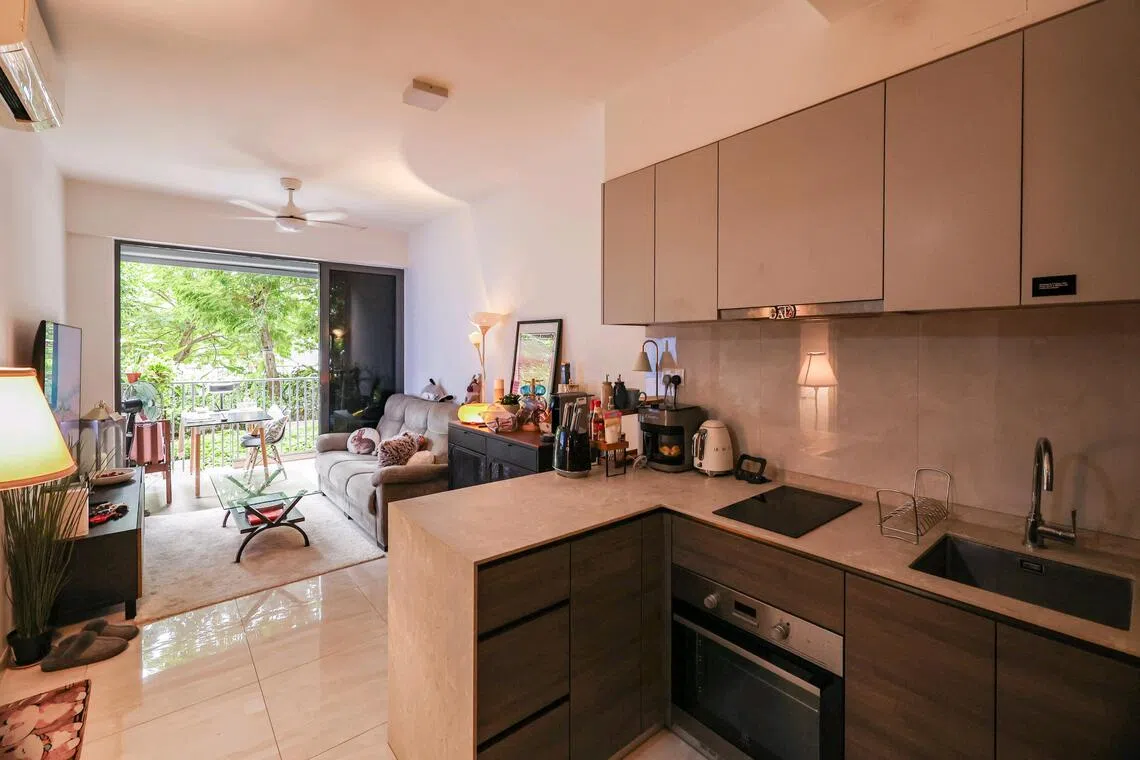
What won him over was the condominium’s family-friendly estate, its many trees and the sunlight that streams in each morning, which he believes sets the tone for his day. “You have to be able to envision yourself waking up in the morning in the place you are choosing,” he says.
Paying for the two-month deposit and monthly rent took careful planning. With no fixed monthly salary, he saved up three months’ worth of rent as a buffer before moving out. He now pays the $3,000 monthly rent on his own.
He has since cut back on travelling and shopping, and plans his spending around one rule. “When you rent, the most important thing is putting rent first every month.”
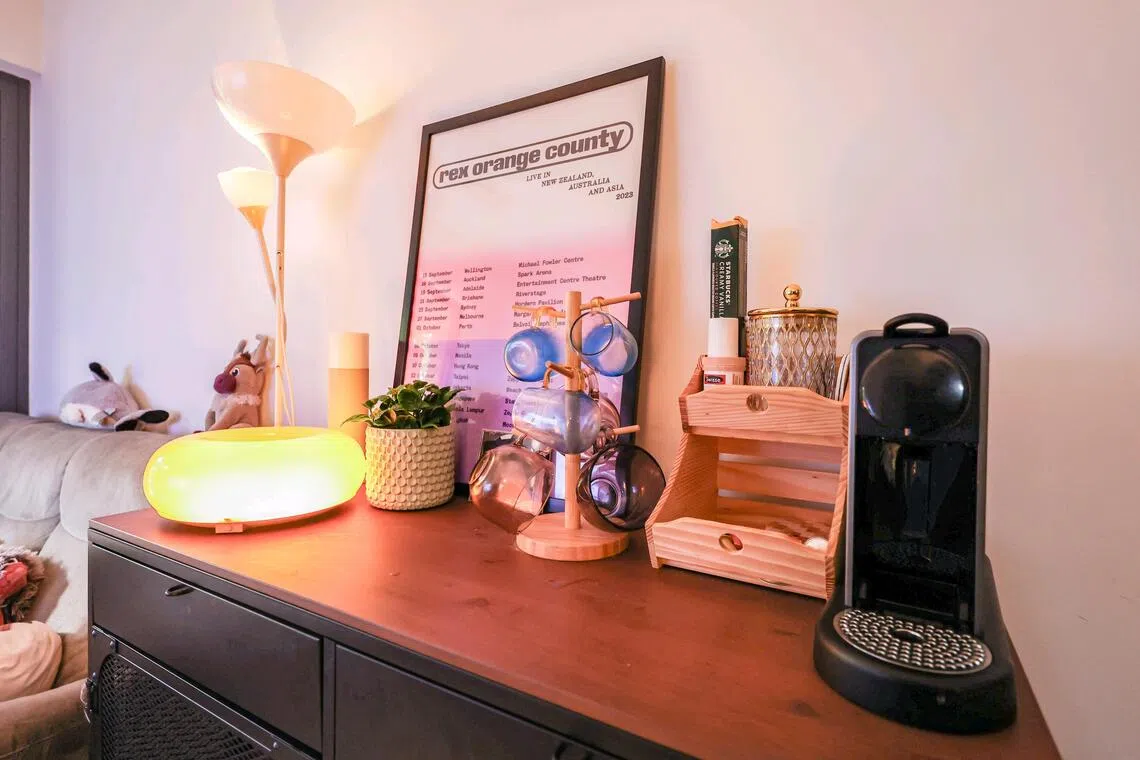
In furnishing his home, Westby calls his style “Bali, Julio version”, a mix of Bali’s island feel and modern furniture. He swopped out the light-coloured wood characteristic of Balinese furniture for darker wood tones instead.
The island feel comes through in the wood textures of pieces like his TV cabinet and entryway cabinet, as well as the abundant greenery.
He is particularly chuffed about the entryway cabinet purchased from Ikea for $350, which he styled himself.
To him, lighting matters as much as the furniture. “White light makes me feel like I’m in the office,” he says. “I really believe in investing in lamps. Warm lighting is very important.”
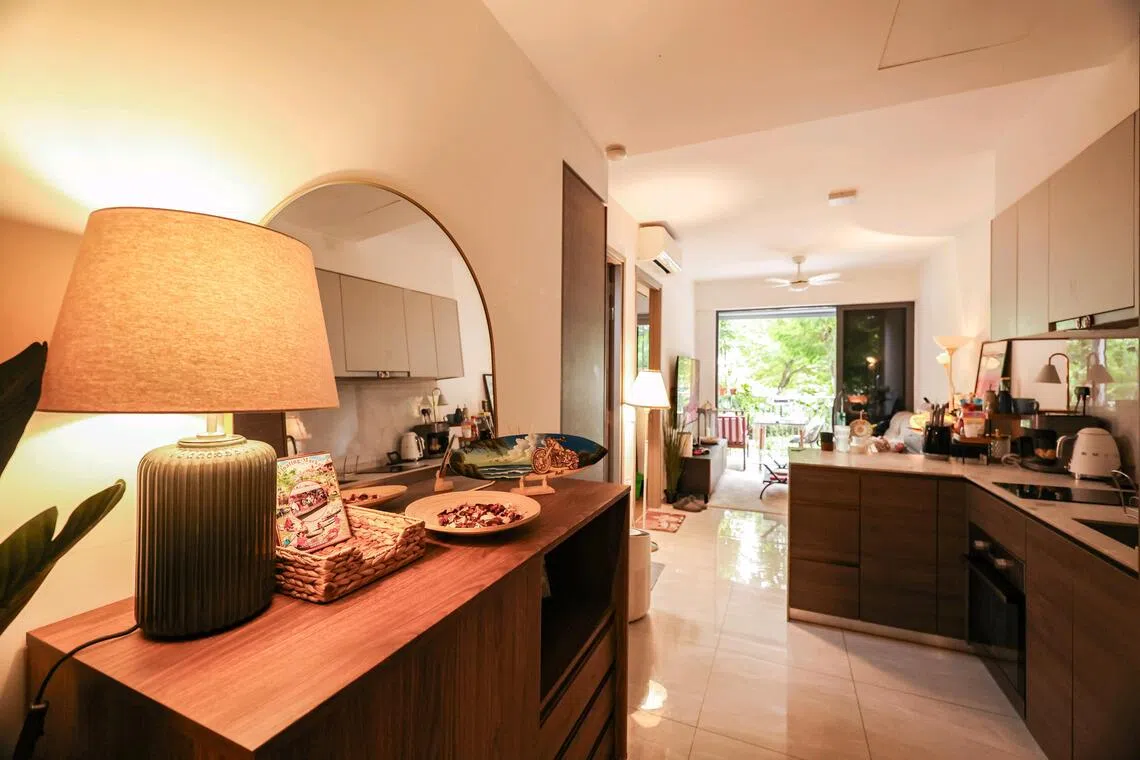
He has spent about $2,000 on furnishing the partly furnished apartment so far, buying pieces one at a time over four months when his income allowed. The unit came with built-in wardrobes, a washing machine, a bed and a sofa provided by the landlord.
Before buying anything new, he checks second-hand marketplaces like Carousell and Facebook Marketplace for goods sold by expatriates moving homes.
Some of his best buys include an Ikea shoe cabinet and a TV cabinet for $50 each.
Still, a low price alone does not convince him to buy. “I would rather wait and save up to get what I want than get something cheaper that I don’t want,” he says.
A chest of drawers in his bedroom was a birthday gift from a friend that he plans to take with him when he eventually moves.
For young people thinking of moving out, Westby’s first tip is to build a safety net of at least three months’ rent, especially if your income changes from month to month.
If you do not mind a slightly higher rent, a fully furnished place could save you the hassle of buying furniture.
If furnishing the place yourself, he recommends buying items from Carousell and Facebook Marketplace over Taobao, as deliveries can take more than a month, and what arrives does not always live up to expectations, says Westby.
Renters whose landlords do not allow drilling will have to get creative. In place of hanging a small mirror on the wall, he leaned a large one against it.
He also relies on 3M double-sided tape as tape marks can easily be painted over, compared with patching up a drilled hole, when you move out.
Small workarounds like these, he says, make a rented place feel like your own. “At the end of the day, it’s not your house. But you still want it to feel like home while you’re renting it.”
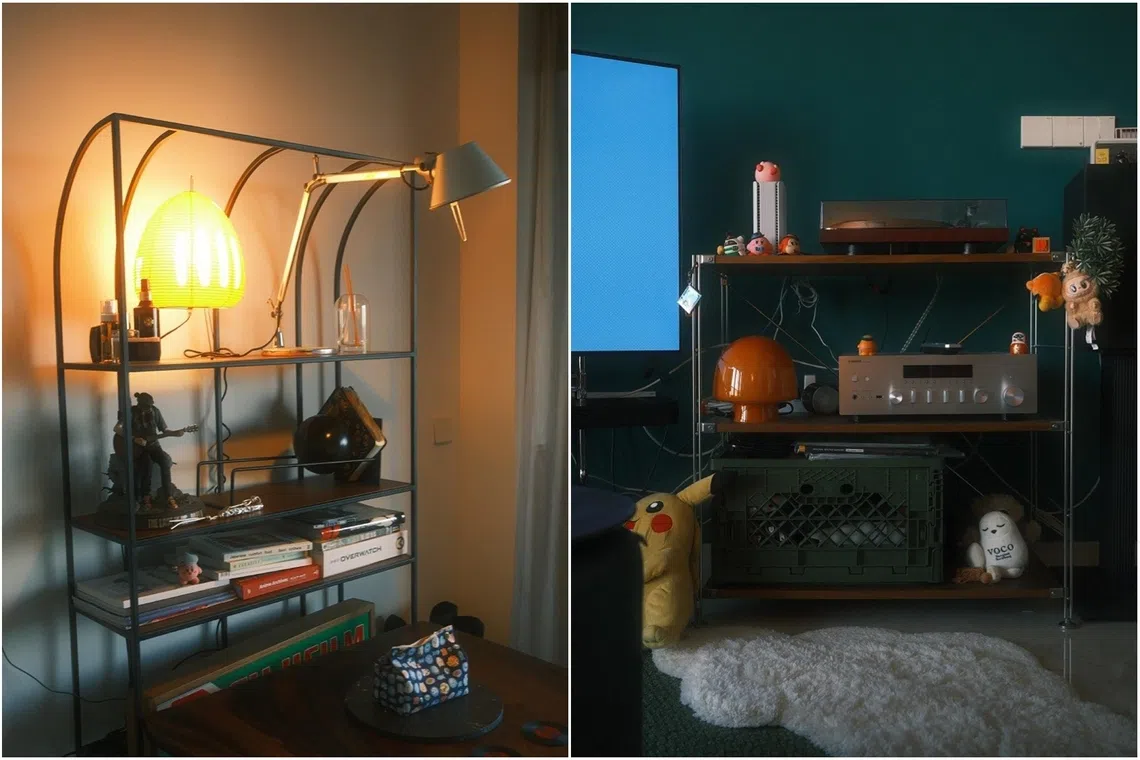
In the office-cum-studio of content creator Daryl Goh’s home, a wall of shelving holds a lifetime of collectibles, books and games.
It is his favourite corner of the home and one he likens to a personal archive. “It’s a whole treasure trove of history about me and each section you take a look at has a story I can tell you about myself,” says the 29-year-old.
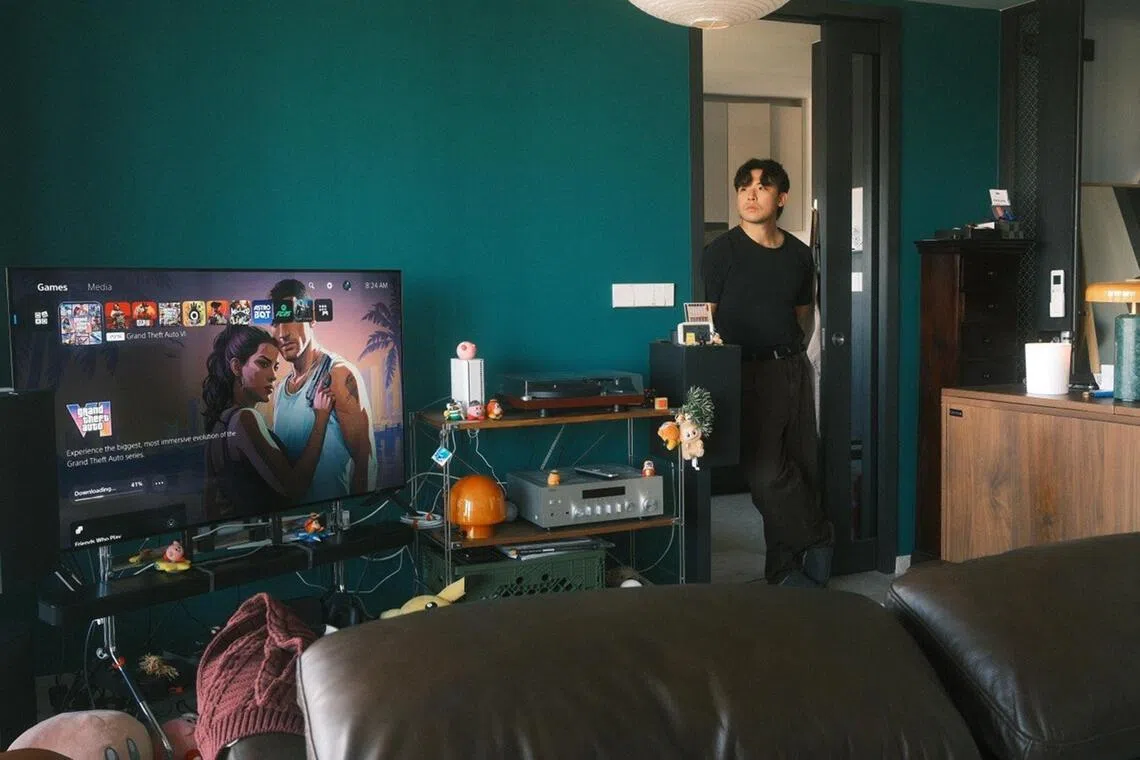
His shelves are packed with things he has collected over the years: rows of Kirby figurines, anime figures, old handheld game consoles, Liverpool Football Club memorabilia and books on football and self-improvement.
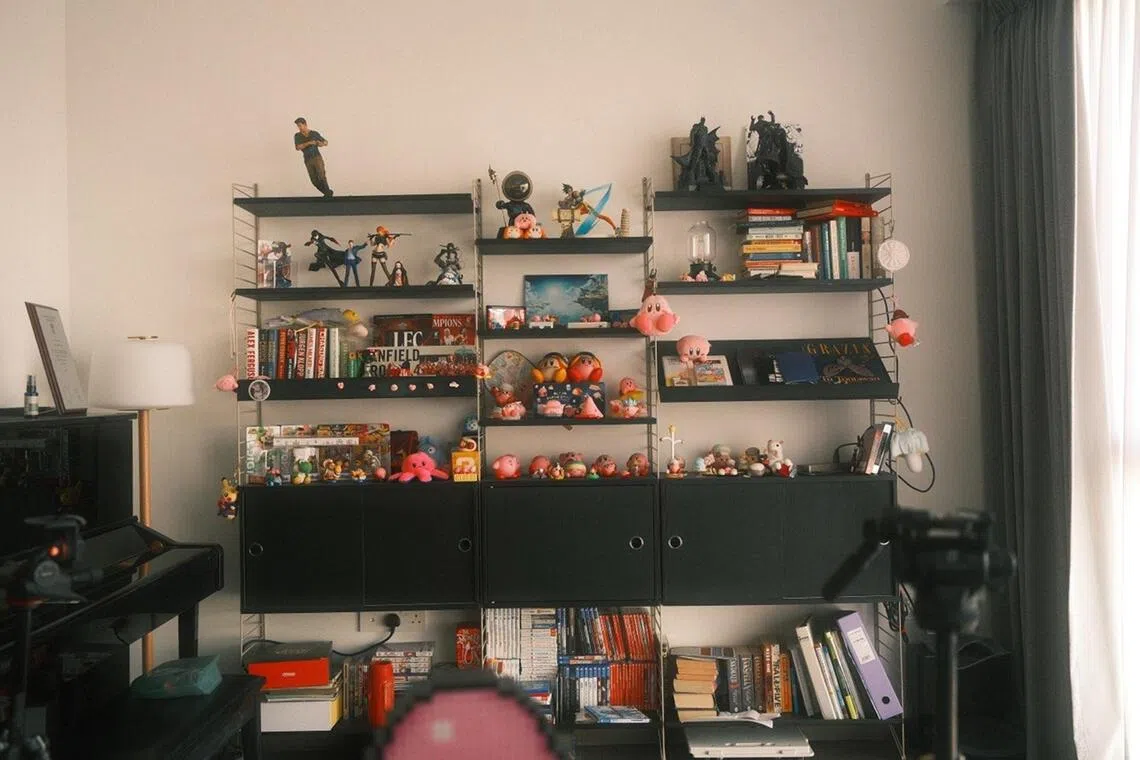
Putting it together took some resourcefulness. Goh wanted a modular String shelving system, but knew the costs of building one from scratch would add up.
He found a seller on Carousell with enough parts for two columns, ordered the rest he needed from Finnish Design Shop and got a handyman to install it. All in, the shelves came to about $3,000.
Goh, a full-time content creator, was about 27 when he started wanting a place of his own. Having lived on campus for three of his four years at the National University of Singapore, he already had a taste of independent living. “I felt that after moving back, I had outgrown my family home and wanted to have my own space,” he says.
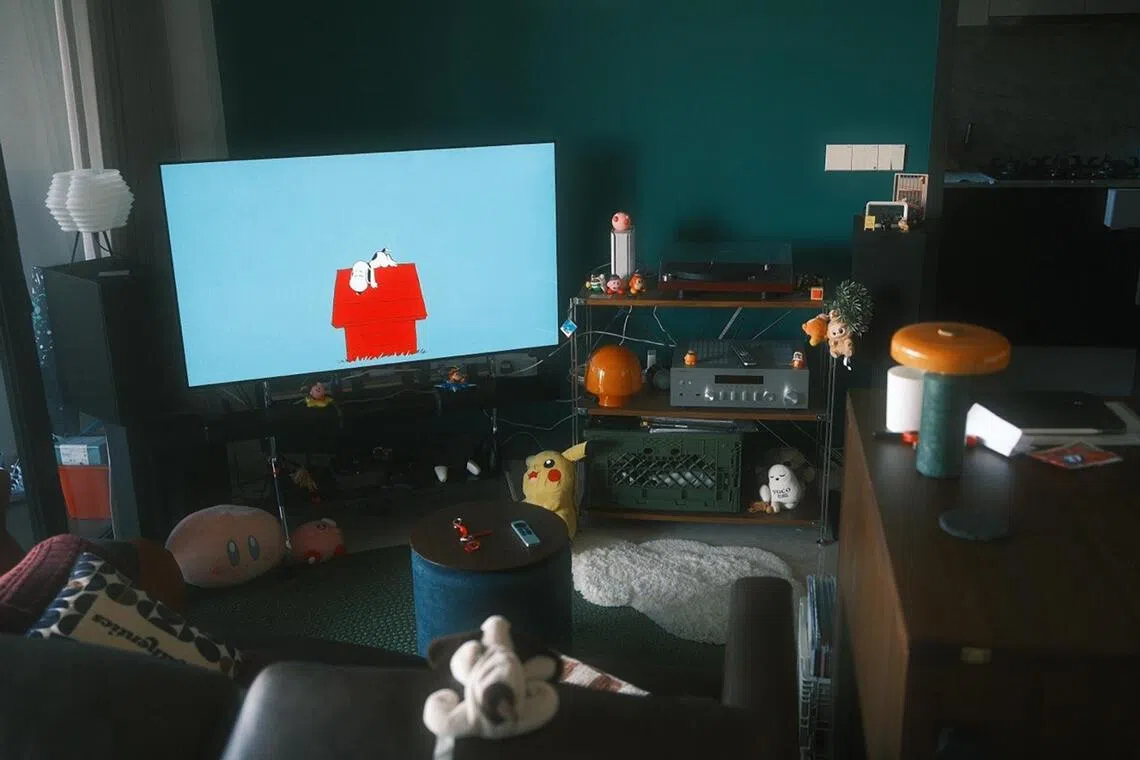
In December 2025, he moved into a 1,300 sq ft three-bedroom condominium unit in eastern Singapore. He declined to reveal if he bought or rented the place, or how he funds it. During renovations, he removed a wall between two of the bedrooms to open up the space, as the rooms were too small.
When it came to decorating, he loosely followed a mid-century modern theme, adding eclectic elements and pops of colour. Rather than stick rigidly to one look, he borrowed its principles, like form following function and the use of honest materials.
“I think it would be limiting to narrow your home’s design to just a ‘style’. It’s better to adopt the principles of said style,” he says.
He also drew inspiration from DIY-centric Western homes. Instead of hiring an interior designer, he kept renovations minimal and let the furniture do the work. “I wanted to see how I could make a home feel cosy and nice just from the furnishings alone,” he says.
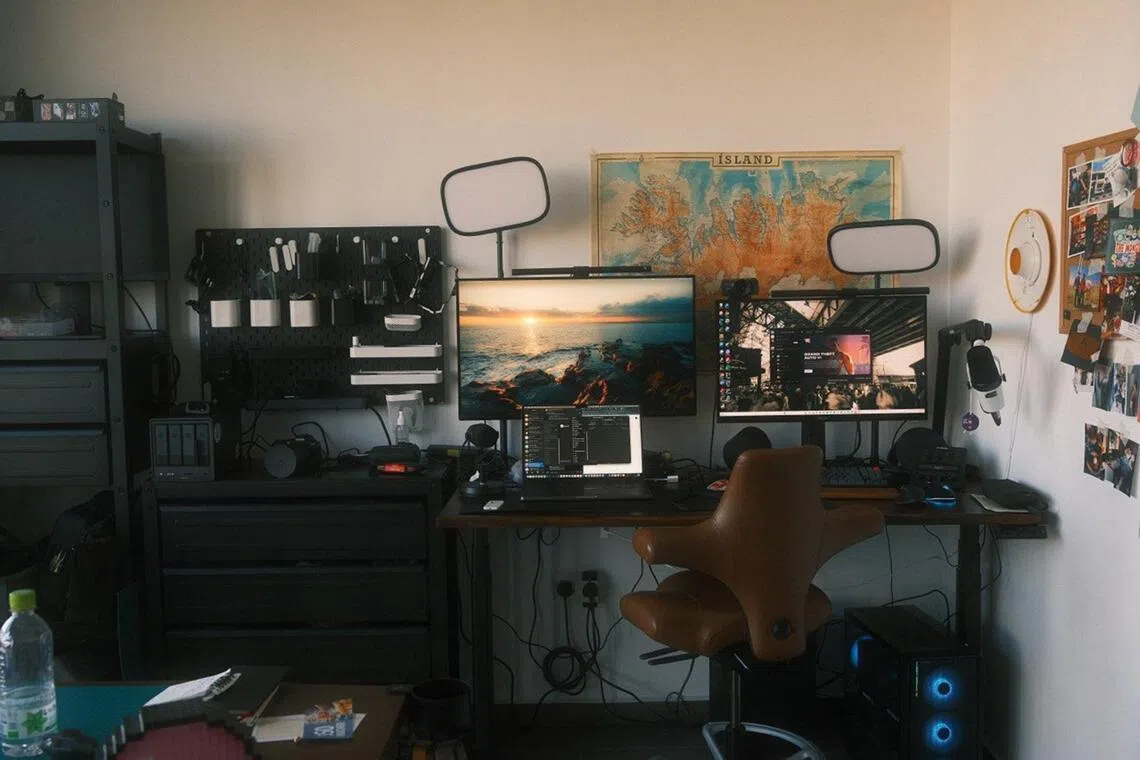
Flexibility was key. His TV sits on a stand with wheels rather than being mounted on a wall and most of his shelving stands on the floor instead of being fixed to it, so he can rearrange the space whenever he likes.
He also uses materials to balance the room. As the main living area has marble flooring, he brought in plenty of wood and layered rugs.
“There’s a lot of wood, which to me helps soften up the space, because the base of the main living area is marble, which is very ‘hard’,” he says.
Goh estimates he has spent $40,000 to $50,000 on furniture, excluding renovation and curtains. Much of that comes from a handful of big-ticket items, which he follows one rule for: buy once and buy well.
“The total cost of furniture is jacked up by a few pieces rather than every piece being expensive,” he says.
One such piece is his wood slab table, which he bought new for about $1,800 from Wood Capitol. He picked South American suar wood for its deeper walnut colour, which made it pricier than similar slabs that cost $1,200 to $1,400.
Another is a set of authentic USM Haller shelves, a Swiss modular storage system known for its steel frames, which he got for more than $9,000 and is waiting for it to be delivered.
He would not usually have considered them, as they are expensive to import to Singapore. But Club Modular, which sells the shelves at Takashimaya, was offering 20 per cent off and this could be stacked with the department store’s own sale. Together, the discounts brought the price down to about 70 per cent of the original. The shelves also hold their value well, so they can be resold later.
To him, it is money well spent.
“Big-ticket items are meant to last for decades rather than just being swapped out after five years because of wear and tear,” he says.
Besides his String shelves, two other pieces stand out for Goh. One is his two-seater Geormani sofa from Singapore furniture brand Commune, which he bought for about $2,000, including neck supports.
The other is a Muji steel unit shelf in walnut, which holds his vinyl player and stereo receiver. He bought it on Amazon for more than $400. Like the String shelves, it is modular and can be set up in different configurations.
Goh’s biggest tip is not to aim for perfection. He encourages people to be comfortable with making mistakes rather than chasing the polished look of a freshly renovated BTO flat.
“There’s a beauty in growing with your space,” he says.
Designing a home yourself, he adds, teaches you what you truly like and dislike. You might discover a nook you end up using more than the living room, or find that a popular layout does not suit how you live. Those lessons also help you plan your next home.
“A home you design yourself might look a lot less ‘pretty’ or ‘designer space’, but I’m sure it’ll have a lot more soul and you will feel much better in it rather than a perfectly designed space, because you took the effort to do it yourself.”
[[nid:726812]]
This article was first published in The Straits Times. Permission required for reproduction.