

5 ways hotter weather will affect Singapore - and what you can do to cope

Being exposed to extreme heat can be detrimental to one’s physical health, with vulnerable groups being more susceptible to heat illnesses.
PHOTO: ST ILLUSTRATION

With El Nino on the horizon and warmer weather on the cards for Singapore, there is an increasing need for people here to learn how to build their resilience against rising temperatures.
This is important because heat goes beyond mere thermal discomfort.
Multiple studies have shown that rising temperatures can affect people in a myriad of ways. The Straits Times highlights some of these impacts, and how people can beat the heat.
People may become more irritable as temperatures rise, and have difficulty paying attention and processing information.
They may be more susceptible to mental health issues such as depression, and suffer from impaired decision-making, lower productivity and poor quality of sleep, said senior economist Dr Ken C Shawa at a forum in 2025 on heat health in South-east Asia.
For example, a South Korean study found that for every 1 deg C increase in average annual temperatures, respondents were 13 per cent more likely to report having depressive symptoms.
Being exposed to extreme heat can be detrimental to one’s physical health, with vulnerable groups being more susceptible to heat illnesses.
Common side effects of heat include headaches, heat cramps, sunburn and heat rash. Severe injuries include heat exhaustion and heat stroke.
The elderly, and patients with chronic conditions such as thyroid disorders, are at greater risk of fainting or heat injuries.
Scientists from Singapore and Britain had found that patients with endocrine disorders such as diabetes and hyperthyroidism are at a greater risk of heat illnesses as their bodies have difficulty regulating heat.
A recently published Singapore study also found that every 1 deg C rise in daily average temperature more than doubles an outdoor worker’s risk of heat stroke. If this temperature increase is sustained over three days, the worker’s odds of having a heat injury nearly quadruples.
High heat stress affects workers’ productivity and decision-making skills, which can lead to a higher risk of injury. Students may also experience poorer performance in warmer environments.
Project HeatSafe, a research project based at the National University of Singapore (NUS) forecast that in 2035, rising temperatures could cause a $2.22 billion loss in labour productivity in Singapore across the construction, services, manufacturing and agriculture sectors.
The cognitive performance of secondary school students also decreased when they experienced warmer, stiller environments, according to a local study supported by the Ministry of National Development.
Exposure to extreme heat can negatively affect fertility and birth outcomes, at a time when Singapore is facing low fertility rates.
The Republic’s total fertility rate hit a new low of 0.87 in 2025, deepening concerns over its potential impact on the country’s society and economy. Total fertility rate refers to the average number of babies each woman would have during her reproductive years.
Another study by NUS also found that pregnant women may also face a higher risk of complications such as premature birth, low birth weight, stillbirth and gestational diabetes.
Extreme heat can also impact pets and wildlife.
For instance, rising temperatures may drive native wildlife to urban areas and cause deaths if they lack access to water and shade, ST reported in 2022.
Bouts of dry weather then were suspected to have caused critically endangered Raffles’ banded langurs to venture into urban areas in search of water sources like canals, instead of their usual sources such as streams and treeholes. This could result in them getting trapped in drains.
Birds and other animals may also die of heat stress in warming urban environments, animal experts told ST.
In Singapore, coral spawning – a mass reproduction exercise that takes place once a year – was observed to be more muted in 2025, after experiencing one of the hottest years on record the year before.
Meanwhile, an international study also found that extreme heat due to climate change was a contributing factor behind a 25 per cent to 38 per cent reduction in tropical bird populations between 1950 and 2020.
Besides impacting wildlife, high temperatures can also amplify the risk of hazards such as air pollution, infectious diseases and drought.
Acclimatise to heat by participating in aerobic exercises such as running and cycling, which can help lower the core body temperature and trigger earlier and faster sweating to help the skin cool down.
Check heat stress levels through the National Environment Agency’s myENV app before going outdoors.
A heatwave response plan will kick in before a heatwave is declared. This happens when the highest daily temperature over three consecutive days is at least 35 deg C, with the mean temperature each day being at least 29 deg C.
As part of the plan, cooling spaces will be set up islandwide in locations such as community centres, residents’ committee rooms and indoor sports halls with air-conditioning.
There are plans to coat all HDB blocks with heat-reflective paint by 2030.
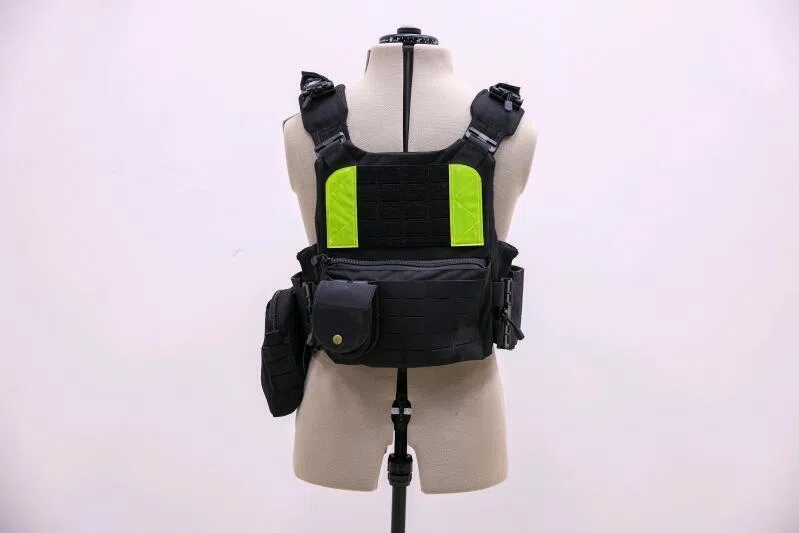
The Home Team Science and Technology Agency (HTX) has been inventing new tools and gear to protect police officers, firefighters and other officers of the Home Team from heat stress.
Police officers may soon get a cooling vest with a ventilation system that uses four fans and an air mesh plate.
The vest is able to reduce officers’ body temperature by around 2 deg C.
HTX also uses manikins – or a human-shaped model with multiple sensors that can “sweat” and “regulate skin temperature” – to test how comfortable newly designed uniforms and protective gear are in hotter, more humid environments.
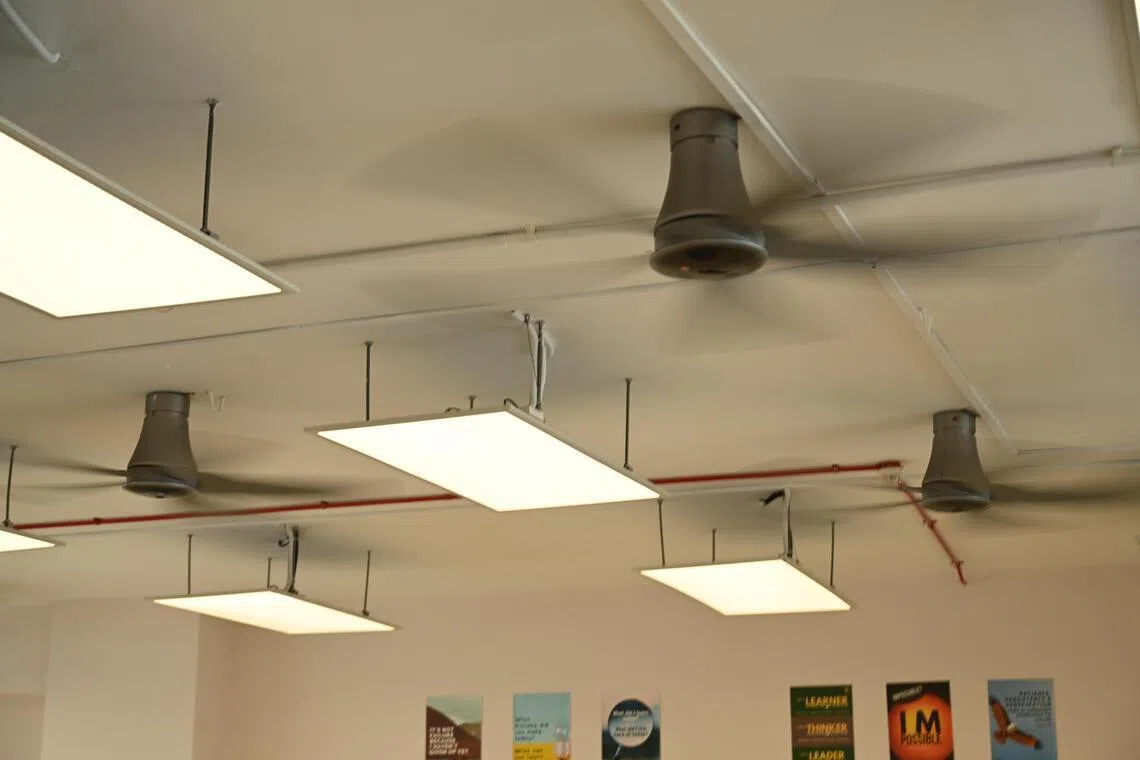
All schools will have additional and more powerful fans in classrooms by 2027.
Building exteriors will be coated with cool paint.
In the event of a heatwave, students will be allowed to wear dress-down attire, such as uniforms made of dri-fit material.
To reduce heat stress for outdoor workers, employers are required to implement varying measures, such as acclimatisation, hydration and rest, according to the wet bulb globe temperature (WBGT), which measures heat stress.
For example, at a WBGT of 32 deg C and above – which indicates high heat stress – workers should be given at least 10 minutes of rest for every hour of heavy physical labour.
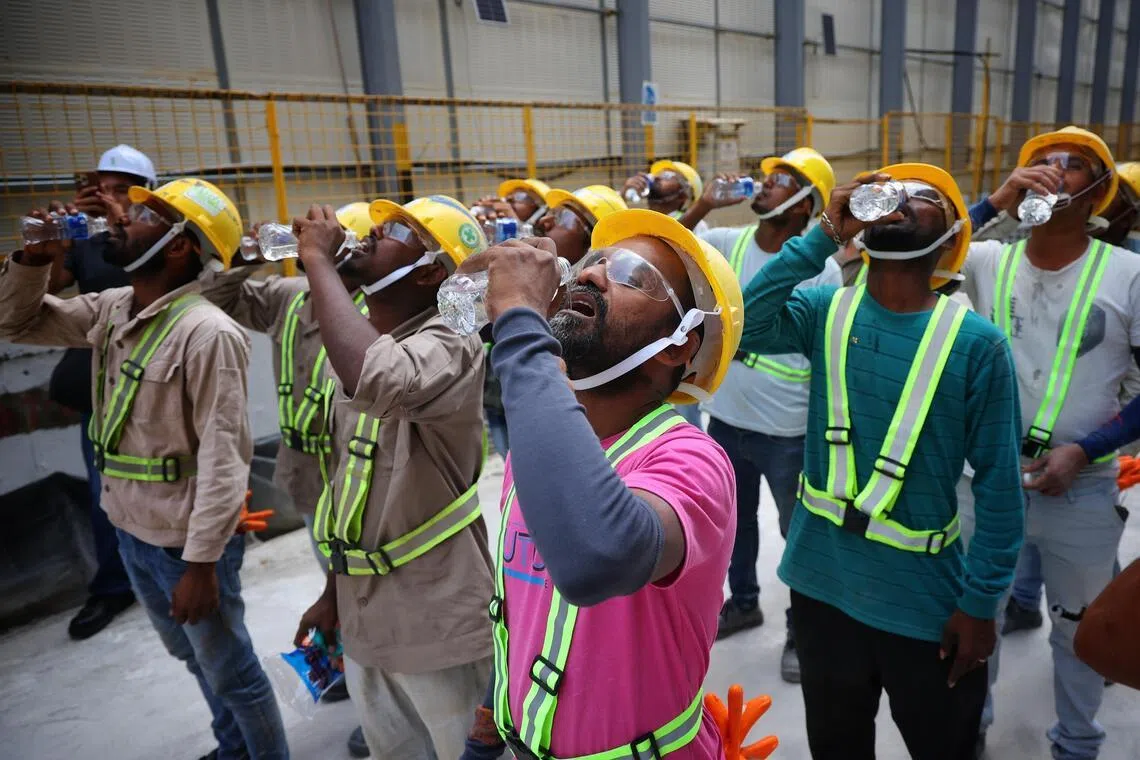
The Singapore Civil Defence Force also said that following the recent spike in temperatures, the Civil Defence Academy has stepped up the frequency of water breaks during training, and reminded trainers and trainees to watch out for signs of heat injury.
SOURCES: ST FILE, HOME TEAM SCIENCE AND TECHNOLOGY AGENCY, GLOBAL HEAT HEALTH INFORMATION NETWORK, CEN ET AL.
[[nid:732491]]
This article was first published in The Straits Times. Permission required for reproduction.