SINGAPORE – To encourage drug abusers to kick their addiction, all first-time abusers who surrender to the authorities from May 16 will not be sent to a drug rehabilitation centre.
Instead, they will be placed on drug supervision in the community with compulsory case management.
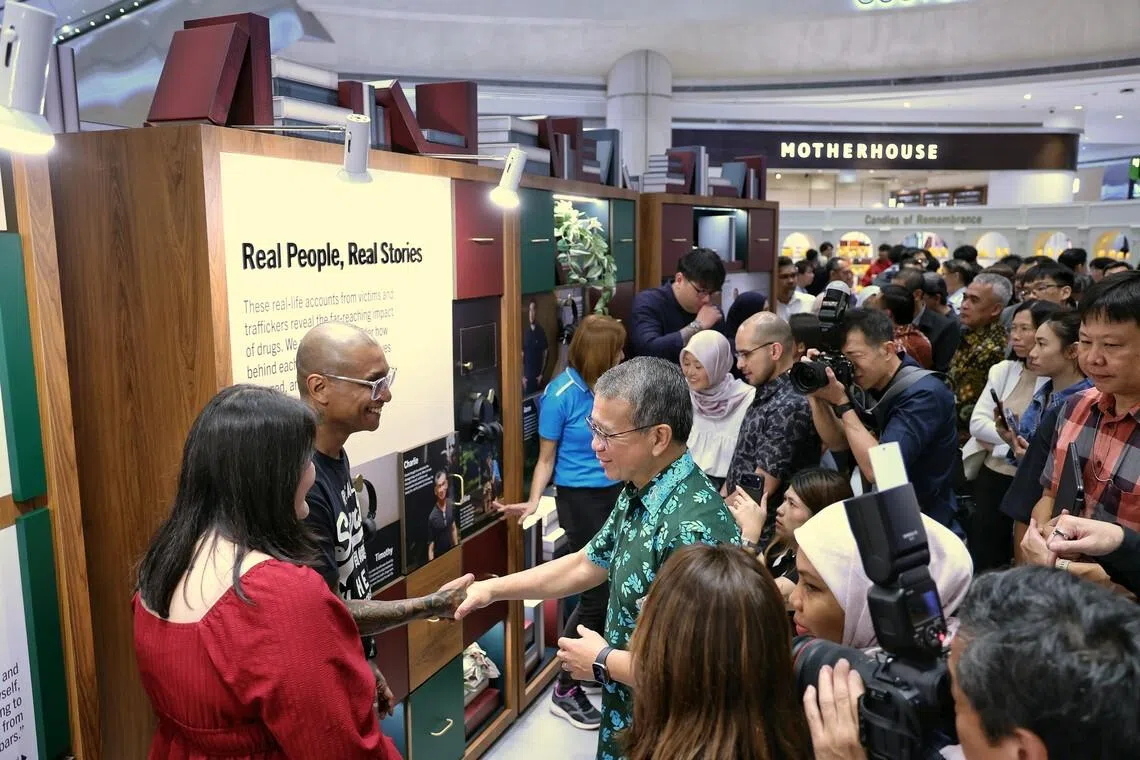
Second Minister for Home Affairs Edwin Tong announced this on May 15 at the Drug Victims Remembrance Day Observance Ceremony at Suntec City.
The conditions of the current surrender regime will continue to apply, he said.
These include the abuser not having surrendered himself more than twice, and not being wanted by the authorities or under investigation.
Mr Tong, who is also Law Minister, said: “Drug abusers who want to wean off their drug addiction and live a drug-free life will be supported with regular counselling sessions in the community, which will involve psychology-based methods such as goal-setting and family engagement, accompanied by regular hair or urine testing by the Central Narcotics Bureau (CNB).”
He added that the number of young abusers has increased, with over half of new abusers arrested aged below 30 in the last three years.
The number of new abusers aged below 20 also increased by 22 per cent from 2024 to 2025, said the minister.
The latest CNB statistics showed that the youngest drug abuser arrested in 2025 was just 12 years old.
In 2024, the youngest arrested was 13.
Mr Tong said cannabis remains a concern in Singapore, with seven in 10 cannabis abusers arrested in 2025 being new abusers. Of these, 63 per cent were below 30 years old.
“This is a generation of young people who are being told, online and through popular culture, that cannabis is harmless; that it is a lifestyle choice; that it is no big deal. These are all outright lies,” he said.
“And then there is the most tragic statistic of them all — 68 drug-related deaths in Singapore in 2025. This is a 15 per cent increase from the 59 deaths in 2024.”
These were cases where drugs were detected in the person during postmortem analysis, he said, adding that about 30 per cent of these deaths across 2024 and 2025 involved Singaporean abusers who had remained undetected for drug abuse.
He cited two cases, including one where a Singaporean man, 30, suddenly became agitated on his way home after a night of drinking with his friend. He suffered a seizure and died in hospital.
The man had lysergic acid diethylamide, or LSD, and MDMA, also known as Ecstasy, in his body, which can cause seizures, comas and cardiovascular collapse, said Mr Tong.
In the second case, a 31-year-old man was playing with his son at home when he suddenly became aggressive.
He punched his father, who was trying to protect his grandson.
During a struggle with neighbours, he fell to his knees and lost consciousness.
He was pronounced dead in hospital. Methamphetamine was found in his bloodstream.
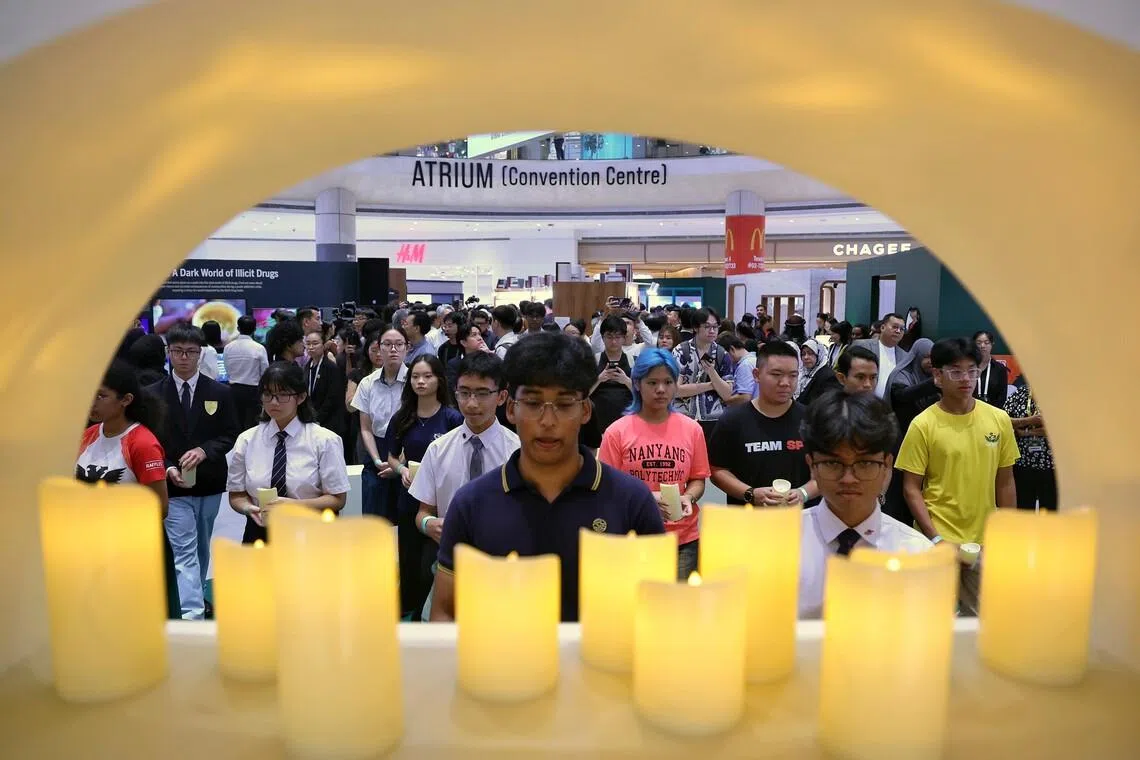
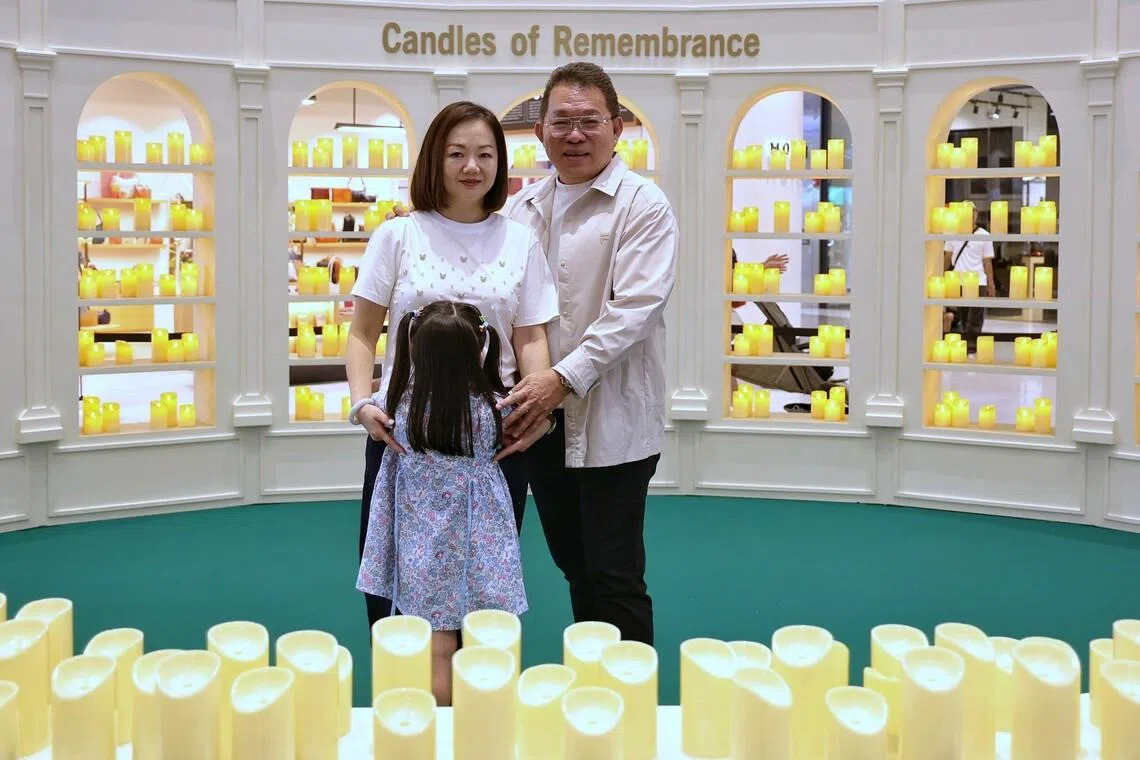
Drug Victims Remembrance Day, observed on the third Friday of May each year, highlights the impact of drugs on abusers and their loved ones.
As part of this year’s campaign, a short film titled Stories, Unfinished was released. It follows the journey of a fictional teenager and traces his life before and after drug abuse.
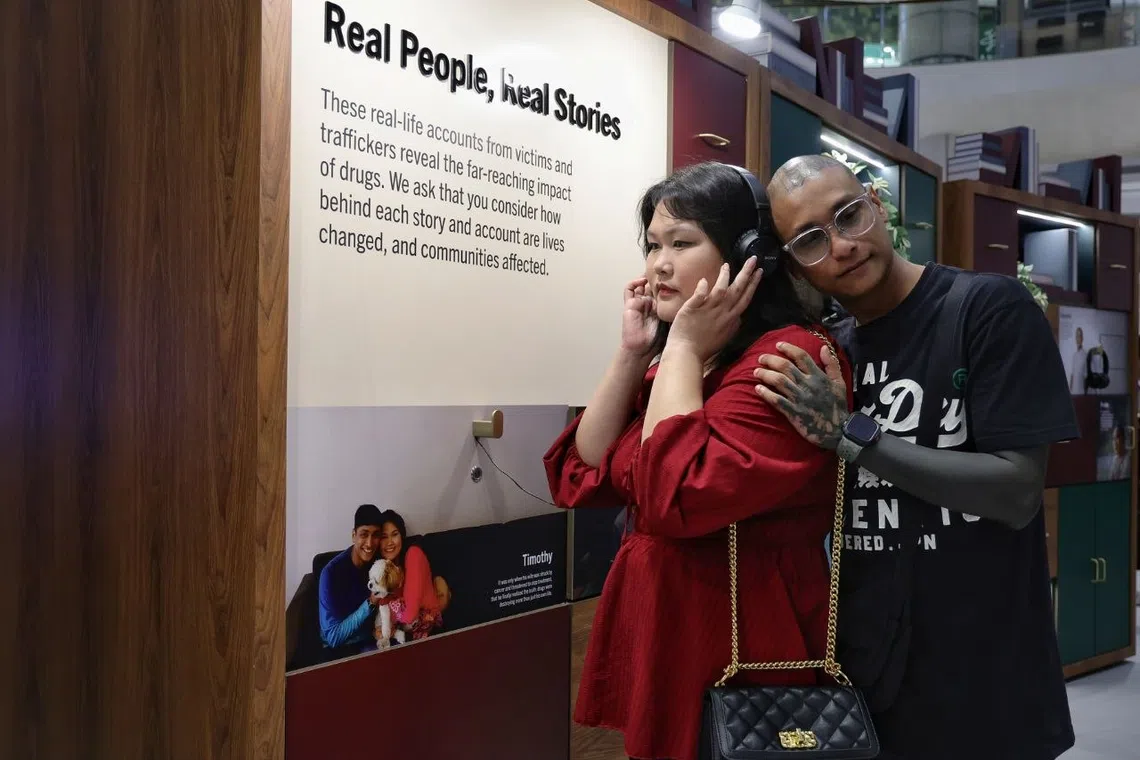
From May 15 to 17, “The Library of Stories, Unfinished” exhibition will be held at the Suntec City atrium, where visitors can explore a collection of real-life accounts and interactive elements from the campaign film.
Mr Tong noted how several local activists will hold candlelight vigils for drug traffickers on death row but leave out the hurt these traffickers had inflicted on drug abuse victims and their families.
“When we talk about drugs, we must always remember the victims,” he said.
“Families suffer from the abusers’ drug-induced violence, the consequential fear in their lives being around the abuser, and the grief when they see what their spouse or children have turned into.
“Their stories must also be told,” added the minister.
Several former drug abusers attended the ceremony.
One of them was Mr Richard Tan, 58, who had been in and out of jail multiple times for drug use since he was a teenager.
Now a prison counsellor, Mr Tan said: “Back then, I would steal, rob and extort just to get money to buy drugs, to feed my flesh.”
The turning point came when he was arrested in Malaysia for selling drugs. His wife was pregnant.
“When I got out of jail, my son was already seven years old. I never had a chance to carry him or even change his diapers. That’s when I knew I had to change my habits,” said Mr Tan.
Mr Timothy York James, 44, a former drug abuser, was 16 when his father turned him in to the authorities.
“At that point, I felt betrayed, hurt and angry. But now, I understand why he did that,” said Mr James, who now works in operations at a halfway house.
In 2022, his wife was diagnosed with ovarian cancer three months after they got married.
“I was still abusing drugs. My wife begged me to stop, if not, she said, she would refuse cancer treatment. She would rather die,” said Mr James, choking up.
“I promised her I would not do drugs again.”
His message to those struggling with drug addiction is to seek help early.
“I want to tell addicts that you are not alone. Don’t be afraid or ashamed to ask for help,” he said.