

Land the size of 2 Toa Payoh towns reclaimed at Pulau Tekong for military training purposes

About 800ha of land have been reclaimed at the north-western tip of Pulau Tekong.
PHOTO: AsiaOne/Jasper Lim

 PUBLISHED ONSeptember 08, 2025 4:00 AMBYKhoo Yi-Hang
Land reclamation works at Pulau Tekong have been completed, adding about 800ha of land at the north-western tip of the island, the Housing and Development Board (HDB) and national water agency PUB said in a joint statement on Monday (Sep 8).
This is equivalent to about two Toa Payoh towns.
The land, reclaimed via a method known as empoldering, will be used for military training purposes, the agencies said.
Empoldering is a process through which a coastal dike along with a network of drains, water pumping systems and a stormwater collection pond are created around the reclaimed land.
This method marks the first time Singapore has reclaimed land below the mean sea level.
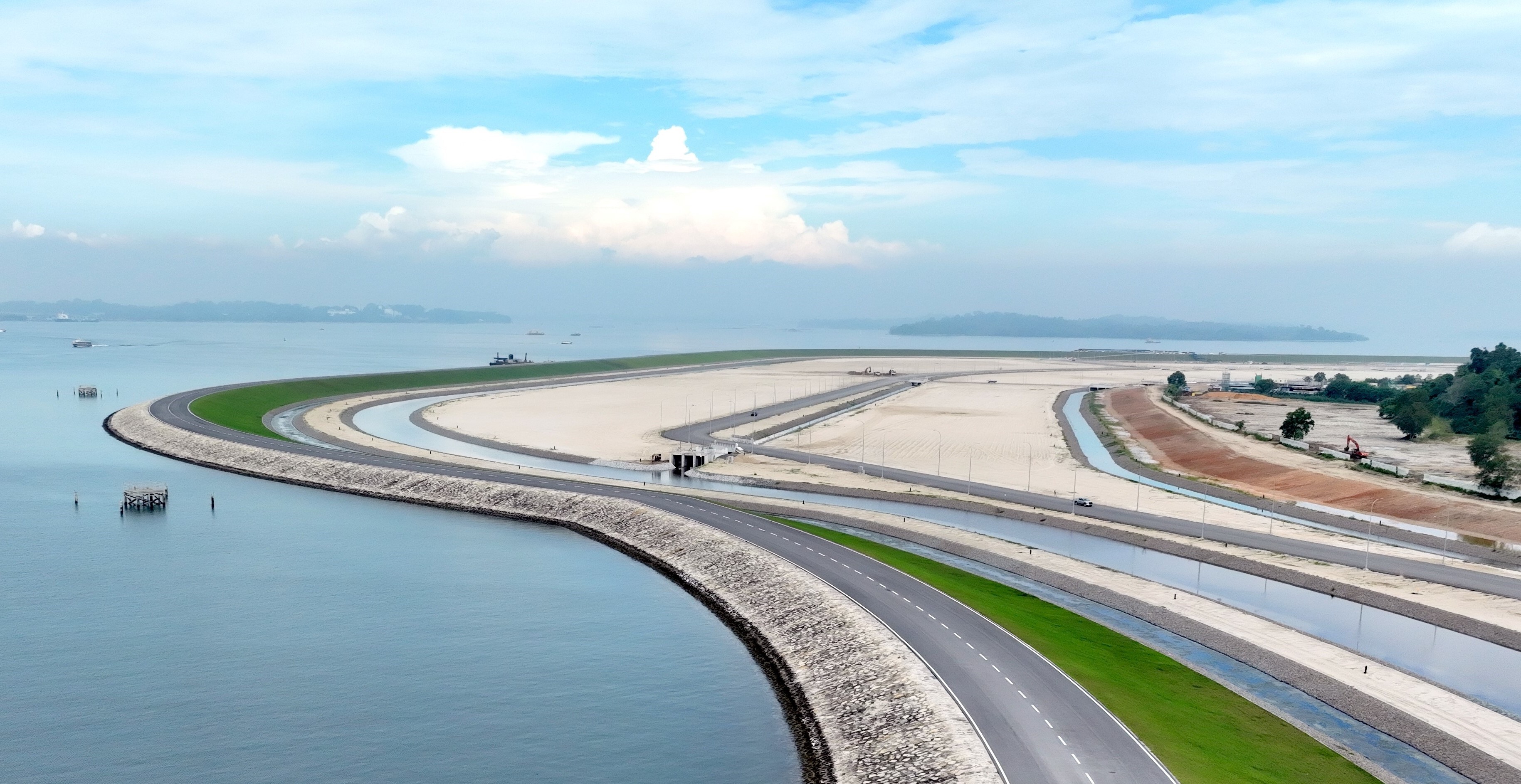
Compared to the traditional land reclamation method of infilling with sand to reclaim land above sea level, the empoldering method uses less sand — resulting in close to 50 per cent of savings in sand used for the reclamation, said the agencies.
The coastal dike, spanning 10km along the perimeter of the reclaimed land, surrounds a low-lying polder land that exists below sea-level, separating the land from the sea.
Standing at 6m above mean sea level, the dike prevents seawater from spilling over onto the land, while a cement bentonite wall within stops most water from seeping through.
A drainage system within the polder land also operates alongside pump systems and the stormwater collection pond, removing excess water from the land where necessary.
"In designing the coastal dike and its safety provisions, HDB and PUB drew on the deep experience of the Netherlands, which has the world's highest standards for dike safety, to ensure the long-term viability and safety of the polder land," the statement reads.
"Singapore will continue to leverage innovation and technology for our reclamation and coastal protection strategies in a responsible and sustainable manner."
Final testing and commissioning works on systems such as telecommunications and water management are still ongoing and are set to be completed later this year, PUB and HDB said.
The polder will subsequently be handed over to PUB and the Ministry of Defence at a later date.
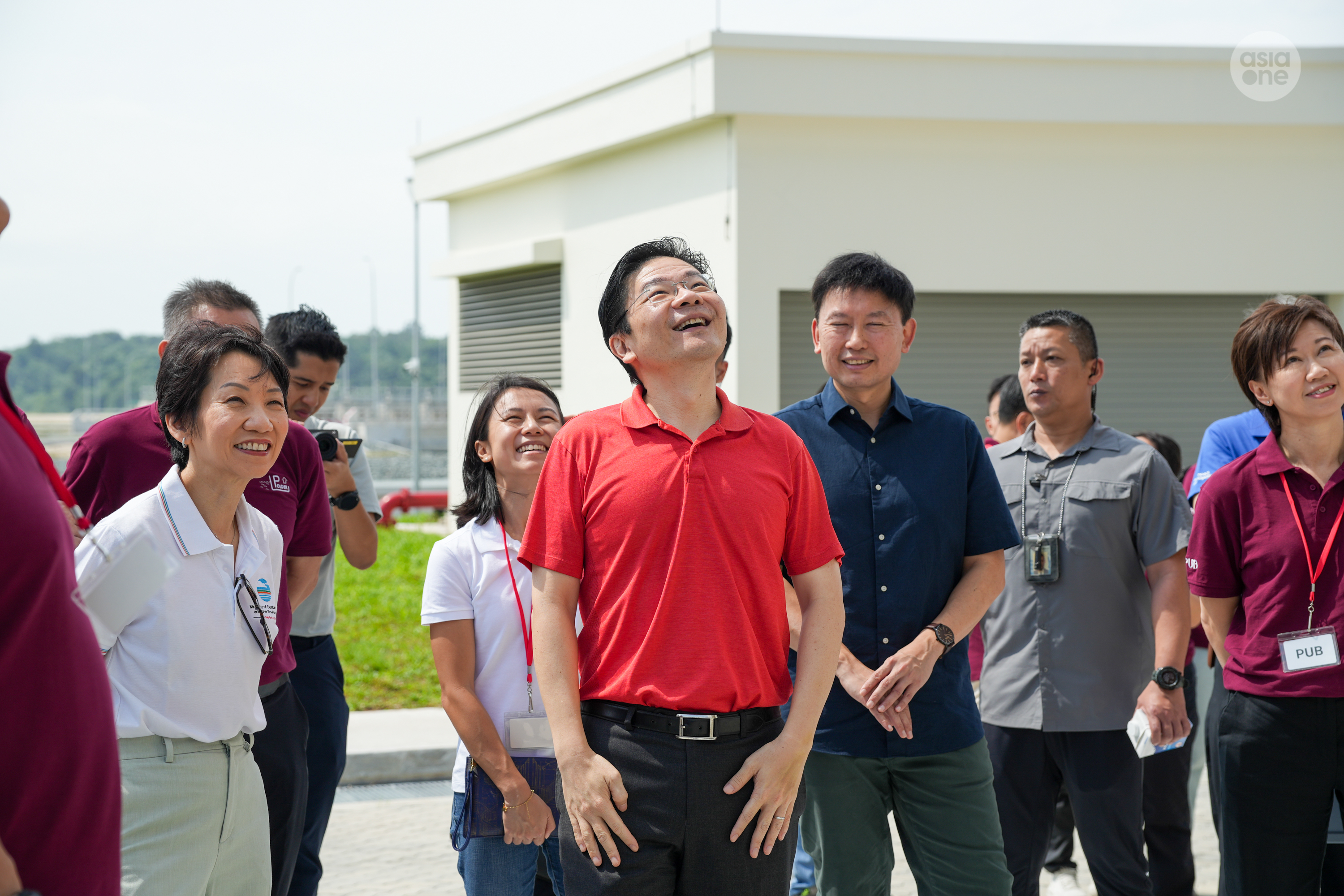
Prime Minister Lawrence Wong also visited the polder on Monday (Sept 8) — he had also been to the polder in 2016 as the Minister of National Development.
How is Singapore growing bigger? #landreclamation #singapore #inaminute #changi #sand
Speaking with the media at the coastal dike, HDB building and infrastructure deputy director Goh Pei Ling shared that the completion of Singapore's first polder is a "major milestone".
"This is the first time we have reclaimed land below the mean sea level," Goh said.
Traditional methods of land reclamation involve infilling regions with sand, reclaiming the land above sea level, she explained, adding that the empoldering method uses less sand.
Natural materials such as a hardy grass species and natural rock were used in the design of the dike to improve its resilience against waves and erosion over time, while excess soil from the stormwater collection pond was recycled as land to further reduce sand usage.
"The newly reclaimed land here on Pulau Tekong will be used for military training purposes," stated Goh. "This will help free up space on mainland for other uses, such as housing.
Steps have also been taken to ensure the polder land remains functional in the future, according to PUB catchment and waterways senior principal engineer Thomas Pang.
Highlighting the intense rainfall and rising sea levels that climate change will bring in the years ahead, Pang pointed out features of the coastal dike and the drainage system in the area which will prevent floods during intense storms.
In particular, the height of the dike is well above high tide levels, even as sea levels continue to rise.
"We will ensure that the coastal dike remains structurally sound to resist rising sea levels," he said, adding that the water management system within the polder will assist with stormwater control amid heavy rainfall.
Over 170 closed-circuit television cameras and 260 sensors ensure that the coastal dike and water control structures are secure, Pang also stated.
"This enables seamless, real-time remote operations from both the polder control centre and PUB's joint operations centre on mainland Singapore," he explained.
[[nid:718767]]
khooyihang@asiaone.com