

In Thai border town, a Singaporean doctor helps build an emergency care unit

Since the military coup in 2021, patient numbers at Mae Tao Clinic have surged.
PHOTO: Romaine Chan

This article is part of a package produced by a group of final-year undergraduates from Nanyang Technological University's Wee Kim Wee School of Communication and Information, for the programme Going Overseas For Advanced Reporting, or Gofar. They reported from a town called Mae Sot at the Myanmar-Thailand border in July and August 2025. There, they met migrants and refugees displaced by six decades of civil war in Myanmar and are rebuilding their lives in Thailand.
MAE SOT, Thailand - During one of her earlier forays into global healthcare, Singaporean emergency medical doctor Tiah Ling found herself in a small district hospital in Ghana, face to face with a patient whose blood level had dropped to 4 grams per decilitre - far below the normal levels of 11 to 14 gdL.
An urgent blood transfusion was needed, but the resource-strapped hospital had no blood bank. The patient had no money to pay for blood transfusions from family members or donors.
With no other choice, Dr Tiah turned to oral iron supplements - a far cry from what was required.
For the Singaporean emergency care specialist, her experiences working in thinly equipped environments made one thing evident: the difference that a well-designed healthcare system can make.
"It's something I experienced well in the Singapore setting," she said. "If you have a good system upstream, you can make a difference downstream."
It also deepened her "inherent interest" to provide healthcare in limited-resource areas.
So when a friend told Dr Tiah about a border-town clinic in Thailand seeking a technical consultant, she accepted the offer without much hesitation.
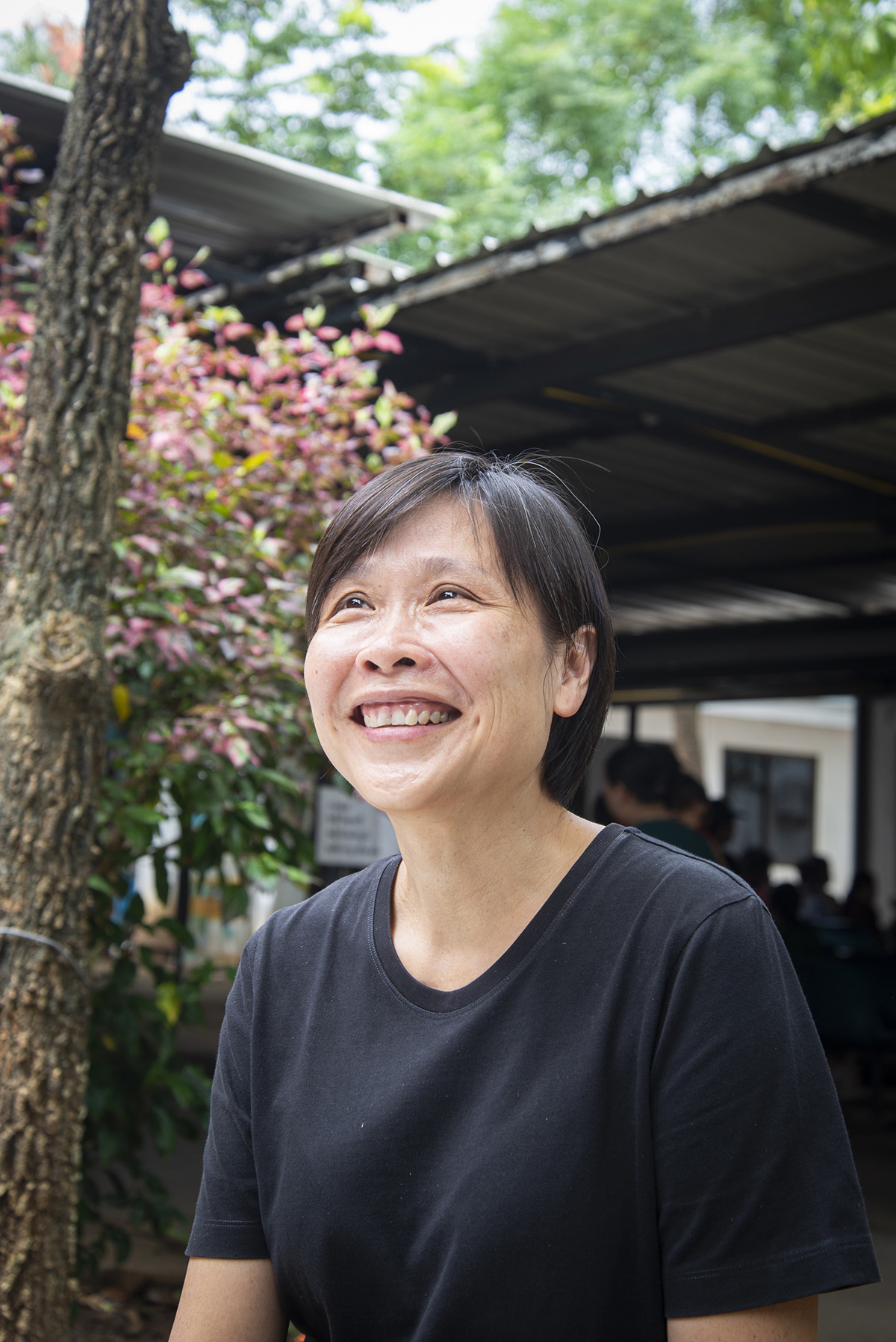
"It's about organising this Emergency Care Unit (ECU) in their setting," said Dr Tiah, who has been overseeing the construction and planning of Mae Tao Clinic's (MTC) ECU in Thailand's Mae Sot district since 2023.
Since the military coup in 2021, patient numbers at MTC have surged.
Now, there are around 130,000 consultations per year, more than twice the number from 2022, where they had around 50,000 consultations, according to Kim Seong-min, fundraising and grant manager of MTC.
The project played to her strengths - the technical expertise of emergency care was well within her comfort zone, she added.
When Dr Tiah arrived, the ECU project was an "empty slate". While MTC had functioning systems for supplies and staffing, it did not have a dedicated space and workflow for emergency care - a gap this project was designed to fill.
"The most important thing is to identify their area of need," she said. For MTC, this meant improving processes like the efficiency of sending out referrals to hospitals.
Before, patients sometimes sat in the wards for two days before somebody realised that they actually needed to go to a larger hospital, said Dr Tiah.
The goal is to have a dedicated team and space, specifically coordinated to manage emergency care patients, Dr Tiah added.
With a trained ECU team of Burmese doctors who have crossed the border and joined MTC, Dr Tiah aims to shorten this wait to just two or three hours.
Equipment was another glaring gap. In its 30 years of operations, MTC never owned an X-ray machine for detecting internal injuries and abnormalities. A substitute used was ultrasound machines - there are around five of these.
Portable and versatile, these can be used in place of X-ray machines in many emergency settings, said Dr Tiah.
In 2023, a SingHealth team joined her to work with MTC in designing the clinic's new ECU building as well as launching a year-long ultrasound training programme. The course is designed for doctors and senior medics, and covers ultrasound use in emergency care and principles of medical education.
Their first training week, held in August, focused on teaching experienced medics how to train nurse aids and community volunteers on using the ultrasound machines that MTC had.
Besides learning how to create ultrasound simulation models, or ultrasoundology, the doctors were also taught teaching techniques for when they needed to train lower skilled healthcare providers.
For the first week, five doctors and senior medics attended the training.
As of Dec 1, the main construction of the ECU has been completed, with additional works about halfway through.
MTC's ECU project is not Dr Tiah's first stint in global healthcare.
From 2008 to 2010, she joined the John Hopkins International Emergency Medicine Fellowship Programme, where she carried out fieldwork across Africa and Asia to improve their emergency care processes, much like what she is currently doing at MTC.
Through venturing into these scarcely equipped environments, Dr Tiah started to look for more opportunities to make a difference beyond Singapore's institutionalised system.
"It is very limited how much I can do beyond Singapore's comfort setting," she said.
After seven years of contemplating whether or not to stay, she finally stepped away in 2023, after nearly two decades in Singapore's hospitals, to properly explore working beyond institutional practice in Singapore.
This was when she got the timely offer to work on the ECU.
As compared to Singapore, the pace of the border town has much less of a "pressure cooker feel", said Dr Tiah.
"When I work here, it's very simple," she said. She enjoys the routine of going to work and returning to her quiet one-room flat in the city's centre.
"Here, this work that I do, there is a lot of ownership. Not so much on myself, but on the team that is working for this," said Dr Tiah. Her ECU team consists of three freshly qualified doctors from Myanmar.
Crossing the border disrupted their medical career progression quite a lot, she said. But this project - working with both the patients and designing the clinic's system - could provide a sort of "normalcy" and a space for them to professionally progress.
Being a part of bridging their disrupted careers also made Dr Tiah feel "fulfilled" and happy - another difference she is able to make besides improving MTC's healthcare system.
"This is what I like to help with."
[[nid:679419]]
editor@asiaone.com