Construction works on the MRT's Cross Island Line (CRL) reached a new milestone on Sept 11, as the Land Transport Authority (LTA) achieved the first of four tunnel breakthroughs on the line — using large-diameter tunnel boring machines — marking the completion of excavation for a tunnel between stations in the vicinity of Tampines North and Defu.
Beyond the milestone, the project also is the largest bored tunnel built in Singapore to date, LTA said in a news release on Thursday (Sept 24).
In conventional MRT projects, two tunnels are typically bored using regular-sized tunnel boring machines (TBMs).
However, for the CRL, a large-diameter TBM measuring approximately 12.6 metres in diameter was used.
"This allows both MRT tracks to be accommodated within a single tunnel instead of two separate tunnels," the authority explained.

What this means, LTA said, is that overall land take can be reduced, which can be beneficial in land-scarce urban areas.
"By accommodating both tracks within one tunnel, it reduces the overall tunnel corridor required compared with conventional twin-bored tunnels, providing greater flexibility for future underground and surface developments."
Another benefit of the single large tunnel is the reduced need for cross-passages between tunnels, which are typically required for emergency access.
Innovations to overcome challenges
Boring a single large tunnel comes with challenges, LTA said.
These include the need for higher-capacity muck removal, handling and transportation systems to maintain efficient tunnelling operations, as the larger TBM generates a substantially greater volume of excavated material.
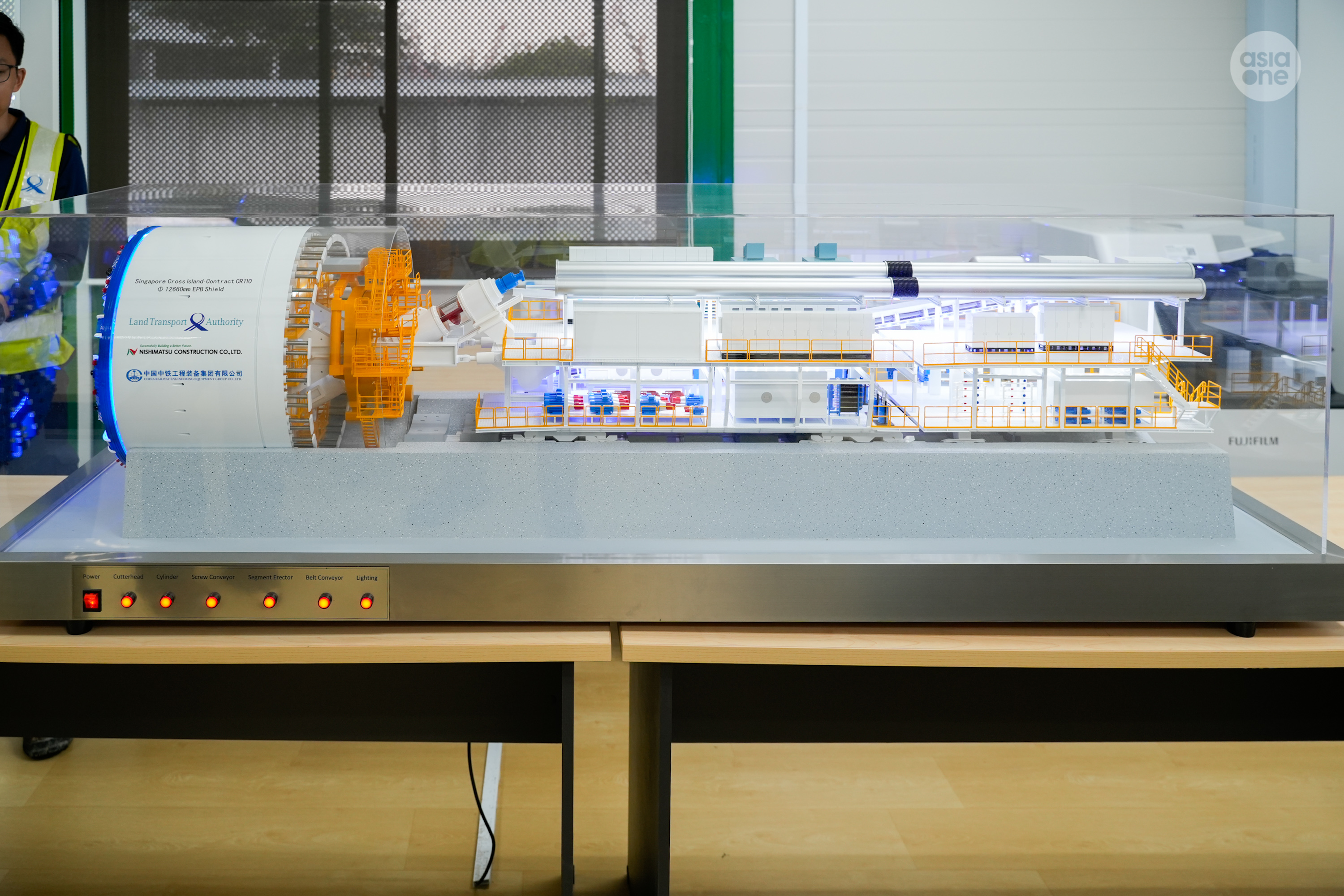
To ensure safe and efficient excavation, LTA's project team developed solutions such as an accessible cutterhead design that allows cutter tools to be replaced under normal atmospheric conditions instead of in a compressed-air environment.
Compressed-air environments are typically used to counter surrounding groundwater and soil pressure, helping to keep the excavation face stable and prevent collapses.
LTA said the project team also equipped the TBM with systems that provide real-time monitoring of cutter wear and enhanced soil-conditioning capabilities to support safe and efficient excavation.
What's next
While the tunnel breakthrough marks the completion of excavation for this stretch, there remains "substantial work" inside the tunnel before railway systems can be installed, LTA highlighted.
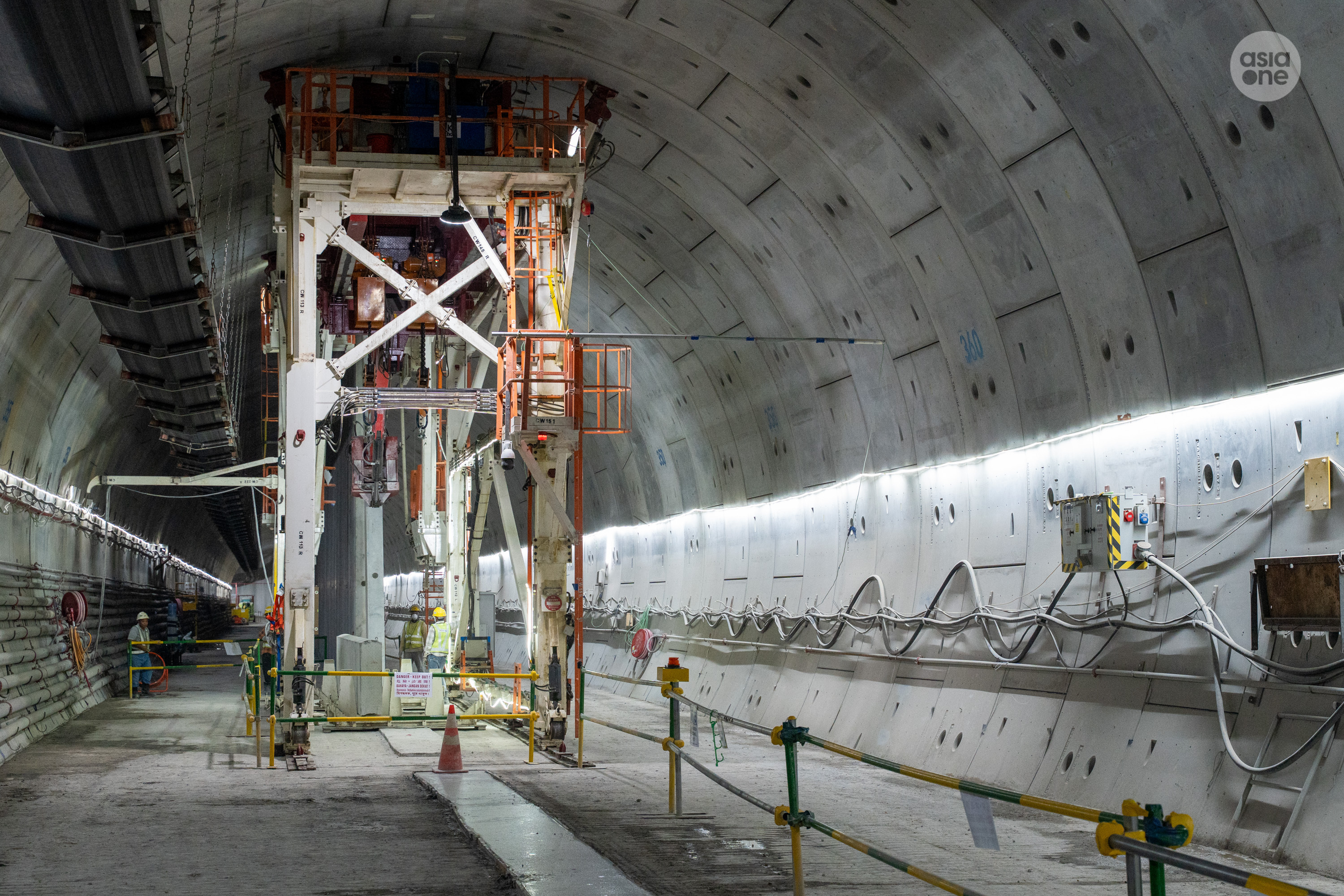
"The next stage includes constructing the centre wall that will separate the eastbound and westbound tracks within the tunnel," the authority said.
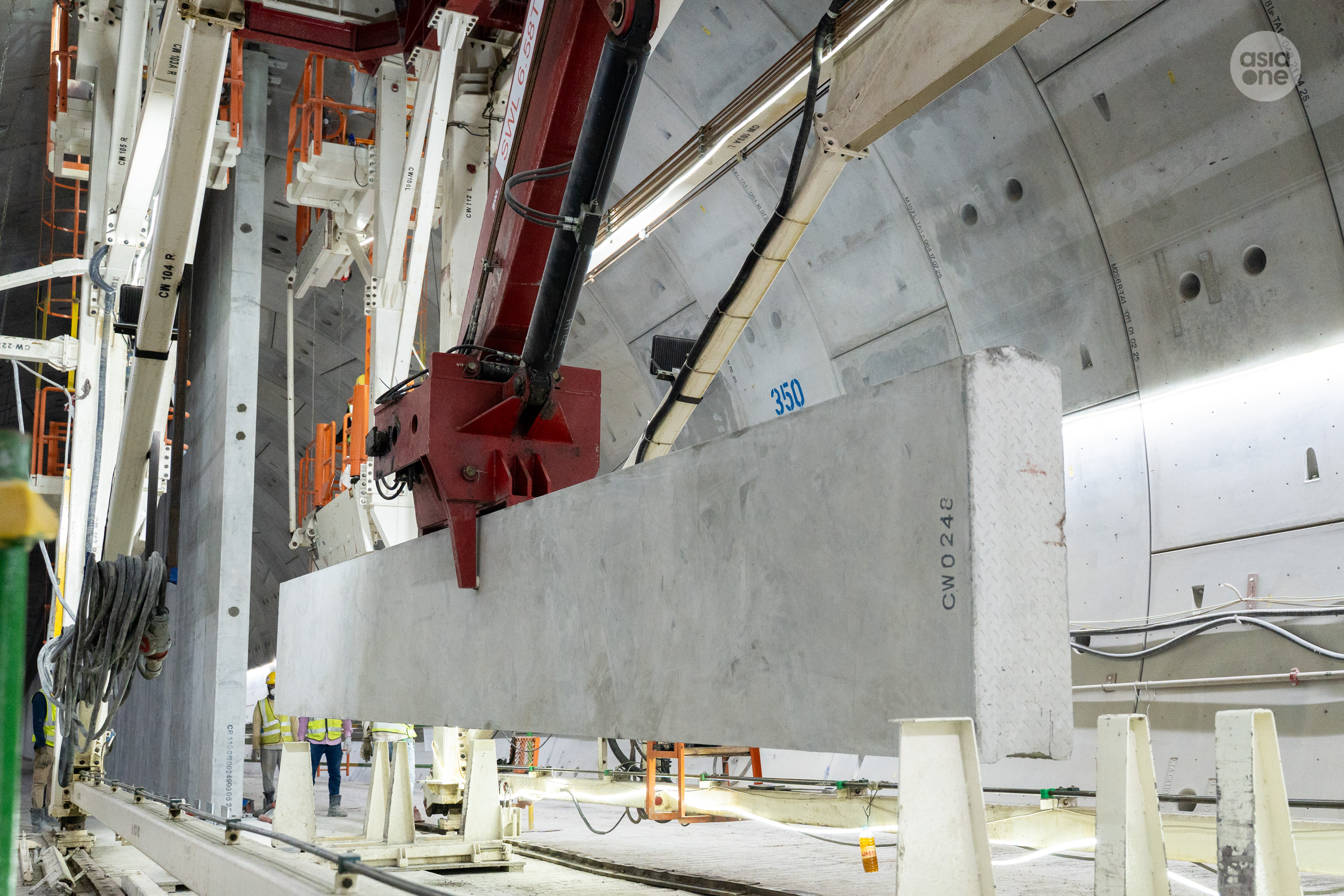
To improve productivity, LTA said it will be using a precast centre wall system instead of the conventional cast-in-situ method, which requires extensive manual work.
To do this, a specially designed erection gantry equipped with a robotic arm will be used to handle, position, and install the precast centre wall panels.
"This reduces the manpower required and the amount of labour-intensive activities within the tunnel environment and enhances construction safety," LTA said.
A similar robotic arm was previously used during tunnel-strengthening works on the Circle Line, where it helped install more than 300 inner and outer steel rings.
When fully completed, the Cross Island Line will be Singapore’s eighth and longest fully underground MRT line. It will span around 67km, linking major hubs such as Changi, Punggol Digital District, Jurong Lake District, and Tuas.
It is expected to have a daily ridership of at least 600,000 in the initial years, growing to around one million over time.
[[nid:737056]]
editor@asiaone.com




