SINGAPORE — As search efforts continue for the nine Singaporeans missing in the Nepal floods, deceptive AI-generated photos of them are spreading across social media.
In a TikTok post on Aug 31, the fake photos are shared alongside real ones, leaving social media users none the wiser.
The post has already garnered over 140,000 views and close to 300 comments.
Such images may hinder rescue operations, diverting attention away from credible information, said a Singapore Red Cross representative.
The nine missing Singaporeans have been identified as Rengarajan Prabu, Shalinny Deavy Elan Sozan, Subramaniam Diraviam, Rajesvaran Ayyavoo, Estee Loeh, Ghosh Aditi, Ng Kit Kuen, Shubakshi Rawla and Sumit Rawla.
They have been uncontactable since Aug 26, when flash floods swept through parts of Tibet and Nepal.
As at Sept 1, the death toll was over 1,000, with another 4,000 still missing.
Rengarajan, Shalinny, Subramaniam and Rajesvaran were travelling with the agency, Leaf Holidays Treks and Expedition.
On Aug 28, the travel agency posted photos of the four Singaporeans on Facebook.
A travel agency uploaded photos of four Singaporeans missing in Nepal to Facebook on Aug 28. The photos were taken from scans of their travel documents.
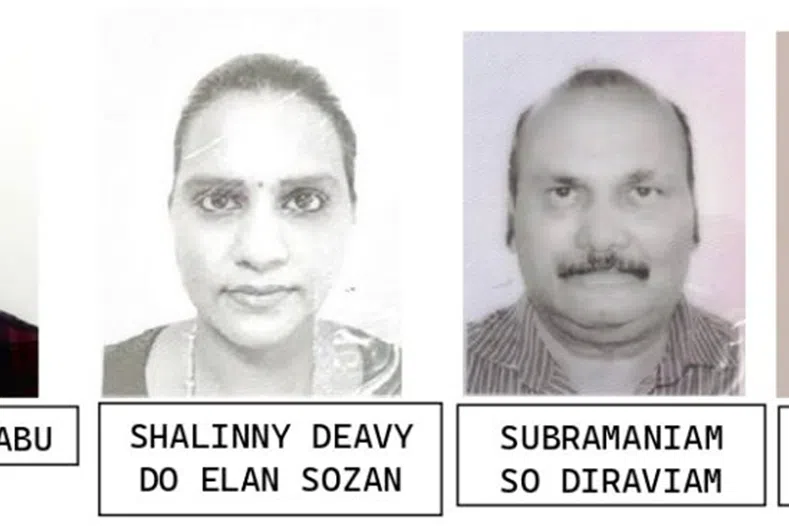
The photos were blurry and of low quality, having been taken from scans of travel documents.
A few days later, AI images that appeared to have been generated using the original images began circulating online.
The Aug 31 TikTok post included real photos of Loeh and the Rawlas that were shared with the media by their family members.
But it also included AI images of Rengarajan, Shalinny, Subramaniam and Rajesvaran.
Shalinny, 40, who works at the State Courts, was portrayed with a black "pottu" (a traditional coloured dot or mark worn on the forehead).
The original image of her, taken from her passport, was monochrome.
Disrespectful
Her husband, who wanted to be known only as Selvaganesh, 43, said Shalinny does not wear a black pottu.
He was upset when he saw the TikTok post and told The Straits Times that fake images of his wife were being circulated.
He said: "She has only worn red pottu, never black. The face doesn't even look like my wife's. It's like someone else is being presented as my wife. It's very disrespectful."
He added he was disappointed by how the ones behind the AI image are using a disaster for clicks.
Selvaganesh said: "These people just want their posts to gain traction. And let's say someone does find her, and they use the AI image to try and identify her. They won't be able to.
"This just confuses and misleads everyone. Please, stop doing this."
[[nid:743991]]
Psychologist Durga Naidu, head of the Centre for Psychosocial Resilience and Humanitarian Studies at the Singapore Red Cross Academy, said that while the image may not be real, the emotional impact is.
She said family members go through what is known as ambiguous loss, having no certainty or closure when their loved ones are missing.
Such images also create a sense of helplessness and loss of control, with loved ones not knowing who created the images or why.
Durga said: "There can also be concerns about the privacy and dignity of their loved one, particularly when their likeness is being manipulated without consent."
Hinder rescue operations
Sharing such images also hinders search and rescue operations, she added.
She said: "Fake or artificial intelligence-generated images presented as real images can divert attention and resources away from verified reports, causing false leads, and potentially hinder search and relief operations at a time when every minute matters."
She added that if fabricated images are widely circulated, they may distract attention from legitimate information, create unnecessary speculation or potentially divert resources towards information that is not genuine.
She said in a crisis, it is crucial to establish a sense of safety and calm, and ensure access to accurate information.
She added: "People may share because they genuinely want to help. But in a crisis, unverified information can sometimes cause more harm than good."
[embed]'We really miss them': Daughters appeal for help after Singaporean couple disappear in Nepal-Tibet floods[/embed]
This article was first published in The Straits Times. Permission required for reproduction.



