KATHMANDU — Outside, the whirl of the helicopter blades. Inside the cabin, there was deafening silence.
When Gopal Thapa, a 42-year-old managing director at Leaf Holidays Treks and Expedition, surveyed the devastation in flood-ravaged Rasuwa from above, he went pale.
There was mud and water as far as his eyes could see.
On Aug 26, water and slush came rushing down the mountains and swept through the Nepal-Tibet border, leaving at least 1,399 dead and more than 5,000 still missing.
Until the other day, Gopal's office in the tourist district of Kathmandu's Thamel Marg was buzzing with tourists.
But on Sept 16, when AsiaOne visited his Leaf Holidays Treks and Expedition office, the mood was desolate — relatives of staff members were milling around, anxious for information about their loved ones.
AsiaOne is in Nepal covering the aftermath of the Aug 26 disaster and Singapore's assistance in the recovery efforts.
The guests he could not bring home
Gopal recounted those harrowing days when lives and property were washed away.
These are not just numbers to him.
Fifty-five people on a trip to Mount Kailash with Leaf Holidays are missing, including four of nine Singaporeans, and nine of his staff.
The four Singaporeans associated with Leaf Holidays are: Rengarajan Prabu, 57; Shalinny Deavy, 40; Subramaniam Diraviam, 66; Rajesvaran Ayyavoo, 57.
Gopal, who is secretary of the Association of Kailash Tour Operators Nepal, said he raced to Tribhuvan International Airport upon receiving news of the disaster, paying US$1,600 (S$2,040) to hire a helicopter that would take him to ground zero.
Any hope that he might be able to find his guests and staff near what used to be Friendship Bridge, at the Nepal-Tibet border, was dashed as the helicopter reached the location.
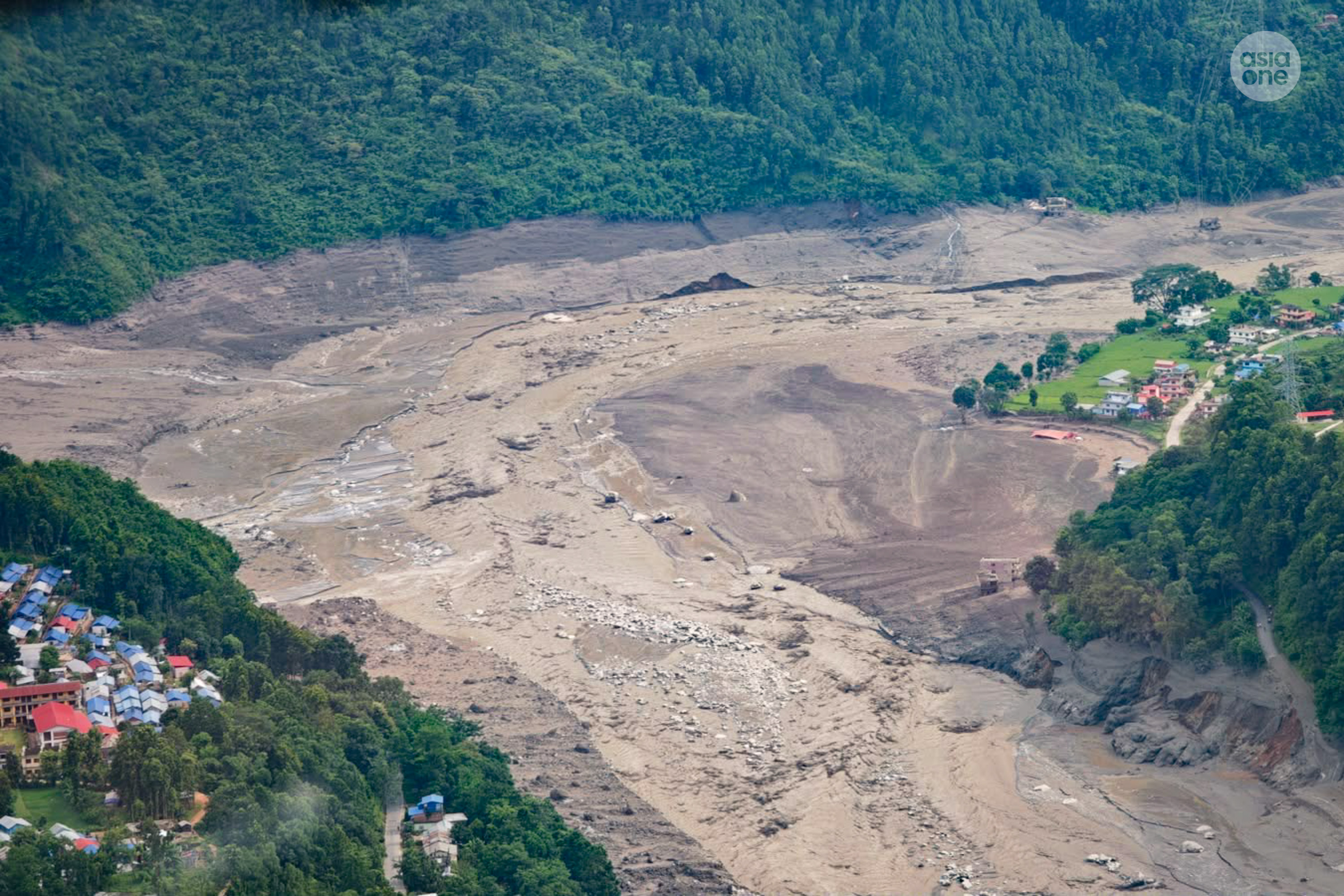
The once-bustling villages and border checkpoint were gone. Instead, there was just mud.
"Muddy. Nothing there," Gopal recalled, describing the flight as the darkest moment of his life. "Clean sweep, no life, nothing there."
Facing families, including his own
To add to the trauma, he also lost his younger brother, Gokarna Thapa, to the deadly floods.
Gopal said his brother, who worked as a tour guide, was preparing to lead another group across the Himalayan passes towards Mount Kailash.
They had spoken a few hours before floods struck the area when Gokarna was at Friendship Pass. That was their final call.

But Gopal had no time to grieve, because he felt accountable for the other 54 people, from eight countries, now missing.
By the next day, he had sent letters to all embassies.
As Kathmandu became a gathering place for those looking for the missing, Gopal also had to face the families, including a friend of missing Singaporean trekker Rengarajan Prabu, who visited him thrice after arriving in Nepal.
"They didn't blame anyone. They just asked if there was any chance that those missing could still be alive, and to be updated if there were any developments," Gopal told AsiaOne.
Since then, many families have returned to their home countries.
But for Gopal and those in the tourism industry, the difficult next chapters are just beginning.
As families in Nepal struggle to come to terms with the possibility of losing their loved ones, those left behind still have to live on.
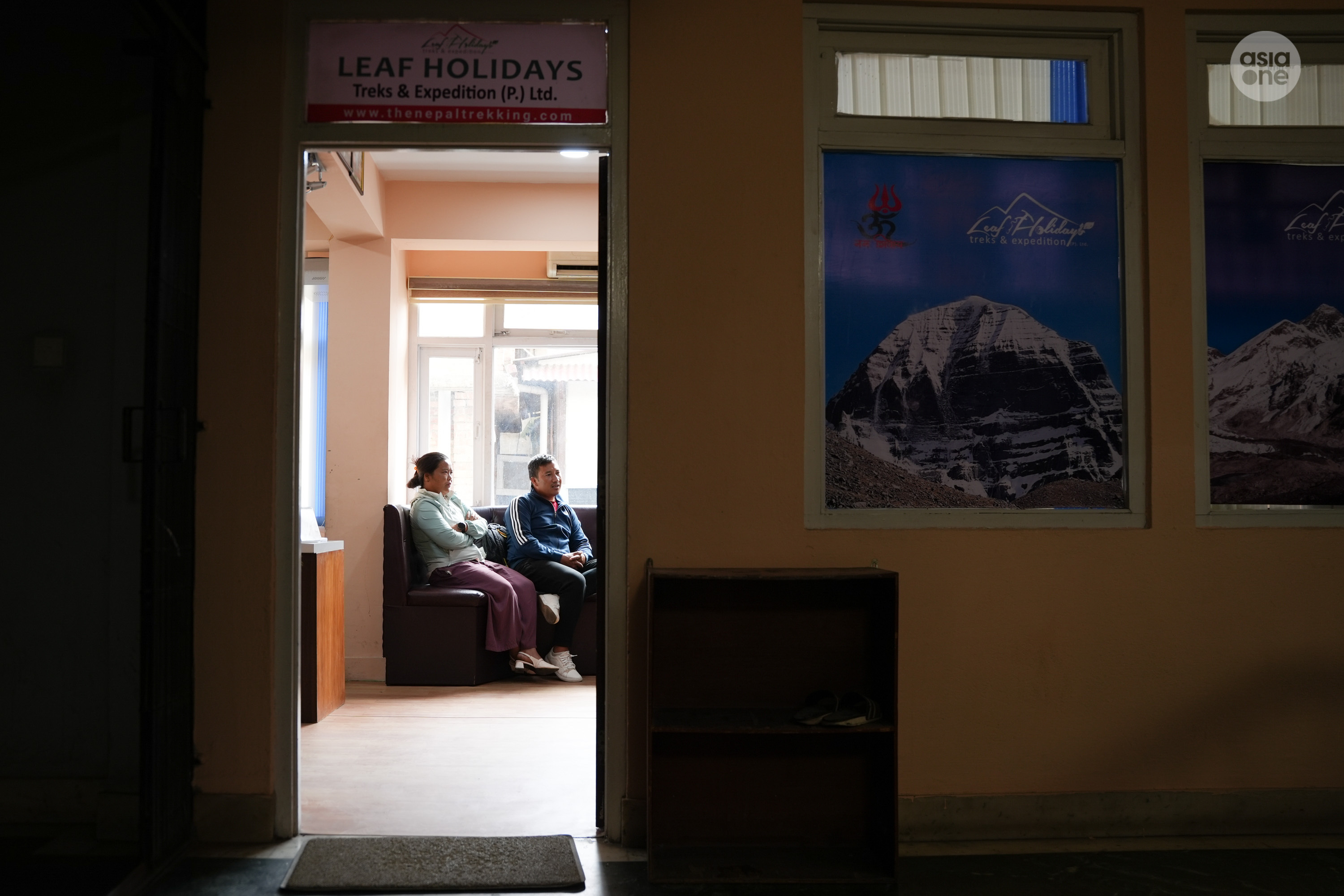
Gopal is providing the families of his nine missing employees with immediate out-of-pocket assistance, as claims for those with insurance are being worked out.
And he still has his brother's family to think about.
He told AsiaOne that his brother's wife and two young children, aged seven and 16 months, have moved into his home so that he can look after them.
He says he is overcome with guilt.
"What if I had stopped them? They definitely would still be alive," he said of his brother and his tour group.
Moving on
Meanwhile, Nepalis are picking up the pieces.
For those whose homes once stood along the river corridor for generations, they now have to rebuild their homes from scratch.
And with livelihoods threatened, Gopal urged tourists not to shun Nepal at a time like this.
"Not all of Nepal is damaged," he pointed out. "Only Trishuli River area was affected. Nepal, as a country, is still safe for tourists to come."
Tourism is a major pillar of Nepal's economy, contributing about 7 to 8 per cent of its total GDP. This, in turn, creates jobs and development.
Asked by AsiaOne about his plans when life returns to normal, Gopal said: "I need to handle all of this."
Voice cracking, he added: "I can be strong, but we've lost our family, we've lost our business. And we've lost many people."

[[nid:744821]]
rauf.khan@asiaone.com
yan.abdullah@asiaone.com
No part of this article can be reproduced without permission from AsiaOne.





