

'We have no choice': Rising operating costs force some hawkers to adjust prices
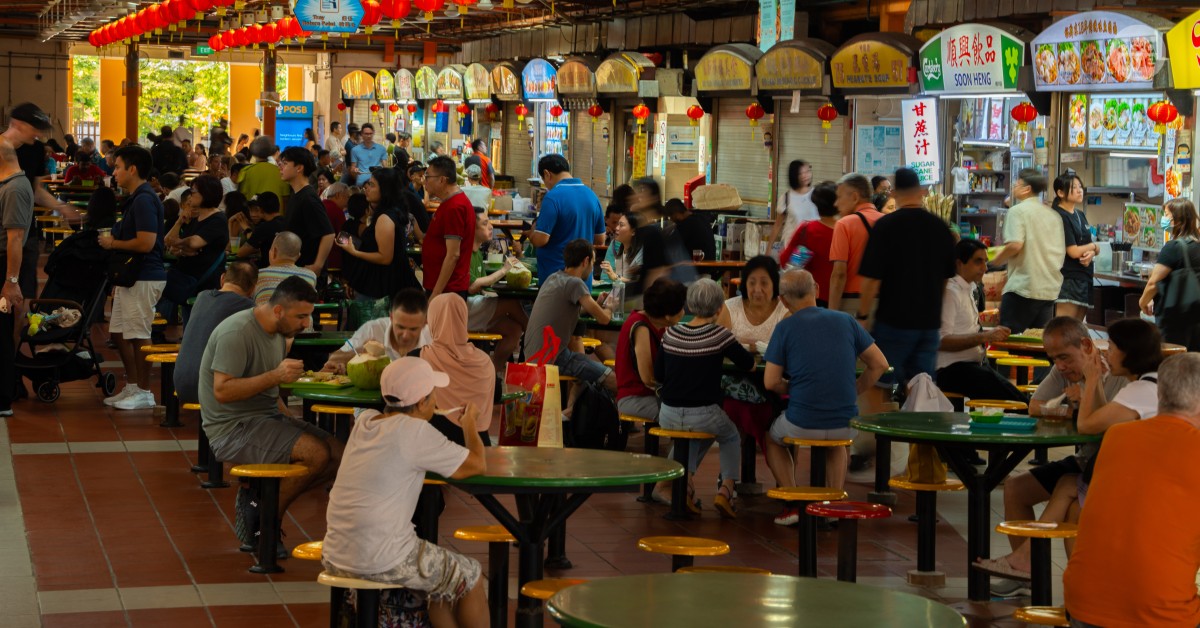
Some hawkers have raised prices for food and drinks amid rising costs, while others are exploring alternative ways to cope.
PHOTO: AsiaOne file

 PUBLISHED ONApril 28, 2026 3:10 PMBYKoh Xing Ying
Some hawkers have begun raising prices due to rising operating costs, including increases in plastic, fuel and supplier expenses, while others remain cautious amid concerns over customer demand.
Speaking to AsiaOne, Ashton Ng, 36, said his third-generation family-run hawker business has had to make price adjustments across parts of its menu due to rising costs amid the Middle East conflict.
"The ongoing crisis has definitely indirectly affected us. Most of my a la carte items have increased by 10 cents, while set meals have increased by 20 cents," said Ng, who runs Sin Hoe Huat Cafe.
"This applies to both dine-in and takeaway orders, as the increase in supplier costs affects our overall business costs."
Ng shared that rising plastic costs have had a wider impact than many might expect and adjustments are often unavoidable.
"It does not affect just one area. It affects many things we use every day, such as cups, bowls, plates, lids and other packaging items," he explained.
"In our experience, when supplier prices go up, they usually do not come down so quickly. When costs keep rising bit by bit, small businesses eventually have to adjust as well," said Ng.
"We can't please everyone, but we do our best to manage customer expectations," he added.
Sharing similar sentiments, the owner of Daily Sip drink store, who wished to be known only as Wong, told AsiaOne that suppliers have recently reached out to inform stall owners of price increases.
"I currently charge 10 cents for takeaway, and with suppliers informing us of rising costs, we will have no choice but to adjust our takeaway charge as well. Any increase will be kept reasonable, as I also have to consider stall rental and other rising expenses," said Wong.
"I'm confident that my regular customers who appreciate my drinks will understand the reasons behind the adjustments."
Kheng Keow Coffee Merchants Restaurant & Bar Owners Association president Hong Ban Seng said the price increases among hawkers are largely a response to rising operational costs rather than a proactive decision.
"We are aware that some hawkers have adjusted their prices due to rising plastic and fuel costs. Most operators are still taking a wait-and-see approach and are trying their best to absorb the increases," said Hong.
"As cost pressures continue to build, price adjustments have become a necessary step to sustain operations. This is a reactive move rather than a proactive decision to raise prices," he added.
Hokkien Man Hokkien Mee noodle store owner Alice Lai told AsiaOne that aside from raw materials, fuel prices are a key concern driving the rise in food prices.
"With the ongoing conflict, we have increased our food prices by 50 cents. Fuel prices have gone up, and it leaves me with no choice — otherwise, my business will not be able to survive," said Lai, who is in her 40s.
"Honestly, the 50-cent increase is very minimal; it does not even cover all the additional costs. I am still absorbing part of the increase," she added.
However, some business owners are also exploring alternative ways to cope.
Speaking to AsiaOne, Janson Chew, owner of drinks store Daily Cup, said the impact of higher operating costs has been significant amid the ongoing Middle East conflict.
"The challenge is maintaining prices while ensuring the business remains sustainable, which is why I've come up with alternatives to retain customers without raising prices, such as launching an online brand that doesn't require a physical shopfront," said the 37-year-old.
"I'm not going to raise prices, and will instead look for creative ways to navigate this period. If I increase prices, there will definitely be fewer customers — that's what happened during Covid-19, when my sales dropped by 40 per cent after a price hike."
Echoing these concerns, Hong said feedback from hawker and coffee shop operators points to continued worries over the impact on customer demand.
"Many are concerned that price increases could affect customer demand and sales, so they are keeping any adjustments to a minimum. This is a reality that society as a whole will need to collectively navigate and bear."
[[nid:733535]]
xingying.koh@asiaone.com
No part of this story can be reproduced without the permission of AsiaOne.