While walking home from grocery shopping along Upper Thomson Road in July 2014, Lim Giok was hit by a lorry at a traffic junction.
Lim, who was 66 then, suffered a brain injury and had to undergo four operations in the subsequent months.
Complications caused her to lose control of the right side of her body, like a stroke patient.
Despite making a full physical recovery, she still suffers from memory loss and cognitive impairment.
Traffic deaths hit a 10-year high in 2025, with 149 killed, compared with 141 in 2016. There were 142 deaths in 2024. The number of injured people also increased, from 9,342 in 2024 to 9,955 in 2025.
Given the dire situation on the roads, The Straits Times has been running a series of stories to call on all road users to be more careful.
In 2025, there were 247 traffic accidents involving elderly pedestrians, up from 203 in 2024. The 27 elderly pedestrian deaths in 2025 were among 36 pedestrian deaths in total for the year.
Lim’s relative, who wanted to be known as Koh, said his family was devastated by the accident.
He said Lim had been taking care of him and his siblings since they were children.
He said: “(The accident) was very traumatic for our family. The first year was especially tough, because we didn’t know if she would recover.”
He said caring for Lim after the accident took a toll on the family, and they had to hire a helper.
Lim suffered a contusion in her brain. During the first operation, doctors peeled back the 1cm-thick layer of skin covering the skull. They then removed a piece of her skull, measuring about 12.5cm in diameter.
This was to allow the brain space to swell to prevent any intracranial pressure increase from further damaging the brain.
After the procedure, Lim lost mobility on the right side of her body, due to atmospheric pressure compressing on her brain that was no longer covered by the skull bone.
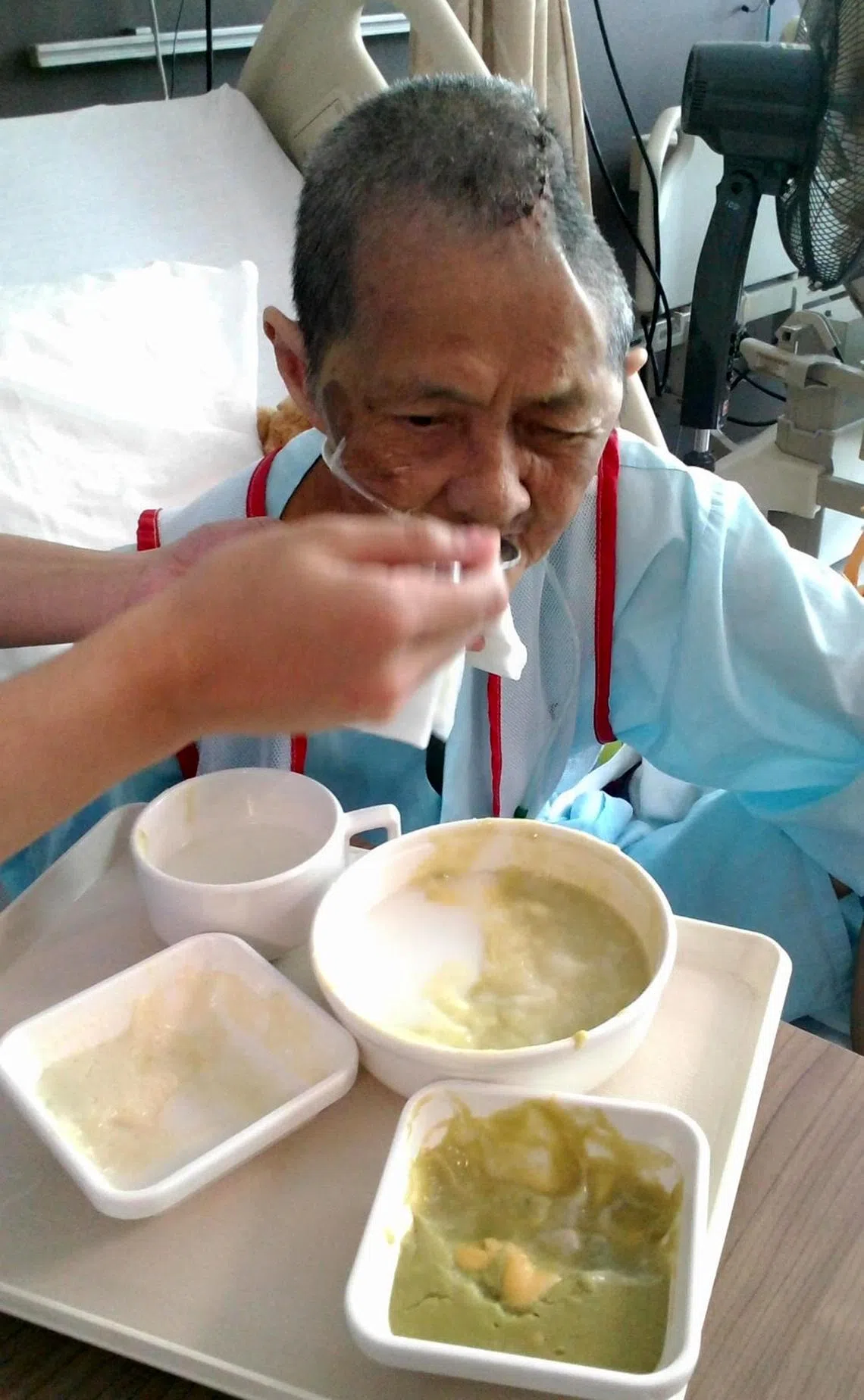
Lim Giok suffered a brain contusion, and doctors had to remove a portion of her skull.
Said Koh: “She couldn’t sit or stand, needed full assistance for all her daily living activities like using the toilet and showering, and could only eat soft foods.”
Although Lim had a second operation to replace the removed portion of her skull, she suffered an infection months later.
When doctors removed the infected bone replacement, Lim lost her mobility again.
Her family had to decide between letting her go under the knife a fourth time to cover the hole in her skull, or remain immobile and bedbound for the rest of her life.
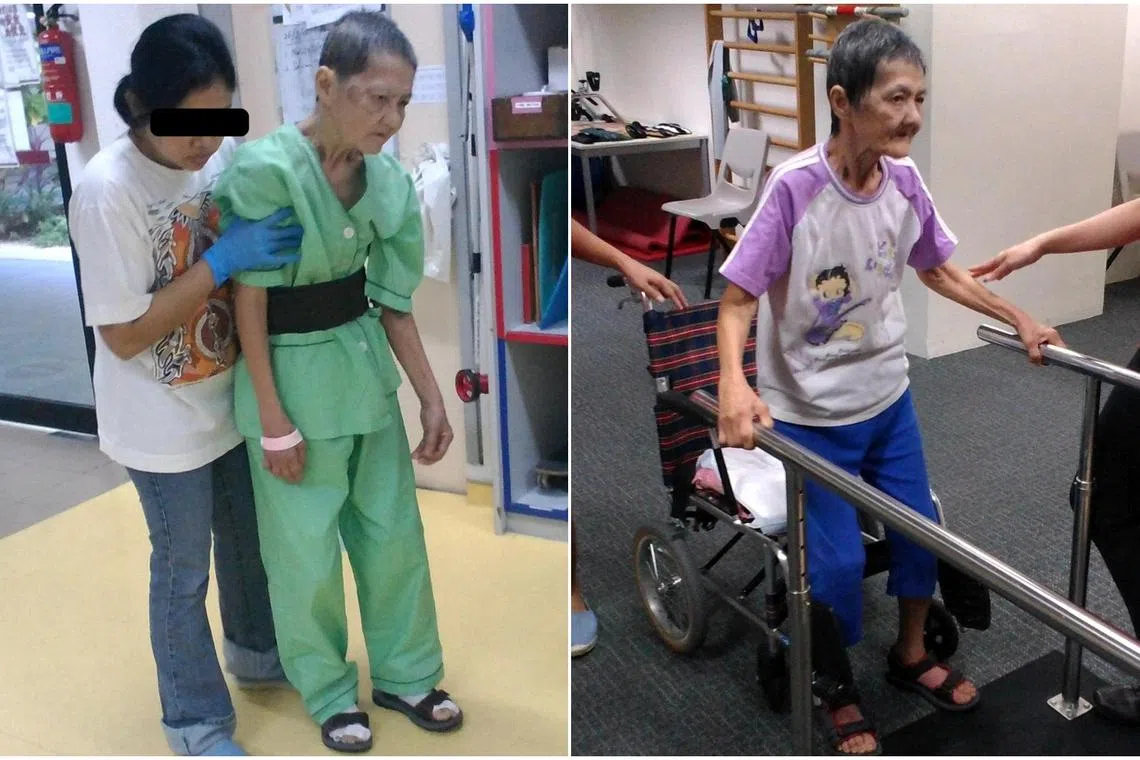
After she was hit by a lorry in July 2014, Lim Giok had to undergo four operations and months of rehabilitation.
Lim had her fourth operation in January 2015, and attended rehabilitation sessions without complaint, exercising daily with her helper.
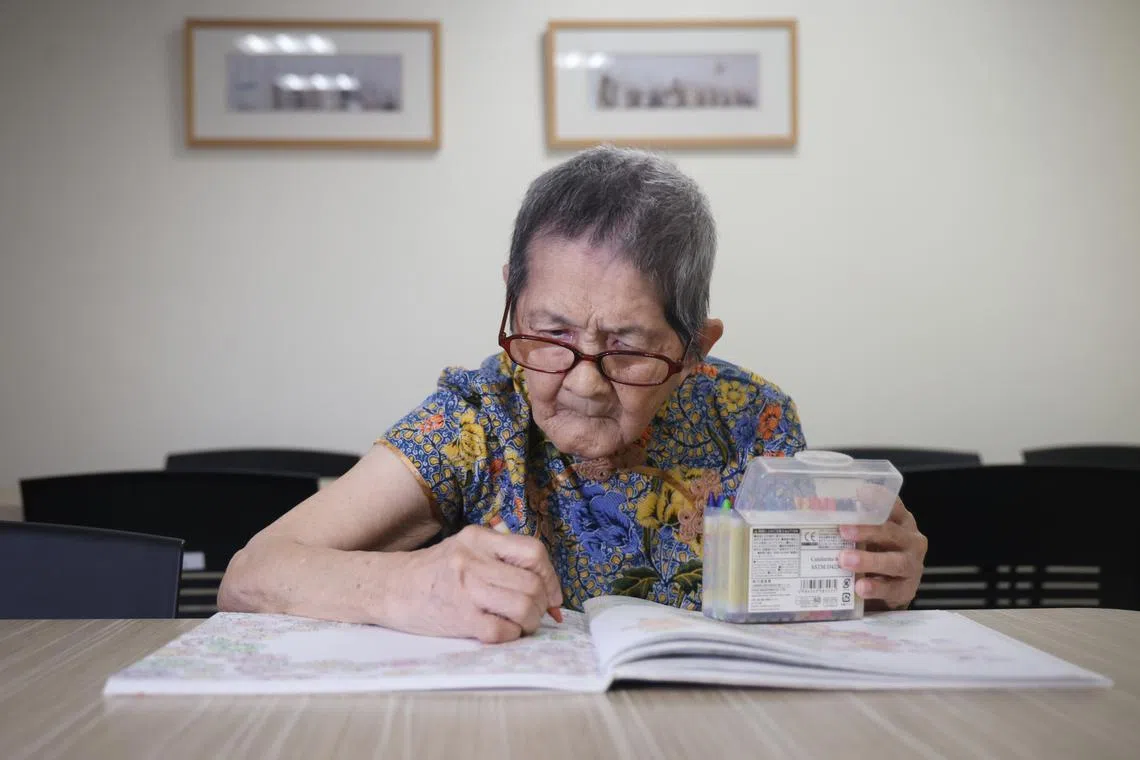
To keep her mind active, her family members bought her puzzles and activity books.
By 2018, she could walk on her own.
To keep her mind active, her family members bought her puzzles and activity books.
She still exercises every day, and keeps a journal to jot down her daily activities. However, she is unable to remember portions of her past, and is sometimes confused about her whereabouts. Her helper accompanies her everywhere.
Koh said the family spent about $100,000 on Lim’s medical bills and rehabilitation.
He said: “As a family, we’ve moved on from the accident. I’m just glad she’s still here with us today.”
Not so lucky
Clinical assistant professor Jai Prashanth Rao, who operated on Lim, said she was lucky because doctors got to her early and contained the damage to her brain.
But not everyone is as fortunate, said consultant neurosurgeon Cheong Tien Meng, who leads the head injury and trauma programme at the National Neuroscience Institute.
When it comes to road traffic accidents, he said pedestrians are particularly vulnerable because they are not protected when hit by vehicles or bicycles.
They can suffer from brain swelling, or develop blood clots in the brain, which have to be removed via an operation.
Even if the patient survives, some might still experience body weakness, a decline in cognitive ability, or paralysis. Some are left in a minimally conscious state, where they are unresponsive.
There are also defects that can be subtle, such as personality changes.
He said: “For pedestrians, it doesn’t take a lot to cause damage. A person who gets hit by a vehicle going at 20kmh can get severely injured.
“A lot of the (medical procedures) we do is to limit the damage that was done, because we cannot reverse it. So the most effective way to prevent all this is to avoid injury in the first place.”