Air quality in eastern Singapore entered the unhealthy range at 6pm on Monday (Oct 5), bringing the number of regions in the country with unhealthy air quality to three.
The other two regions — central and western Singapore — started recording 24-hour Pollutant Standards Index (PSI) in the unhealthy range at 1am and 6am respectively.
At 7pm, PSI readings in northern (97) and southern Singapore (97) remained in the moderate range, while the central (124), eastern (104) and western (121) regions recorded unhealthy readings.
Meanwhile, one-hour PM2.5 is in the elevated band across all five regions, with central Singapore recording the highest concentration reading of 109.
Concentration readings of between 56 and 150 denote the elevated band, while readings of 151 to 250 are in the high-band.
In its daily haze situation update on Monday, the National Environment Agency said the country's 24-hour PSI is forecast to be in the high-moderate to mid-unhealthy range.
It noted that moderate to dense smoke haze plumes from southern Sumatra were observed to have drifted towards Singapore, while smoke haze was also observed from fires in Kalimantan.
Data from the ASEAN Meteorological Centre shows that the number of hotspots in Kalimantan spiked from 175 to 533 on Oct 4.
Given that dry conditions are expected to persist over southern Sumatra and Kalimantan, and with the prevailing south-easterly or east-south-easterly winds, smoke haze could continue to affect Singapore, NEA stated.
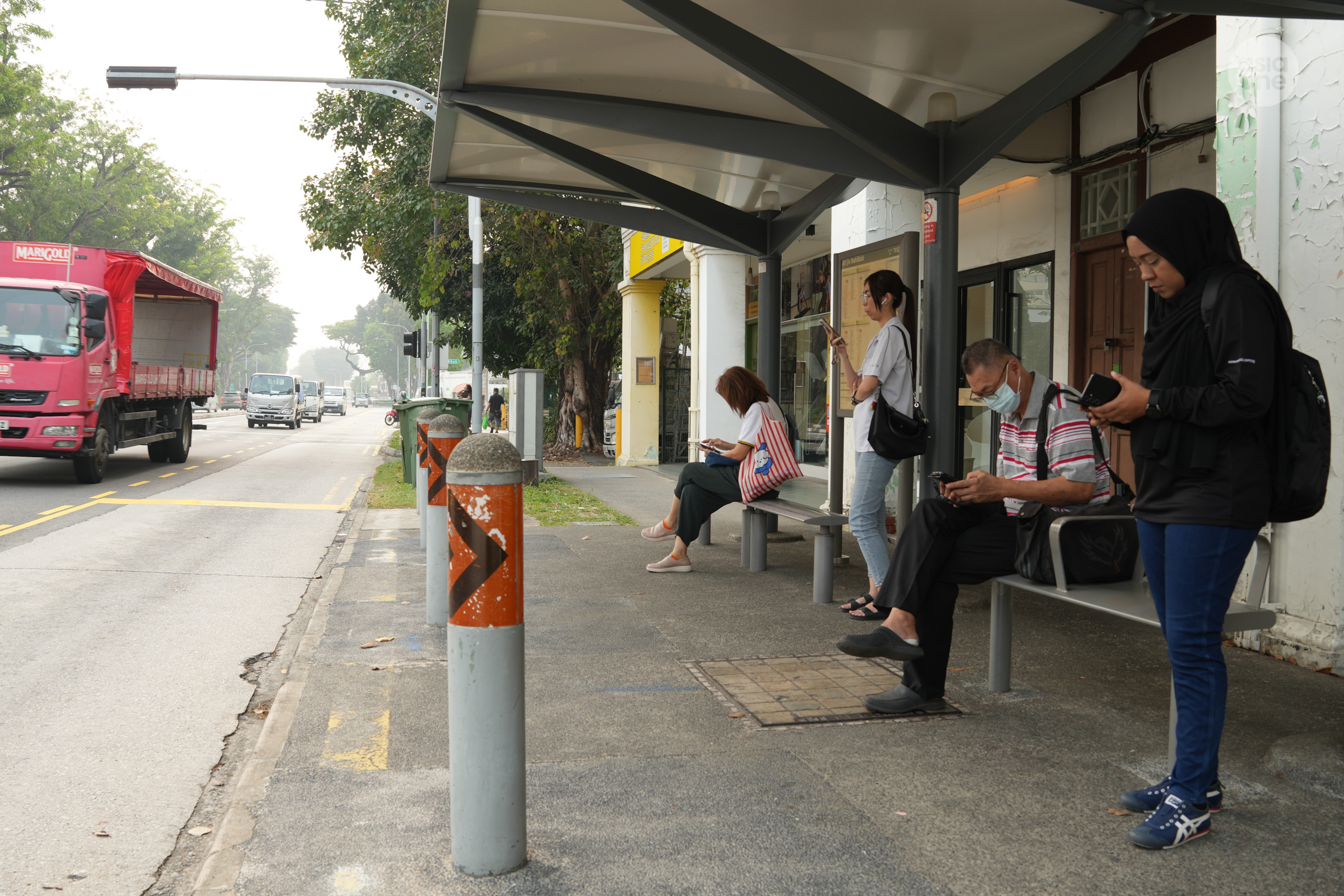
Members of the public should check the latest one-hour PM2.5 concentration readings before participating in outdoor activities.
[[nid:746017]]
editor@asiaone.com




