

From drones to 3D scanners: Police turn to new tech to enhance crime scene investigations

A Mixed Reality (MR) Training System used by crime scene specialists for bloodstain pattern analysis.
PHOTO: AsiaOne/Rauf Khan

 PUBLISHED ONJune 10, 2026 2:00 AMBYDana Leong
The Singapore Police Force (SPF) is making use of new technologies such as unmanned aircraft vehicles (UAVs) and 3D scanners to enhance efficiency in forensic investigations.
The fundamentals of forensic investigative processes remain the same, but they are instead complemented by advancements in technologies, said the police during a media engagement session on Monday (June 8) which showcased their forensic division capabilities.
During the session, the police also referenced the 2016 Tanah Merah Ferry Terminal murder case — where a Malaysian man stabbed his supervisor and hid her body in a drain before fleeing the country — and shared how the latest technologies could have been applied to the investigations.
According to a press release on Wednesday, the police said that the new technologies have been adopted by the forensics division under Home Team Science and Technology Agency Integrated Forensics Service, which is a specialised unit that is forward deployed to SPF's Criminal Investigation Department.
More commonly known as drones, UAVs can help enhance aerial crime scene documentation and operational effectiveness.
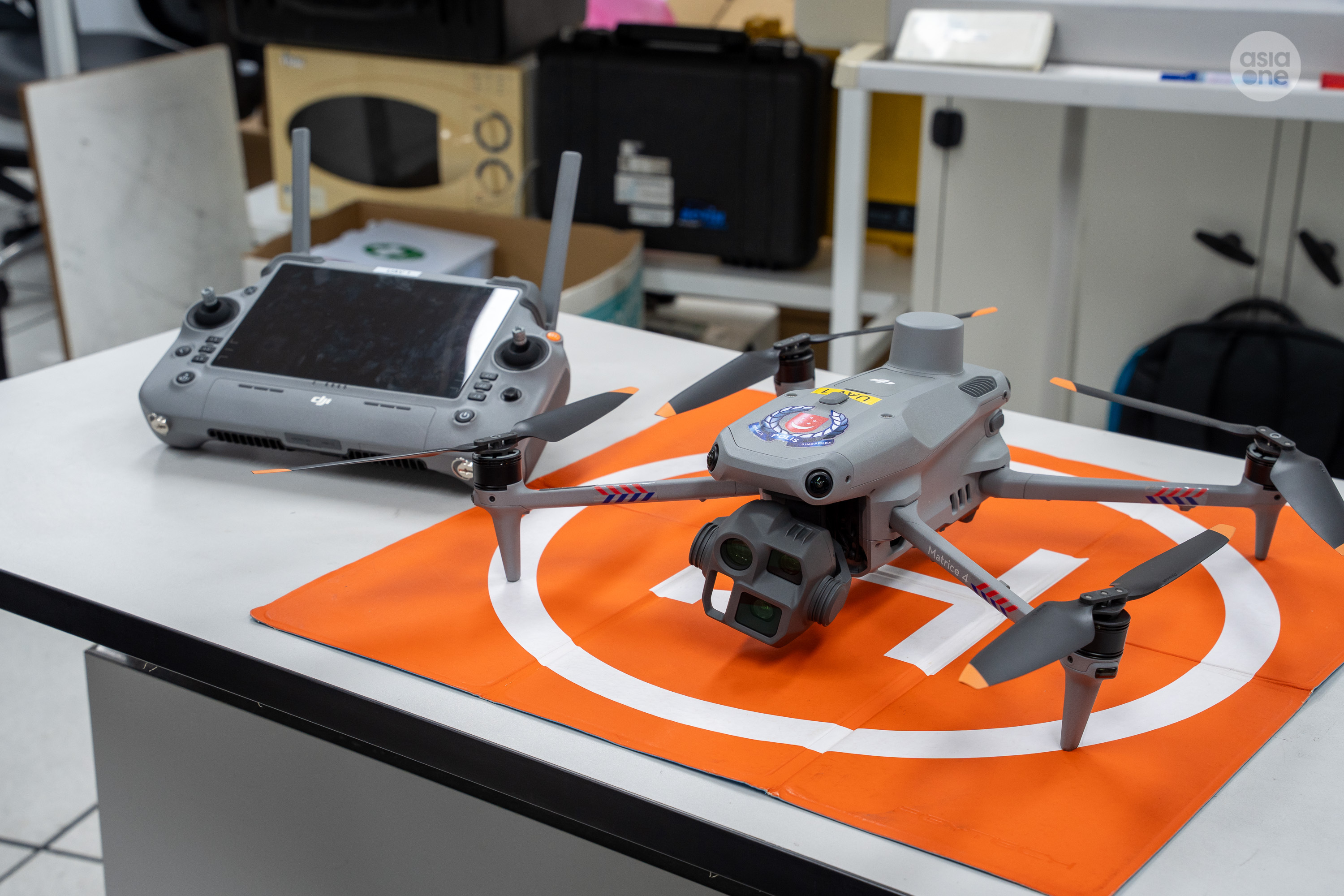
Operationalised in 2025 in accordance with local airspace regulations, the UAVs are equipped with advanced cameras and sensors, and can help create high-resolution images to facilitate more accurate documentation of crime scenes.
Additionally, UAV aerial images can be processed to create 2D and 3D maps for forensic reconstruction.
Overall, they can also provide investigative officers with a more comprehensive aerial perspective of crime scenes, which can help improve situational awareness and provide a clearer understanding of spatial relationships, which can be particularly important in large or complex environments.
The police also added that UAV technologies can also be used in hazardous situations or inaccessible areas, which reduces operational risks while allowing critical evidence to be preserved.
3D scanners have also enhanced forensic investigations over the years and have helped improve efficiency by allowing investigative officers to reconstruct crime scenes virtually.
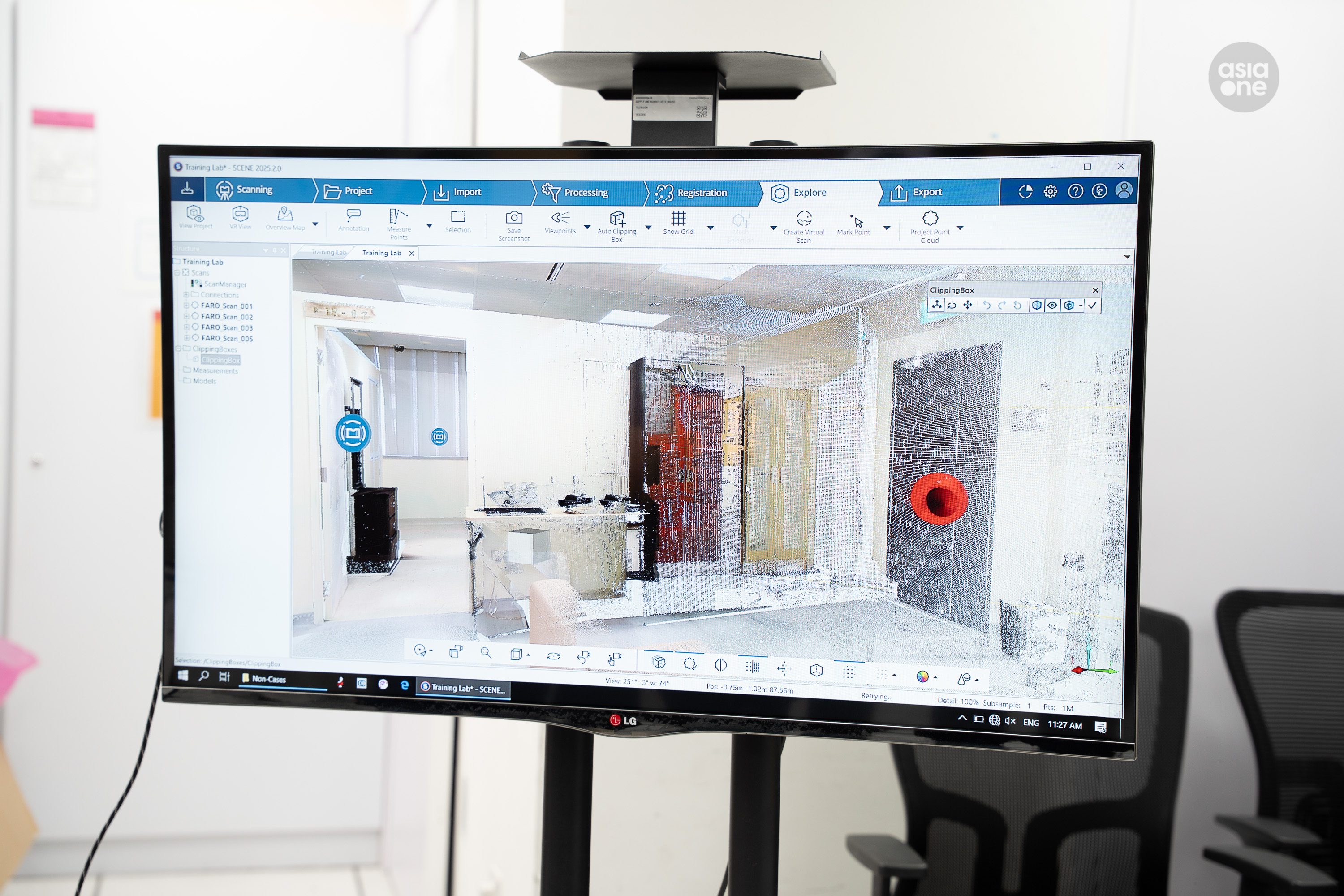
Prior to 3D scanning technologies, such as during investigations on the 2016 Tanah Merah murder case, crime scene specialists would need to manually document crime scenes with photography and sketch plans, which would take hours.
During follow-up investigations, specialists also had to revisit the crime scene to take additional measurements such as the distance from the cleaner's room to the drain where the body was found.
Currently, the police use a suite of terrestrial and handheld 3D scanners, which were first operationalised in 2019.
By deploying such technologies, crime scene specialists are able to map out 3D replicas of crime scenes in a fraction of the time, allowing them to revisit scenes and visualise complex scenarios digitally at any point in time.
Leveraging 3D scanners also allows crime scene specialists to prioritise other operational tasks at the scene, said the police.
@asiaone 3D scanners, AI and drones are reshaping crime scene investigations, helping forensic teams capture evidence more efficiently while keeping human judgement at the centre of the process. #sgnews #Singapore #Police #CSI #Investigations #Forensics ♬ original sound - AsiaOne
Training within the forensics division is also enhanced with new technologies such as the Mixed Reality (MR) training system.
With a lightweight goggle headset and programming, the traditionally laborious bloodstain pattern analysis (BPA) training can be digitalised and adapted to any environment.
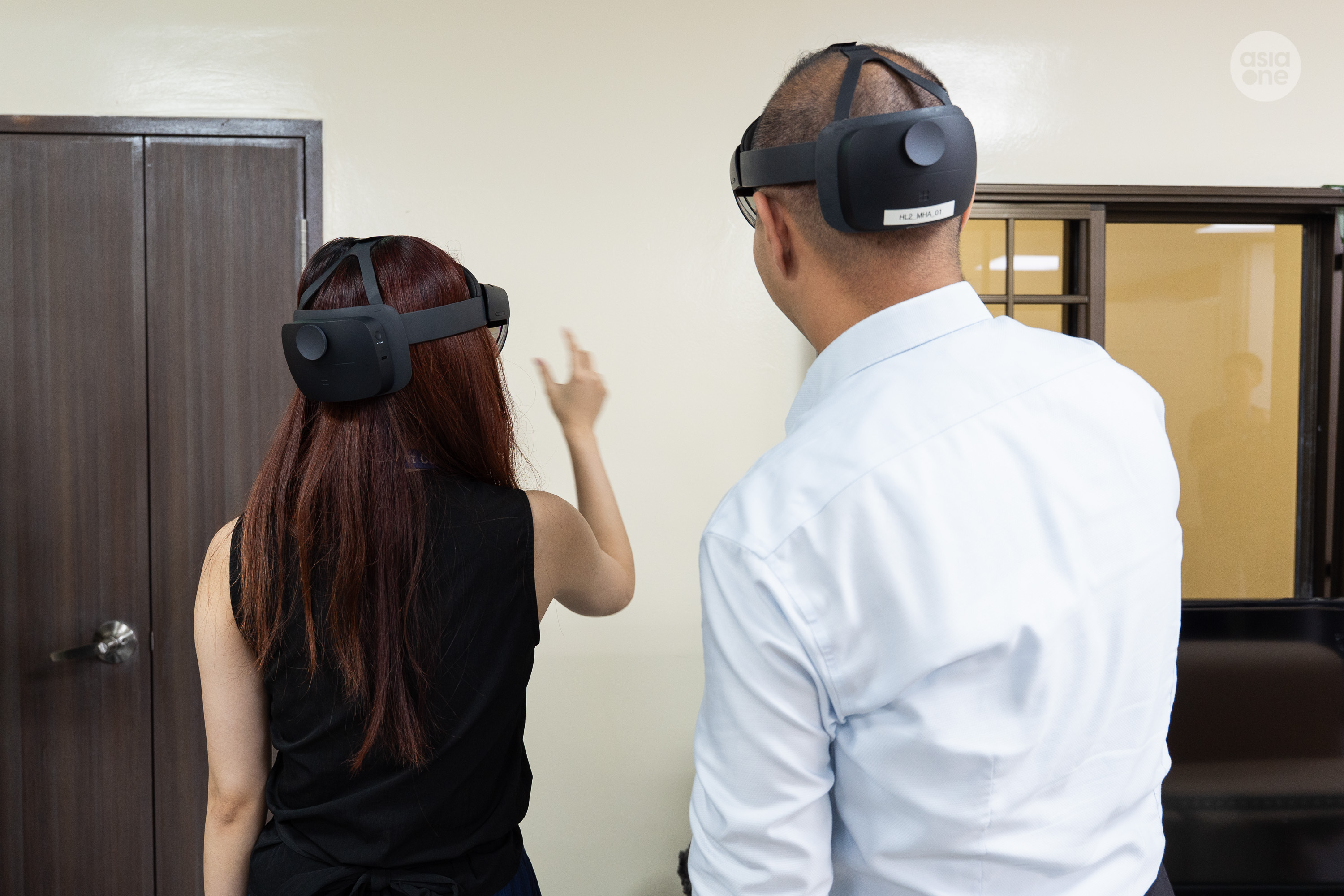
Normally, BPA training would require the physical recreation of bloodstain patterns using synthetic blood and hands-on analysis, which would need to be redone for each trainee.
Operationalised since 2022, the MR Training System lets trainers construct customised virtual crime scenes by incorporating virtual furniture, bloodstain patterns and weapons.
Likewise, trainees can process these scenes in an immersive environment, by identifying and marking evidence, taking measurements and capturing photographs.
[[nid:735787]]