More than 100 exotic animals, including axolotls, leopard geckos, tarantulas and pig-nosed turtles, were seized during coordinated raids targeting six individuals suspected of illegally selling or possessing wildlife.
The National Parks Board (NParks) said on Wednesday (Sept 16) that 101 specimens were recovered from the six individuals' residential premises during simultaneous raids conducted on Sept 14.
The operation was part of one of NParks' largest seizures of illegally kept wildlife in recent years.
The operation was conducted after the animals were advertised for sale on online platforms, noting that several of the species are also protected under the Convention on International Trade in Endangered Species of Wild Fauna and Flora (Cites).
The agency added that among the animals seized also included armadillo girdled lizards, blue beauty anoles, Mount Elliot leaf-tailed geckos, and rosy boas.
13 animals found dead
Among the animals seized, NParks noted that some had also died due to the poor conditions in which they were kept, likely as a result of insufficient space, poor ventilation and inadequate access to food and water.
"Just for this operation alone, there were 13 wildlife specimens that were found dead on site, and there were also other animals that we observed to be in very poor welfare conditions," said Teoh.
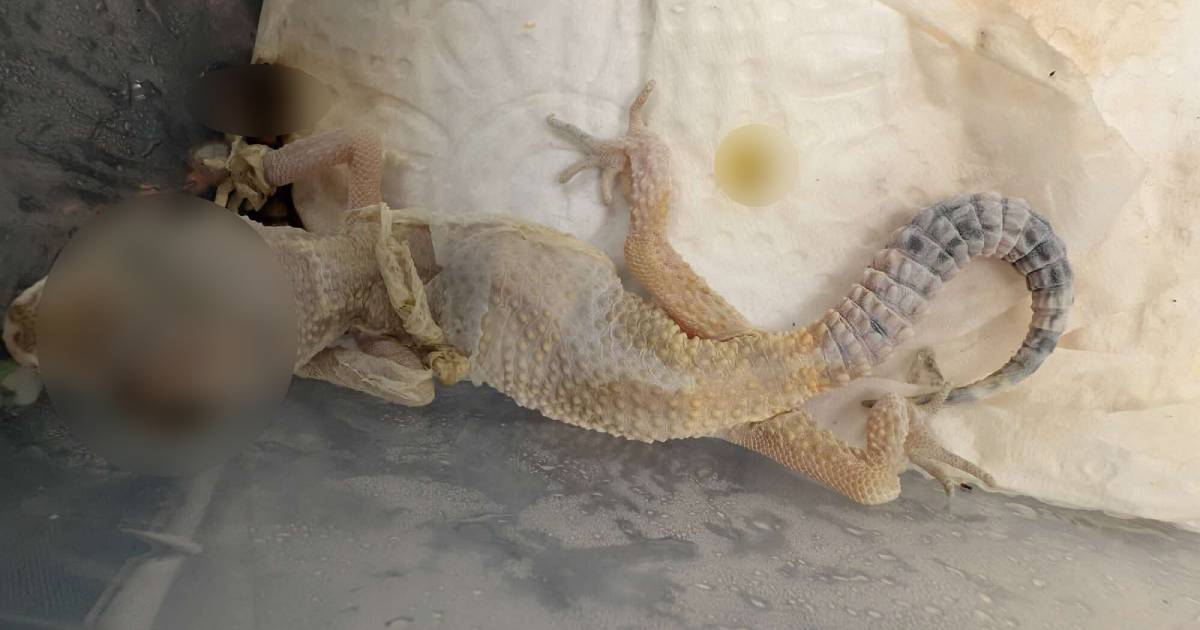
Several of the surviving animals were also found to be in poor health.
Among them was a leopard gecko with a ruptured and infected eye that was also unable to shed its skin fully. It was subsequently euthanised on animal welfare grounds, said NParks.
The agency added that the animal's condition was highly indicative of a long period spent in captivity under poor conditions.
Other leopard geckos and axolotls were also found to be lethargic and in poor body condition.
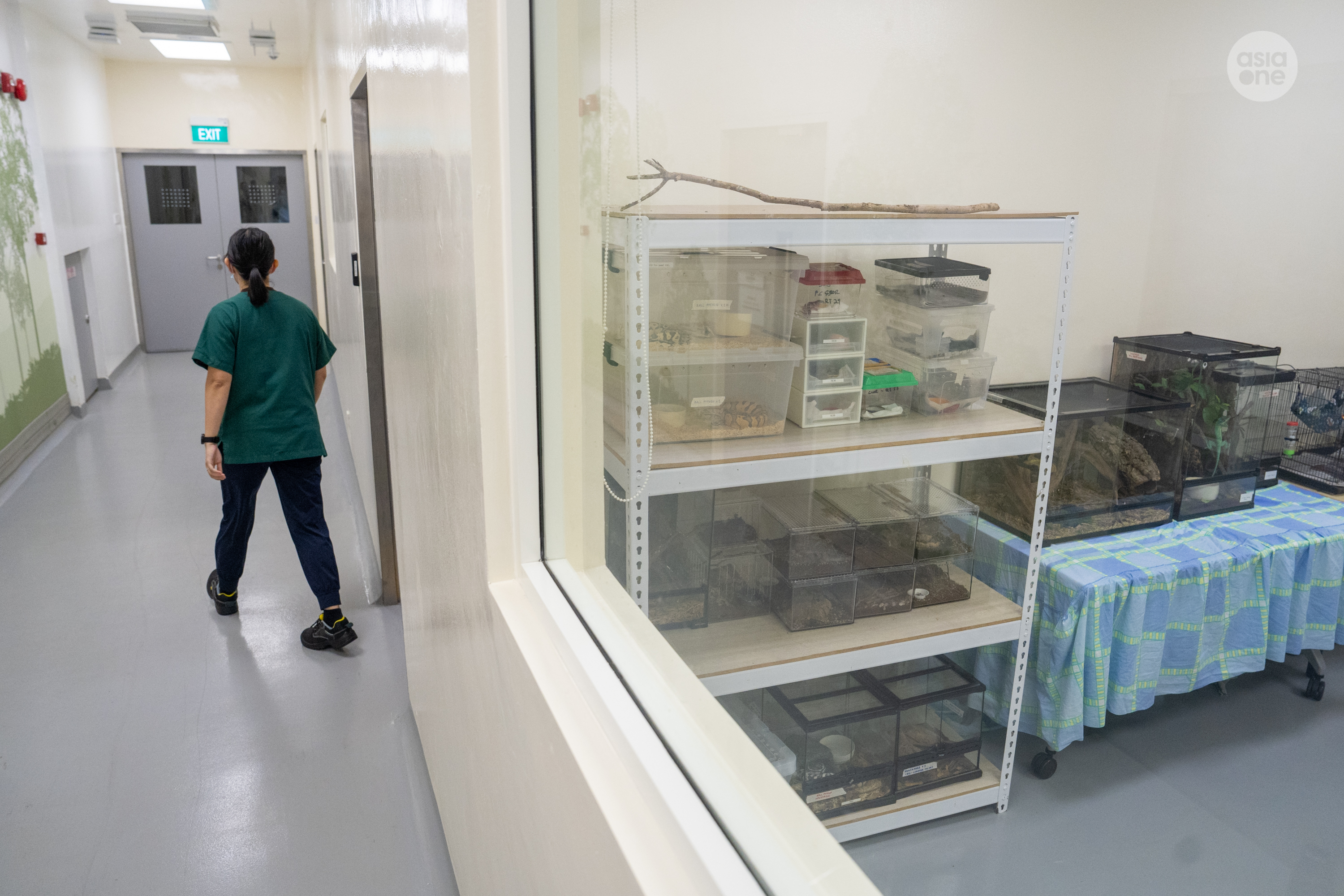
During a media tour of NParks' centre for wildlife rehabilitation, the media were shown some of the surviving animals housed at the facility.
The animals were seen undergoing mandatory quarantine before being assessed for possible repatriation or donation to animal establishments, such as zoos.
NParks said the quarantine period is necessary as the animals came from unknown sources and may harbour diseases that can infect other animals and humans.
'Enforcement alone is not enough'
While investigations into the six individuals are ongoing, NParks' director of enforcement and investigation Joshua Teoh said the latest operation is part of its wider efforts to tackle the illegal wildlife trade, with public education also playing an important role.
"Such operations are part of NParks' ongoing efforts to combat the illegal wildlife trade, and we recognise that enforcement alone is not enough," said Teoh.
"I would like to take this opportunity to remind everyone that the illegal wildlife trade has serious and far-reaching consequences," he said.
"When you purchase any illegally imported product, it fuels demand, and this will eventually drive endangered species to the brink of extinction."
Teoh also warned of the potential health risks associated with the illegal wildlife trade.
"Smuggled animals, including wildlife of unknown health status, may also carry zoonotic diseases that can be transmitted to humans, and this poses significant health risks."
Under the amended Wildlife Act, a person cannot offer for sale, sell or export wildlife, whether alive or dead, or any part of wildlife.
Offenders may be fined up to $50,000, sentenced to up to two years' imprisonment, or both.
If an individual is found guilty of illegally importing Cites-listed species, they may face a maximum fine of $100,000 per specimen and a maximum imprisonment term of six years.
[[nid:725498]]
xingying.koh@asiaone.com




