Singapore and Germany have announced an updated joint work plan that will see the two strategic partners intensify cooperation on five identified pillars.
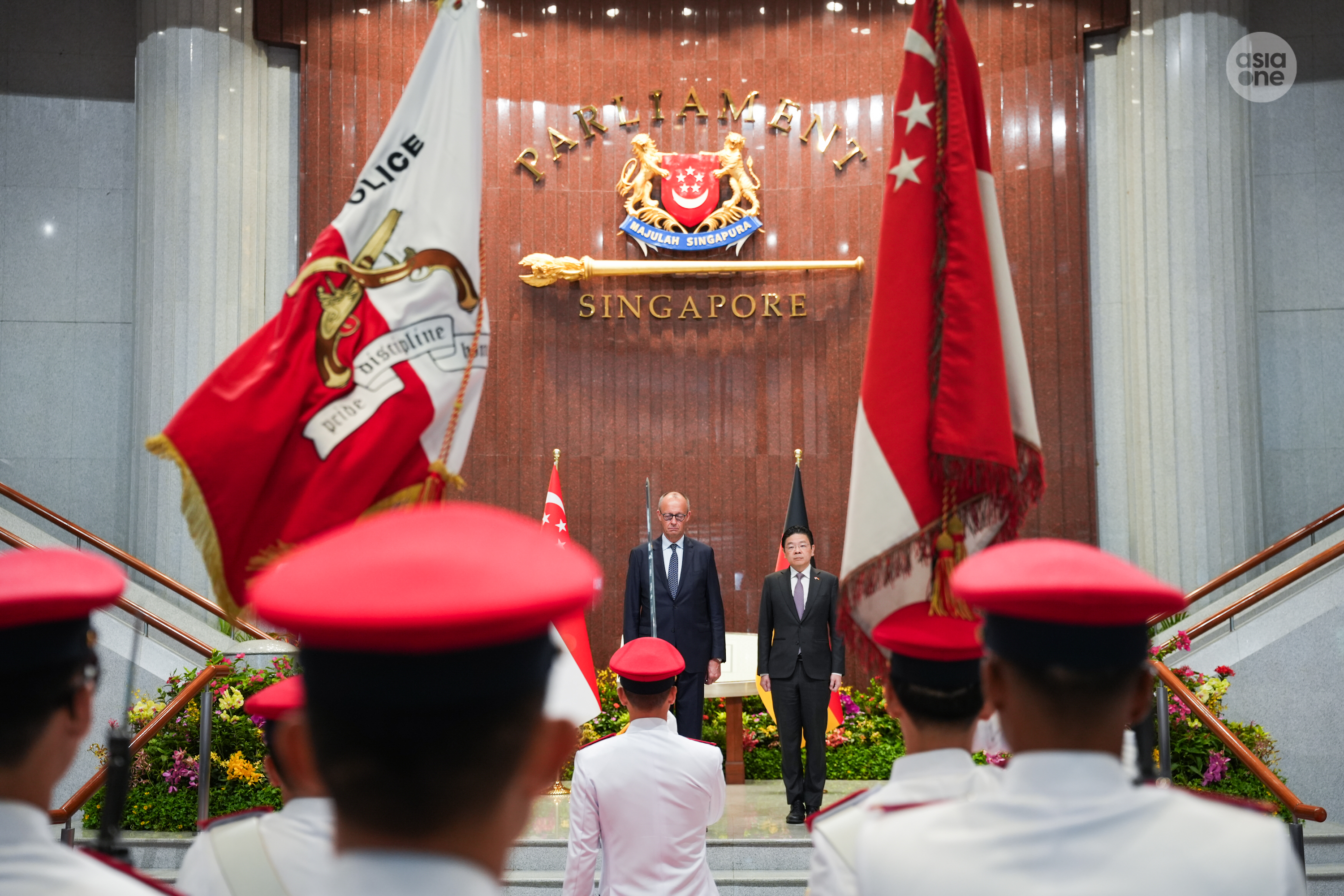
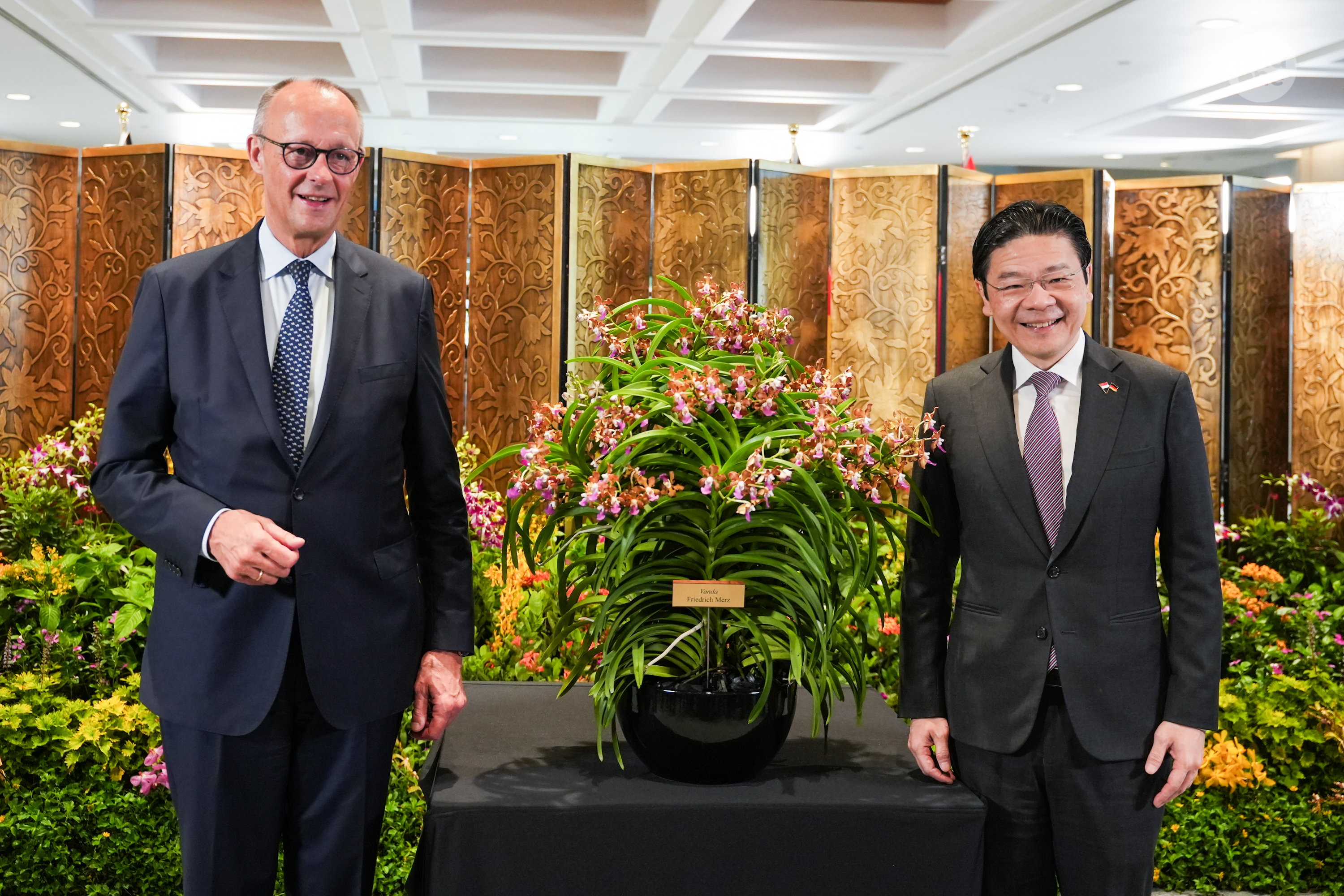
The announcement was made at a joint press conference between Singapore Prime Minister Lawrence Wong and German Chancellor Friedrich Merz on the first day of his two-day official visit on Tuesday (Oct 27).
In a statement issued thereafter, Singapore's Ministry of Foreign Affairs (MFA) identified the five pillars as:
Expanding bilateral cooperation into these further areas is to ensure that the strategic partnership remains dynamic and forward looking, the ministry added.
PM Wong noted in his remarks at the conference that the two countries share a longstanding and substantive relationship built on mutual trust and shared interests, culminating in 60 years of diplomatic ties in 2025.
Today, Germany is one of Singapore's largest trading partners in the European Union (EU), and their bilateral trade in both goods and services has increased significantly since the EU-Singapore Free Trade Agreement came into force.
Bilateral trade in goods with Germany grew to $23.4 billion in 2025, while services trade increased to around $14.1 billion in 2024.
Meanwhile, over 2,900 German companies are based in Singapore, using the city state as a gateway to opportunities in Asia and the region.
The two countries also share strong defence ties, with the Singapore Armed Forces operating or buying German-made Leopard tanks, the Sentinel-class Offshore Patrol Vessel, and the Invincible-class submarines.
"These arrangements reflect a high level of trust between our two countries," PM Wong said, adding that both Chancellor Merz and him have agreed to the updated joint work plan.
Sharing some areas in which cooperation will be stepped up, the prime minister stated that the two countries intend to cooperate on the development and deployment of industrial AI, where their strengths can complement each other.
But this will be human-centric, and done in a way that remains safe and trusted.
Turning to research and development, PM Wong said the two countries will pursue more joint research and innovation projects in areas such as AI, advanced manufacturing, green technologies, semiconductors, quantum, and space technologies.
And moving past bilateral partnerships, the prime minister said Singapore will work to deepen ASEAN's partnership with both Germany and the EU, including by making progress towards an ASEAN-EU Free Trade Agreement.
PM Wong pointed out that while the two countries may be geographically far apart, they share many common interests and convictions.
"These shared convictions have underpinned our friendship over the past six decades, and in a world that is becoming more uncertain and fragmented, our ties will be even more important in bringing our two countries and our two regions closer together," he said.
[[nid:746600]]
editor@asiaone.com


