

Not just anime: Is Japanese entertainment having a resurgence in Singapore?

Japanese actor Kento Yamazaki seen here in a still from the hit drama series Alice in Borderland, and J-pop boy band Naniwa Danshi.
PHOTO: Netflix, Instagram/Naniwa Danshi

 PUBLISHED ONOctober 04, 2025 12:00 AMBYSyarifah Nadhirah
When 19-year-old Annie was a child, she would go around yelling "Kubi yo, kubi!" at random times.
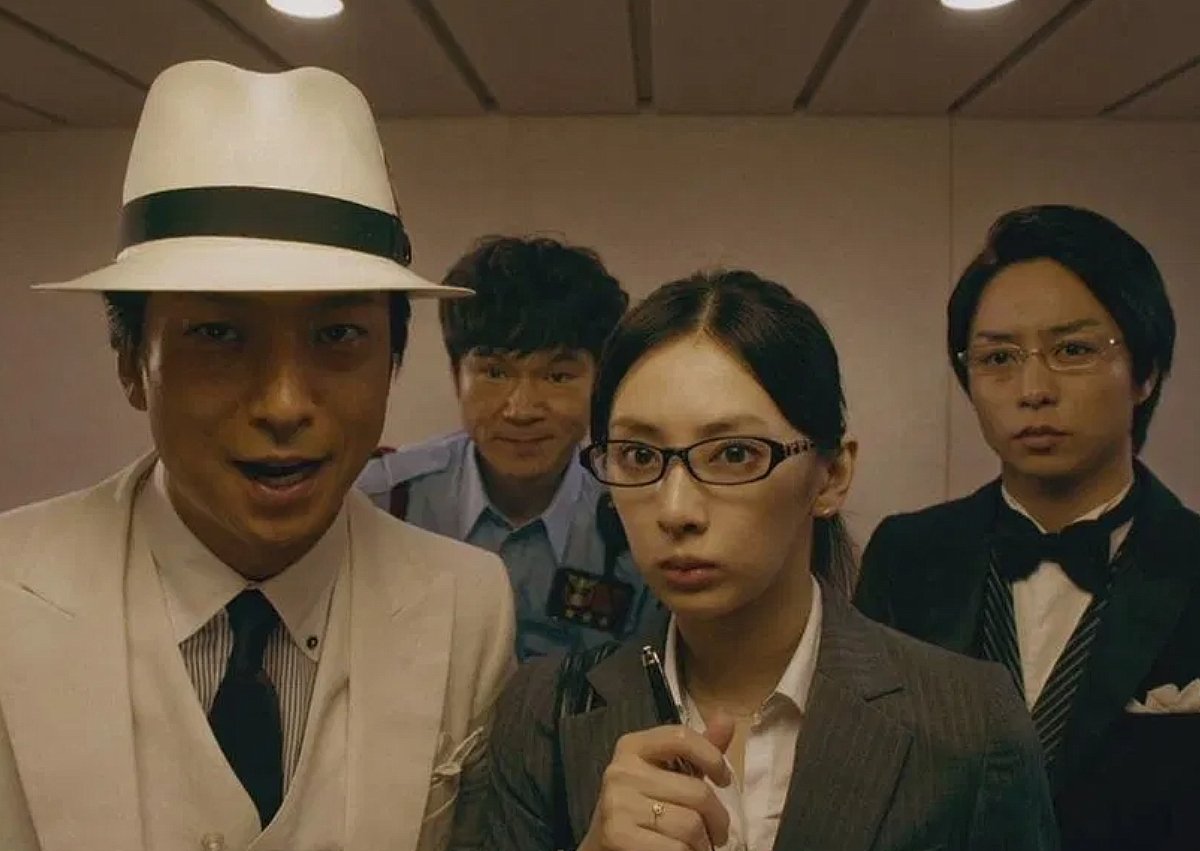
The Singaporean student told AsiaOne she was at the time "obsessed" with the Japanese drama The Dinner Table Detective (2011) and thought the catchphrase, said by the female lead Keiko Kitagawa and which means "You're fired, fired!", was hilarious.
Unlike many youths who grew up in Singapore on the Korean showbiz wave, Annie was surrounded by Japanese music and dramas in her childhood.
She told us in an interview: "I started liking J-pop and J-dramas as a kid when my sisters played music by Arashi and Perfume at home. It started off as background music until she passed her old iPod to me, and I got to listen to these songs whenever I wanted, which sparked my interest...
"I remember hearing Arashi's Monster for the first time, and I thought it was such a good song that it became my favourite from the get-go."
Before K-pop and K-dramas took over Asia, J-entertainment was all the rage in Singapore in the 1990s to early 2000s - from idol groups like Arashi and Smap to dramas such as Long Vacation (1996) and Beach Boys (1997).
"J-entertainment was on fire; local TV stations broadcast Music Station (Japanese prime-time music show) and every week you would hear J-pop songs on the radio too," said Kristine, an office administrator in her 30s, who looked forward to the weekly broadcast.
Angeline, 32, said cinemas showing Japanese movies were mostly filled up then.
"I remember having a lot of fun watching the Hana yori Dango Final: The Movie (2008) with friends who were completely new to the premise," shared the software engineer.
She also recalled watching classic J-dramas like The Files of Young Kindaichi (from 1995) and 1 Litre of Tears (2005) on TV and borrowed VCDs, as OTT (over-the-top) platforms weren't around back then.
"Mediacorp and Channel 8 used to screen a lot of J-dramas... The very classic ones, your Takuya Kimura shows, those shows by Smap," shared 37-year-old data analyst Daniel (not his real name).
To him, J-entertainment back then was as big as K-entertainment has been in the past decade.
"There was nothing much else I think; in Singapore, the good choices [for dramas] were between Japanese and Hong Kong dramas," he added.

So why did the hype quiet down? Some felt J-entertainment was overshadowed by the Hallyu wave.
"I feel like when K-pop started taking off, so did K-dramas. So, J-entertainment somehow got buried under the K-entertainment buzz and became less widely known by the newer generation," said Angeline.
Daniel felt similarly: "I speak for myself but people of my generation, I think, never really lost interest but Gen Z grew up watching K-pop. Then J-pop became less of a thing."
The Hallyu wave was reportedly a result of the global financial crisis then.
A research paper by Doobo Shim published in February 2008 said the economic downturn in Asia in the late 1990s made the cheaper Korean programmes a popular alternative for international broadcasters. Korean TV dramas were a quarter of the price of Japanese ones, and a tenth of the price of Hong Kong television dramas as of 2000.
Some of the earliest and most popular K-drama exports included Autumn in My Heart (2000) starring Song Seung-heon, Song Hye-kyo and Won Bin, Bae Yong-joon and Choi Ji-woo's Winter Sonata (2002) and Jewel in the Palace (2003) with Lee Young-ae and Ji Jin-hee.
Music-wise, there were BoA (debuted in 2000), Rain (2002), Super Junior (2005), BigBang (2006) and Girls' Generation (2007).
AsiaOne spoke to Leo Akahoshi, the CEO of Qdopp Inc - an international business consulting company with Japanese music label clients.
"During the 1980s to 1990s, J-pop thrived due to strong media presence (Japanese dramas and music programmes). However, in the 2000s, the rise of K-pop, more aggressive international marketing by Korean entertainment companies, and Japan's inward-looking strategies led to a decline in J-pop's overseas visibility," he said.
With digital platforms levelling the playing field though, Akahoshi feels J-pop is "making a strong comeback globally".

Singer-producer Tadayoshi Ohkura, a current member of the Japanese pop group Super Eight as well as founder and CEO of the production company J-pop Legacy, debuted with his group in 2004, two years after their formation.
Speaking to AsiaOne, the 40-year-old, who is also the special creative producer overseeing J-pop boy bands Naniwa Danshi and Ae! Group, shared his perspective as a veteran idol.
"The 2000s were truly a time of evolution for J-pop. A lot of artists expanded their range of expression beyond set boundaries while keeping true to our shared cultural roots of enka (a traditional Japanese music genre)," he recalled.
Ohkura said he was so focused on launching his career that he didn't give much thought to what was going on in the industry overall.
"Perhaps if social networking had been as widespread back then as it is today, it would have been easier to see the enthusiasm of overseas fans in real time, and it's certainly regrettable to have missed out on such," he said.
We asked how J-pop's slowdown in globalisation affected him both as a talent and producer.
"I wouldn't say that J-pop's globalisation stopped per se, but rather that it got a bit boxed in. For us living here in Japan, J-pop is simply music and can be enjoyed across a wide variety of genres and styles but once shipped overseas, it tends to get overshadowed as just an accessory to other forms of media like anime and film," he said.
"This, in and of itself, is not a bad thing; but I wonder if it limited the reach of J-pop and overly narrowed the entire category to select subgenres at the expense of everything else."
The growth of social media and video-sharing platforms as well as programme and music streaming apps have fuelled the globalisation of showbiz.
Akahoshi said the J-pop scene has seen a "significant increase" in global demand over the past five years.
"Anime's international expansion, along with the unique cultural appeal of J-pop artists, are key drivers," he told us, adding that in 2023 and 2024 alone, more than 100 Japanese songs have surpassed 100 million streams online.
The renewed demand began around 2018 to 2019, he said.
"This was fuelled by factors like the worldwide boom of anime (such as Demon Slayer and Attack on Titan) which featured J-pop theme songs, successful overseas activities by artists like Yoasobi and streaming platforms such as Netflix promoting Japanese content aggressively worldwide, especially during the Covid-19 period."
Like Akahoshi, Ohkura feels the rise of globally accessible content streaming services has helped parties overcome some "traditional market barriers".
"It will be interesting to see how this plays out as the Japanese entertainment industry continues to evolve. As a talent and producer myself, I do feel it is easier to develop a global vision now than it ever was before."

In the past, to watch J-dramas that weren't broadcast in Singapore, people would have to buy DVDs or rely on fellow fans to add English subtitles to the content and upload it to their blogs. While the latter was not legal, it was the only way international fans could enjoy their favourite Japanese content.
However, if you're subscribed to OTT platforms like Netflix and Disney+ now, you would have noticed the influx of Japanese dramas in the last few years. Over 70 are on Netflix as of press time and some are winning viewers over.
For instance, the first season of Japanese sci-fi thriller Alice in Borderland was reportedly the most-watched live-action Japanese series on Netflix in 2020. It came close to beating megahit K-drama Squid Game's 63 million viewing hours in its first week when the latter started streaming on Netflix in September 2021.
The second season, released on Dec 22, 2022, was the most watched Japanese series on the streaming platform, with a total of 61.2 million viewing hours over the Christmas weekend.
It hit Netflix's Top 10 Series list in 90 countries and was the top series in Singapore.
The third season recently premiered on Netflix and became number one in Singapore's Top 10 Series list, taking over the K-drama Bon Appetit, Your Majesty.
According to Disney+, season two of the Japanese folk horror drama Gannibal, which premiered in March this year, is the number one most-viewed Japanese live-action premiere globally, including Singapore, across all seasons and movies.

Historical J-drama Shogun, which is also streaming on Disney+, won 19 Emmy awards in 2024, the most ever for a single drama season.
"Storytelling from Japan is enjoying a resurgence among audiences across Asia Pacific. We've learnt from the global success of Shogun that the best entertainment are stories rooted in a fearless authenticity in storytelling - with exceptional production quality," said Carol Choi, Executive Vice President of Original Content Strategy in The Walt Disney Company Asia Pacific.
"Japan has such a rich heritage of storytelling, and a deep pool of content and IP. As more high-quality shows like Gannibal get produced in Japan, the interest towards Japanese content and J-drama will grow substantially over time."
Fans are noticing an increasing interest among their circles too.
Angeline noted: "With the growing release of newer and some older J-dramas hits on Netflix, many of my colleagues who don't usually touch J-entertainment have started treading into J-entertainment [content]."
When AsiaOne asked fans why they enjoyed J-entertainment, one common aspect came to their minds: Relatability.
"In K-pop, you can see how the fan base, or even the idols themselves, really strive for perfectness. They need to have perfect visuals, vocals and dance. It's like they cannot make a mistake, because if they do, people are going to comment on it," remarked 20-year-old student Puteri Ellesya.
"For my favourite idol, Ryo Hashimoto (a member of Starto Entertainment's pre-debut group B&zai), even though he's a pretty popular idol in Japan, he hasn't debuted yet. Because of that, I want to support him so that I can watch him grow… It's like you're growing with the idol and both of you are doing your best in your own ways."
She admitted that the live vocals in J-pop aren't always perfect but feels that's the charm of it.
"In K-pop, you see articles saying an idol is putting on weight and people commenting on it. I think in J-pop, no one really cares. People just support groups because they like their music, personality or the chemistry between the members. It's more like, we're just here to have fun."
This unique aspect is something Akahoshi highlighted: "J-pop prioritises emotional storytelling, unique individualism, and a 'growth journey' narrative. While K-pop focuses heavily on polished, global-ready performances and visuals, J-pop often emphasises relatable, raw charm and diverse musical styles. Both are powerful, but they offer different emotional connections to fans."
University student Ifah likes J-pop for their concepts.
[embed]https://youtu.be/PW42qpS4tAg?si=J3qMt8bF37lcG3gH[/embed]
"I like the songs because they're catchy, and I like the costumes - they're very sparkly, which is quite different from K-pop because I feel like these days quite a lot of groups are doing hardcore, emo kind of styles. But I quite like the... in Japanese, they will say, the Kira-Kira style - very shiny, very bubblegum pop kind of sound. It makes me not want to think about serious things," the 23-year-old said.
To Daniel, J-dramas have a similar appeal with its storytelling.
"The thing I like about J-drama is that they focus on slice-of-life - very real human issues. For example, their high-school dramas talk about the kind of struggles that students have. Even back in those days, they talked about issues like school stress and dealing with parental expectations. They are just very good at writing plots that resonate well with the audience," he said.
J-dramas are also more digestible, with one season usually spanning six to 10 episodes.
Annie said this is one of the reasons she has been watching more J-dramas: "They're so easy to binge-watch… The length of episodes varies but most of the J-dramas I like happen to be between 20 to 40 minutes each episode, compared to hour-long episodes in K-dramas, making it easier to follow along and finish in one day.
"It's also easier to follow along to the storyline because I find they're more straightforward compared to K-dramas where many subplots happen."
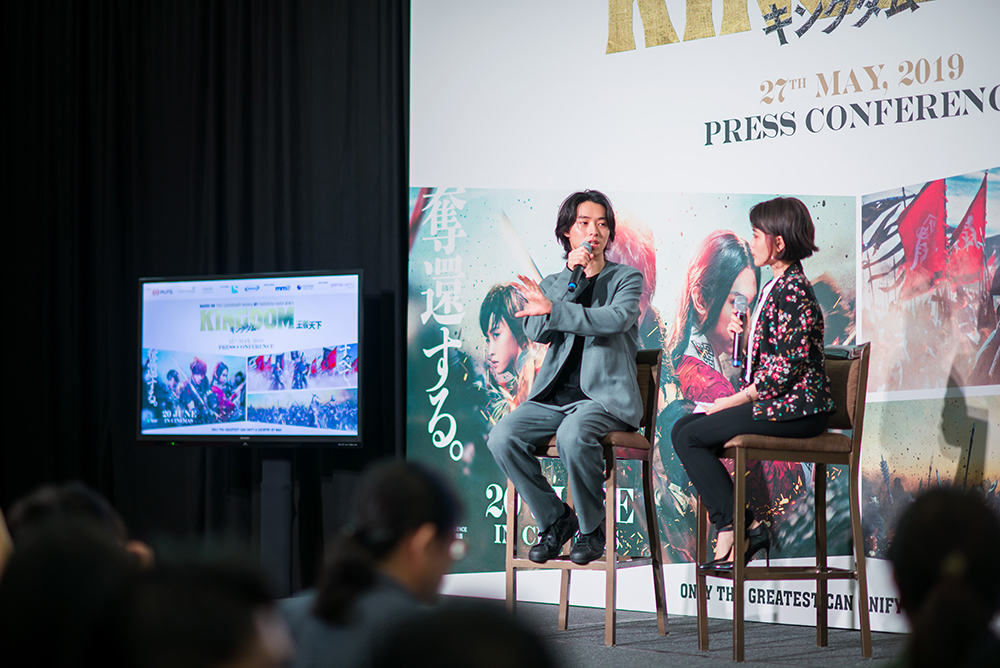
In the past few years, more Japanese singers and actors have been hitting our shores.
In 2019, Arashi held a press conference at Jewel Changi Airport as part of their fan-meet tour and so did actor Kento Yamazaki - the leading man in Alice in Borderland - for the movie Kingdom.
Last year, Gannibal's Yuya Yagira and Show Kasamatsu, as well as Genta Matsuda from the J-pop boy band Travis Japan were here for the 2024 Disney Content Showcase.
This year, J-pop boy band Be:First and iconic songstress Ayumi Hamasaki performed here, as well as bands and singers like My First Story, BabyMetal, Yoasobi, Fujii Kaze, Phantom Siita, Flow, Ado and Scandal.
J-pop group One or Eight was part of the Yes933 Hits Fest concert line-up and there were recently two free-to-attend J-pop festivals featuring boy bands Psychic Fever from Exile Tribe and Wolf Howl Harmony from Exile Tribe.
Akahoshi says this is a "deliberate strategy".

"The domestic Japanese market has matured, so many agencies and labels are now prioritising international expansion to sustain artist growth. Singapore is considered a key market due to its strong fanbase, English proficiency, and regional influence in Southeast Asia," he said, adding that the global market is "essential".
"While Japan's music market is not small, population decline and digitalisation are forcing labels to expand overseas. For artists, overseas success brings not just new revenue but also prestige and career longevity."
Ohkura said he noticed a "tremendous shift" in recent years that broadened the horizon of mainstream international consumers.
"When I was first getting started as an entertainer, I think a lot of people had the sense that touring outside of Japan was 'reckless'; a remnant of the so-called 'Bubble Era' of the generation before me," he shared.
"But nowadays, there are a lot more opportunities to learn, explore, and cultivate a general knowledge base on how to approach neighbouring markets in different ways.
"I've definitely seen for myself just how much excitement J-pop brings to various parts of the world, both in-person on my own overseas trips and through the eyes and experiences of the groups I work with."
There is no question how much potential the global market has for the talents' long-term dreams, he stressed.
[embed]https://youtu.be/6-YaVL-4u1s?si=FiouM5-KpjkV2iZ8[/embed]
Popular septet Naniwa Danshi wrapped up their first Asia tour earlier this year with concerts in Seoul, Taipei and Hong Kong. Ohkura added that the group is interested in going even further, whether it be another full tour or one-off participation in local events, with Southeast Asia a region of great potential.
The Asia tour was a big step forward, as it is uncommon for idol groups, especially those under Starto Entertainment, to venture out of Japan. Ohkura explained why this is so.
"Very different from pure musicians, multi-media talent or idols like us are deeply invested in and have significant responsibilities to the overall ecosystem of Japan's domestic entertainment industry that requires a lot more care and consideration about the pros and cons, risks and rewards of any single action," he shared.
Akahoshi also explained to us: "Bands and soloists have more universal musical styles that cross language barriers easily. Idol groups often rely heavily on unique Japanese cultural elements (like handshake events or fan meetings), which are harder to replicate abroad.
"If they could feel more confident that they can monetise, their management company will take them abroad."
For his company J-pop Legacy, Ohkura doesn't want to choose between local and global audiences. "I want our juniors to pursue careers in entertainment, having been inspired by their senpai's (senior in Japanese) success in media that is familiar and important to them as Japanese young people...
"However, the borderless-ness of digital technologies is making things very different for the next and next-next generation than they were for me at their age, and being exposed to so many artists who have found success both home and abroad has very much influenced what they see as their own long-term career ambitions."
Travis Japan - who debuted in 2022 - recently wrapped up a world tour with stops in the US, Hong Kong, Taiwan and Thailand. They also have English versions of their songs.
Be:First, managed by BMSG, recently wrapped up their world tour in Singapore, and members Ryuhei Kuroda and Manato Hirose told us they have made efforts to learn and speak English to break the language barrier.
LDH Japan's Psychic Fever from Exile Tribe has toured the US, Europe and Asia, and in a recent interview with us, member Kokoro Kohatsu shared they debuted with the main goal of going global.
They also have a culturally diverse lineup that includes Japanese-Nigerian member Jimmy and Morrocan-Zainichi Korean member Weesa.
Ryoga Nakanishi from Psychic Fever told us in a recent interview: "We still feel we have a long way to go ourselves, but being able to share the wonderful aspects of Japan and its culture with everyone overseas is truly a joy. We realise it's no simple task, so moving forward, we intend to work as one united team to deliver our entertainment to audiences around the world."
[[nid:720765]]
No part of this article can be reproduced without permission from AsiaOne.