Diesel prices in Singapore fell for a fourth straight day on Friday (May 8) as Caltex, followed by Shell and Sinopec reduced their respective posted prices.
Six fuel companies — Caltex, Cnergy, Esso, Shell, Sinopec and SPC — all made downward adjustments to their diesel prices between Tuesday and Thursday — between 10 cents and 30 cents.
In a price board update published at 11am on Friday, Caltex announced a 7-cent drop in its posted price for diesel. It made a further 3-cent reduction at 5.30pm, but kept petrol prices unchanged
This was followed by a 3-cent decrease by Shell and a 10-cent drop by Sinopec at about 2.30pm. The two companies left petrol prices untouched.
Following the latest round of price adjustments, the price of diesel now ranges from $3.40 at Cnergy to $4.51 at Caltex.
Diesel prices have risen by nearly 70 per cent since a joint US-Israel strike on Iran nearly 10 weeks ago. The posted price averaged about $2.57 on Feb 23.
| Company / Fuel | 92-octane | 95-octane | 98-octane | Premium | Diesel |
| Caltex* | $3.43 | $3.47 | Not available | $4.16 | $4.48* |
| Esso | $3.43 | $3.46 | $3.98 | Not available | $4.48 |
| Shell* | Not available | $3.46 | $3.98 | $4.20 | $4.48* |
| Sinopec* | Not available | $3.46 | $3.97 | $4.10 | $4.47* |
| SPC | $3.39 | $3.42 | $3.93 | Not available | $4.32 |
| Cnergy | Not available | $2.64 | $3.05 | Not available | $3.40 |
Prices are correct as at 10pm on May 8. All prices are before discounts. *Indicates change to posted price(s) on May 8. |
Small diesel vehicle population but significant impact
Even though diesel-only vehicles make up just 15.6 per cent of the 1.01 million vehicle population in Singapore, they form 85 per cent of goods vehicles here.
They are used heavily in logistics — ranging from delivery of parcels to the daily resupply of ingredients at food stalls, and the transportation of materials and supply for the construction, manufacturing, and processing sectors.
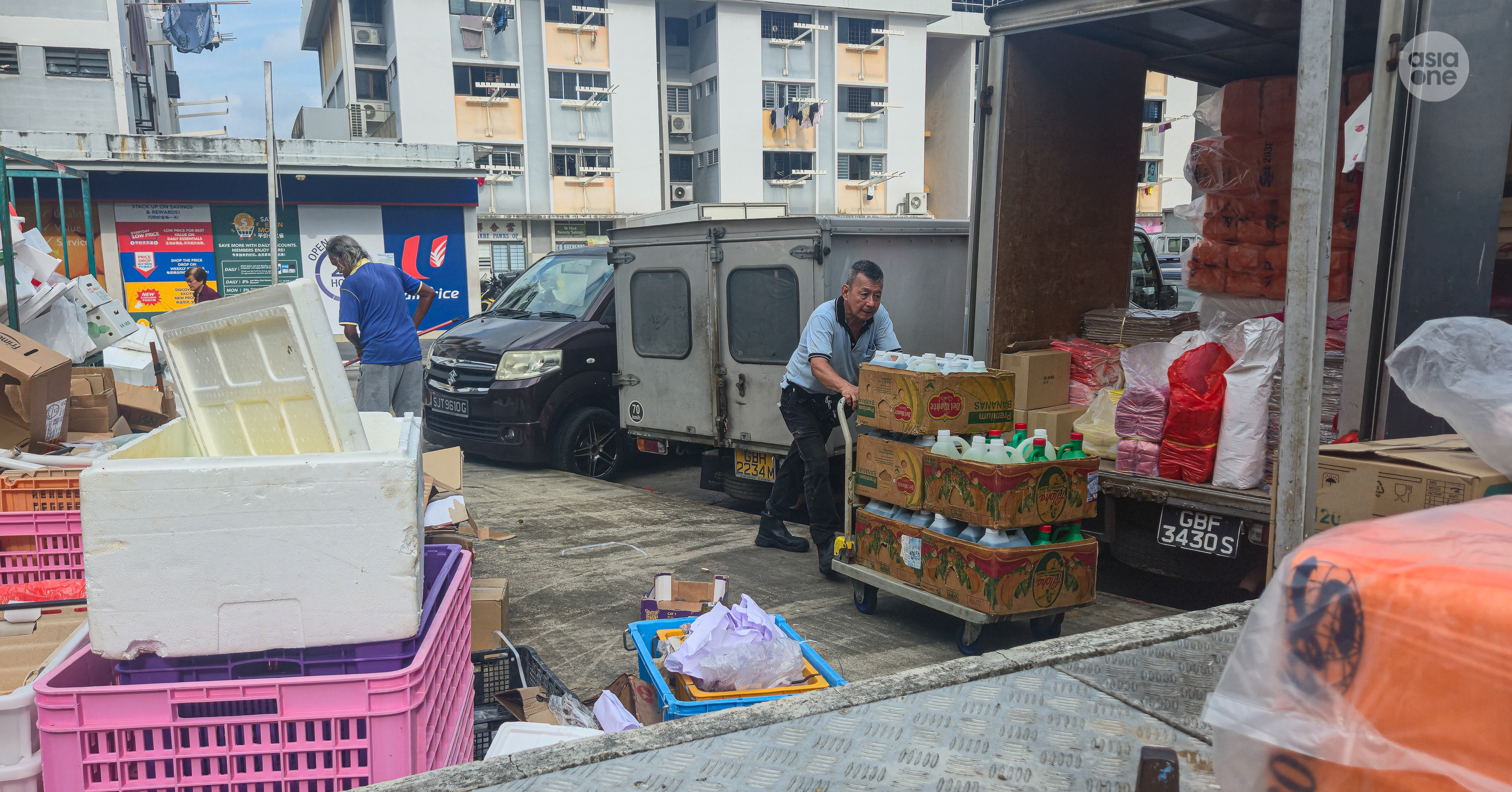
The higher operating costs for transportation will eventually be passed on by businesses to consumers, driving up the costs of food and goods.
Some hawkers whom AsiaOne spoke to said they have begun raising prices due to rising operating costs, including increases in plastic, fuel and supplier expenses.
But some remain cautious about doing so amid concerns over customer demand.
Small and medium enterprises, accounting for 99 per cent of businesses in Singapore and hiring about 70 per cent of the workforce, will therefore see sustained increases in their operating costs which will in turn impact their profit margins and sustainability.
On April 7, the Government announced measures to help households and businesses cushion the impact of rising costs, including a disbursement of $200 in cash to active platform workers, private hire car drivers and taxi drivers.
It also provided temporary aid by co-funding cost increases for essential bus services, such as those for school students, seniors, and persons with disabilities, so that these services can continue without disruption.
Senior Minister of State for Finance Jeffrey Siow also explained why the Government will not reduce petrol or diesel duties.
He said that as an economy, Singapore must allow fuel prices to reflect market realities.
Oil prices hover above US$100 per barrel
Brent oil prices on Friday whipsawed around the US$100 per barrel mark amid renewed hostilities between the US and Iran on Thursday.
The renewed hostilities broke out as Washington was awaiting Iran's response to a proposal that would stop the fighting but leave the most contentious issues, such as Iran's nuclear programme, unresolved for now.
Iran's military said the US targeted two ships entering the Strait of Hormuz and carried out strikes on Iranian territory, but the US military said it fired in response to Iranian attacks.
US President Donald Trump told reporters the ceasefire was still in effect and sought to play down the exchange.
[[nid:735366]]
editor@asiaone.com




