Singapore households to pay higher electricity and gas household tariffs from July to Sept
Energy Market Authority says this is due to a sharp increase in natural gas prices from the end of February, which has remained elevated between April to June
Singapore households will pay higher electricity and gas tariffs for July to September 2026 due to a sharp rise in natural gas prices.
The effects of the ongoing Middle East war — now in its fifth month — are rippling through, with Singapore households set to pay higher electricity and gas tariffs in the third quarter of 2026 due to a sharp increase in natural gas prices.
The household electricity tariff from July to September, before the goods and services tax (GST), will increase by17 per cent, SP Group announced in a media release on Tuesday (June 30).
This is 4.64 cents per kilowatt-hour (kWh) higher than the second quarter of 2026, from April to June.
Following the increase, the average monthly electricity bill for families living in HDB four-room flats will rise by $17.14 (before GST).
The overall electricity tariff (before GST), including tariffs for non-households, will increase by an average of 17.5 per cent or 4.66 cents per kWh compared with the previous quarter.
"The situation in the Middle East remains uncertain. Should the situation improve, global fuel prices and correspondingly the electricity tariffs for the fourth quarter of 2026, may decrease," SP Group said.
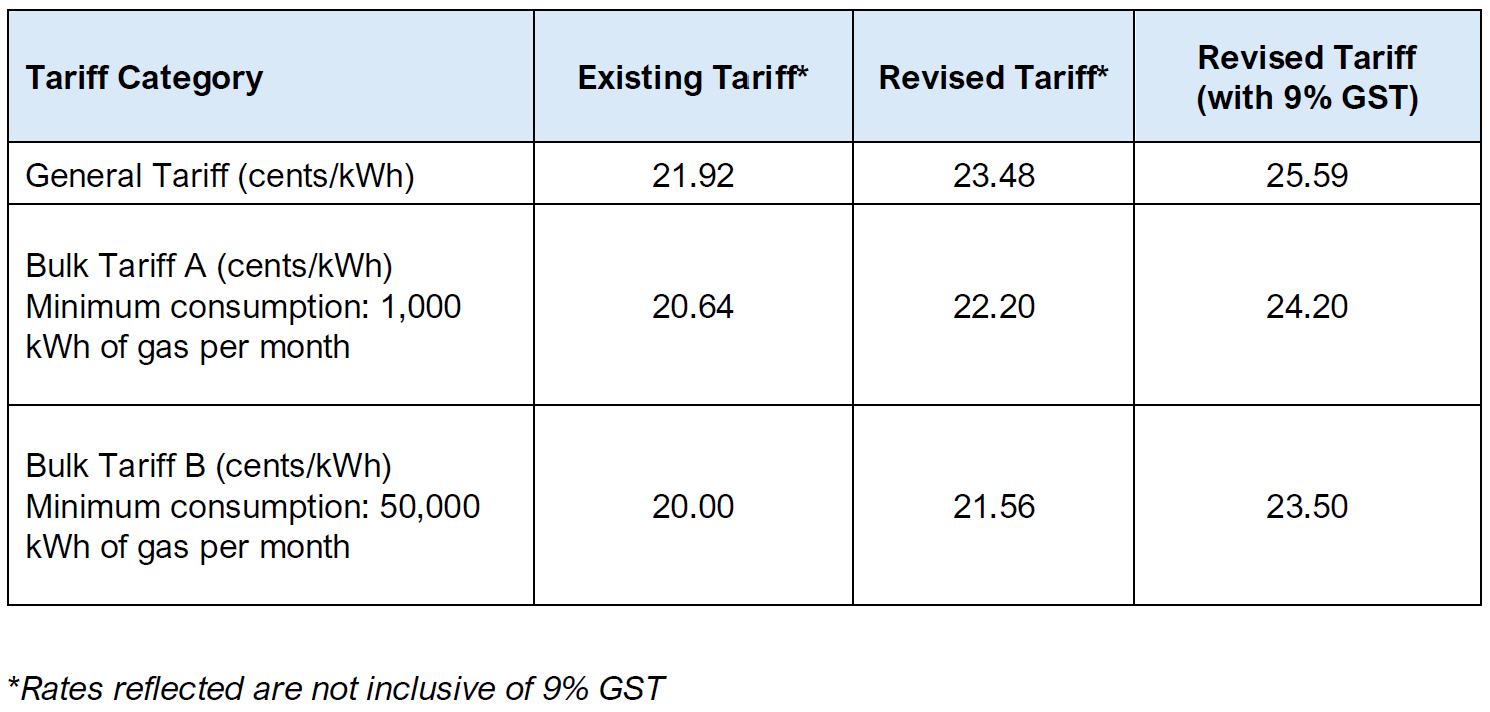
Meanwhile, the town gas tariff (before GST) for households will increase by 1.56 cents per kWh from July to September, City Energy said on Tuesday.
This is 7.1% higher than the previous quarter.
Offsetting the increase through U-Save
Eligible households would have received up to $190 in U-Save rebates in April, with another tranche of up to $190 to be disbursed in July.
The two disbursements include additional U-Save rebates announced at Budget 2026, on top of the regular GSTV—U-Save rebates.
For example, one- and two-room HDB flats receiving $95 in regular GSTV — U-Save rebates in April, received another $95 in Budget 2026 U-Save rebates, bringing the total utilities rebates received to $190.
These rebates are intended to help offset utilities expenses for lower- and middle-income HDB households, MOF said in a statement on March 31.
Eligible households will receive two further tranches of GSTV—U-Save rebates later in October, and in January 2027.
How electricity and town gas tariffs are determined
Earlier in June, the Energy Market Authority (EMA), responding to media queries, said most households can expect to face a significant increase in electricity costs from the third quarter.
In a media statement issued on Tuesday, EMA explained that Singapore is highly dependent on imports for its energy needs.
"Imported natural gas accounts for 95 per cent of our electricity production, and is also the main feedstock for the production of town gas."
Town gas refers to the man-made, combustible gas used for cooking and heating. It is produced in electricity plants and piped into homes and businesses.
EMA pointed out that natural gas prices had increased sharply from the end of February and remained elevated from April to June due to the Middle East conflict.
"An increase in the cost of natural gas will lead to an increase in the costs of producing electricity and town gas in Singapore," the authority stated in their statement.
EMA also shared that the quarterly determination of regulated electricity and town gas tariffs are based on gas prices in the first 2.5 months of the previous quarter.
This means that gas prices between April and mid-June 2026 are used to set the tariffs for the upcoming quarter.
Noting that Iran and the United States have agreed to halt recent hostilities in the Gulf and renew talks, EMA said that if the situation improves, it may lead fuel prices decreasing, and, in turn, lower electricity and town gas tariffs in the fourth quarter of 2026.
The authority also urged Singaporeans to play their parts in conserving energy, such as by setting air-conditioners to a moderate temperature of 25 deg C or higher, switching off lights and appliances when they are not in use, and choosing energy-efficient appliances.
"This will not only help to reduce household electricity bills but also contribute to Singapore's energy resilience," EMA said.