Singapore updated its National Artificial Intelligence Strategy (NAIS) on Wednesday (May 20) as part of efforts to advance artificial intelligence (AI) development to create a "flywheel" effect that would allow it to build, activate and sustain a vibrant AI hub here.
The refresh comes just months after the city-state announced during its Budget 2026 that a new National AI Council — to drive the national AI agenda — will be headed by Prime Minister Lawrence Wong.
A new tripartite council, comprising the National Trades Union Congress, Singapore National Employers Federation and the Ministry of Manpower, was also announced on April 30 to help workers and businesses here address the impact of AI.
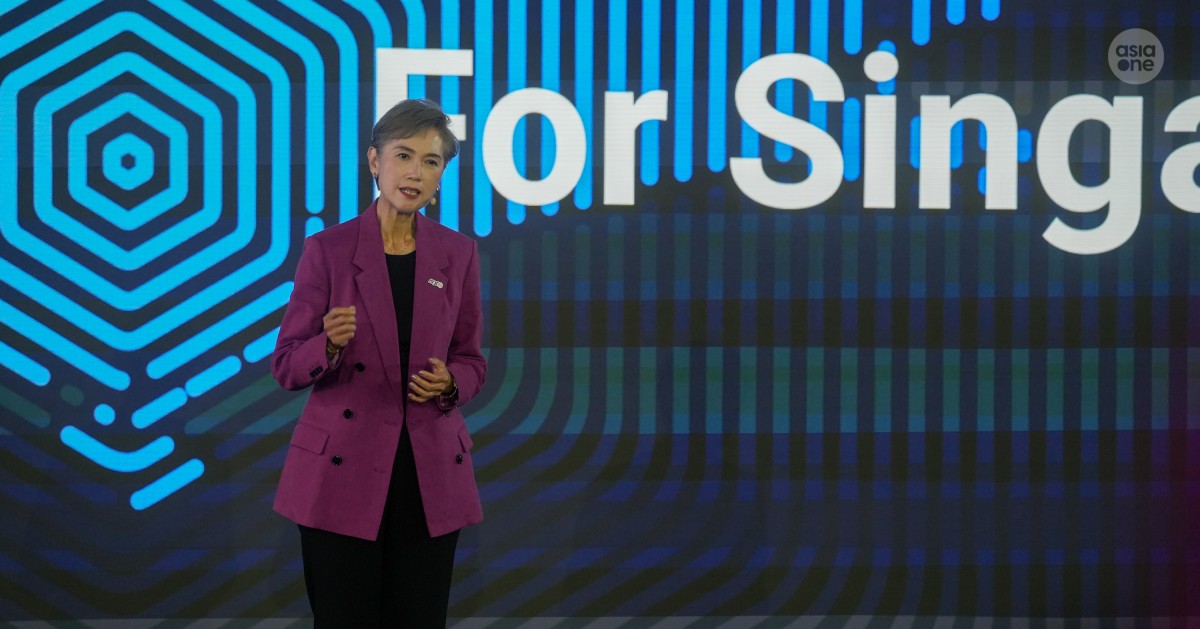
Presenting the update, Minister for Digital Development and Information (MDDI) Josephine Teo said the AI story is not just about technology, but also, economies and societies, with serious implications for security and governance.
She added that the 10 refreshed priorities across the ten NAIS enablers — capabilities, compute, data, ecosystem integration, government, industry, leader in thought and action, research, talent and trusted environment — will better support the National AI Council's elevated ambitions.
"They are not meant to operate as separate workstreams. Each enabler helps to advance AI development in Singapore and works in concert with other enablers to create greater impact. The resulting flywheel activates and sustains a vibrant AI hub," the minister said.
The 10 refreshed priorities cut across three focuses which can be categorised as: deepening sectoral and public sector transformation; mainstreaming AI adoption and strengthening workforce readiness; and, building an AI hub.
Public sector transformation
MDDI said in a factsheet issued on Wednesday that the sectoral transformation will be driven through national AI missions in advanced manufacturing, financial services, connectivity and healthcare.
These will be complemented with continued efforts to mainstream AI adoption across industry — to ensure that industry transformation will help spread the benefits of AI more evenly across the economy.
Moving forward, the Government will also embed AI "more deeply" and as a routine part of public sector work, while pursuing breakthroughs in high-impact domains where AI can transform how the Government serves citizens.
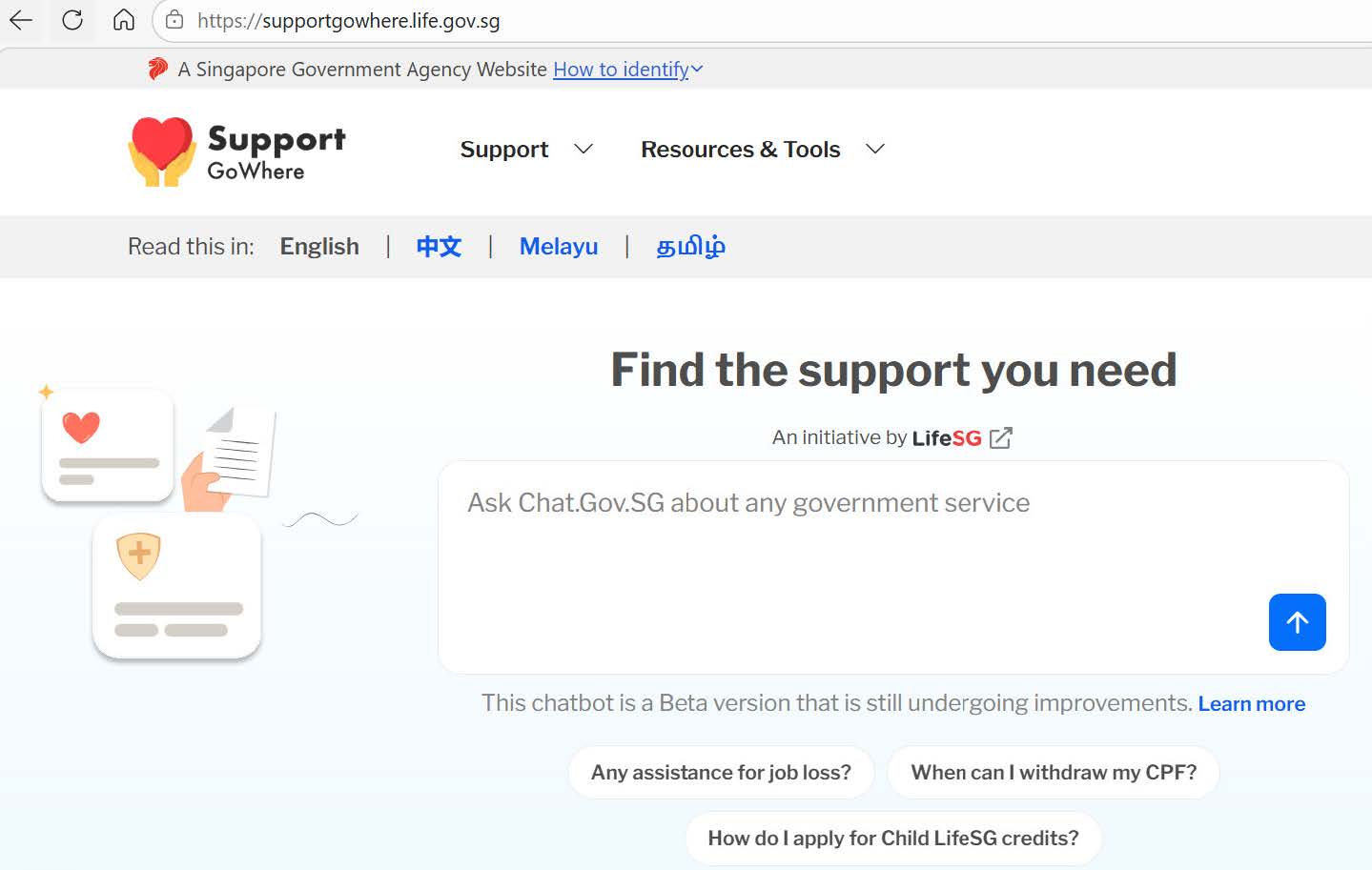
One such example is the "Chat.GOV.SG Chatbot" which acts as a digital concierge to answer citizens' questions on government support measures in plain language and by pointing them directly to relevant schemes and services.
These efforts will be enabled by stronger applied AI research and engineering capabilities.
Meanwhile, Singapore will continue to equip itself with the talent mix to thrive as a leading AI hub by anchoring top-tier AI talent, while nurturing a strong base of AI practitioners.
In tandem, Singapore will support efforts to help some 100,000 workers become AI bilingual, who will, in turn, serve as pathfinders for upskilling across the broader workforce.
The Government will also enable trusted access to datasets that can improve models and go on to support sectoral transformation. This will also take into account privacy, security and legitimate commercial concerns.
Strengthening workforce readiness
Alongside pushing frontiers for sectoral transformation, including supporting businesses and government agencies to adopt AI in practical ways, Singapore will move to entrench broad-based AI capabilities to support inclusive growth, MDDI said.
This means deepening AI literacy and fluency regardless of ages and job roles, supporting job redesign and helping workers transition confidently into new roles and growth areas, including through tripartite efforts.
Amidst this push, and as risks become more complex, Singapore will move to strengthened layered AI governance; deepen sector-specific risk management; and build AI testing, assurance, and safety capabilities.
On April 20, the Infocomm Media Development Authority and Enterprise Singapore put forth a new international standard, also a world first, to standardise methods for generative artificial intelligence (GenAI) systems.
Speaking at a plenary meeting of the International Organisation for Standardisation (ISO) and the International Electrotechnical Commission (IEC), IMDA chief executive Ng Cher Pong highlighted that standards are the "quiet infrastructure" that enables interoperability, consistency and trust at scale.
Building AI hub
While the foregoing areas will help make Singapore a more compelling place to develop, test, and scale AI solutions, Singapore also has to secure more computing power while improving the efficiency with which AI models and systems are deployed and built — sustainably.
It will also need to deepen ecosystem integration across Singapore's AI community, at home and abroad, such as through Lorong AI and the upcoming Kampong AI at One-North.
This will foster a shared sense of purpose across industry, government, and research, and support Singapore’s development as a connected AI hub, MDDI said.
Meanwhile, as the global landscape grows more fragmented, Singapore will need to contribute to global and regional AI efforts by convening partners, sharing practical resources, and supporting collaborations, including as chair of the Association of Southeast Asian Nations next year.
Said Teo at the ATx Summit on Wednesday: "This refresh build on our experiences and insights implementing NAIS 2.0. It is a double click rather than a system reboot."
[[nid:735249]]
editor@asiaone.com